Darjeeling in September is a fascinating mix of mist-covered hills, bright green tea gardens, cool mountain air, and the gradual return of clearer Himalayan views after the peak monsoon months. If you enjoy landscapes that feel fresh and alive, fewer tourists than the October holiday season, and the possibility of seeing both dramatic clouds and snow-covered peaks on the same trip, September can be a rewarding time to visit the “Queen of the Hills”.
Located in the Himalayan foothills of West Bengal, Darjeeling is famous around the world for its tea, heritage railway, colonial-era character, Buddhist monasteries, mountain viewpoints, and views of the Kanchenjunga range. September adds another dimension to the town. The hills remain intensely green after months of rain, waterfalls are active, valleys are filled with mist, and sunny intervals become more common as the month progresses.
The important thing to understand is that September is a transitional month in Darjeeling. Early September can still feel like the monsoon, while the second half generally offers better conditions for sightseeing and mountain views. Rain is still possible, so your itinerary should remain flexible.
For travelers who do not mind occasional showers, September offers plenty to experience, from watching sunrise at Tiger Hill and riding the famous Toy Train to tasting authentic Darjeeling tea and exploring nearby Mirik, Kurseong, and Kalimpong.
Here are the best things to do in Darjeeling in September 2026, along with weather information, practical travel advice, a suggested itinerary, and ideas for extending your Himalayan holiday.
Why Visit Darjeeling in September 2026?
September is sometimes overlooked because many travelers wait until October for the traditional autumn season. However, that can work in your favor.
By September, Darjeeling’s hills have spent several months receiving monsoon rain. Tea estates, forests, moss-covered slopes, and valleys are therefore at their greenest. Clouds often move rapidly through the mountains, creating changing scenery throughout the day.
September is especially suitable if you:
- Prefer greener landscapes over dry-season scenery.
- Enjoy mist, clouds and atmospheric photography.
- Want to avoid the heavier crowds of October and November.
- Are interested in tea gardens, cafés and cultural sightseeing.
- Can keep an extra day in your schedule in case of rain or road delays.
- Prefer comfortable temperatures rather than extreme heat or winter cold.
EaseIndiaTrip’s existing September hill-station guide also highlights Darjeeling for its tea gardens, Toy Train, Tiger Hill and Himalayan scenery during this period.
Darjeeling Weather in September 2026
September marks the gradual transition from the monsoon toward the clearer autumn season.
You can generally expect daytime conditions to remain cool and comfortable, while mornings and evenings feel noticeably colder. Cloud cover, fog and intermittent rain are common, particularly during the first part of the month.
Typical September conditions include:
- Daytime temperature: approximately 17°C to 21°C
- Night temperature: approximately 12°C to 16°C
- Weather: cloudy, misty and occasionally rainy
- Visibility: changeable, usually improving later in the month
- Landscape: extremely green after the monsoon
- Humidity: relatively high
Weather in mountain areas can change quickly. A misty morning may turn sunny by midday, while an apparently clear afternoon can suddenly become cloudy.
If your main priority is photographing Kanchenjunga, give yourself at least two or three mornings in Darjeeling rather than relying on a single Tiger Hill excursion.
Darjeeling September 2026: Things to Do & See
1. Watch Sunrise from Tiger Hill
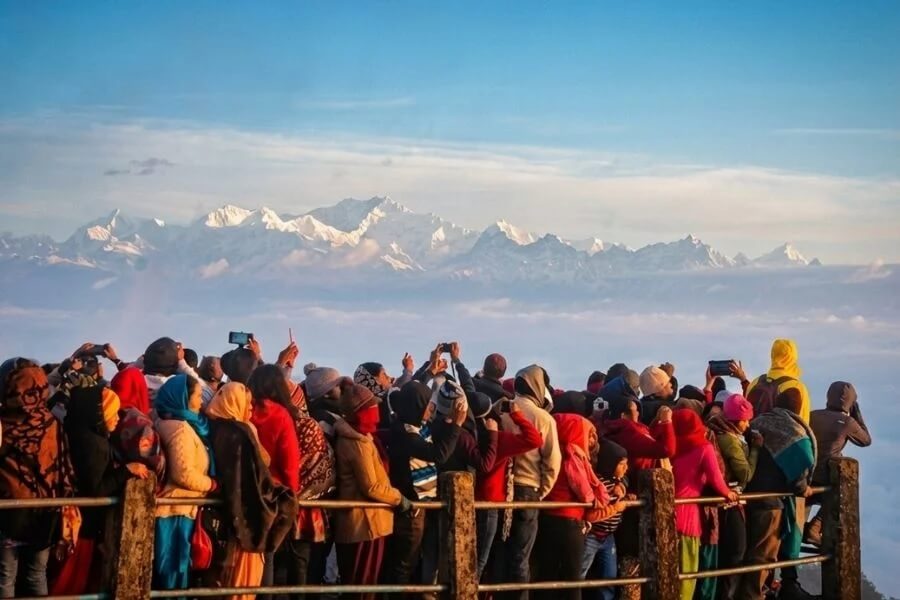
A journey to Darjeeling feels incomplete without an early-morning trip to Tiger Hill.
Located above Darjeeling, Tiger Hill is famous for its panoramic views toward Kanchenjunga. When conditions are exceptionally clear, visitors may also see distant Himalayan peaks beyond the immediate range.
The experience begins long before sunrise. Vehicles leave Darjeeling while the town is still dark, climbing through Ghoom toward the viewpoint.
September weather makes Tiger Hill slightly unpredictable. Clouds can completely hide the mountains one morning and disappear the next.
That uncertainty is part of traveling in Darjeeling at this time of year.
September tip
Try scheduling Tiger Hill for your first clear-looking morning. If clouds prevent the view, you may still have another opportunity later in your stay.
Later September usually offers a better chance of clearer morning skies than the beginning of the month.
2. Ride the Darjeeling Himalayan Railway Toy Train
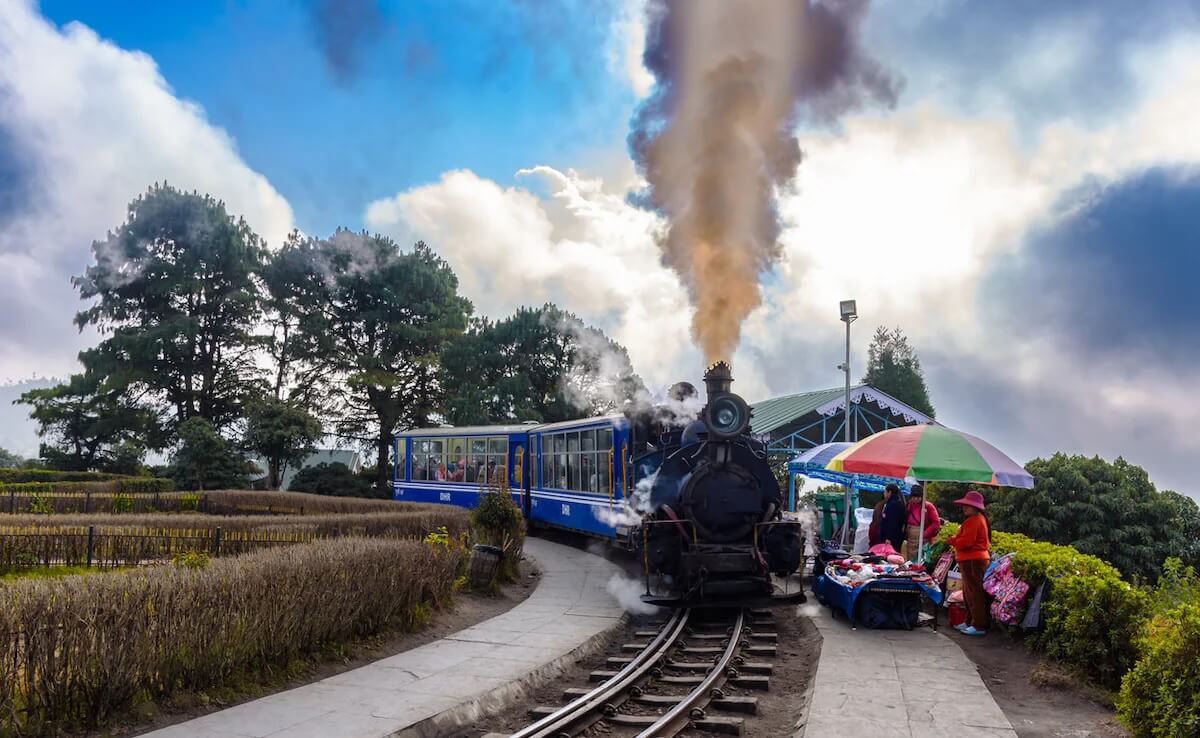
The Darjeeling Himalayan Railway, popularly called the Toy Train, is one of the most distinctive experiences in the hills.
The historic narrow-gauge railway winds through Darjeeling’s streets, mountain curves and hillside neighborhoods. Rather than simply being transportation, the journey gives visitors a completely different perspective on the town.
A popular choice is the shorter joy ride from Darjeeling toward Ghoom and Batasia Loop.
The route combines railway heritage with Himalayan scenery and is particularly atmospheric when mist hangs over the hills.
If trains interest you, EaseIndiaTrip already has a dedicated guide to the Darjeeling Himalayan Railway, which makes a useful internal link for readers who want schedules, route options and planning information. The railway is also one of the central experiences included in the site’s Darjeeling travel content.
September tip
Check operations shortly before your trip because heavy rain, maintenance or local conditions can occasionally affect mountain rail services.
Book popular joy rides in advance when possible, especially around weekends.
3. Explore Batasia Loop and the Gorkha War Memorial
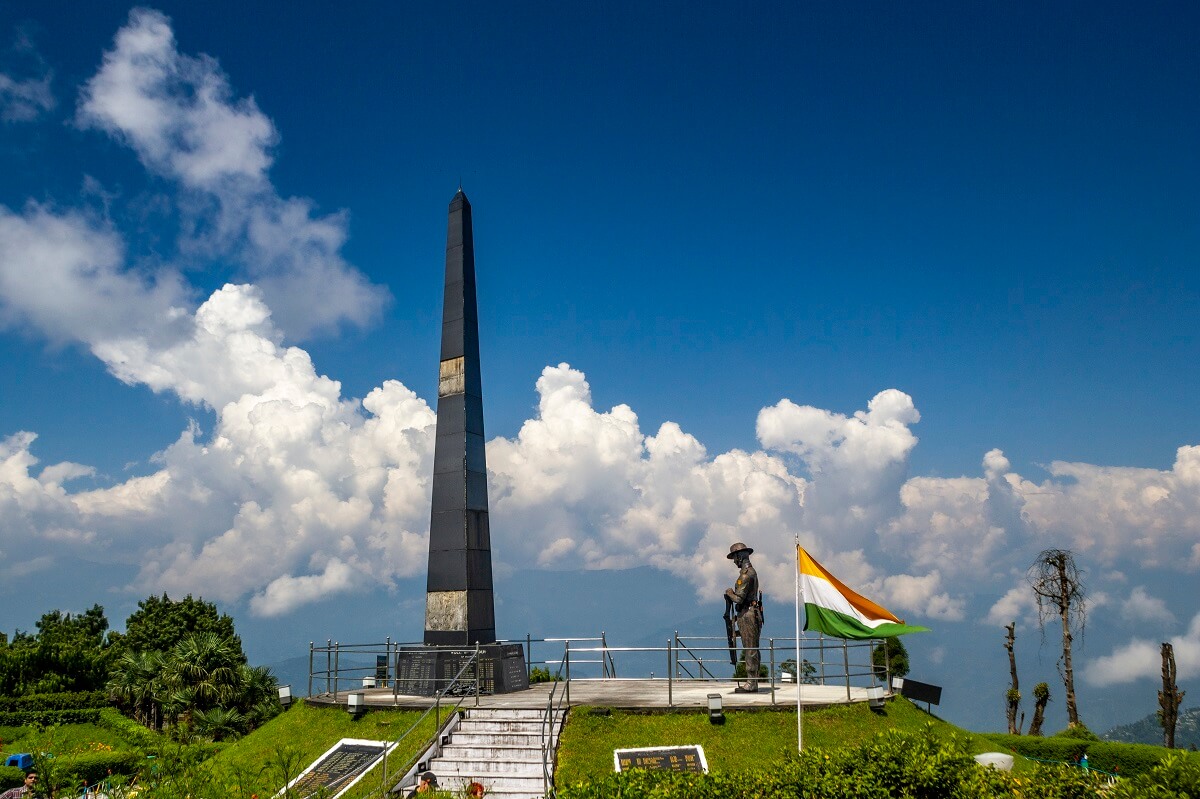
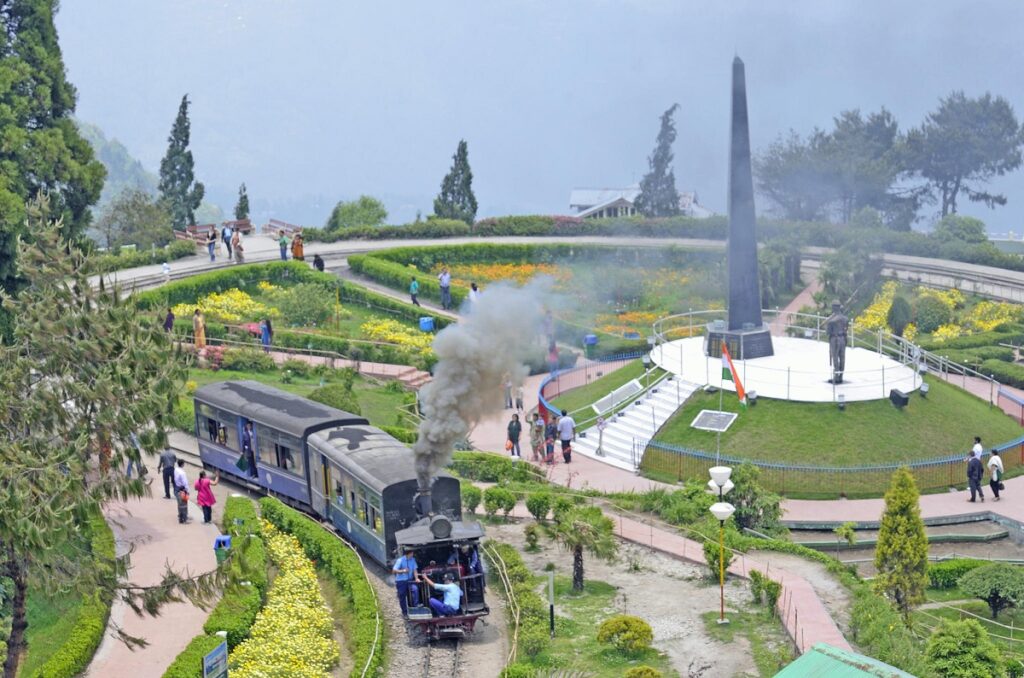
Batasia Loop is one of Darjeeling’s most photographed railway landmarks.
The railway curves around a landscaped loop designed to help trains manage the steep gradient. In the center lies a memorial dedicated to Gorkha soldiers who served in the Indian armed forces.
On clear mornings, the gardens also provide beautiful views toward the Himalayan range.
The area looks particularly fresh in September because the gardens and surrounding vegetation remain lush after the monsoon.
Many travelers combine:
Tiger Hill → Ghoom Monastery → Batasia Loop
This creates an efficient half-day sightseeing route.
4. Visit a Darjeeling Tea Garden
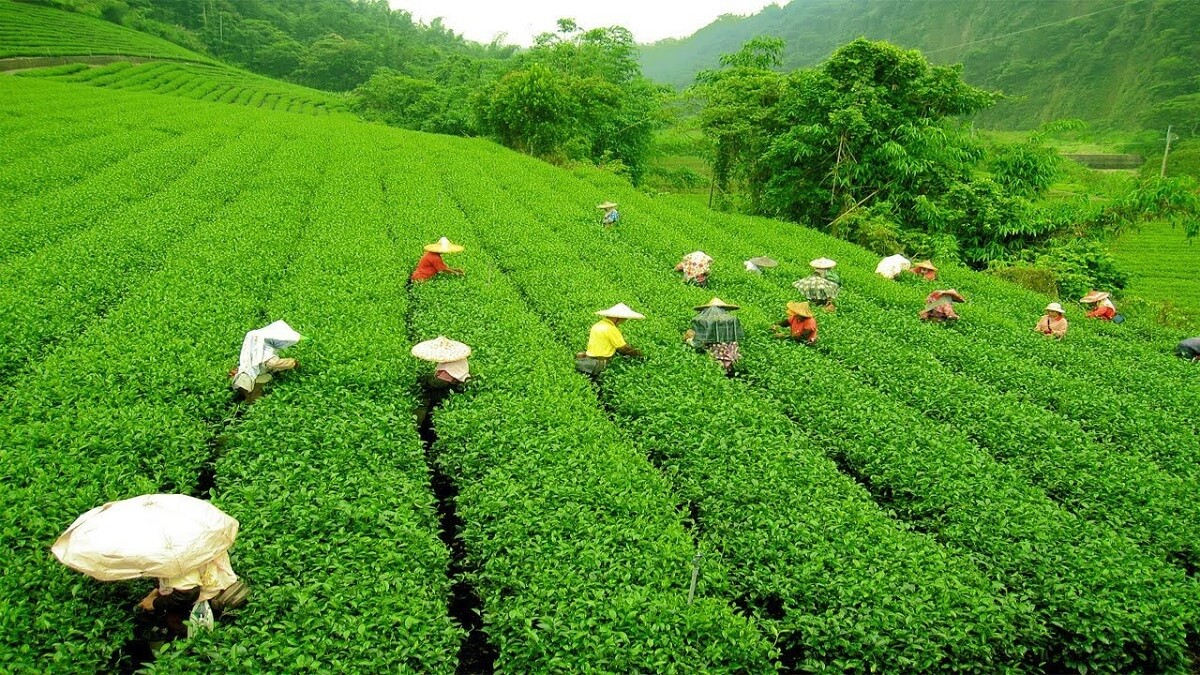
Few destinations are as strongly associated with tea as Darjeeling.
Tea estates spread across steep slopes surrounding the town, and September is an excellent time to appreciate just how green these plantations can become.
A tea-garden visit gives you the opportunity to learn about:
- Different tea varieties
- Plucking techniques
- Processing stages
- Orthodox tea production
- The influence of altitude and climate
- Tea grading and tasting
Depending on the estate and seasonal activity, visitors may also see workers in the plantations or processing areas.
Rather than simply buying packaged tea from a shop, a guided tasting helps you understand why Darjeeling tea varies so much in aroma, appearance and flavor.
EaseIndiaTrip also lists longer Darjeeling tea estate itineraries among its West Bengal tour options, so readers who are especially interested in tea culture can be directed toward a deeper plantation-based experience.
5. Walk Around Chowrasta and Mall Road
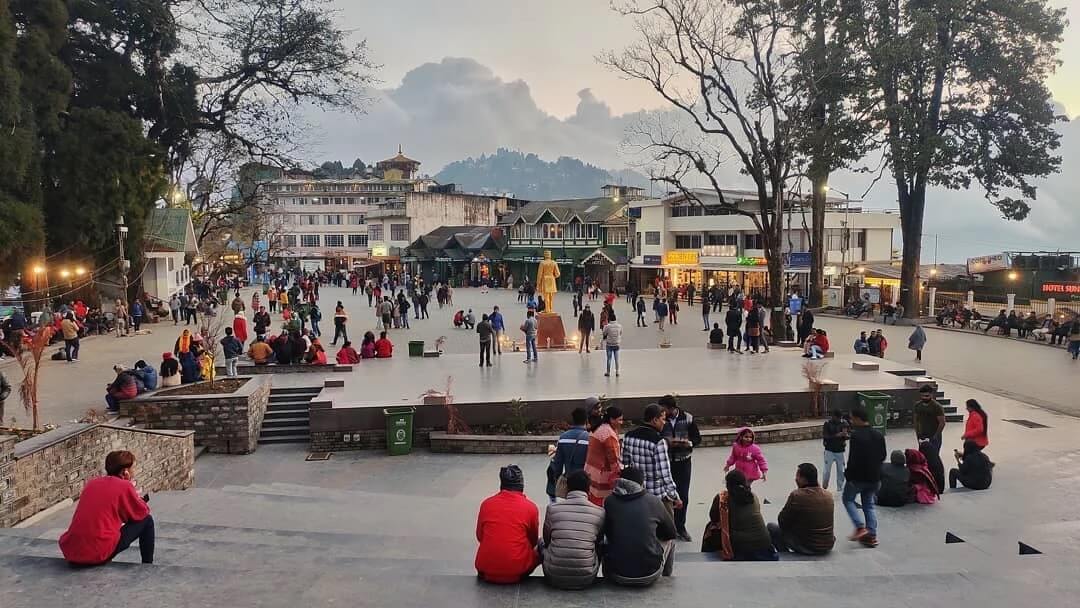
After sightseeing, spend an unhurried evening around Chowrasta, one of Darjeeling’s most enjoyable public spaces.
The pedestrian-friendly area is surrounded by shops, restaurants, cafés and mountain views.
September evenings can be cool and misty, which makes the area especially pleasant for sitting with a cup of hot tea.
You can browse for:
- Darjeeling tea
- Woollen clothing
- Local handicrafts
- Tibetan souvenirs
- Books
- Handmade accessories
- Local food products
Instead of rushing through Chowrasta as another sightseeing stop, allow at least an hour to simply walk around and absorb the atmosphere.
Explore Itinerary for West Bengal:
- 3 Days Darjeeling Tour Package
- 5 Days Darjeeling & Mirik Tour Package
- 6 Days Darjeeling, Kalimpong & Gangtok Tour
- 10 Days Darjeeling Tea Garden & Heritage Tour
6. Visit Padmaja Naidu Himalayan Zoological Park
The Padmaja Naidu Himalayan Zoological Park focuses on wildlife adapted to high-altitude Himalayan environments.
Its best-known residents include red pandas and snow leopards, while other Himalayan species are also represented.
The zoo is especially interesting for families, wildlife lovers and travelers visiting the Himalayas for the first time.
EaseIndiaTrip’s Darjeeling attraction guide includes the zoo among the town’s important places to see, highlighting its Himalayan wildlife conservation role.
September’s cooler conditions can make walking through the complex comfortable, although you should carry rain protection.
7. Explore the Himalayan Mountaineering Institute
Located beside the zoo, the Himalayan Mountaineering Institute, or HMI, tells the story of Himalayan exploration and Indian mountaineering.
The institute has a strong connection with legendary mountaineer Tenzing Norgay, who reached the summit of Mount Everest with Edmund Hillary in 1953.
Inside the museum, visitors can learn about:
- Historic Himalayan expeditions
- Mountaineering equipment
- Everest exploration
- High-altitude climbing
- Important Indian mountaineers
Combining HMI with the zoo is practical because the two attractions are situated together.
Plan roughly two to three hours for both.
8. Find Peace at the Japanese Temple and Peace Pagoda
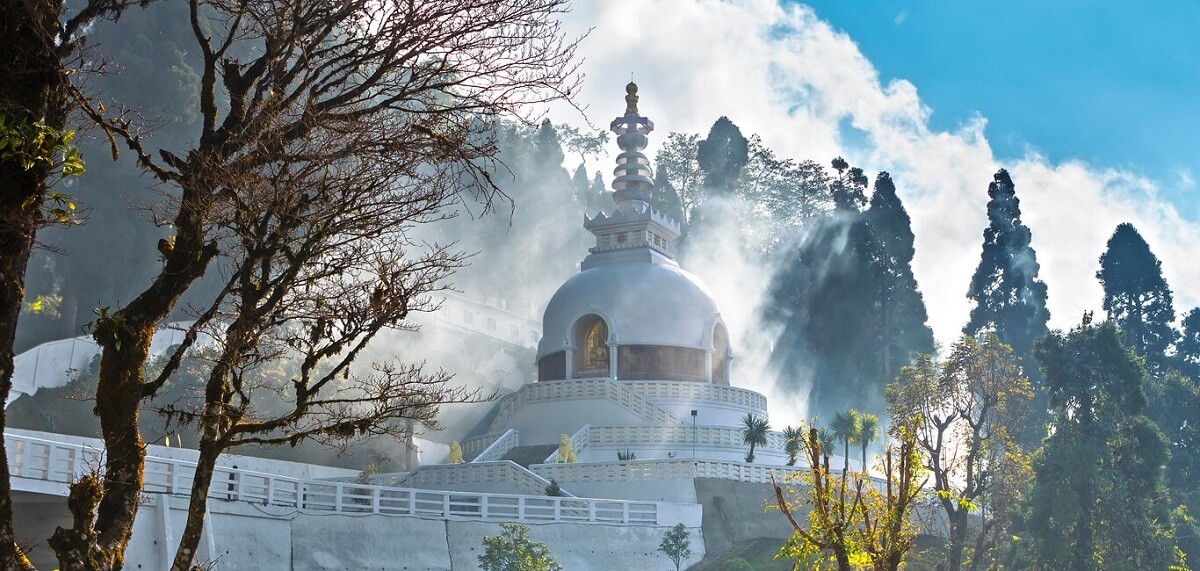
Darjeeling’s Japanese Peace Pagoda offers a quieter experience than many of the town’s busy viewpoints.
The white pagoda stands against forested Himalayan slopes and symbolizes peace and harmony.
Nearby is the Japanese Buddhist temple, where visitors can experience a calm spiritual atmosphere.
September fog can actually enhance the setting. When mist moves between the pine trees and surrounding hills, the pagoda feels particularly peaceful.
Visit early in the morning if you prefer fewer visitors.
9. Explore Ghoom Monastery
Located near Ghoom, Yiga Choeling Monastery, commonly known as Ghoom Monastery, is among the best-known Buddhist monasteries around Darjeeling.
Its prayer wheels, traditional architecture and religious artwork introduce visitors to the strong Himalayan Buddhist influence found throughout the region.
Because Ghoom lies on the route between Tiger Hill and Darjeeling, it is easy to combine with sunrise sightseeing.
Remember that this is an active place of worship rather than simply a tourist attraction. Speak quietly, follow photography rules and dress respectfully.
10. Take the Darjeeling Ropeway
For a different perspective over Darjeeling’s tea-covered valleys, ride the Darjeeling Ropeway.
The cable-car journey descends from the higher parts of town toward the Rangeet Valley, passing above forested slopes and tea gardens.
When the weather is clear, the views are spectacular.
September makes ropeway planning somewhat weather-dependent. Fog may reduce visibility, while strong rain or operational conditions can affect services.
Do not schedule it too rigidly. Instead, keep it as a flexible activity for the clearest part of your sightseeing day.
11. Visit Happy Valley Tea Estate
For travelers who do not have time to stay overnight at a plantation, Happy Valley Tea Estate offers a convenient introduction to Darjeeling tea culture close to town.
The plantation covers rolling slopes below Darjeeling, producing the terraced landscapes that many visitors associate with the region.
A guided visit may include explanations of tea leaves, plucking, processing and tasting.
September’s intense greenery makes the estate especially photogenic.
Wear footwear with good grip because plantation paths can remain wet after rain.
12. Discover the Rock Garden
Darjeeling’s Rock Garden, also known as Barbotey Rock Garden, is set on a hillside below the main town.
The drive itself is scenic, passing winding mountain roads and tea-covered slopes.
The garden is arranged around cascades, paths and landscaped terraces.
September is one of the best months for seeing the water features with good flow because of the recent monsoon rains.
However, road conditions matter. Check locally before driving down if there has been heavy rain.
13. Enjoy Local Darjeeling Food
Darjeeling’s food reflects Nepali, Tibetan, Bengali and Himalayan influences.
September’s cool, damp weather makes hot mountain dishes particularly satisfying.
Try:
Momos
Steamed or fried dumplings filled with vegetables, chicken or other ingredients.
Thukpa
A comforting noodle soup with vegetables or meat.
Nepali thali
A complete meal generally served with rice, dal, vegetables, pickles and other accompaniments.
Aloo dum
A spicy potato preparation popular across the region.
Sel roti
A traditional ring-shaped rice bread associated with Nepali cuisine.
Darjeeling tea
Try tea from different flushes and estates rather than ordering only generic milk tea.
Local bakeries and old-style cafés also remain an important part of Darjeeling’s character.
14. Take a Day Trip to Mirik
If you have more than three days in Darjeeling, consider visiting Mirik.
The town is centered around Sumendu Lake and surrounded by forests, orange-growing areas and tea estates.
The journey itself is attractive, with mountain roads passing plantations and small settlements.
A typical day can include:
- Mirik Lake
- Lakeside walking
- Tea-garden stops
- Local viewpoints
- Mountain cafés
A combined Darjeeling and Mirik itinerary works especially well for travelers who prefer a slower hill-station holiday rather than packing every day with sightseeing.
EaseIndiaTrip lists dedicated Mirik and Darjeeling tour routes among its West Bengal packages, providing a natural internal link for readers considering this combination.
15. Visit Kurseong
Another worthwhile addition is Kurseong, located between the plains and Darjeeling.
The town is quieter and less busy than Darjeeling and is surrounded by tea plantations and forested hills.
You can explore:
- Tea gardens
- Eagle’s Crag viewpoint
- Heritage railway surroundings
- Local markets
- Quiet hill roads
EaseIndiaTrip has a dedicated 3 Nights 4 Days Kurseong and Darjeeling Tour Package, combining both destinations in a short Himalayan itinerary.
Kurseong can be visited as part of your arrival or departure route rather than requiring a separate long detour.
16. Take a Day Trip to Kalimpong
Travelers with five or six days can combine Darjeeling with Kalimpong.
Kalimpong offers a noticeably different atmosphere, with Buddhist monasteries, flower nurseries, viewpoints and views toward the Teesta Valley.
Highlights include:
- Deolo Hill
- Buddhist monasteries
- Flower nurseries
- Local markets
- Himalayan viewpoints
- Colonial-era buildings
The journey between Darjeeling and Kalimpong is roughly 50 km and passes scenic mountain landscapes, although travel time depends heavily on road and weather conditions. EaseIndiaTrip’s route guide specifically notes that July through September can bring rain-related road disruption, so flexibility is important.
For more planning information, readers can explore EaseIndiaTrip’s guide to things to do in Kalimpong.
17. Combine Darjeeling with Gangtok
One of the most popular ways to extend a Darjeeling holiday is to continue into Gangtok in Sikkim.
Darjeeling and Gangtok offer quite different experiences.
Darjeeling is strongly associated with tea gardens, colonial heritage and the Toy Train, while Gangtok is known for monasteries, mountain roads, MG Marg and excursions toward higher-altitude destinations.
EaseIndiaTrip has a detailed Darjeeling vs Gangtok comparison for travelers deciding whether to visit one or combine both.
For a short combined holiday, the site’s 4 Days Gangtok and Darjeeling Tour Package follows an NJP–Gangtok–Darjeeling–NJP route.
If you have more time, the 7 Days Darjeeling Gangtok Tour Package adds Gangtok sightseeing, Tsomgo Lake and Namchi.
Suggested 4-Day Darjeeling Itinerary for September:
A four-day stay gives you enough flexibility for variable September weather.
Day 1: Arrival and Darjeeling Town
Arrive from Bagdogra Airport or NJP Railway Station.
After checking in:
- Walk around Chowrasta
- Explore Mall Road
- Visit local tea shops
- Have dinner at a local Himalayan restaurant
Keep your arrival day relaxed because mountain-road journeys can take longer during rainy weather.
Day 2: Tiger Hill and Classic Darjeeling Sightseeing
Start before sunrise.
Visit:
- Tiger Hill
- Ghoom Monastery
- Batasia Loop
After breakfast continue to:
- Himalayan Mountaineering Institute
- Padmaja Naidu Himalayan Zoological Park
- Happy Valley Tea Estate
Finish the evening at Chowrasta.
Day 3: Toy Train and Cultural Darjeeling
Take a Toy Train joy ride if operating.
Later visit:
- Japanese Temple
- Peace Pagoda
- Darjeeling Ropeway, weather permitting
- Local markets
End your day with tea or dinner overlooking the hills.
Day 4: Mirik, Kurseong or Kalimpong
Choose one excursion depending on weather and your onward route.
Mirik works well for lakes and scenic countryside.
Kurseong is convenient if traveling back toward Bagdogra or NJP.
Kalimpong is better if you want monasteries, viewpoints and a longer Himalayan road journey.
How to Reach Darjeeling in September:
By Air
Bagdogra Airport is the main airport serving Darjeeling.
The journey from Bagdogra to Darjeeling generally takes several hours by road, depending on traffic, route conditions and weather.
By Train
New Jalpaiguri Railway Station, commonly called NJP, is the primary long-distance railway gateway.
From NJP, travelers usually continue by private taxi or shared vehicle.
By Road
Darjeeling is connected with Siliguri, Kalimpong, Gangtok, Kurseong and nearby hill towns by mountain roads.
During September, always allow extra journey time.
Heavy rainfall can occasionally cause:
- Landslides
- Road repairs
- Traffic delays
- Temporary route diversions
Avoid scheduling an important flight immediately after a long mountain transfer. Keeping a reasonable buffer is much safer.
What to Pack for Darjeeling in September
Packing correctly can make a big difference during a September trip.
Bring:
- Lightweight waterproof jacket
- Small umbrella
- Comfortable walking shoes with good grip
- Extra socks
- Light sweater or fleece
- Quick-drying trousers
- Small waterproof day bag
- Power bank
- Reusable water bottle
- Basic medicines
- Sunscreen
- Sunglasses
A heavy winter jacket is usually unnecessary, but evenings can feel chilly after rain.
Avoid relying on completely open footwear because streets and pathways may remain slippery.
Is September Safe for Visiting Darjeeling?
Darjeeling remains open to tourism in September, but travelers should respect monsoon conditions.
The main concern is not sightseeing inside town but road disruption caused by prolonged rainfall.
Before long day trips:
- Ask your hotel about road conditions.
- Check the weather forecast.
- Avoid unnecessary late-night mountain driving.
- Keep one flexible day in longer itineraries.
- Follow local advice during heavy rain.
This is particularly important when traveling between Darjeeling, Gangtok and Kalimpong.
Early September vs Late September
If your dates are flexible, the timing within the month matters.
Early September
Expect:
- More frequent rain
- More cloud cover
- Very green landscapes
- Fewer tourists
- Lower chances of consistent mountain views
Mid-September
Conditions gradually begin improving.
You may experience alternating rainy and clearer days.
Late September
Often the most attractive part of the month.
You may get:
- Better mountain visibility
- Less frequent rain
- Fresh post-monsoon landscapes
- Comfortable temperatures
- Increasing tourist activity before October
Travelers whose priority is photography and Himalayan views may therefore prefer the final ten days of September.
Is Darjeeling Worth Visiting in September?
Yes, provided you understand what September offers.
Do not visit expecting uninterrupted blue skies every day.
Instead, choose September for:
- Deep green tea gardens
- Mist-covered valleys
- Active waterfalls
- Cooler sightseeing weather
- Fewer peak-season crowds
- Atmospheric Toy Train rides
- Tea experiences
- Cultural sightseeing
- The possibility of clearer Himalayan views toward the end of the month
Travelers who absolutely require guaranteed mountain visibility may prefer October or November.
But those who enjoy dramatic weather and lush landscapes often find September especially memorable.
Responsible Travel Tips for Darjeeling
Mountain environments are sensitive, particularly during the monsoon.
Travel responsibly by:
- Carrying a reusable water bottle.
- Avoiding single-use plastic where possible.
- Never throwing rubbish from vehicles or viewpoints.
- Purchasing tea from reputable local producers.
- Respecting monastery rules.
- Asking permission before photographing local people.
- Using established walking trails.
- Supporting local guides, cafés and family-run businesses.
Small decisions help protect the landscapes that make Darjeeling special.
Final Thoughts
Darjeeling in September 2026 offers a softer, greener and more atmospheric version of one of India’s best-known hill stations.
This is the month when the monsoon gradually loosens its grip but leaves behind intensely green tea estates, flowing waterfalls, moss-covered forests and clean mountain air. Mist may hide Kanchenjunga one morning and reveal it dramatically the next.
Spend your days watching sunrise from Tiger Hill, riding the historic Toy Train, walking through tea estates, exploring Buddhist monasteries, learning about Himalayan mountaineering and relaxing around Chowrasta with a cup of authentic Darjeeling tea.
With extra time, extend your journey to Mirik, Kurseong, Kalimpong or Gangtok.
The key to enjoying Darjeeling in September is flexibility. Keep enough time in your itinerary, avoid tightly scheduled mountain transfers and accept that weather will occasionally decide the day’s plan for you.
For travelers who enjoy cool temperatures, green scenery, tea culture, mountain heritage and fewer crowds, September can be one of the most interesting months to experience Darjeeling.
You can also browse the EaseIndiaTrip travel blog for more West Bengal, Himalayan and India travel guides, or explore India tour packages when planning a longer journey.
- Why Visit Darjeeling in July 2027? Weather & Travel Guide
- Darjeeling February 2027: Best Places, Weather & Tips
- Best Things to Do in Darjeeling in October 2026
- Darjeeling in August 2027: Best Places and Travel Tips
- How to Travel from Darjeeling to Kalimpong
- How to Reach Darjeeling from Patna: Complete Guide
- How to Reach Darjeeling from Kolkata: Travel Guide
- Darjeeling Himalayan Railway: Complete Toy Train Guide
- 10 Best Tourist Attractions in Darjeeling for Your Trip
Frequently Asked Questions About Darjeeling in September 2026
1. Is September a good time to visit Darjeeling?
Yes. September is good for travelers who enjoy green landscapes, misty hills, moderate temperatures and fewer crowds. Rain remains possible, particularly during the first half of the month.
2. Does it rain in Darjeeling in September?
Yes. September is a transitional month between the main monsoon and autumn seasons. Rainfall generally becomes less persistent as the month progresses, but showers can still occur.
3. Can we see Kanchenjunga in September?
It is possible, especially during clearer mornings and toward late September. However, clouds can obstruct mountain views, so visibility cannot be guaranteed.
4. Is the Darjeeling Toy Train available in September?
Services generally operate according to scheduled railway operations, but weather, maintenance or local conditions can occasionally affect services. Check current availability before traveling.
5. What clothes should I wear in Darjeeling in September?
Carry layered clothing, a light sweater, waterproof jacket, umbrella and comfortable shoes with good grip. Heavy winter clothing is usually unnecessary.
6. How many days are enough for Darjeeling?
Three nights and four days works well for first-time visitors. Five or six days are better if you also want to explore Mirik, Kurseong, Kalimpong or Gangtok.
7. Which is better in September, Darjeeling or Gangtok?
Both are attractive but still affected by late-monsoon weather. Darjeeling is ideal for tea gardens, Toy Train experiences and colonial hill-station character, while Gangtok offers monasteries, Sikkimese culture and high-altitude excursions when road conditions permit.