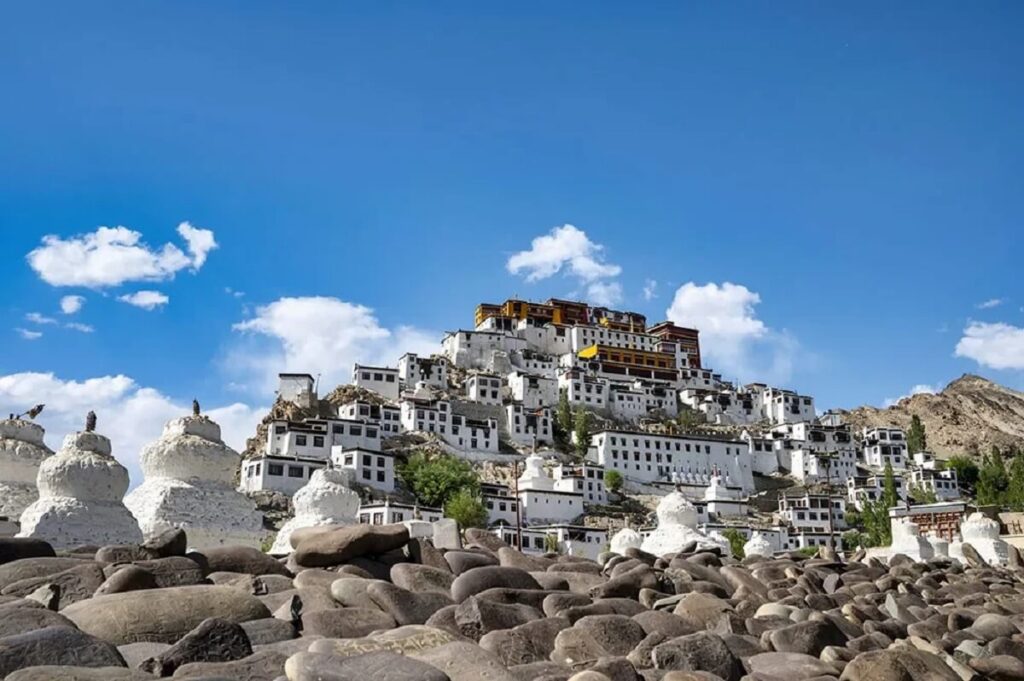
Set against the dramatic backdrop of the Himalayas, Thiksey Monastery is one of the most visually striking and spiritually enriching monasteries in Ladakh. Located about 19 km from Leh, this iconic monastery stands gracefully on a hill, overlooking the vast Indus Valley.
Often compared to the legendary Potala Palace, Thiksey Monastery captivates visitors with its layered architecture, peaceful environment, and deep-rooted Buddhist traditions. Whether you are a traveler, photographer, or spiritual seeker, this monastery offers a complete Himalayan experience.
This comprehensive guide covers everything you need to know—from history and architecture to travel tips, festivals, and nearby attractions.
Key Facts About Thiksey Monastery
- Location: Thiksey Village, Ladakh
- Distance from Leh: ~19 km
- Altitude: ~3,600 meters (11,800 ft)
- Founded: 1433
- Sect: Gelug (Yellow Hat school of Tibetan Buddhism)
- Levels: 12-storey complex
- Famous For: Maitreya Buddha statue, panoramic views, morning prayers
- Best Time to Visit: May to September
Thiksey is considered the largest monastery in central Ladakh, housing more than 100 monks and serving as a key center for Buddhist learning.
History of Thiksey Monastery:
Origins and Foundation
The origins of Thiksey Monastery date back to the 15th century. It was founded by Jangsem Sherab Zangpo, a disciple of Je Tsongkhapa, who established the Gelug sect of Tibetan Buddhism.
Initially, a smaller monastery known as Lhakhang Serpo (Yellow Temple) was built. Over time, it expanded into a grand multi-level complex that we see today.
Legend Behind the Location
According to local folklore, monks were searching for the perfect place to build the monastery. A sacred offering cake was carried away by a crow and placed on a hilltop. Interpreting this as a divine sign, the monks constructed the monastery at that very spot. The name “Thiksey” translates to “perfectly arranged” or “in perfect order.”
Royal Patronage
The monastery flourished under the patronage of the Ladakhi royal family, especially the Namgyal dynasty, which helped establish it as a major religious and cultural center in Ladakh.
Architecture of Thiksey Monastery
A Mini Potala Palace in Ladakh
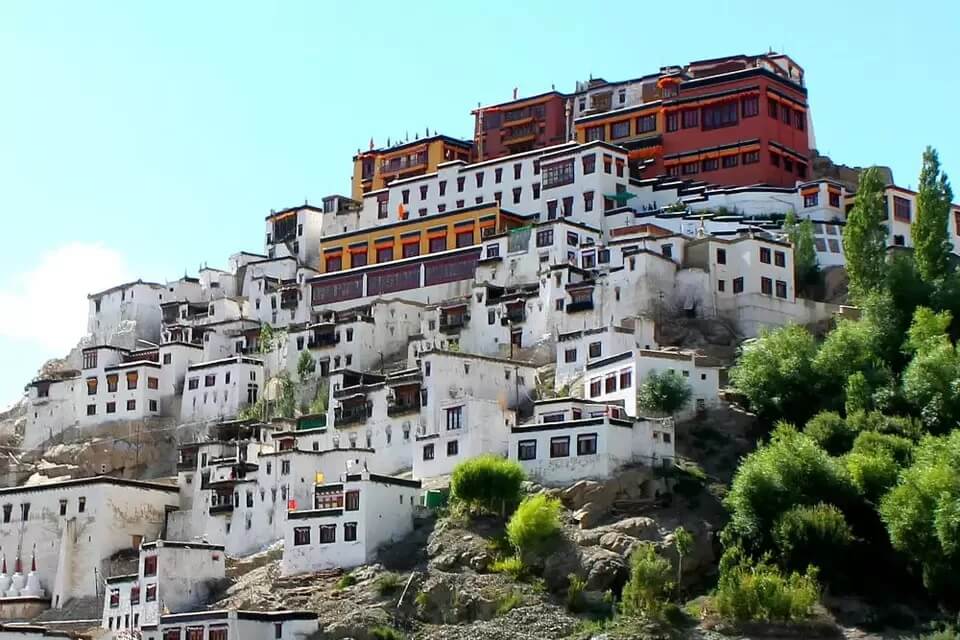
The architecture of Thiksey Monastery is one of its most fascinating features. Built in traditional Tibetan style, the monastery is spread across a hill in a tiered formation of 12 levels.
Key Architectural Highlights:
- Whitewashed residential quarters
- Red and ochre monastery buildings
- Narrow alleys and stairways
- Courtyards and prayer halls
- Elevated temples at higher levels
The resemblance to the Potala Palace in Tibet makes it a must-visit for architecture enthusiasts and photographers.
Layout and Structure
The monastery complex includes:
- Around 10 temples
- Assembly halls (Dukhang)
- Monk residences
- A nunnery
- A library of ancient texts
- Prayer rooms and stupas
Every level of the monastery has a unique spiritual and cultural significance.
Main Attractions Inside Thiksey Monastery:
1. Maitreya Buddha Statue
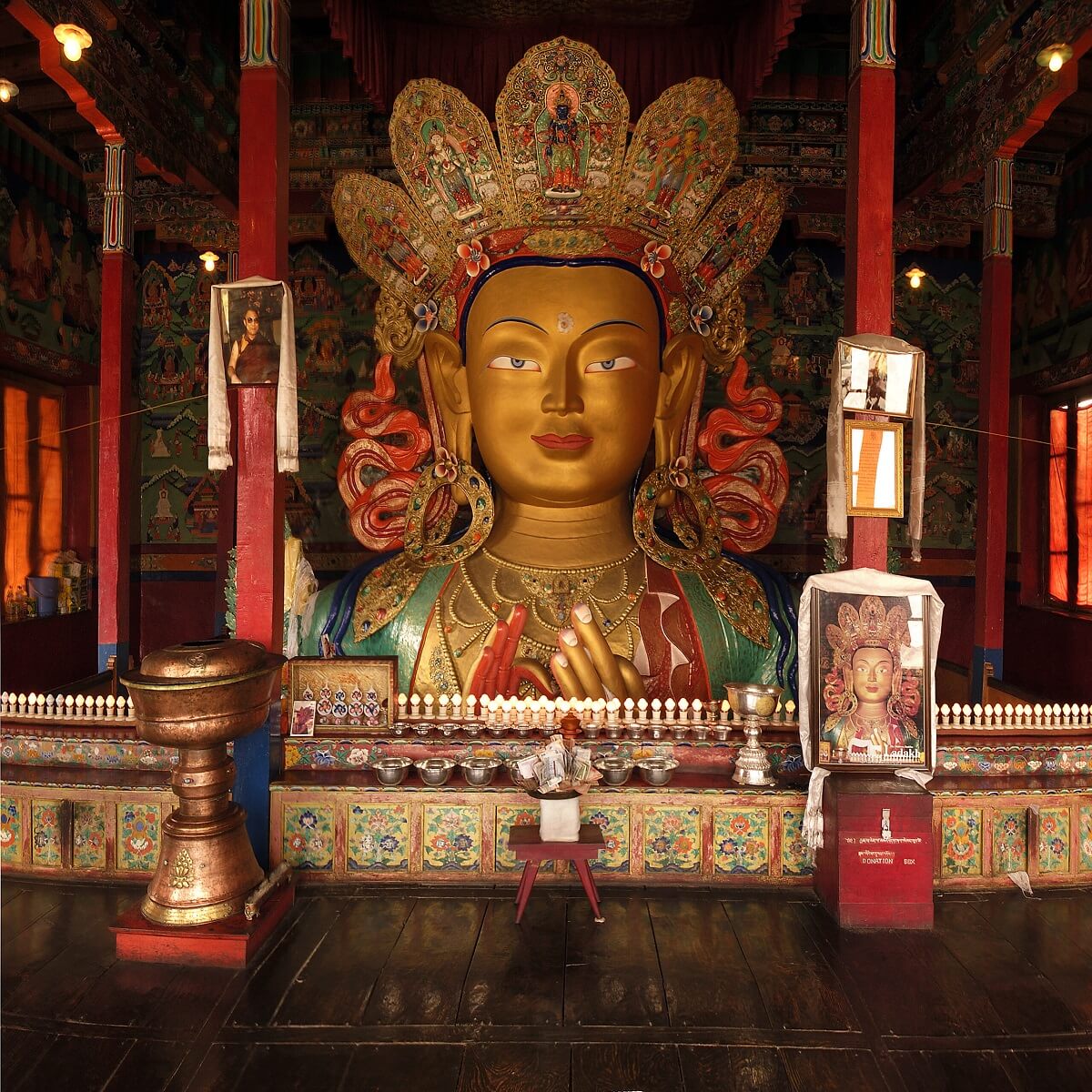
The most iconic and spiritually powerful attraction inside Thiksey Monastery is the magnificent statue of Maitreya Buddha. Standing at an impressive height of around 15 meters (49 feet), this statue dominates the monastery and is visible from a distance, symbolizing peace and divine presence.
What makes this statue truly remarkable is that it spans two floors of the monastery, allowing visitors to view it from different levels—one offering a close look at the serene facial expressions, while the other provides a full-body perspective.
Built in 1970 to honor the visit of the 14th Dalai Lama, the statue represents the future Buddha, believed to appear on Earth to restore harmony and enlightenment. The intricate craftsmanship, golden hues, and detailed ornamentation reflect the highest level of Ladakhi artistry.
The calm expression of the Buddha, along with the silent ambiance of the temple, creates a deeply meditative atmosphere, making it one of the most spiritually uplifting spaces in Ladakh.
2. Assembly Hall (Dukhang)
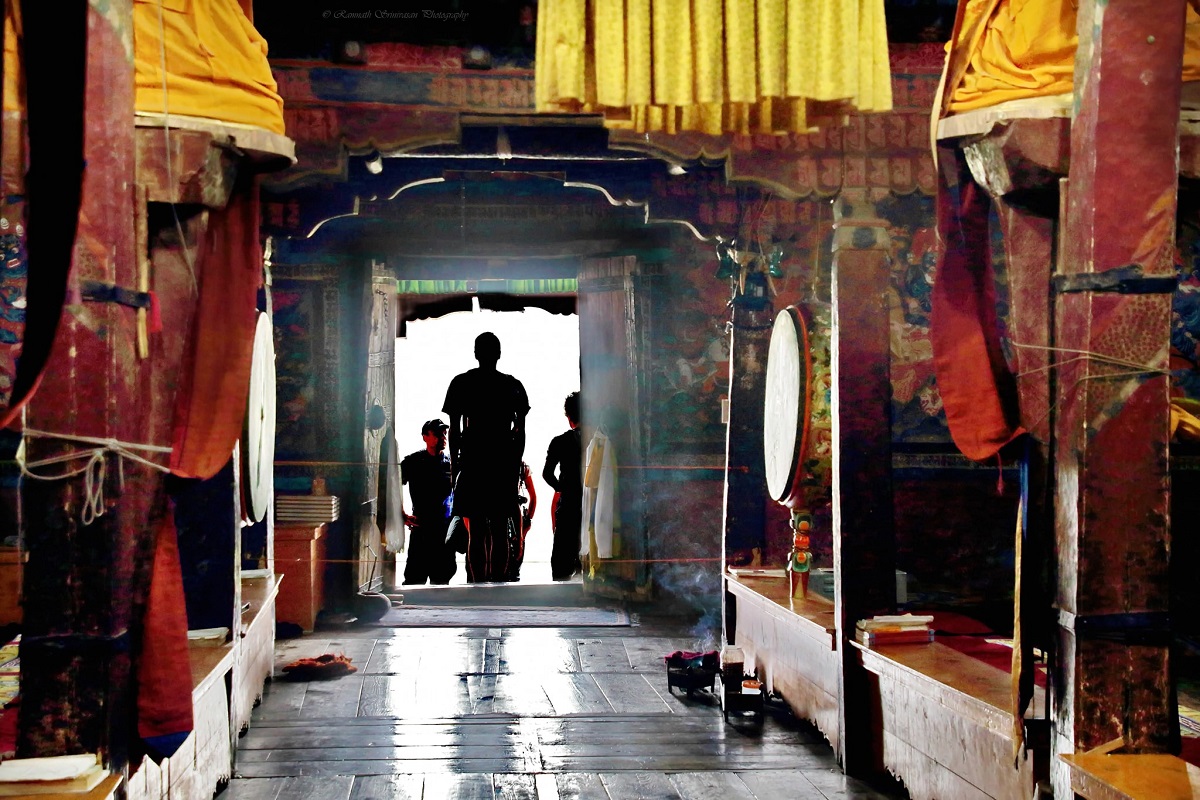
The Assembly Hall, locally known as the Dukhang, is considered the spiritual heart of Thiksey Monastery. This is where monks gather every day to perform prayers, rituals, and important religious ceremonies.
As you step inside, you are immediately surrounded by a sense of calm and devotion. The hall is beautifully adorned with:
- Ancient murals illustrating Buddhist teachings, life stories of Buddha, and symbolic deities
- Thangkas (traditional Tibetan paintings) hanging on walls, often depicting intricate spiritual themes
- Prayer wheels and sacred texts, used during rituals and chanting sessions
Large pillars, traditional carpets, and low seating arrangements for monks create an authentic monastic setting. During prayer time, the rhythmic chanting combined with the sound of horns and drums transforms the space into a deeply spiritual experience.
Visitors are usually allowed to observe quietly, making it one of the best places to witness living Buddhist traditions in Ladakh.
3. Tara Temple
The Tara Temple is dedicated to Goddess Tara, one of the most revered female deities in Buddhism. She is known as the protector and savior, symbolizing compassion, healing, and guidance.
Inside the temple, you will find 21 different forms of Tara, each representing a unique aspect of compassion and divine energy. These statues are beautifully crafted and often decorated with vibrant colors and intricate designs.
The temple’s peaceful atmosphere makes it a perfect place for quiet reflection and prayer. Many visitors find this shrine particularly calming due to its soft lighting, spiritual symbolism, and serene surroundings.
4. Lamokhang Temple
The Lamokhang Temple is one of the most sacred and restricted areas within the monastery. It is primarily used for private rituals and advanced spiritual practices.
This temple houses some of the most important Buddhist scriptures, including:
- Kangyur – the direct teachings and words of Buddha
- Tengyur – scholarly commentaries and interpretations
These texts are considered invaluable and are preserved with great care.
Traditionally, access to this temple may be limited, and in some cases, entry for women is restricted, as per long-standing monastic customs. Visitors are advised to respect these traditions and follow the guidelines provided by the monastery authorities.
Despite limited access, the Lamokhang Temple remains a vital part of Thiksey’s spiritual significance.
5. Monastery Library
The Monastery Library is a treasure trove of knowledge and history. It preserves centuries-old manuscripts, scriptures, and rare texts that are central to Buddhist philosophy and teachings.
The collection includes:
- Handwritten scriptures on traditional paper
- Illustrated religious texts
- Historical records related to Ladakh and Tibetan Buddhism
Many of these documents are fragile and carefully maintained, reflecting the monastery’s role as a center of learning.
For those interested in religion, history, or ancient literature, this library offers a fascinating glimpse into the intellectual heritage of Himalayan Buddhism.
6. Rooftop Views
One of the most rewarding experiences at Thiksey Monastery is climbing to its uppermost levels, where you are greeted with breathtaking panoramic views.
From the rooftop, you can witness:
- The vast and serene Indus Valley
- Snow-covered Himalayan peaks stretching across the horizon
- Traditional Ladakhi villages scattered below
- Endless blue skies and dramatic landscapes
This viewpoint is especially magical during sunrise and sunset, when the golden light bathes the monastery and surrounding valley.
For photographers and nature lovers, this is undoubtedly one of the best viewpoints near Leh, offering unforgettable scenery and a peaceful escape from the crowds.
Handpicked Leh Ladakh Holiday Packages:
- Leh Ladakh Short Escape – 4 Nights / 5 Days
- Classic Ladakh Tour Package – 5 Nights / 6 Days
- Leh Ladakh Explorer Tour – 6 Nights / 7 Days
- Manali to Leh Road Trip via Jispa – 7 Nights / 8 Days
- Manali to Ladakh Adventure Tour – 9 Nights / 10 Days
- Kashmir with Ladakh Tour Package – 9 Nights / 10 Days
- Leh, Kargil, Nubra & Pangong Tour – 8 Nights / 9 Days
- Kashmir and Ladakh Grand Journey – 9 Nights / 10 Days
Spiritual Experience at Thiksey Monastery:
Morning Prayer Ceremony
Attending the morning prayers at Thiksey Monastery is a deeply moving experience.
What You’ll Witness:
- Rhythmic chanting of Buddhist scriptures
- Use of traditional instruments like horns and drums
- A calm, meditative environment
The ceremony usually begins around 7:00 AM and offers a rare glimpse into monastic life.
Festivals at Thiksey Monastery:
Thiksey Gustor Festival
The Thiksey Gustor Festival is the most important festival celebrated here.
Key Highlights:
- Cham (masked) dances
- Ritual offerings
- Cultural performances
- Local gatherings
Held annually (usually October–November), the festival symbolizes the victory of good over evil and attracts visitors from across the world.
Best Time to Visit Thiksey Monastery:
Summer (May to September)
- Pleasant weather
- Clear skies
- Ideal for sightseeing
Autumn (October)
- Festival season
- Fewer crowds
Winter (November to April)
- Snow-covered landscapes
- Limited accessibility
The best time overall is May to September, when Ladakh is fully accessible.
How to Reach Thiksey Monastery:
By Air
- Nearest airport: Kushok Bakula Rimpochee Airport (Leh)
- Regular flights from Delhi and other major cities
By Road
- Well-connected via Leh–Manali Highway
- Taxis and bikes easily available from Leh
By Train
- Nearest railway station: Jammu Tawi (~700 km away)
Things to Do at Thiksey Monastery:
1. Attend Morning Prayers
One of the most enriching experiences at Thiksey Monastery is attending the early morning prayer ceremony, usually held around 7:00 AM.
As you enter the prayer hall, you are immediately immersed in a deeply spiritual environment. Monks dressed in traditional robes sit in rows, chanting ancient Buddhist scriptures in a rhythmic, almost hypnotic tone. The sound of long horns, cymbals, and drums fills the hall, creating a powerful sensory experience.
This is not just a ritual—it’s a window into the daily life of monks and the living traditions of Tibetan Buddhism. Visitors are welcome to observe quietly, and many find the experience calming and transformative.
Tip: Arrive early, sit respectfully, and maintain silence to fully absorb the atmosphere.
2. Explore Temples and Artwork
Thiksey Monastery is not just a single structure—it is a multi-level complex of temples, shrines, and sacred rooms, each offering something unique.
As you move through the monastery, you will discover:
- Beautifully painted murals depicting the life of Buddha, cosmic diagrams, and spiritual symbols
- Thangka paintings, rich in color and detail, narrating Buddhist teachings
- Sacred statues and altars, each with symbolic meaning
Every room tells a story, and the deeper you explore, the more layers of history and spirituality you uncover. Take your time to walk slowly through corridors and stairways, as the monastery reveals itself gradually.
3. Capture Stunning Photographs
For photography enthusiasts, Thiksey Monastery is a dream destination. From its dramatic hilltop location to its intricate interiors, every corner offers a perfect frame.
Best photography opportunities include:
- Sunrise shots with golden light illuminating the monastery
- Panoramic views of the Indus Valley
- Close-ups of murals, statues, and prayer wheels
- Monks in prayer (capture respectfully and without disturbance)
The contrast between the stark Himalayan landscape and the vibrant monastery colors creates striking visuals.
Tip: Early morning and late afternoon are ideal for soft lighting and fewer crowds.
4. Interact with Monks
A visit to Thiksey Monastery also offers a chance to connect with the monastic community.
While monks maintain a disciplined lifestyle, many are open to polite interaction, especially outside prayer times. You may observe:
- Young monks studying or playing in courtyards
- Senior monks engaged in daily routines
- Friendly exchanges that offer insight into their way of life
These interactions can be simple yet meaningful—sometimes even a smile or greeting is enough to create a memorable moment.
Note: Always be respectful, avoid interrupting rituals, and ask permission before taking close-up photographs.
5. Enjoy Peaceful Meditation
Amid the silence of the mountains, Thiksey Monastery provides an ideal setting for quiet reflection and meditation.
Find a peaceful corner—whether inside a temple, near a courtyard, or overlooking the valley—and simply sit in stillness. The combination of:
- Fresh mountain air
- Soft chanting sounds in the distance
- Expansive Himalayan views
creates a naturally calming environment.
Even a few minutes of silence here can feel deeply refreshing, making it one of the most rewarding experiences for travelers seeking inner peace.
Entry Fee & Timings:
Visiting Thiksey Monastery is quite simple and budget-friendly, making it accessible for all types of travelers.
Entry Fee
- ₹30 to ₹50 per person (approx.)
The fee is nominal and helps in the maintenance of the monastery, preservation of ancient artwork, and support of the resident monks.
Timings
- Open Daily: 7:00 AM to 7:00 PM
The monastery remains open throughout the day, but your experience can vary depending on the time you visit.
Best Time to Visit:
- Early Morning (7:00 AM – 9:00 AM): Ideal for attending prayer ceremonies and enjoying a peaceful atmosphere
- Late Afternoon (4:30 PM – 6:30 PM): Perfect for photography, especially during golden hour
Tip: Try to avoid mid-day hours if you prefer fewer crowds and a quieter experience.
Nearby Attractions Around Thiksey Monastery:
1. Shey Palace
Located just a few kilometers from Thiksey, Shey Palace was once the summer capital of Ladakh’s royal family. Though now partly in ruins, it still holds immense historical and cultural value.
Highlights:
- A giant copper-gilded Buddha statue, one of the largest in Ladakh
- Panoramic views of the Indus Valley
- Ancient palace ruins with a royal legacy
This site offers a perfect mix of history, spirituality, and scenic beauty, making it a great stop on your Ladakh itinerary.
2. Hemis Monastery
About 40 km from Leh, Hemis Monastery is the largest and wealthiest monastery in Ladakh and a major center of Tibetan Buddhism.
Why Visit:
- Famous for the Hemis Festival, featuring vibrant mask dances (Cham)
- Rich collection of ancient relics, thangkas, and artifacts
- Beautiful setting surrounded by mountains
It offers a deeper insight into Ladakh’s religious traditions and is a must-visit for culture lovers.
3. Stakna Monastery
Perched dramatically on a hill resembling a tiger’s nose, Stakna Monastery is one of the most scenic monasteries near Leh.
Highlights:
- Stunning location overlooking the Indus River
- Peaceful and less crowded atmosphere
- Ideal for photography and quiet exploration
If you’re looking for a more serene and offbeat experience, Stakna Monastery is a perfect choice.
Travel Tips for Visiting Thiksey Monastery
- Arrive early for the best experience
- Dress modestly and respectfully
- Carry warm clothing (even in summer)
- Stay hydrated to avoid altitude sickness
- Avoid disturbing monks during prayers
Why You Should Visit Thiksey Monastery
Thiksey Monastery is more than just a sightseeing spot—it is a journey into the spiritual soul of Ladakh. From its majestic architecture and sacred rituals to its serene environment, it offers a complete Himalayan experience.
Conclusion
A visit to Thiksey Monastery is a highlight of any Ladakh itinerary. Whether you’re drawn by spirituality, architecture, or scenic beauty, this monastery promises an unforgettable experience.
From witnessing ancient rituals to soaking in panoramic views of the Himalayas, Thiksey Monastery truly captures the essence of Ladakh’s culture and charm.
Related Ladakh Travel Guides
- Zanskar Valley Ladakh: Complete Guide, Facts & Travel Tips
- Nubra Valley Travel Guide: Best Places, Facts & Tips
- Ladakh Trip Cost Guide: Budget, Transport, Stay & Food
- Ladakh Permit Guide: Rules, Documents & Restricted Areas
- Ladakh in May 2026: Weather, Roads & Travel Advice
- Apricot Blossom Festival in Ladakh: Places & Travel Tips
- Ladakh Silk Route Guide: History, Villages & Scenic Stops
- Ladakh in April: Weather, Temperature & Trip Planning
- Magnetic Hill Ladakh: Location, Mystery & Visitor Tips
- First-Time Ladakh Travel Guide: Routes, Tips & Itinerary
- Leh Ladakh in January 2027: Snow, Weather & Travel Tips
- Karakoram Sanctuary Travel Guide: Nubra, Shyok & Wildlife
- Pangong Lake Ladakh: Route, Best Time & Travel Tips
- Magnetic Hill Explained: Myth, Science & Travel Facts
- Shanti Stupa Leh Guide: History, Timings & Travel Tips
- How to Reach Ladakh: Best Routes by Air, Road & Bike
- AMS in Ladakh: Prevention Tips for Safe High-Altitude Travel
- Stok Kangri Trek Guide: Route, Altitude & Planning Tips
- Zoji La Pass Guide: Road Route, Weather & Travel Tips
- Ladakh in July 2026: Weather, Road Trips & Places to Visit
- Top Photo Spots in Ladakh for Instagram-Worthy Views
- Hemis Festival 2026: Dates, Events & Visitor Guide
- New Year in Leh Ladakh 2026: Weather, Snow & Travel Tips
- Ladakh Helicopter Services: Routes, Updates & Travel Info