
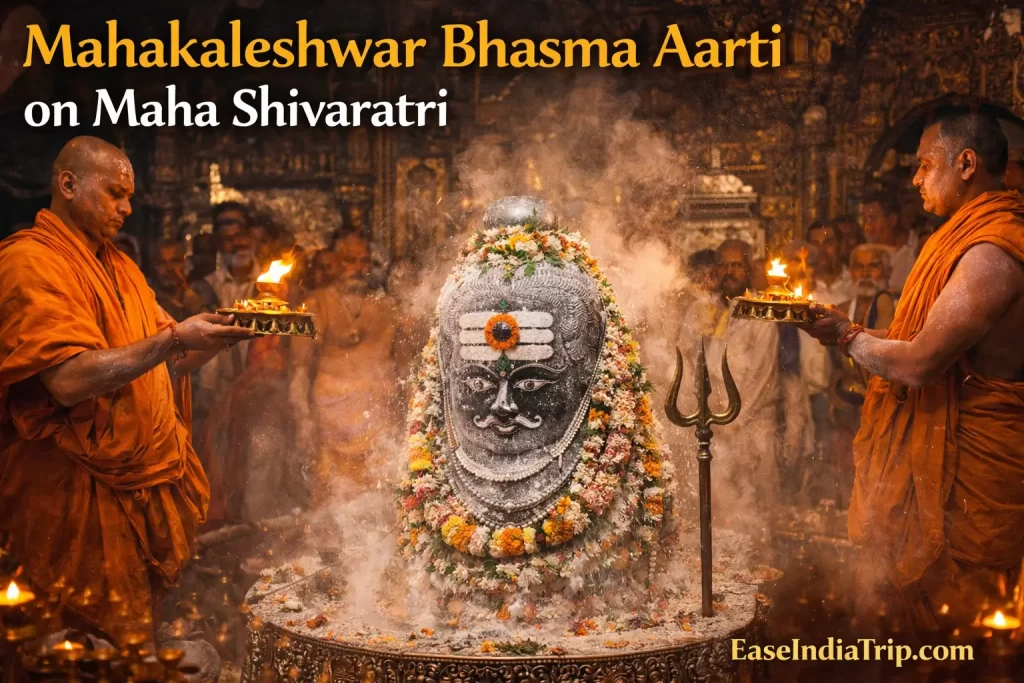
For many devotees, attending Bhasma Aarti on Maha Shivaratri is a once-in-a-lifetime experience. However, it is also one of the most challenging rituals to plan due to limited entry, strict rules, and heavy demand during Shivaratri.
This guide explains everything you need to know: what makes the Bhasma Aarti special, how to plan your visit during Maha Shivaratri, booking realities, dress code, crowd strategy, and how to combine Ujjain with nearby Jyotirlingas like Omkareshwar.
Before planning your visit, make sure you are clear about the festival date and Nishita Kaal timings: Maha Shivaratri: Date, Puja Timings & Fasting Rules.
Why Mahakaleshwar Is So Important on Maha Shivaratri
Mahakaleshwar is the only Jyotirlinga where Bhasma Aarti is performed daily. On Maha Shivaratri, this ritual carries even deeper significance, as it symbolises the core philosophy of Shiva: time, impermanence, and liberation.
Unlike festive celebrations in cities like Varanasi, Ujjain’s Shivaratri energy is more ritual-centric and inward-looking. Devotees arrive not for spectacle, but for a deeply traditional form of worship that has continued for centuries.
If you want to understand the complete set of rituals and temple traditions, read this detailed guide: Mahakaleshwar Jyotirlinga Darshan & Rituals Guide.
What Is Bhasma Aarti and Why It Is Unique
Bhasma Aarti is performed in the early hours before dawn, traditionally between 3:00 AM and 5:00 AM. The Shiva Lingam is bathed, adorned, and worshipped using sacred ash, symbolising the ultimate truth that everything returns to ash.
Key Highlights of Bhasma Aarti
- Performed only at Mahakaleshwar Temple
- Takes place before sunrise
- Strict dress code and entry rules
- Extremely limited daily attendance
On Maha Shivaratri, the demand for Bhasma Aarti is exceptionally high, and entry becomes even more restricted.
Bhasma Aarti Timings on Maha Shivaratri
On Maha Shivaratri, Mahakaleshwar Temple remains active throughout the night with special abhishekams and darshan arrangements.
- Bhasma Aarti: Early morning (approx. 3:00 AM – 5:00 AM)
- Nishita Kaal Worship: Around midnight (temple-specific arrangements)
- Continuous Darshan: Throughout the night with crowd control slots
Important: Exact timings may vary based on temple administration decisions for crowd management during Maha Shivaratri.
Bhasma Aarti Booking Reality During Maha Shivaratri
This is the most important section to read carefully.
Is Online Booking Guaranteed?
No. During Maha Shivaratri, online slots are extremely limited and often get fully booked weeks in advance. Even regular daily booking systems may be modified due to festival crowd protocols.
What You Should Realistically Expect
- High competition for limited entry passes
- Priority often given to administrative and temple-managed lists
- Long waiting hours even after securing entry
Practical advice: If Bhasma Aarti is your main goal, plan your Ujjain stay with flexibility and buffer days.
Dress Code and Entry Rules for Bhasma Aarti
Mahakaleshwar Temple follows one of the strictest dress codes in India for Bhasma Aarti.
For Men
- Traditional dhoti (bare upper body)
- No stitched garments allowed
For Women
- Saree or salwar-kameez with dupatta
- Modest, traditional attire only
No exceptions are made, especially during Maha Shivaratri.
If You Cannot Attend Bhasma Aarti: Alternative Darshan Options
Many devotees do not get access to Bhasma Aarti during Shivaratri. That does not mean the trip is wasted.
Other Powerful Experiences
- Late-night darshan during continuous temple hours
- Morning abhishekam darshan
- Evening aarti with strong devotional atmosphere
Ujjain itself becomes highly charged on Shivaratri, and even a general darshan can feel deeply fulfilling.
How Ujjain Celebrates Maha Shivaratri Beyond the Temple
During Maha Shivaratri, the entire city of Ujjain aligns with Shiva worship.
- Processions and bhajan programs in temple zones
- Devotees performing night-long jagran
- Holy dips at Ram Ghat and Shipra River
The experience here is quieter and more ritual-driven compared to places like Varanasi on Maha Shivaratri.
Best Time to Visit Ujjain for Maha Shivaratri
February is generally a good time weather-wise, but Shivaratri week brings massive footfall.
For seasonal clarity, refer to this planning guide: Best Time to Visit Ujjain.
Planning tip: Arrive at least one day before Shivaratri to settle in and understand local movement patterns.
How to Reach Ujjain
Ujjain is well connected but experiences congestion during major festivals.
From Delhi and North India
Check out our blog in detail about How to Reach Ujjain from Delhi
Via Indore
Indore Airport is the nearest major airport. Road travel from Indore to Ujjain is straightforward, but festival traffic should be expected.
For nearby exploration ideas, see:
Best Places Near Indore.
Combining Mahakaleshwar with Omkareshwar Jyotirlinga
Many devotees choose to combine Mahakaleshwar with Omkareshwar Jyotirlinga, making it a powerful two-Jyotirlinga circuit.
Travel planning resources:
Note: On Shivaratri week, allow extra time for darshan at Omkareshwar as well.
Suggested 3–4 Day Itinerary for Maha Shivaratri in Ujjain
Day 1: Arrival + City Temples
- Check-in and rest
- Visit local temples
- Evening Shipra ghat walk
Day 2: Maha Shivaratri Day
- Early darshan attempt or Bhasma Aarti (if permitted)
- Rest during afternoon
- Night-time temple visits and jagran atmosphere
Day 3: Omkareshwar Day Trip
- Early departure to Omkareshwar
- Darshan and parikrama
- Return to Ujjain or continue to Indore
Optional Day 4Explore Mandu or Indore. See: Day Trips from Ujjain.
You may also consider a packaged itinerary like: 4 Days Indore–Ujjain–Mandu Tour Package.
FAQs
Is Bhasma Aarti guaranteed on Maha Shivaratri?No. Due to extreme demand, entry is limited and not guaranteed even with planning.
Is Ujjain suitable for first-time pilgrims?Yes, but expect crowds and plan with patience. The spiritual reward is worth the effort.
Is Ujjain very different from Varanasi on Shivaratri?Yes. Ujjain focuses on temple ritual depth, while Varanasi offers a city-wide celebratory atmosphere.
What if I want a more structured spiritual program?Consider Isha Yoga Center’s night-long event: Maha Shivaratri at Isha Yoga Center.
Conclusion
If your devotion is rooted in traditional Shaiva rituals, Mahakaleshwar on Maha Shivaratri offers an experience that is intense, disciplined, and deeply symbolic. It is not an easy visit, but it is a powerful one.
For festival timing clarity, fasting guidance, and Nishita Kaal details, always refer back to the main guide: Maha Shivaratri: Date, Puja Timings & Fasting Rules.


