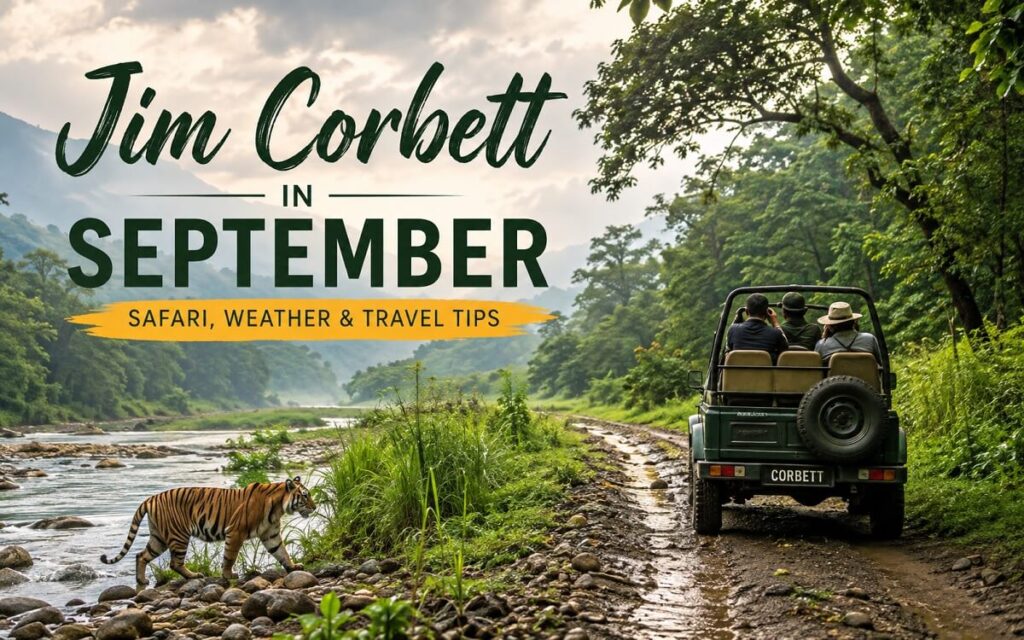
Jim Corbett National Park feels completely different in September. After weeks of monsoon rain, the forests are intensely green, seasonal streams are full, grasses are fresh, and the surrounding Himalayan foothills often disappear behind dramatic clouds. For travellers who associate Corbett only with dry summer safaris and peak-season tiger sightings, September reveals a quieter and more atmospheric side of the reserve.
However, visiting Jim Corbett in September 2026 requires careful planning. This is still the tail end of the monsoon season. Several of Corbett’s most famous tourism zones normally remain closed because forest tracks may be muddy or damaged by rain. At the same time, selected year-round zones can provide jeep safari opportunities, subject to weather and Forest Department conditions.
That makes September neither a conventional peak wildlife month nor a month you should automatically avoid. It is better suited to travellers who appreciate forests, birdlife, photography, peaceful resorts and the excitement of a safari without making a tiger sighting the only measure of a successful trip.
This complete guide explains the weather in Jim Corbett in September, safari zones, wildlife possibilities, what to pack, where to stay, how many days to spend and important travel tips for September 2026.
For accommodation, transport and organised wildlife holidays, you can also explore the Jim Corbett tour options available through EaseIndiaTrip.
Quick Guide to Jim Corbett in September 2026
| Travel Detail | September Expectation |
| Season | End of monsoon |
| Landscape | Very green and fresh |
| Daytime weather | Warm and humid |
| Rain | Possible, especially early September |
| Safari availability | Limited to zones permitted during monsoon |
| Best suited for | Nature, birding, photography, quiet holidays |
| Tiger sightings | Possible but unpredictable |
| Crowds | Generally lower than peak winter months |
| Recommended stay | 2 to 3 nights |
| Main base | Ramnagar |
| Best approach | Flexible itinerary with safari confirmation |
The biggest thing to remember is that safari operations depend on current weather and road conditions. Even zones normally available year-round can temporarily close after heavy rain.
Is September a Good Time to Visit Jim Corbett?
Yes, September can be a good time to visit Jim Corbett, but it is important to know what kind of experience you are booking.
If your sole objective is to enter Dhikala, Bijrani and several of the better-known core tourism areas, September is usually too early in the season. Those areas generally reopen later, after monsoon conditions have improved and forest roads have been inspected.
If, however, you want a peaceful forest break with the possibility of a jeep safari, September becomes much more appealing.
The national park and surrounding Corbett landscape are at their greenest. Rivers are fuller than during summer, waterfalls appear around the foothills, butterflies become more noticeable, and birds are active throughout the forest.
Hotels around Ramnagar can also feel considerably quieter than they do during major holidays and peak winter weekends.
September is therefore particularly suitable for:
- Couples looking for a nature-focused escape
- Families combining wildlife with a resort stay
- Birdwatchers
- Landscape photographers
- Repeat Corbett visitors
- Travellers who dislike peak-season crowds
- Weekend travellers from Delhi and NCR
- Visitors combining Corbett with Nainital or Kumaon
It is less suitable for travellers who expect guaranteed access to every safari zone.
Jim Corbett Weather in September 2026
September marks the transition from monsoon towards the drier autumn season in Uttarakhand.
Early September can still experience frequent rain, while the second half of the month generally sees gradually improving conditions. Exact weather patterns vary from year to year, so travellers should monitor forecasts shortly before departure rather than relying entirely on historical averages.
Days are usually warm and humid, while mornings inside the forest can feel pleasantly fresh after rainfall.
You may experience everything from bright sunshine to sudden showers on the same day.
What September Weather Feels Like
Expect:
- Warm daytime temperatures
- High humidity
- Cloudy periods
- Occasional heavy showers
- Pleasant early mornings
- Green and wet forest conditions
- Muddy trails after rain
- Cooler evenings towards late September
A lightweight rain jacket is considerably more useful than a heavy winter coat.
Travellers visiting other parts of the state during the same holiday may also find the EaseIndiaTrip guide to Uttarakhand in September helpful for understanding post-monsoon conditions and road considerations.
Early September vs Late September in Jim Corbett
September should not be treated as one uniform travel period.
1 to 15 September
The first half of September is more strongly influenced by the monsoon.
You may encounter:
- Higher rainfall probability
- Muddy approach roads
- Temporary safari interruptions
- Higher river levels
- Very dense forest vegetation
- Fewer tourists
Choose this period if you value scenery and quietness more than maximizing safari time.
16 to 30 September
Late September can be a more convenient period.
Rainfall often begins decreasing, sunny periods become more frequent, and road conditions generally improve.
The forest remains beautifully green, however, so you still get much of the visual appeal of the monsoon landscape.
For most leisure travellers, the second half of September is the better choice.
Are Jim Corbett Safaris Open in September?
This is the most important question for anyone planning a September trip.
Corbett Tiger Reserve contains several tourism zones, and they do not all follow the same seasonal schedule.
EaseIndiaTrip’s current safari-zone guide lists Jhirna, Dhela and Garjia among the zones that can operate throughout the year, while major seasonal zones such as Dhikala, Bijrani and Durga Devi normally reopen later.
A separate EaseIndiaTrip guide to Indian wildlife reserves open during September similarly identifies Jhirna and Dhela as important options for visitors to Jim Corbett during the monsoon period.
Opening schedules can nevertheless change because of:
- Heavy rainfall
- Flooding
- Damaged forest tracks
- River conditions
- Wildlife management
- Forest Department orders
- Conservation requirements
Therefore, never plan a September trip on the assumption that a particular safari is guaranteed.
Confirm availability immediately before booking your transport and accommodation.
Best Safari Zones in Jim Corbett in September:
Your actual choices depend on the permits released for your travel dates.
Jhirna Zone
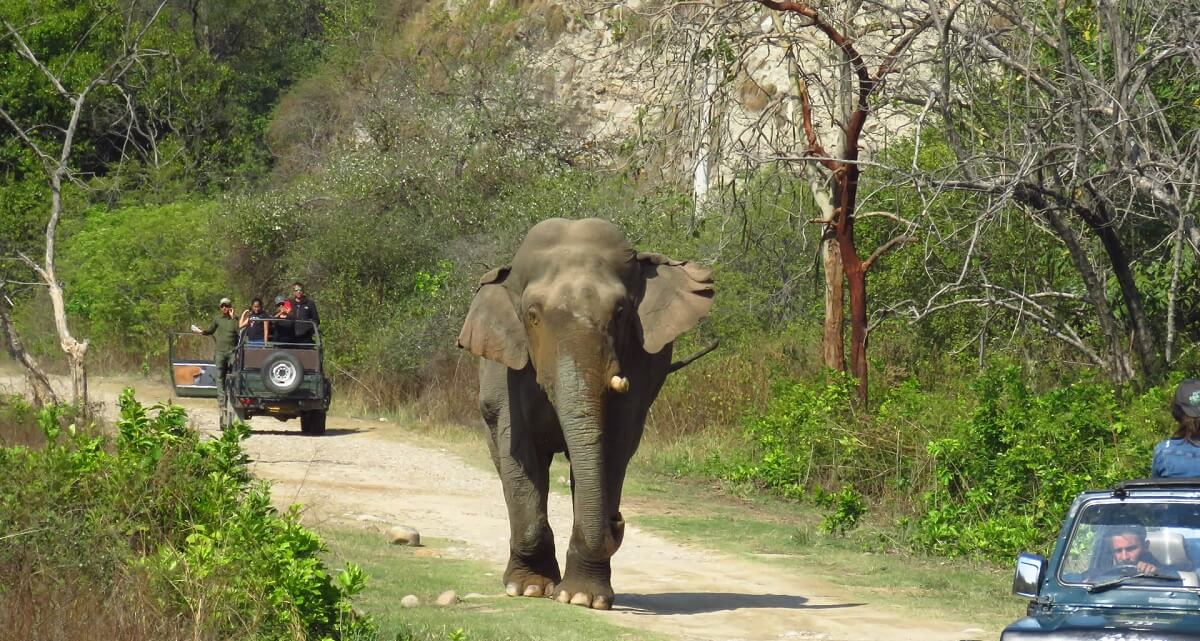
Jhirna is one of the most useful zones for travellers planning Jim Corbett during the monsoon months.
Its terrain combines scrub, forest and open areas, creating habitat for a wide range of wildlife.
Animals that may be encountered include:
- Sambar deer
- Spotted deer
- Wild boar
- Elephants
- Langurs
- Various bird species
- Occasionally sloth bears
- Tigers, if you are fortunate
Jhirna can be a particularly sensible choice for September because you are still enjoying a genuine forest safari rather than simply visiting attractions outside the reserve.
It should nevertheless be approached as a wildlife experience rather than a guaranteed tiger tour.
Dhela Zone
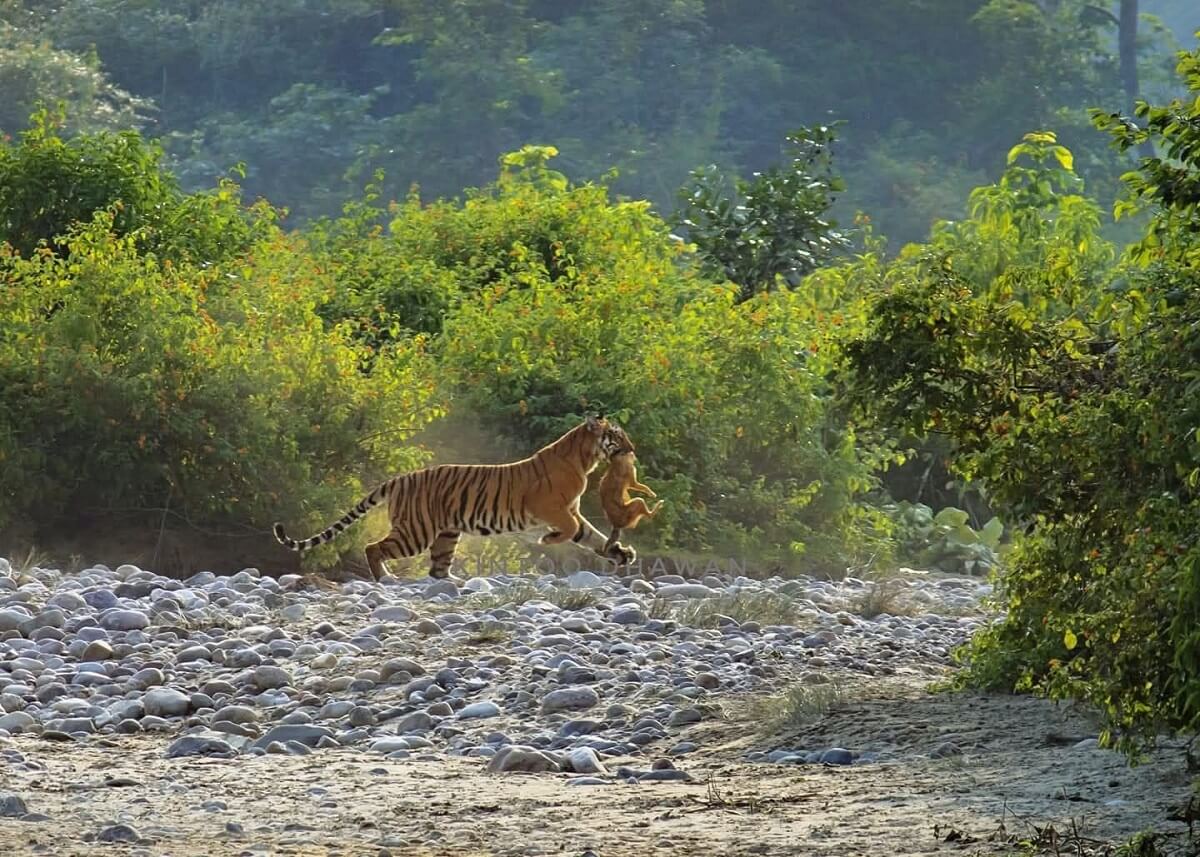
Dhela is another important safari area for monsoon-season Corbett visitors.
The zone has mixed woodland, grassland and wildlife habitat, with good opportunities for spotting deer, elephants, birds and occasionally big cats.
September gives Dhela a lush appearance.
Tall grasses and thick vegetation may make animals harder to see than during the dry season, but the landscape itself becomes one of the highlights.
For photographers, green vegetation combined with dramatic skies can produce images very different from those taken during April or May.
Garjia Zone
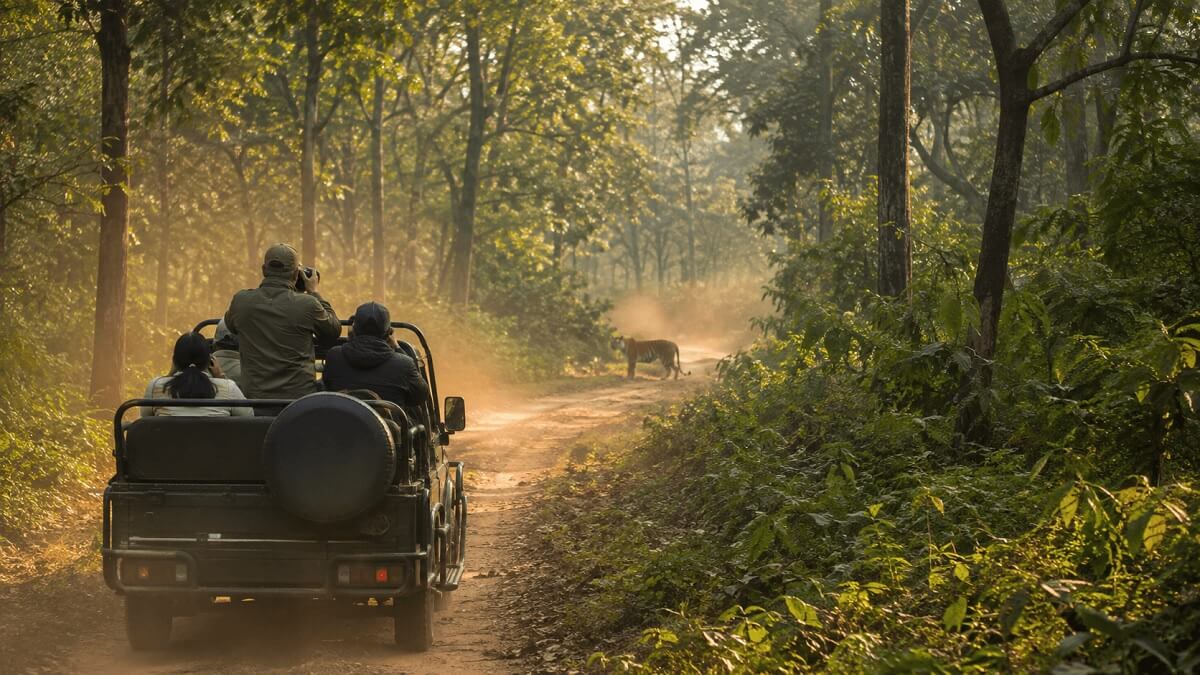
Garjia is also listed in EaseIndiaTrip’s updated Corbett safari guide as a tourism zone with year-round access, although actual entry continues to depend on current operating conditions.
Its convenient location can make it attractive for visitors staying around the Ramnagar and resort belts.
Before choosing it specifically, check what permits are being released for your exact September 2026 dates.
What About Dhikala in September?
Dhikala is the name most travellers hear when researching Jim Corbett.
Its broad grasslands, Ramganga landscape and reputation for wildlife make it arguably the park’s most iconic tourism zone.
But September is normally not the month to plan specifically around Dhikala.
EaseIndiaTrip’s current zone guide lists Dhikala’s regular tourism season from approximately 15 November to 15 June, subject to official notifications.
If experiencing Dhikala is your main objective, schedule your Corbett holiday during the regular open season instead.
Is Bijrani Open in September?
Bijrani is another highly sought-after safari zone, particularly for travellers interested in tiger tracking and classic sal-forest scenery.
It normally remains closed through September following the monsoon.
EaseIndiaTrip’s current safari guide lists Bijrani’s general operating period from around 15 October to 30 June, though dates can vary.
Therefore, a traveller visiting on 20 September should not design the whole trip around entering Bijrani.
Travelling in late October or November would provide many more safari choices.
Can You See Tigers in Jim Corbett in September?
Yes, tigers live in the reserve throughout the year, so tiger sightings in September are certainly possible.
But seeing one requires luck, timing, experienced tracking and favourable conditions.
The challenge during September is vegetation.
Monsoon rains encourage rapid growth of grasses, bushes and foliage. A tiger walking only a short distance from the vehicle may remain completely hidden.
Water is also widely available throughout the forest, meaning animals do not need to concentrate around limited water sources as they often do during the dry summer months.
For this reason, September should not be promoted as the ultimate tiger-sighting season.
Instead, enjoy the entire ecosystem.
A safari becomes far more interesting when you begin noticing:
- Alarm calls
- Fresh pugmarks
- Sambar deer
- Herds of spotted deer
- Wild elephants
- Langurs
- Jackals
- Wild boar
- Raptors
- Kingfishers
- Woodpeckers
- Forest tracks and river landscapes
A tiger sighting then becomes an extraordinary bonus rather than the only reason you entered the forest.
Jim Corbett in September for Birdwatching
Birdwatching can be one of the underrated reasons to visit Corbett around the end of the monsoon.
The wider Corbett landscape supports an exceptional variety of birds, thanks to its combination of rivers, forests, foothills and grasslands.
Carry binoculars even if your main interest is mammals.
Depending on location and luck, you may encounter kingfishers, bee-eaters, woodpeckers, hornbills, eagles, parakeets and many smaller forest species.
Quiet mornings around riverside resorts can sometimes produce excellent bird activity even before you enter the safari zone.
Travellers interested in wildlife beyond tigers often find September much more rewarding than visitors arriving with only one species on their checklist.
Jeep Safari Tips for September:
A little preparation can dramatically improve a monsoon-season safari.
Choose a Morning Safari
Morning conditions are often comfortable, and wildlife activity can be good before temperatures rise.
Early light also creates attractive photography conditions.
However, there is no universal rule that morning safaris always produce more tiger sightings. Wildlife does not follow tourism schedules.
If time permits, book more than one safari rather than putting all expectations into a single drive.
Take Binoculars
Dense vegetation means wildlife may be partially hidden.
Binoculars help enormously with birds, deer and distant animals.
Protect Cameras and Phones
September moisture can damage electronics.
Carry:
- Waterproof camera cover
- Dry bag
- Lens cloth
- Spare battery
- Power bank
- Zip pouch for mobile phone
Avoid changing camera lenses repeatedly during rainfall or in a wet jeep.
Wear Neutral Clothing
Choose brown, green, beige, grey or other muted shades.
There is no need for elaborate camouflage clothing.
Comfort matters more.
Listen to Your Guide
Good wildlife observation is often about sound before sight.
Experienced guides listen for:
- Deer alarm calls
- Langur calls
- Bird behaviour
- Elephant movement
Avoid shouting when someone sees an animal.
What to Wear in Jim Corbett in September
September safari clothing should be comfortable, breathable and prepared for rain.
Pack:
- Lightweight cotton or quick-dry shirts
- Full-length trousers
- Comfortable closed shoes
- Light rain jacket
- Cap or hat
- Extra socks
- Thin layer for early morning
- Small waterproof backpack
Full trousers are generally more practical than shorts because they provide protection from vegetation, insects and mosquitoes.
Avoid very bright clothing when entering the forest.
You probably will not need heavy winter clothes unless you are continuing your holiday to significantly higher Himalayan destinations.
Important Things to Pack:
Your September packing list should include:
Rain Protection
Carry a compact umbrella for resort use and a rain jacket for travelling.
Mosquito Repellent
Post-monsoon vegetation and standing water can mean more insects.
Binoculars
One of the most useful items for any wildlife holiday.
Personal Medicines
Bring your regular medication because specialised pharmacies may not always be close to remote resorts.
Waterproof Footwear
Shoes with good grip are useful after rain.
Sunscreen
Cloudy weather does not eliminate UV exposure.
Valid Identification
Safari bookings require passenger details, so carry the same valid identification used for the reservation.
How to Reach Jim Corbett in September:
The main gateway to Jim Corbett tourism is Ramnagar in Uttarakhand.
Delhi to Jim Corbett by Road
Delhi to Ramnagar is one of the most popular travel routes.
The journey typically takes around six hours or more depending on:
- Traffic
- Starting point in Delhi
- Road conditions
- Weather
- Stops
September rain can slow travel, so avoid creating a tight schedule around your safari.
If you have an early morning safari the next day, reach your resort the previous afternoon.
Jim Corbett by Train
Ramnagar has railway connections with selected cities, and additional services can be available through nearby railway stations.
Train travel can be a comfortable alternative for travellers who do not want to spend several hours driving from Delhi.
Arrange your hotel transfer beforehand if arriving late at night or early in the morning.
Jim Corbett by Air
Pantnagar is among the nearest airports, although flight schedules can be limited compared with Delhi.
Many travellers therefore fly into Delhi and continue to Corbett by private vehicle or train.
Always leave extra time when travelling during the monsoon transition period.
Where to Stay in Jim Corbett in September
The Corbett region has everything from simple guesthouses to large riverside resorts.
Where you stay should depend partly on your confirmed safari gate.
Do not choose a hotel solely because an online advertisement says it is “near Jim Corbett.”
The tourism landscape covers a wide area.
Useful accommodation belts include areas around:
- Ramnagar
- Dhikuli
- Garjia
- Mohan
- Dhela side
- Jhirna side
Ask your hotel how long the drive takes to your allocated safari gate.
A resort that looks only 20 kilometres away on a map can require a surprisingly early departure for a morning safari.
You can review Jim Corbett travel packages and stay options when planning transport, safari and accommodation together.
What to Do When You Are Not on Safari:
One advantage of spending two or three nights in Corbett is that your holiday does not depend entirely on safari permits.
Enjoy a Riverside Resort
September is one of the prettiest months for simply sitting around a forest resort.
Rain-washed trees, cloudy skies and the sounds of birds create an atmosphere very different from city life.
Visit Corbett Museum
The Corbett Museum at Kaladhungi introduces visitors to the history associated with Jim Corbett and the region.
It works well when travelling between Corbett and Nainital, depending on your route.
Visit Garjiya Devi Temple
Garjiya Devi Temple is a well-known religious site in the Corbett region.
Remember that river conditions are particularly important during and shortly after monsoon rains. Follow local safety instructions and never enter restricted areas near swollen rivers.
Birdwatch Around Your Resort
Many properties sit close to forest patches, streams or rivers.
An hour of quiet birdwatching around sunrise can sometimes be as enjoyable as a formal activity.
Relax Instead of Overscheduling
A wildlife holiday benefits from free time.
You may have a 5 a.m. wake-up for a safari, so filling every afternoon with sightseeing can quickly become tiring.
Suggested 3-Day Jim Corbett September Itinerary:
Day 1: Arrive in Jim Corbett
Travel from Delhi or another nearby city to Ramnagar.
Check into your resort and spend the afternoon relaxing.
Later, enjoy a guided nature walk if offered in a safe area outside restricted forest zones.
Have an early dinner because your safari may begin before sunrise.
Day 2: Jim Corbett Safari
Wake up early and travel to your designated entry gate.
Complete your jeep safari in whichever tourism zone is officially operating and allotted through your permit.
After returning, have breakfast and rest at the resort.
Spend the afternoon birdwatching or exploring nearby permitted attractions.
If you have booked an evening safari as well, keep lunch light and allow sufficient time to reach the gate.
Day 3: Local Sightseeing and Departure
Enjoy breakfast at the resort.
Depending on road and weather conditions, visit a nearby attraction before continuing towards Delhi, Nainital or another Kumaon destination.
Combining Jim Corbett and Nainital in September
Corbett and Nainital make a natural combination because they offer two completely different Uttarakhand experiences.
Corbett provides:
- Forest
- Wildlife
- Safaris
- Rivers
- Nature resorts
Nainital provides:
- Mountain scenery
- Naini Lake
- Hill-town atmosphere
- Cafés
- Viewpoints
A comfortable itinerary could be:
Day 1: Delhi to Corbett
Day 2: Corbett safari
Day 3: Corbett to Nainital
Day 4: Nainital sightseeing
Day 5: Return
Avoid trying to do Corbett and Nainital in only two nights.
September road conditions can occasionally cause delays, and a relaxed schedule is safer and much more enjoyable.
Advantages of Visiting Jim Corbett in September:
September offers several advantages that are easy to overlook.
Beautiful Green Landscapes
Few months match September for lush scenery.
The forest has been renewed by monsoon rain, and the hills look remarkably fresh.
Lower Tourist Pressure
Crowds are generally lighter than during popular winter weekends.
This can make resorts and local sightseeing areas more relaxing.
Excellent Photography
Mist, clouds, rain-washed forests and dramatic skies create strong landscape-photography conditions.
Good for Birders
The green season brings plenty of birding interest around forest and river habitats.
Relaxed Resort Experience
September works very well for travellers who want wildlife combined with two or three peaceful days away from Delhi.
Disadvantages of Visiting in September:
September also has limitations.
Restricted Safari Zones
This is the biggest disadvantage.
Dhikala, Bijrani and other seasonal tourism areas are generally unavailable.
Rain Can Affect Plans
Heavy showers can disrupt local travel or safari operations.
Dense Vegetation
Although beautiful, dense foliage makes wildlife more difficult to spot.
Humidity
Some visitors may find the weather humid.
Unpredictable Road Conditions
Monsoon damage can occasionally affect roads throughout Uttarakhand.
Flexible planning is therefore essential.
September vs October: Which Is Better?
Choose September if your priorities are:
- Green landscapes
- Lower crowds
- Quiet resorts
- Monsoon atmosphere
- Birdwatching
- Lower emphasis on tiger sightings
Choose late October onward if your priorities are:
- Greater safari-zone choice
- Drier conditions
- More predictable outdoor planning
- Traditional wildlife-tour experience
Bijrani generally becomes an important option after its seasonal reopening, while Dhikala follows later in the year.
September vs May in Jim Corbett
May offers an almost opposite experience.
During May, conditions are hot and generally dry, vegetation is thinner, and wildlife often gathers near available water sources. This can improve visibility, although daytime temperatures can be demanding.
September is cooler, wetter and far greener, with more limited zone access.
EaseIndiaTrip also has a detailed Jim Corbett May travel guide for travellers comparing safari seasons.
In simple terms:
Choose May for serious wildlife viewing.
Choose September for green scenery, quietness and a mixed nature holiday.
Essential Jim Corbett Safari Rules
Responsible tourism is especially important inside a tiger reserve.
While exact park regulations should always be confirmed when obtaining your permit, basic wildlife etiquette includes:
- Never feed animals
- Do not throw plastic or rubbish
- Keep noise low
- Stay inside the authorised safari vehicle
- Do not ask drivers to chase animals
- Follow the permitted safari route
- Respect speed limits
- Avoid flash photography around wildlife
- Follow instructions from guides and Forest Department personnel
A tiger does not need to come closer for your photograph.
Wildlife welfare must always come before social-media content.
How to Improve Your Chances of a Good Safari
No ethical operator can guarantee a wild tiger sighting.
You can, however, improve the overall quality of your safari.
Book two safaris if your schedule allows. Choose a trained local guide. Spend time observing rather than continuously driving. Carry binoculars. Listen for alarm calls. Keep conversations quiet. Most importantly, appreciate every species you encounter.
A safari where you see elephants, deer, hornbills, fresh tiger tracks and a beautiful forest sunrise is not a failed safari because the tiger remained hidden.
For more detailed comparisons between the reserve’s different areas, read EaseIndiaTrip’s updated guide to the best Jim Corbett safari zones.
Is Jim Corbett Safe in September?
Tourism areas around Jim Corbett are generally visited throughout the year, but September requires extra attention to monsoon-related conditions.
The most important risks are usually environmental rather than wildlife-related.
Be cautious around:
- Fast-flowing rivers
- Flooded streams
- Slippery paths
- Damaged roads
- Waterlogged areas
- Restricted forest tracks
Never attempt to cross a flooded road because another vehicle has done so.
Do not walk into forest areas without permission.
Follow hotel and local authority advice regarding rainfall and river conditions.
Who Should Visit Jim Corbett in September?
September is particularly rewarding for travellers who understand the season.
Couples
Choose a scenic forest or riverside property and include one or two safaris.
Families
A two-night stay combines nature, relaxation and wildlife without requiring a long expedition.
Photographers
The post-rain landscape produces atmospheric scenery, mist and vibrant vegetation.
Birdwatchers
The varied habitats around Corbett make birding enjoyable even outside formal safari hours.
Repeat Visitors
If you have already experienced Dhikala or Bijrani during winter or summer, September shows you an entirely different version of Corbett.
Who Should Avoid September?
Consider travelling in another month if:
- Dhikala is essential to your itinerary
- You want maximum safari-zone availability
- Your main goal is tiger photography
- You strongly dislike humidity
- You cannot tolerate last-minute weather changes
- You need a completely fixed itinerary
November through the cooler months is generally easier for conventional first-time safari holidays.
Final Travel Tips for Jim Corbett in September 2026
Before confirming your holiday, remember these practical points:
- Check safari availability for your exact dates. Never rely solely on general seasonal information.
- Stay for at least two nights. A one-night trip feels rushed.
- Prefer late September if your dates are flexible.
- Carry rain protection.
- Keep one flexible activity period in case rain changes your plans.
- Do not expect Dhikala or Bijrani to operate in September.
- Consider two safaris if wildlife is your priority.
- Keep expectations realistic about tiger sightings.
- Stay relatively close to your assigned safari gate.
- Check Uttarakhand road and weather conditions before departure.
FAQs About Jim Corbett in September 2026
1. Is Jim Corbett open in September 2026?
Parts of the Corbett tourism landscape can remain accessible during September, particularly selected year-round safari zones. Other major zones remain seasonally closed. Exact operations depend on rainfall, forest-road conditions and official decisions.
2. Which Jim Corbett safari zones are open in September?
Jhirna and Dhela are among the best-known year-round tourism options, and current Corbett zone information also lists Garjia as operating throughout the year. However, temporary closures are possible during severe weather.
3. Can I visit Dhikala in September?
Normally, no. Dhikala’s main tourism season generally begins around mid-November after the monsoon. Check the official safari status before making travel arrangements.
4. Can I see a tiger in Jim Corbett in September?
Yes, a tiger sighting is possible, but never guaranteed. Dense monsoon vegetation can make wildlife harder to observe than during the dry season.
5. Does it rain heavily in Jim Corbett in September?
Rainfall is still possible, especially during the first half of September. Conditions often become progressively drier towards the end of the month, although yearly weather patterns vary.
6. How many days are enough for Jim Corbett?
A 2-night/3-day trip is ideal for most first-time visitors. Wildlife enthusiasts can stay three or four nights and plan multiple safaris.
7. Is September worth visiting Jim Corbett?
Yes, provided you understand its limitations. September is excellent for lush forests, birdlife, photography, quieter resorts and a relaxed nature holiday. Travellers seeking maximum safari access may prefer October onward.
Final Thoughts
Jim Corbett in September 2026 is best viewed as a green-season wildlife holiday rather than a peak tiger-safari expedition. The final weeks of the monsoon transform the forest into a rich landscape of fresh sal trees, wet grasslands, flowing streams, birds and cloud-covered foothills.
You may not have access to Dhikala or Bijrani, and rain can occasionally interrupt even permitted safari operations. Yet September offers something peak season often cannot: quietness.
There are mornings when mist hangs over the forest, afternoons when rain darkens the sal trees and evenings when the only sounds around your resort are cicadas, birds and distant flowing water. Add a jeep safari through an operating zone and you still have the possibility of elephants, deer, birds, fresh pugmarks and perhaps the brief appearance of a tiger.
Travel with realistic expectations, keep your itinerary flexible and confirm safari conditions close to departure.
For trip planning, accommodation and organised travel arrangements, explore Jim Corbett tours with EaseIndiaTrip. You can also browse the EaseIndiaTrip Travel Blog for more Uttarakhand weather guides, wildlife articles and destination-planning advice.
For this article, I’d especially interlink the existing Jim Corbett Safari Zones guide, because it directly answers the next question readers are likely to have after reading about September safari availability. Jim Corbett Safari Zones: Best Areas for Wildlife.