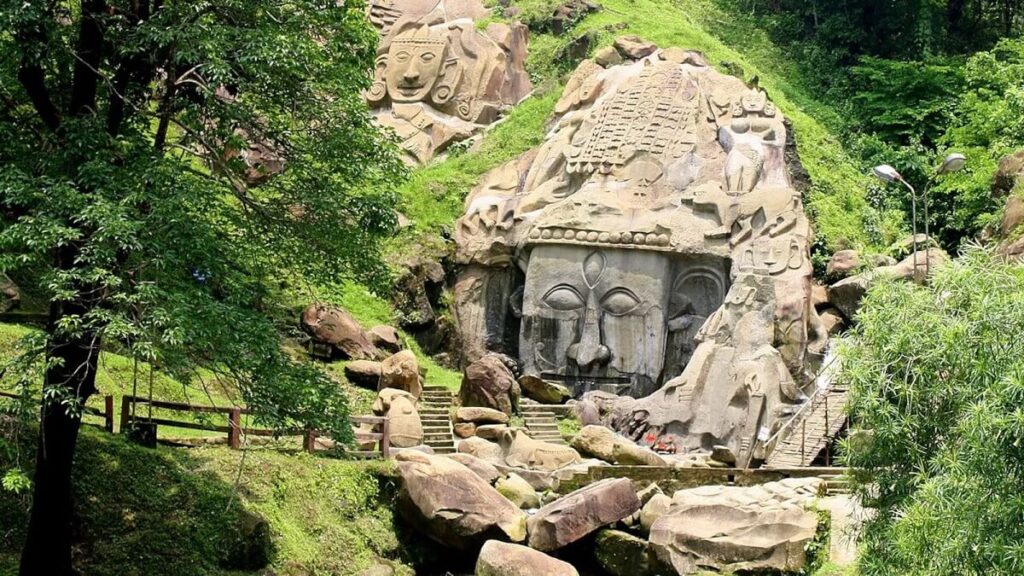
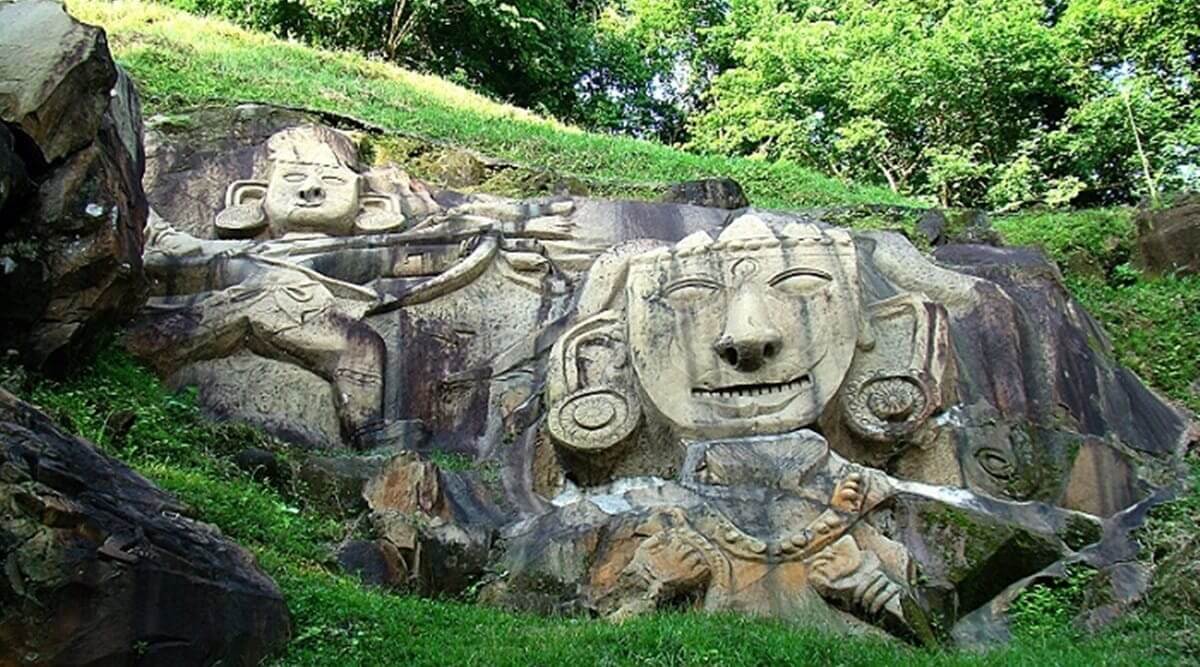
Tucked deep within the lush green hills of northeast Tripura, Unakoti rock carvings is an archaeological and spiritual treasure that feels like it’s been carved straight from mythology. Known for its colossal rock-cut sculptures of Hindu deities, this lesser-known site is often called the “Angkor Wat of the Northeast.”
What makes Unakoti rock carvings truly fascinating is that the carvings are not housed in a temple or protected under domes — instead, they are etched into hillsides, waterfalls, and boulders, naturally weathered by centuries of monsoon rain and jungle mist.
The term “Unakoti” translates to “one less than a crore” in Bengali. According to local legend, 99,99,999 gods and goddesses were on their way to Kashi with Lord Shiva but were turned to stone for disobedience. These petrified deities now rest at Unakoti rock carvings, frozen in time — an open-air museum of myth and mystery.
If you’ve already explored remote spiritual circuits like Mechuka in Arunachal or historical marvels like Sanchi’s Buddhist stupas, Unakoti rock carvings offers an equally enigmatic and soul-stirring experience, especially for travelers seeking offbeat pilgrimage sites or ancient art in natural settings.
Where Is Unakoti and How to Reach It?
Unakoti is located in Unakoti district of Tripura, about 178 km from Agartala, the state capital. The nearest major town is Kailashahar, just 8–10 km from the site. 5-Day Tour to Gangtok, Guwahati & More – Book Now for 2025!
By Air:
- Nearest Airport: Agartala (Maharaja Bir Bikram Airport)
- Flights from Kolkata, Guwahati, Delhi, and Bangalore are available.
- From Agartala, hire a cab or take a bus to Kailashahar (approx. 6–7 hours).
By Train:
- Nearest Station: Kumarghat (25 km from Unakoti)
- Trains from Guwahati and Agartala connect here. Taxis are easily available from the station.
Travel By Road:
- Regular buses and shared jeeps run from Agartala, Dharmanagar, and Kumarghat to Kailashahar.
- Roads are scenic but narrow and winding — a bonus for adventure travelers!
If you’re already planning a trip across northeast India, Unakoti fits perfectly between itineraries that include Meghalaya’s waterfalls, Kaziranga National Park, and Majuli Island in Assam.
What to See at Unakoti: Highlights & Sculptures
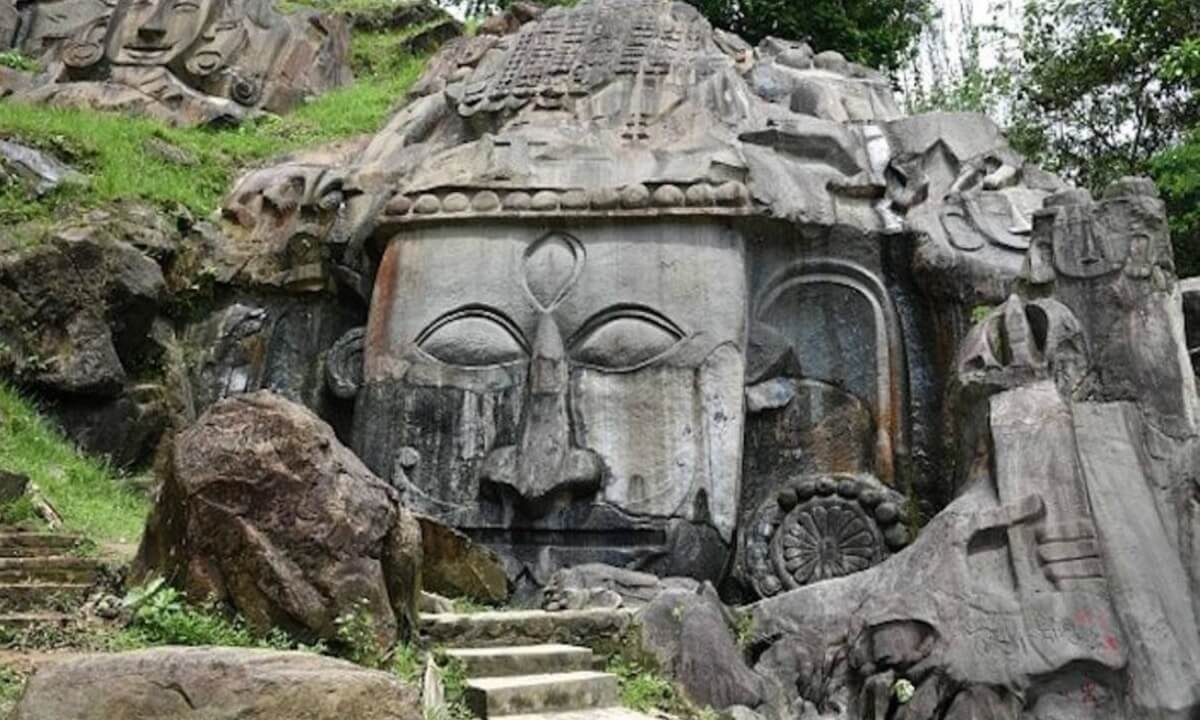
The centerpiece of Unakoti is its towering 27-foot-tall Shiva head known as Unakotiswara Kal Bhairava. The expression, the details of the headdress, and the setting amidst thick foliage make it one of India’s most stunning ancient carvings. Explore Assam in 5 Days – Plan Your Perfect Northeast Adventure
Other key carvings and attractions include:
• Ganesha Figures
Two gigantic rock-cut Ganeshas, flanking the main Shiva, each with distinct iconography and damaged tusks.
• Durga in Mahishasura Mardini Form
A stunning image of Durga slaying the buffalo demon, etched onto rock — a masterpiece that resembles temple bas-reliefs.
• Waterfall Carvings
Many smaller images — including Nandi (Shiva’s bull), Vishnu avatars, and yakshas — are found near the small waterfall running through the site.
• Natural Trails and Viewpoints
Explore stone staircases, moss-covered paths, and bamboo groves leading to more hidden carvings scattered throughout the hillside.
Unlike crowded spiritual hubs like Varanasi or Rishikesh, Unakoti invites silence and contemplation. It feels more like a forgotten shrine than a tourist site, which adds to its magnetism.
Looking for more remote heritage sites like this? You might enjoy reading about Khajuraho’s spiritual side and temple art, which balances myth with artistic legacy. Book Your 4-Day Gangtok & Darjeeling Tour Now – Limited Deals!
Best Time to Visit Unakoti
October to March (Winter – Ideal Time):
- Clear skies and cool weather make it perfect for walking, trekking, and photography.
- The Unakoti Festival (Ashokastami Mela) is held during March/April and attracts pilgrims and artists. Ready to Visit Lepakshi? Start with This Travel Guide!
June to September (Monsoon):
- The forest is lush and mystical, but paths can be slippery.
- Fewer tourists and surreal misty views.
April to June (Summer):
- Best avoided due to high humidity and heat.
If you’re exploring India during monsoon months, also check out our blog on Romantic Rainy Getaways in India for Couples, which includes similar tranquil hill retreats perfect for July–August travel.
Where to Stay Near Unakoti
There aren’t luxury resorts here — and that’s part of Unakoti’s offbeat charm. However, there are clean, affordable options:
1. Kailashahar Tourist Lodge (Tripura Tourism)
- Distance: 8 km
- Clean rooms, basic amenities, in-house dining.
- Rates: ₹800–₹1,200
2. Private Guesthouses in Kailashahar
- Budget homestays and simple lodges available.
- Prices range from ₹500–₹1,000
- Ask locals for heritage homestays for a cultural experience.
3. Agartala Options (If making a day trip)
Pro tip: Combine a stay in Kailashahar with local tribal village visits or forest walks. It offers a glimpse of indigenous Tripuri culture, similar in charm to tribal villages around Araku Valley or Chhattisgarh’s Bastar region. Escape the Heat: Coolest Hill Stations in India for a July Getaway
What Makes Unakoti Unique in Indian Heritage
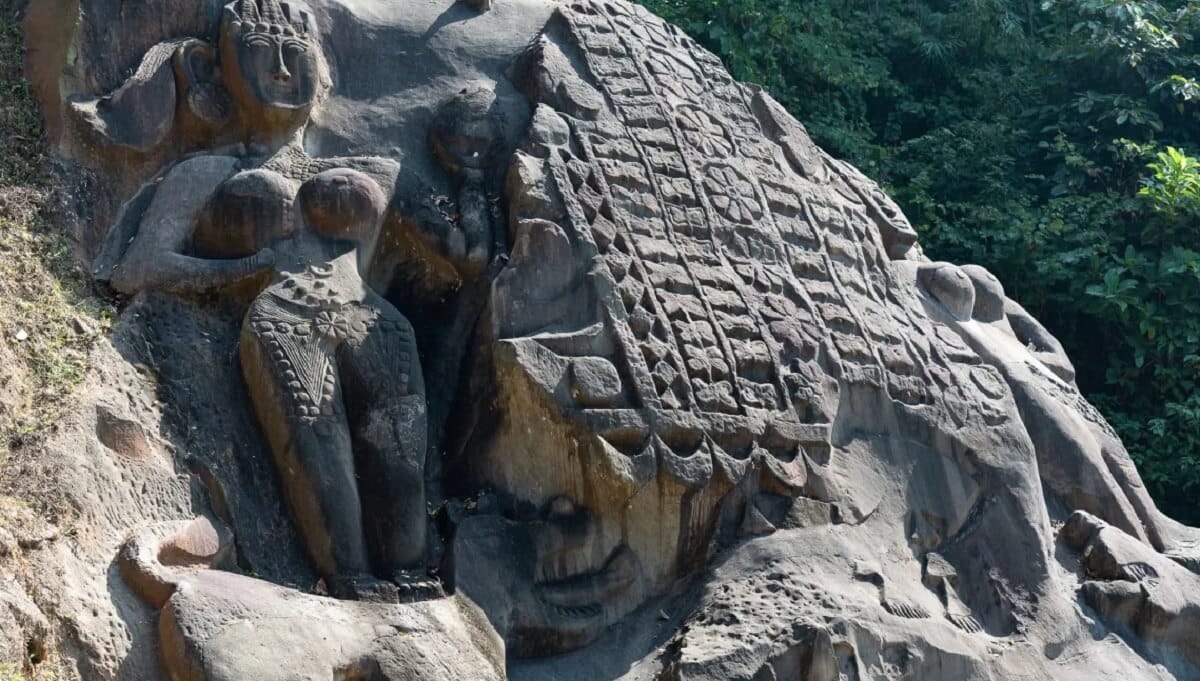
Unakoti is one of India’s most unique open-air rock carving sites, not only for its scale but for the way it blends spiritual heritage with nature. What sets it apart from temple architecture in Khajuraho or Ellora is the lack of built structures — here, gods are etched into the hills themselves, forming a living, breathing mythological landscape.
The site stands at the confluence of mythology, tribal folklore, and Shaivism. Unlike places where you encounter polished stone idols in structured shrines, at Unakoti you walk through jungle paths, stumble upon moss-covered faces of Shiva or Durga, and feel a deep connection to the divine through earth, rock, and water. It’s more than art — it’s a sacred sculpture park, hidden in plain sight.
Unakoti also showcases a synthesis of tribal art and mainstream Hindu iconography. The elongated faces, stylized headdresses, and simplified animal figures reflect indigenous interpretations of Hindu mythology. This is what makes the site a cultural anomaly and a treasure — and why it’s being proposed for UNESCO World Heritage Site status.
Looking for other places with this level of mystery and myth? You may enjoy remote monasteries in Spiti Valley that similarly blend art, legend, and wilderness. Explore Wildlife and Tranquility – Visit Karlapat Sanctuary Today!
What to Do Around Unakoti: Local Experiences

Unakoti is not just about the rock carvings — the surrounding Kailashahar region offers unique local experiences that can enrich your visit. Experience the Zuluk Loops: 32 Scenic Hairpin Bends in Sikkim
1. Explore Local Markets
The town of Kailashahar has vibrant tribal markets where you can buy bamboo crafts, hand-woven shawls, organic honey, and medicinal herbs used by local healers. These products reflect the indigenous culture of the Tripuri and Reang tribes. Plan a Wild Getaway – Explore Mouling National Park in Arunachal!
2. Visit Tea Gardens
A short drive from Unakoti takes you to Chawmanu and Pecharthal, where lush green tea gardens stretch across the rolling hills. You can visit a plantation, talk to workers, and even buy fresh tea directly from the estate. Explore Top 10 Attractions in Lachen – North Sikkim Travel Guide
3. Try Local Cuisine
Don’t miss trying traditional Tripuri dishes like Mui Borok, fermented fish chutney, and bamboo shoot curries. Simple eateries in Kailashahar serve these flavors, offering a break from regular tourist fare.
Why Mechuka Valley Should Be on Your Bucket List – Read Now!
4. Join a Local Festival
If visiting during March/April, the Ashokastami Fair turns Unakoti into a cultural hub. There are music performances, folk dance, and local food stalls — a chance to witness Tripura’s heritage in full swing.
Looking for more under-the-radar destinations with rich local culture? You’ll also love our feature on India’s lesser-known pilgrimage trails.
FAQs About Visiting Unakoti
Q1. Do I need a permit to visit Unakoti?
No special permit is required for Indian nationals. Foreign travelers should carry valid ID and may need to register upon arrival in Tripura, depending on the latest government policies.
Q2. Is there an entry fee at Unakoti?
Yes, a nominal fee of ₹10–₹20 is charged per person. Cameras may incur an additional ₹20–₹50 fee.
Q3. Are guides available at the site?
Local guides can be hired near the parking area. It’s advisable to take one to understand the historical and mythological context of the carvings.
Q4. Is it safe for solo travelers and women?
Yes, but since the site is remote, it’s best to visit during daylight and preferably in a group or with a guide. The area is peaceful and rarely crowded.
Q5. How long should I plan to explore Unakoti?
Allocate at least 2–3 hours to explore the main carvings, waterfall trails, and upper levels. Photography, especially in morning light, can take longer.
Q6. What should I carry for the visit?
Comfortable shoes, a water bottle, insect repellent, and a basic medical kit. Be prepared for uneven forest terrain and minimal on-site facilities.
🔗 Internal Linking Suggestions
- Remote monasteries in Spiti Valley
- Khajuraho’s spiritual side and intricate temple art
- Spiritual circuits beyond famous temples
- Weekend trips from Delhi to enjoy July rains
- Explore 17 Must-Know Facts About Tripura – Plan Your Visit Now!
- Plan Your First North East India Trip – 2025 Guide Inside!
- Discover the Top 10 Tourist Places in North East India – Start Exploring!
- Visit These 10 Best Places in North East India – Travel Smart!
- 12 Amazing Places to Visit in Northeast India This May – Don’t Miss Out!
- Karlapat Wildlife Sanctuary, Odisha: All You Need to Know Before You Go
- Why Visit Mechuka Valley in 2025? Untouched Beauty in Arunachal Pradesh
- Discover Birding Bliss at Chilika Lake – Explore Now!
- Click Here for the Ultimate Karlapat Wildlife Sanctuary Travel Guide!