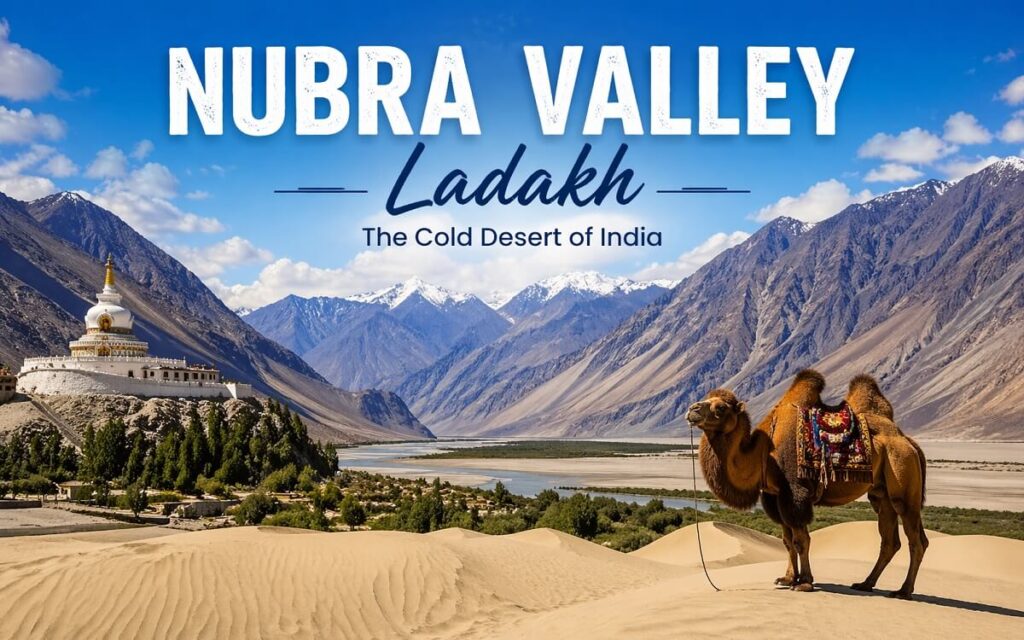
Hidden beyond towering mountain passes and rugged Himalayan terrain lies Nubra Valley—one of Ladakh’s most fascinating and visually striking destinations. Often described as a “cold desert”, Nubra Valley is where nature defies expectations. Imagine sand dunes at high altitude, rivers flowing through barren landscapes, and snow-capped peaks rising dramatically in the distance. This unique combination makes Nubra Valley not just a place to visit, but a destination to experience.
Located about 150 kilometers from Leh, Nubra Valley has become a must-visit for travelers exploring Ladakh. It offers a rare blend of adventure, culture, and tranquility. Whether you are riding a double-humped camel across sand dunes, exploring centuries-old monasteries, or simply soaking in the silence of the Himalayas, Nubra Valley leaves a lasting impression.
This detailed guide covers everything you need to plan your journey—from facts and routes to accommodation, culture, and practical travel advice.
Where is Nubra Valley Located?
Nubra Valley is situated in the northern part of Ladakh, in the Union Territory of Ladakh, India. It lies at an average altitude of around 10,000 feet above sea level and is formed by the confluence of the Shyok River and the Nubra River.
The valley is strategically located near the Siachen Glacier, making it an important region from both geographical and military perspectives. Despite its remote location, Nubra Valley is accessible via the famous Khardung La Pass, one of the highest motorable roads in the world.
The journey from Leh to Nubra Valley is an adventure in itself, offering breathtaking views of mountains, glaciers, and winding roads.
Why Nubra Valley is So Special
What makes Nubra Valley truly unique is its contrasting landscapes and cultural richness. It is one of the few places in the world where you can witness:
- High-altitude desert landscapes
- Sand dunes surrounded by mountains
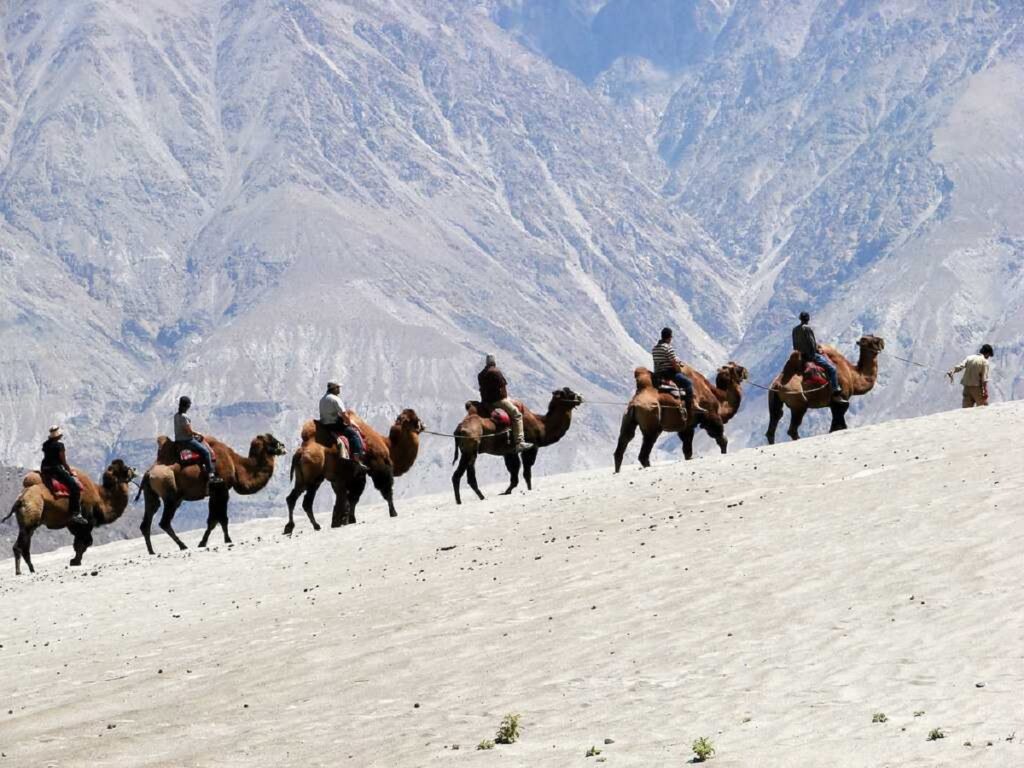
- Double-humped Bactrian camels
- Lush green villages in a barren terrain
- Ancient monasteries and Buddhist culture
The valley was once an important stop on the Silk Route, connecting India with Central Asia. This historical significance adds depth to its cultural identity, making it more than just a scenic destination.
Fascinating Facts About Nubra Valley:
1. A Cold Desert in the Himalayas
Unlike typical valleys filled with greenery, Nubra Valley features vast stretches of sand dunes. This is due to its location in the rain shadow region of the Himalayas, where rainfall is minimal.
2. Home to Bactrian Camels
The valley is famous for its rare double-humped camels, known as Bactrian camels. These camels were historically used by traders along the Silk Route.
3. A Blend of Cultures
Nubra Valley is influenced by Tibetan and Central Asian cultures. This is reflected in its monasteries, language, and traditions.
4. Strategic Importance
Due to its proximity to the Siachen Glacier, Nubra Valley holds significant importance for India’s defense.
5. Diverse Landscapes
From rivers and deserts to mountains and villages, Nubra Valley offers a wide range of landscapes within a relatively small area.
Tailor-Made Leh Ladakh Travel Packages:
- Ladakh Escape – 5 Days / 4 Nights Tour
- Discover Ladakh – 6 Days Tour Package
- Leh Ladakh Experience – 7 Days / 6 Nights Journey
- Manali to Leh Adventure via Jispa – 8 Days Itinerary
- Ladakh Overland Tour from Manali – 10 Days
- Ladakh with Kashmir Highlights – 10 Days Tour
- Leh, Kargil, Pangong & Nubra Valley – 9 Days Tour
- Kashmir and Ladakh Grand Explorer – 10 Days
Best Time to Visit Nubra Valley:
Choosing the right time to visit Nubra Valley is essential for a comfortable and enjoyable experience.
Summer (May to September)
This is the best time to visit Nubra Valley. The weather is pleasant, with temperatures ranging from 15°C to 25°C. Roads are open, and all tourist activities are available.
This period is perfect for sightseeing, photography, camping, and adventure activities.
Spring (April to Early June)
During this time, the snow begins to melt, and the valley starts to bloom. The landscape looks fresh and vibrant.
Autumn (September to October)
Autumn offers clear skies, fewer crowds, and excellent photography opportunities. The weather remains comfortable.
Winter (November to March)
Winter in Nubra Valley is harsh, with temperatures dropping below -15°C. Many roads remain closed due to heavy snowfall, making travel difficult.
How to Reach Nubra Valley:
By Air
The nearest airport is Kushok Bakula Rimpochee Airport in Leh. It is well connected to major Indian cities like Delhi and Mumbai.
From Leh, Nubra Valley can be reached by road.
By Road
Leh to Nubra via Khardung La
This is the most popular route. The journey takes around 5–6 hours and offers stunning views. Khardung La is a highlight of this route.
Leh to Nubra via Wari La
A less crowded and more adventurous route, ideal for experienced travelers.
Pangong Lake to Nubra via Shyok Route
This scenic route connects Nubra Valley with Pangong Lake and is perfect for those planning a circuit trip.
Permits Required for Nubra Valley:
Since Nubra Valley is located in a restricted area near the border, permits are mandatory.
For Indian Travelers
- Inner Line Permit (ILP) is required
- Can be obtained online or in Leh
For Foreign Travelers
- Protected Area Permit (PAP) is required
Travelers should carry multiple copies of permits, as they are checked at various points.
Top Places to Visit in Nubra Valley:
1. Diskit Monastery
Diskit Monastery is the largest and oldest monastery in Nubra Valley. It is famous for its giant Buddha statue overlooking the valley. The monastery offers stunning panoramic views and a peaceful spiritual atmosphere.
2. Hunder Sand Dunes
Hunder is known for its cold desert and sand dunes. It is one of the most unique places in Ladakh where you can enjoy camel rides and witness mesmerizing sunsets.
3. Turtuk Village
Turtuk is one of the northernmost villages in India and was opened to tourists only recently. It offers a glimpse into Balti culture, which is different from the rest of Ladakh.
4. Panamik Hot Springs
Located near the Siachen Glacier, Panamik is known for its natural hot water springs believed to have medicinal properties.
5. Sumur Village
A quiet and scenic village that provides a deeper insight into traditional Ladakhi life.
Best Things to Do in Nubra Valley:
(i) Camel Safari
One of the most popular activities in Nubra Valley is riding the double-humped camels in Hunder.
(ii) Explore Monasteries
Visit monasteries like Diskit and Samstanling to experience Buddhist culture and spirituality.
(iii) Photography
Nubra Valley is a paradise for photographers. From landscapes to cultural elements, every frame is unique.
(iv) Camping
Spend a night under the stars in luxury camps or basic tents.
(v) ATV Rides
For adventure enthusiasts, ATV rides on sand dunes offer an exciting experience.
Accommodation Options in Nubra Valley:
Nubra Valley offers a range of accommodation options:
Luxury Camps
These provide a comfortable stay with modern amenities, often located near sand dunes.
Mid-Range Hotels
Available in Diskit and Hunder, offering decent facilities.
Homestays
Ideal for those who want to experience local culture and hospitality.
Most accommodations operate only during the tourist season.
Food & Local Cuisine in Nubra Valley
Food in Nubra Valley is simple, nourishing, and deeply influenced by Ladakhi and Tibetan traditions. Due to the region’s remote location and harsh climate, meals are typically prepared using locally available ingredients, resulting in dishes that are both wholesome and comforting.
One of the most popular dishes you will come across is Thukpa, a warm noodle soup that is perfect for the cold weather. It is usually prepared with vegetables or meat and served hot, making it a staple meal for both locals and travelers. Another must-try is Momos, soft dumplings filled with vegetables or minced meat, often served with spicy chutney.
You should also try Butter Tea (Gur Gur Chai), a traditional Ladakhi beverage made with tea leaves, yak butter, and salt. While its taste may feel unusual at first, it helps keep the body warm and energized at high altitudes.
Another local specialty is Skyu, a traditional Ladakhi dish made with handmade wheat dough pieces cooked with vegetables or meat in a thick stew. It is filling and perfectly suited for the cold desert climate.
Apart from these traditional dishes, most guesthouses, camps, and hotels in Nubra Valley serve basic Indian meals like dal, rice, vegetables, and chapati. While the variety may not be extensive, the food is usually fresh, home-cooked, and satisfying.
3-Day Nubra Valley Itinerary:
Planning your trip well can help you make the most of your visit. Here is a detailed 3-day itinerary:
Day 1: Leh to Nubra Valley via Khardung La
Start early from Leh and drive towards Nubra Valley via the famous Khardung La Pass. The journey itself is an unforgettable experience, offering panoramic views of the mountains.
Stop at Khardung La to enjoy the views and take photographs before continuing your drive. Upon reaching Nubra Valley, visit Diskit Monastery, known for its giant Buddha statue overlooking the valley.
Later, head to Hunder Sand Dunes, where you can enjoy the unique landscape and optional camel rides. Stay overnight in Hunder in a hotel or luxury camp.
Day 2: Explore Nubra Valley
Begin your day with a peaceful morning in Hunder. You can explore the sand dunes further or take a camel safari if you missed it the previous day.
After breakfast, you have two great options:
- Visit Turtuk Village, a beautiful and culturally rich village near the India-Pakistan border, known for its unique Balti heritage
- Or head to Panamik Hot Springs, where you can relax in natural hot water springs surrounded by mountains
Return to your accommodation in the evening and enjoy a quiet night under the starry sky.
Day 3: Nubra Valley to Leh
After breakfast, begin your return journey to Leh via the same route. The drive offers another chance to admire the stunning landscapes.
Reach Leh by afternoon or evening and relax after the long journey.
Travel Tips for Nubra Valley
Traveling to Nubra Valley requires some preparation due to its high altitude and remote location. Here are some important tips:
- Spend at least 1–2 days in Leh to acclimatize before heading to Nubra Valley
- Carry warm clothes even during summer, as nights can be cold
- Stay hydrated to avoid altitude sickness
- Avoid alcohol and smoking during the first few days
- Carry sufficient cash, as ATMs are scarce in Nubra Valley
- Keep essential medicines and a basic first-aid kit
- Start your journey early in the morning to avoid road delays
Proper planning ensures a safe and enjoyable trip.
Altitude Sickness and Safety
Since Nubra Valley is located at a high altitude, travelers may experience Acute Mountain Sickness (AMS), especially if they ascend too quickly.
Common Symptoms
- Persistent headache
- Nausea or vomiting
- Dizziness or fatigue
- Shortness of breath
Prevention Tips
- Acclimatize properly in Leh before traveling
- Drink plenty of water and stay hydrated
- Avoid heavy physical activity on the first day
- Eat light meals
- Consult a doctor about preventive medication if needed
If symptoms worsen, it is important to descend to a lower altitude and seek medical help.
Packing Essentials for Nubra Valley
Packing smartly is crucial for a comfortable trip. Here’s what you should carry:
- Warm jackets and thermal wear
- Woolen caps, gloves, and socks
- Sunglasses to protect from strong UV rays
- Sunscreen with high SPF
- Comfortable trekking or walking shoes
- Power bank (electricity supply may be limited)
- Basic medicines and personal essentials
- Reusable water bottle
Being well-prepared will make your journey smoother and more enjoyable.
Nubra Valley vs Pangong Lake
Both Nubra Valley and Pangong Lake are among Ladakh’s top attractions, but they offer different experiences.
Nubra Valley stands out for its diversity—it combines sand dunes, rivers, villages, monasteries, and adventure activities. Travelers can enjoy camel safaris, cultural exploration, and multiple sightseeing options.
On the other hand, Pangong Lake is known for its stunning blue waters and dramatic landscapes. It is more about scenic beauty and photography rather than activities.
If you are looking for variety and experiences, Nubra Valley offers more. If you prefer serene landscapes and iconic views, Pangong Lake is equally rewarding.
Cultural Experience in Nubra Valley
Nubra Valley offers a rich cultural experience rooted in Tibetan Buddhism. The region is dotted with monasteries, prayer flags, and traditional homes that reflect centuries-old traditions.
Monasteries like Diskit and Samstanling are not just religious centers but also cultural landmarks. Visitors can witness monks performing rituals, spinning prayer wheels, and chanting prayers.
The local people are warm, welcoming, and deeply connected to their traditions. Staying in a homestay allows you to experience Ladakhi hospitality, local food, and everyday village life.
Festivals, traditional attire, and local customs add to the cultural charm of Nubra Valley, making it more than just a scenic destination.
Connectivity and Network
Connectivity in Nubra Valley is limited due to its remote location.
- Mobile networks are weak and unreliable
- BSNL and Jio provide the best coverage in some areas
- Internet connectivity is slow and not always available
It is advisable to inform your family and friends about your travel plans in advance, as you may remain unreachable for certain periods.
Budget for Nubra Valley Trip
The cost of a Nubra Valley trip depends on your travel style and preferences.
Budget Travel
₹8,000 – ₹12,000 per person
Includes basic accommodation, shared transport, and simple meals
Mid-Range Travel
₹15,000 – ₹25,000 per person
Includes comfortable hotels, private transport, and better amenities
Luxury Travel
₹30,000 and above
Includes luxury camps, private vehicles, and premium experiences
Planning your budget in advance helps avoid unexpected expenses.
Responsible Travel in Nubra Valley
Nubra Valley is an ecologically sensitive region, so responsible travel is essential.
- Avoid using single-use plastic
- Do not litter or pollute natural surroundings
- Respect local customs and traditions
- Support local businesses and homestays
- Follow guidelines set by local authorities
Responsible tourism ensures that the beauty of Nubra Valley is preserved for future generations.
Final Thoughts
Nubra Valley is one of the most extraordinary destinations in Ladakh. Its unique landscapes, rich culture, and adventurous experiences make it a must-visit for every traveler.
From crossing high mountain passes to exploring desert dunes and ancient monasteries, Nubra Valley offers a journey that stays with you forever.
If you are planning a trip to Ladakh, make sure Nubra Valley is at the top of your list—it truly captures the essence of the Himalayas.
Suggested Articles:
- Ladakh Travel Budget Guide: Cost Breakdown & Planning Tips
- Complete Ladakh Permit Guide: Areas, Rules & Application
- Ladakh Travel in May 2026: Weather, Travel Tips & Events
- Apricot Blossom Festival in Ladakh: A Complete Visitor Guide
- Ladakh Silk Route Guide: History, Culture & Must-Visit Spots
- Ladakh in April 2026: Weather, Places & Travel Tips
- Magnetic Hill Ladakh Guide: Location, Mystery & Facts
- First Trip to Ladakh? Easy Step-by-Step Planning Guide
- Leh Ladakh in January 2027: Weather, Tips & What to Expect
- Karakoram Wildlife Sanctuary: Travel Guide to Nubra & Shyok
- Pangong Lake Ladakh: Complete Travel & Visitor Guide
- Magnetic Hill Truth: Science Behind the Optical Illusion
- Shanti Stupa Leh: Visitor Guide, History & Travel Tips
- How to Reach Ladakh: Best Routes, Distance & Travel Options
- Acute Mountain Sickness in Ladakh: Safety & Prevention Tips
- Stok Kangri Trek Guide: Adventure at High Altitude
- Zojila Pass Travel Guide: Road Status, Routes & Tips
- Ladakh in July 2026: Weather Guide & Road Trip Planning
- Top Instagram-Worthy Places in Ladakh You Should Visit
- Hemis Festival 2026 Guide: Dates, Rituals & Highlights
- New Year in Leh Ladakh 2026: Travel Planning Guide
- Ladakh Improves Connectivity with New Helicopter Services
Frequently Asked Questions (FAQs)
Is Nubra Valley safe for travelers?
Yes, Nubra Valley is generally safe for tourists. However, travelers should follow safety guidelines and be cautious while driving on mountain roads.
How many days are enough for Nubra Valley?
A 2 to 3-day trip is ideal to explore Nubra Valley comfortably.
Do I need a permit to visit Nubra Valley?
Yes, an Inner Line Permit (ILP) is mandatory for Indian travelers, and a Protected Area Permit (PAP) is required for foreign nationals.