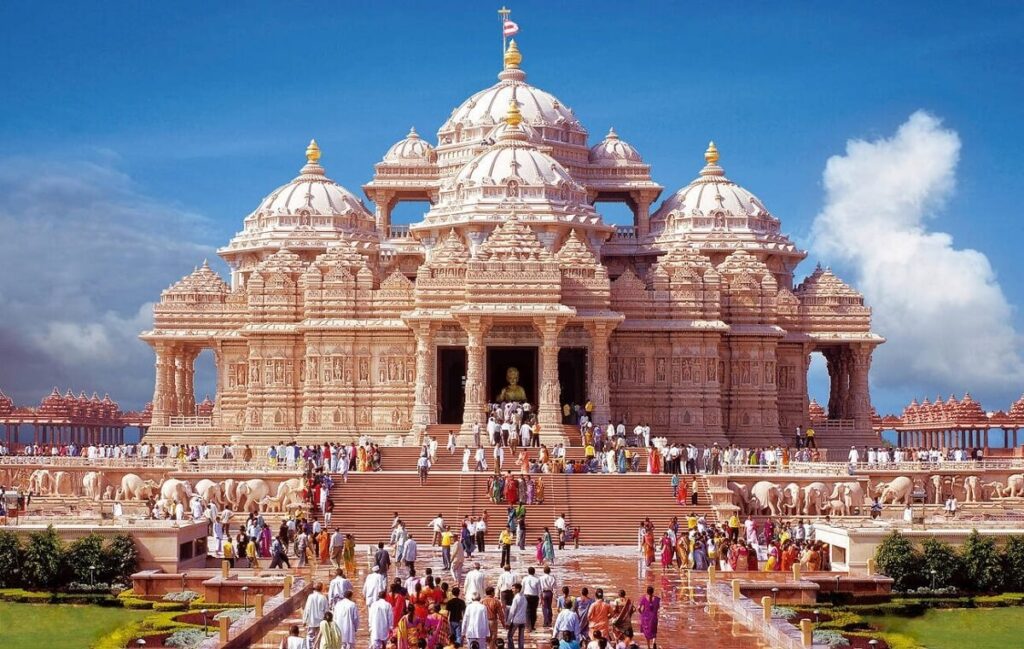
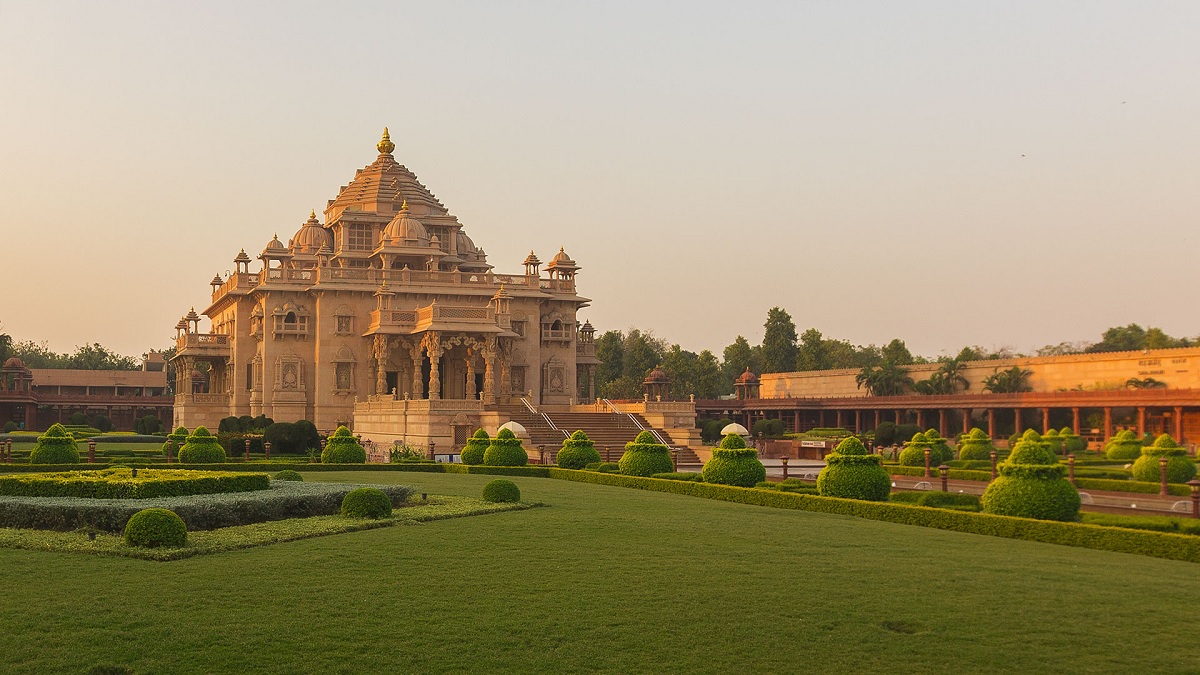
When you enter Delhi, the city greets you with contrasts. On one side, there are centuries-old forts, bustling bazaars, and Mughal tombs. On the other side, gleaming glass towers and expressways announce India’s rapid growth. Standing between these worlds is a masterpiece that feels timeless—Akshardham Temple, also known as the Swaminarayan Akshardham Mandir.
Completed in 2005, Akshardham looks like something that could have been built a thousand years ago. Its domes, pillars, and carved figures echo the golden age of Indian temple architecture. Yet, it’s also strikingly modern—a place where tradition meets technology, history meets devotion, and spirituality meets global tourism.
But Akshardham is not just about grandeur. Behind its pink sandstone walls lies a deep story: the vision of a saint, the efforts of thousands of artisans, and the inspiration of India’s spiritual heritage. To understand its history is to understand a piece of India’s cultural soul.
The Vision Behind Akshardham
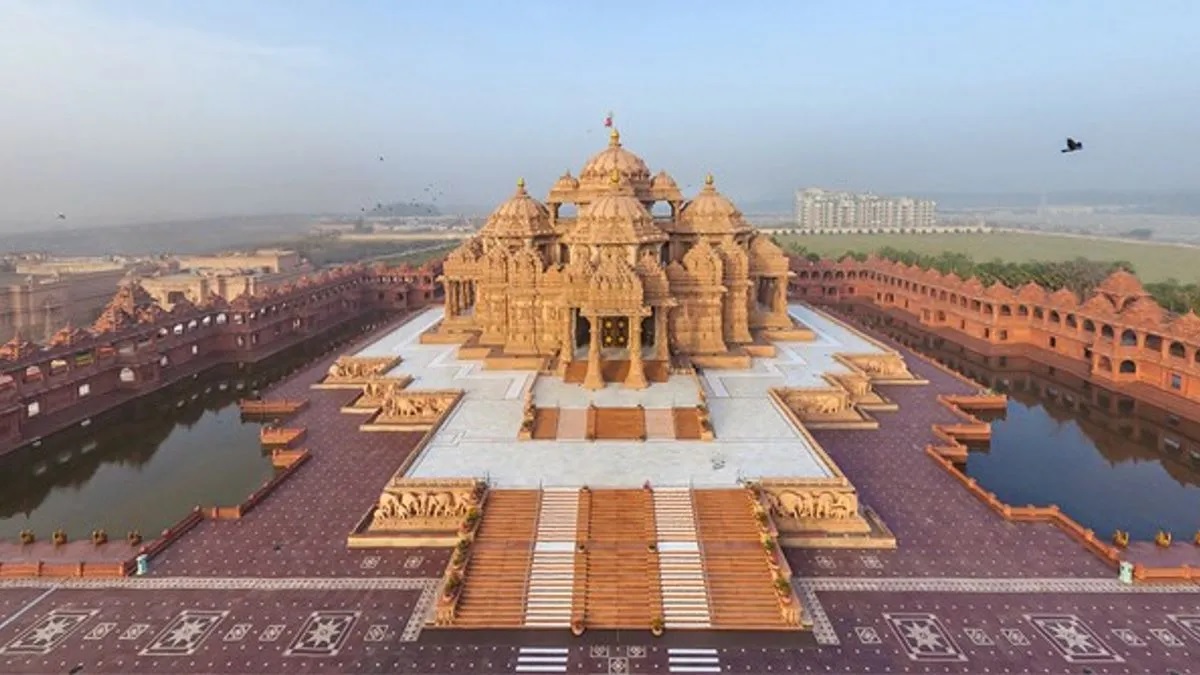
The story of Akshardham begins not with bricks or stones, but with a vision. This vision belonged to Pramukh Swami Maharaj, the spiritual leader of the Bochasanwasi Akshar Purushottam Swaminarayan Sanstha (BAPS).
Pramukh Swami Maharaj dreamed of building a temple that would:
- Celebrate India’s spiritual roots.
- Showcase the life and teachings of Bhagwan Swaminarayan (1781–1830), a reformer and spiritual master.
- Preserve India’s ancient art, architecture, and traditions for future generations.
He wanted more than just a temple. His idea was to create a spiritual-cultural campus where people could learn, reflect, and find peace—regardless of their religion or nationality.
This vision was shared with his disciples in the late 20th century, and after years of planning, the foundation was laid to make it a reality.
Book Your Dream Tour Package Now: Experience the 3 Days Delhi Agra Jaipur Tour Itinerary
Foundation and Construction Timeline
The project was ambitious. Building something so vast and detailed in the middle of a modern capital city wasn’t easy.
- Foundation Stone: The foundation stone was laid in 2000, with blessings from Pramukh Swami Maharaj.
- Workforce: Over 8,000 volunteers and artisans from across India contributed their skills.
- Duration: Construction took just five years—a surprisingly short time for a structure of this scale.
- Inauguration: On 6 November 2005, Akshardham was inaugurated by Dr. A.P.J. Abdul Kalam, then President of India, alongside Prime Minister Dr. Manmohan Singh.
The inauguration was more than a political event—it was a cultural celebration. Leaders spoke of how Akshardham wasn’t just for Hindus, but for anyone interested in India’s heritage.
Find Out Why Travelers Love: Find the Best Temples in India for Spiritual Journeys
Architecture and Design Philosophy
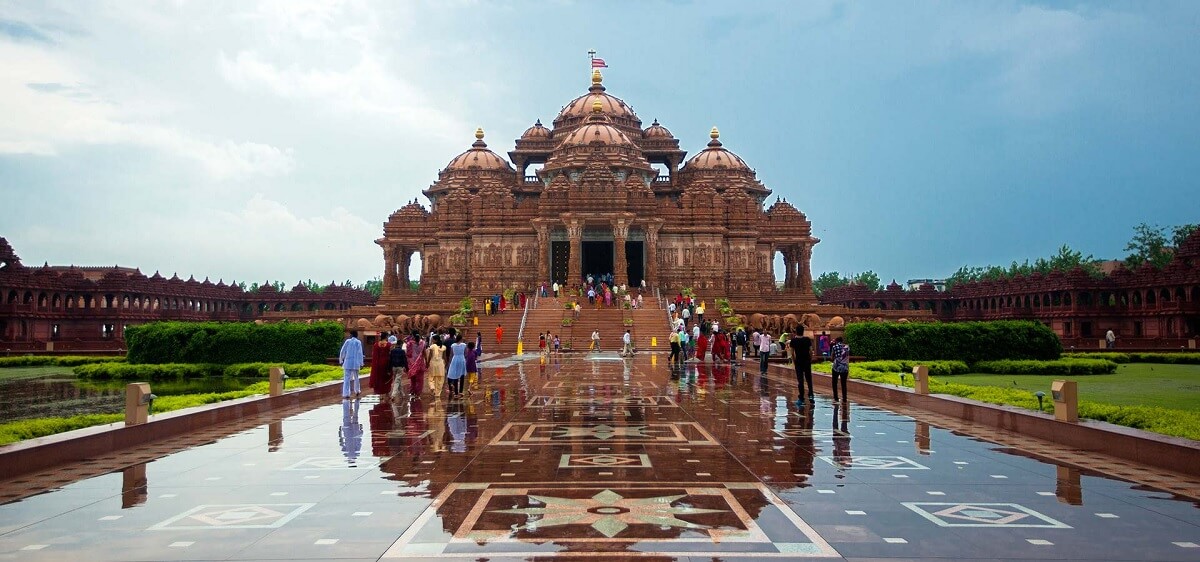
One of the most fascinating aspects of Akshardham is how it looks ancient, even though it is barely two decades old. That is no accident.
The temple was designed based on Vastu Shastra and Pancharatra Shastra, ancient Indian texts that guide temple construction. These texts emphasize harmony between structure, nature, and spirituality.
Key Features of the Design:
- Symmetry and Balance: Every part of Akshardham is aligned with cosmic principles.
- No Steel or Concrete in the Main Mandir: The central shrine is built entirely from pink sandstone and white marble, using traditional methods.
- Symbolism Everywhere: From lotus motifs to elephant carvings, every detail carries meaning about purity, strength, or devotion.
Walking through the temple, visitors often feel a sense of calm and awe—not just because of its size, but because of its harmony.
Discover the Best Deals on Tour Packages: Book 4 Days Agra & Delhi Tour Package Online
Materials and Craftsmanship
The building of Akshardham was a true national effort. Materials were sourced from different parts of India:
- Pink Sandstone: From Rajasthan, symbolizing strength and timelessness.
- White Marble: From Makrana, the same marble used in the Taj Mahal, symbolizing purity.
- Carvings: Every inch of the temple is hand-carved—depicting deities, musicians, dancers, animals, and plants.
The Numbers Behind the Craft:
- Over 200 stone sculptors worked full-time.
- Around 20,000 statues and images adorn the temple.
- 234 carved pillars, each unique in design.
- 9 ornate domes and 148 stone elephants forming the grand Gajendra Pith (elephant plinth).
This dedication to detail reflects the philosophy that temples are not just buildings—they are representations of the universe.
Experience the Best Things to Do in: Discover 25 Famous Temples to Visit in North India
Historical Inspirations Behind the Temple
Though Akshardham was built in the 21st century, its soul belongs to India’s ancient temple tradition.
1. Connection to Bhagwan Swaminarayan
The temple honors Bhagwan Swaminarayan, who lived in the late 18th and early 19th centuries. Known for his teachings on morality, spirituality, and social reform, he inspired a movement that still thrives today through BAPS. Akshardham is both a tribute to him and a continuation of his legacy.
2. Inspired by Ancient Indian Temples
The design of Akshardham draws inspiration from temples across India:
- Konark Sun Temple (Odisha): Intricate stone carvings.
- Khajuraho Temples (Madhya Pradesh): Artistic depictions of human and divine life.
- Somnath Temple (Gujarat): Grand scale and historic importance.
- Meenakshi Temple (Tamil Nadu): Sculptural richness and symbolic layouts.
By bringing together these influences, Akshardham acts like a living museum of India’s temple heritage.
3. A Temple for the Modern World
While rooted in history, Akshardham is also modern in its approach. It integrates exhibitions, films, and boat rides to teach culture and spirituality. This makes it accessible not only to pilgrims but also to schoolchildren, tourists, and international visitors.
The Main Monument (Mandir)
At the heart of the Akshardham complex stands the main temple, or Mandir. Built entirely from pink sandstone and white marble, it is a breathtaking example of traditional craftsmanship.
Central Shrine
- The central sanctum houses a beautifully carved idol of Bhagwan Swaminarayan in a seated posture.
- Around him, you’ll find idols of important Hindu deities such as Lord Shiva, Parvati, Radha-Krishna, Sita-Ram, and Lakshmi-Narayan.
- Each deity represents universal values: compassion, devotion, and balance.
Mandir Design
- Height: 141 feet.
- Width: 316 feet.
- Length: 356 feet.
- Pillars: Over 234 intricately carved columns.
- Domes: 9 majestic domes and 20,000 statues.
The Mandir feels alive—not only because of its sheer size but because every surface tells a story. Walk slowly, and you’ll notice scenes from epics like the Ramayana and Mahabharata, as well as carvings of musicians, dancers, and animals. It’s like walking through India’s cultural memory.
Discover the Best Deals on Tour Packages: Reserve Your 2-Day Delhi Tour Itinerary – Historical Highlights
Cultural and Historical Exhibitions
One of the unique aspects of Akshardham is its exhibition halls, which use art and technology to tell stories. These exhibitions make the temple more than a religious site—they turn it into a learning experience.
1. Sahajanand Darshan (Hall of Values)
This hall uses animatronic displays to present the life and teachings of Bhagwan Swaminarayan. The stories highlight timeless values such as:
- Non-violence
- Honesty
- Compassion
- Respect for nature
Visitors, especially children, often find this hall inspiring because it connects moral lessons to real-life situations.
2. Neelkanth Darshan (Giant Screen Film)
This IMAX-style film follows the journey of Neelkanth Varni, the teenage form of Swaminarayan, who traveled across India barefoot. His journey covered deserts, forests, and mountains, symbolizing courage, sacrifice, and spiritual awakening.
The film is visually stunning and appeals even to international tourists who may not know the details of Indian saints.
3. Sanskruti Vihar (Boat Ride)
Perhaps the most popular part of the exhibitions, this 12-minute indoor boat ride takes you through 10,000 years of Indian history. You pass scenes of ancient universities like Nalanda, contributions in science and mathematics, art and culture, and great personalities like Aryabhata and Chanakya.
This ride often leaves visitors amazed at the depth of India’s civilization and its global impact.
Find the Perfect Package for Your Journey: Join a 3-Hour Old Delhi Heritage Walk with Rickshaw Ride
Gardens and Surroundings
Akshardham is not only about temples and halls—it’s also about open spaces designed for reflection and beauty.
1. Yagnapurush Kund
- Known as the largest stepwell in the world.
- Features a musical fountain called the Sahaj Anand Water Show, which uses fire, water, and light to tell spiritual stories.
- In the evenings, this show draws large audiences and creates a magical atmosphere.
2. Bharat Upavan (Garden of India)
This garden is decorated with bronze statues of great Indian personalities—freedom fighters, kings, philosophers, and women leaders. It’s like walking through a gallery of India’s moral and cultural heroes.
3. Yogihriday Kamal (Lotus Garden)
A lotus-shaped garden engraved with inspiring quotes from world leaders and spiritual figures, including Gandhi, Vivekananda, and Swami Vivekananda. It symbolizes universal wisdom.
Plan Your Trip to: Explore Akshardham Temple Delhi – Architecture Guide
Spiritual Significance and Modern-Day Relevance
While Akshardham is undeniably beautiful, its deeper importance lies in what it represents.
- A Place of Unity: It welcomes people of all religions and backgrounds. Many visitors say they feel peace, even if they are not Hindus.
- Preserving Heritage: Through its architecture and exhibitions, Akshardham ensures that India’s culture is not forgotten in the rush of modernization.
- Inspiration for Youth: Thousands of students visit each year, learning not only about history but about values like service, humility, and respect.
- A Global Landmark: Akshardham has put Delhi on the world map as a center of spirituality, much like the Taj Mahal represents romance.
Visiting Information Akshardham Temple
If you’re planning a trip, here are practical details to make your visit smooth.
Timings
- Closed on Mondays.
- Open from 9:30 AM to 6:30 PM.
- Evening fountain show usually begins after sunset.
Entry
- Entry to the temple is free.
- Exhibition tickets cost around ₹220–₹250 for adults and less for children.
Rules
- Cameras, mobile phones, and large bags are not allowed inside.
- Lockers are available at the entrance.
Best Time to Visit
- October to March is ideal, with cooler weather.
- Post-monsoon (September) is also great as the gardens are lush and crowds are fewer.
Suggested Duration
Plan at least 4–5 hours to explore the mandir, exhibitions, gardens, and evening show.
FAQs about Akshardham Temple
1. Why was Akshardham built?
It was built to honor Bhagwan Swaminarayan and to celebrate India’s culture, values, and spiritual heritage.
2. How long did it take to construct?
Construction began in 2000 and was completed in just five years, opening in 2005.
3. Is Akshardham the largest temple in the world?
While not the largest by area, it is among the largest Hindu temples and one of the most intricate in design.
4. What is the difference between Akshardham in Delhi and other Swaminarayan temples?
Akshardham in Delhi is the largest cultural complex of BAPS and serves as a global showcase of India’s heritage. Other Swaminarayan temples are smaller and focused mainly on worship.
5. Can foreigners visit Akshardham?
Yes, visitors from all countries are welcome. The exhibitions are translated into multiple languages, making it easy for international travelers.
Start Your Adventure with This Package: Book a Private Full-Day Tour of New & Old Delhi
Conclusion: A Living Legacy of Indian Spiritual Heritage
Akshardham Temple is more than stone and marble—it is a living legacy. It embodies centuries of Indian spirituality, culture, and art, yet speaks to modern hearts with technology, inclusiveness, and relevance.
For Delhi, it is not just a tourist attraction but a reminder of India’s soul. For the world, it is proof that tradition and progress can coexist beautifully.
Whether you are a pilgrim, a history lover, or simply a curious traveler, visiting Akshardham is like stepping into a story that is ancient and new at the same time.
More Articles to Explore:
- Getting to Red Fort Made Easy – See Your Transport Choices!
- Don’t Miss the Red Fort Light & Sound Show – Plan Your Visit Today!
- Don’t Miss These Highlights – What to See Inside Red Fort
- Plan Your Visit to Lotus Temple Delhi – Complete Travel Guide
- Explore Famous Temples in Delhi-NCR with Nearest Metro Access
- Discover the Top 10 Temples in Delhi – Insider’s Travel Guide
- Uncover Unknown Facts About Lotus Temple New Delhi
- Book the 10 Best Weekend Getaways from Delhi This August
- Visit Must-See Temples Near Delhi for a Spiritual Retreat
- Top 10 Shiva Temples in Delhi NCR to Visit This Sawan 2025
- Plan Weekend Trips from Delhi to Enjoy July Monsoon Rains
- Escape to Hill Stations Near Delhi This Monsoon (August)
- Explore Best Wildlife Sanctuaries Near Delhi Open in Monsoon
- Red Fort vs Agra Fort: Which Should You Visit?
- Top 5 Things to Do Inside Red Fort Delhi
- Red Fort Delhi Light and Sound Show Experience