When you hear the name Red Fort (Lal Qila), you probably picture its massive red sandstone walls that dominate Old Delhi’s skyline. Built in 1648 by Mughal Emperor Shah Jahan, this UNESCO World Heritage Site is not just a fort—it’s a city within a city.
Every year, thousands of people visit the Red Fort to admire its grandeur. But here’s the thing: many travelers stop at the gate or take a quick walk around without truly exploring what lies inside. In reality, the Red Fort is filled with palaces, museums, gardens, audience halls, and secret passages, each with its own story.
If you want to understand India’s Mughal past, colonial history, and journey to independence, you need more than a photo at the Lahori Gate—you need to explore the fort’s top attractions in detail.
This guide will take you inside the fort, room by room, courtyard by courtyard, so you know exactly what to see, why it matters, and how to make the most of your visit.
A Brief History Before You Step Inside
- Built by Shah Jahan when he shifted his capital from Agra to Delhi.
- Served as the main residence of the Mughal emperors for nearly 200 years (1648–1857).
- Later taken over by the British after the 1857 Revolt.
- Today, it is the site where the Prime Minister hoists the Indian flag every Independence Day (15 August).
This layered history is what gives the Red Fort its special place in India’s identity.
Make Your Holiday Memorable in: Top 5 Things to Do Inside Red Fort Delhi
Top Attractions Inside the Red Fort

Let’s now walk through the fort systematically, from the entrance to the innermost palaces.
1. Lahori Gate – The Grand Entrance
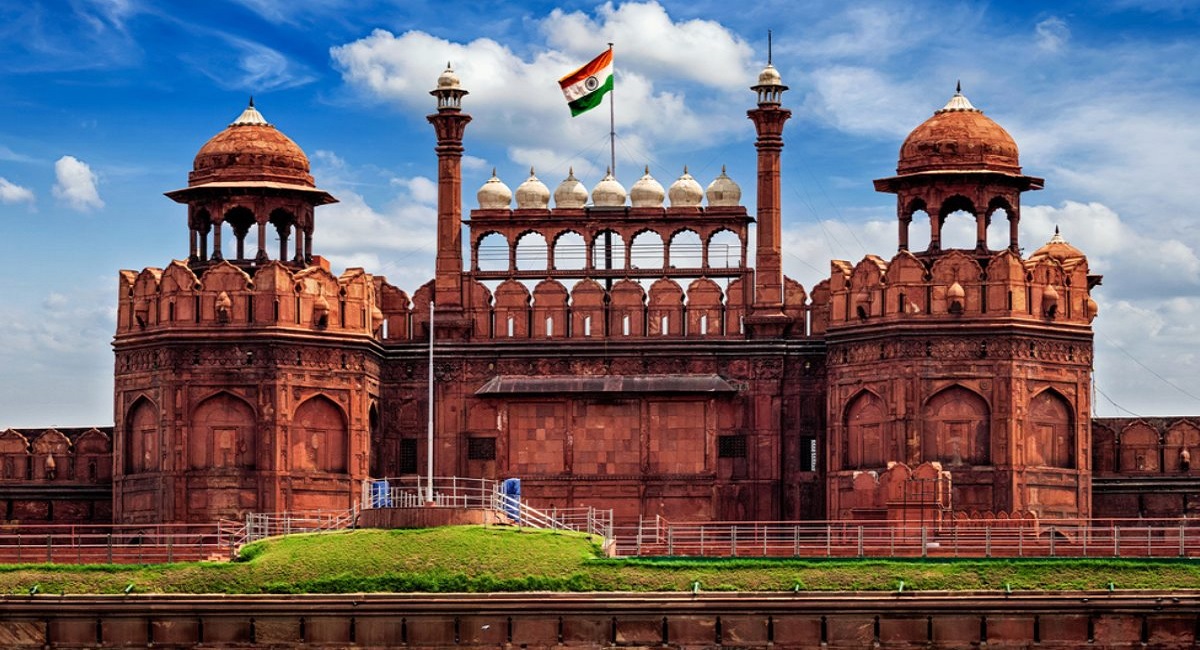
The Lahori Gate is the main public entrance to the Red Fort. Named because it faces Lahore (now in Pakistan), it is the same gate through which the Prime Minister enters on Independence Day.
- The gate is massive, with two large octagonal towers.
- During the Mughal era, this was the entrance used by royalty, courtiers, and visiting dignitaries.
- Today, security is tight here, but walking through the same gate as emperors once did sets the tone for the visit.
💡 Visitor Tip: Arrive early in the morning to beat the crowds at this gate.
Explore Also: Red Fort Delhi Light and Sound Show Experience
2. Chatta Chowk – The Covered Bazaar
Just beyond the Lahori Gate lies Chatta Chowk, one of the most fascinating parts of the fort.
- It is a covered bazaar, with arched ceilings and long corridors lined with shops.
- In the Mughal era, this was where noble families and royalty shopped for luxury goods like silks, jewelry, and perfumes.
- Today, the shops sell handicrafts, souvenirs, traditional jewelry, and miniature paintings.
Walking here feels like stepping into a 17th-century shopping mall, still alive after centuries.
💡 Tip: Don’t rush through. This is a great spot to pick up unique souvenirs.
Book Your Dream Tour Package Now: Experience the 3 Days Delhi Agra Jaipur Tour Itinerary
3. Naubat Khana (Drum House)
At the end of Chatta Chowk stands the Naubat Khana, or Drum House.
- Musicians played here to announce the arrival of the emperor or distinguished guests.
- Only nobles of high rank were allowed beyond this point into the inner fort.
- The building is richly decorated with floral motifs and was once filled with the sounds of ceremonial music.
Today, it houses a small museum with artifacts and displays about Mughal court culture.
4. Diwan-i-Aam (Hall of Public Audience)
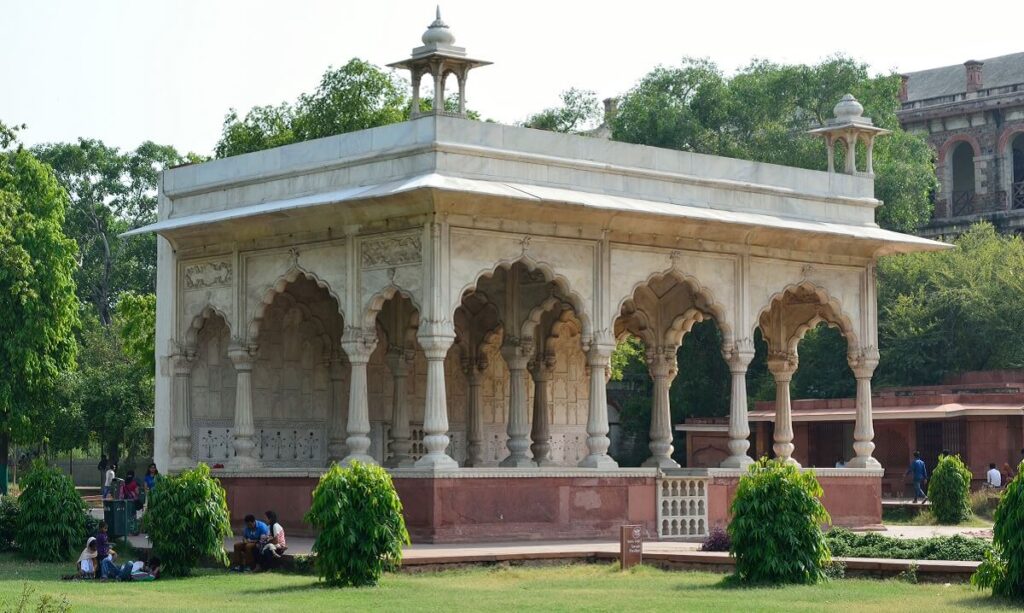
Next comes the Diwan-i-Aam, a grand hall where the emperor would meet his subjects.
- The hall is open on three sides with rows of arches and carved pillars.
- At the center is the emperor’s throne alcove, decorated with marble inlay.
- Common people could present petitions, complaints, or seek justice here.
Standing here, you can almost imagine the grandeur of an emperor listening to his people.
💡 Tip: This hall gets crowded, but take time to notice the intricate carvings and the throne space.
5. Diwan-i-Khas (Hall of Private Audience)
If the Diwan-i-Aam was for the public, the Diwan-i-Khas was for the elite.
- This marble hall was where the emperor held private meetings with ministers, nobles, and foreign dignitaries.
- The famous Peacock Throne—studded with jewels and gold—once stood here before being taken to Persia.
- A Persian inscription inside reads:
“If there is a paradise on earth, it is this, it is this, it is this.”
The Diwan-i-Khas truly symbolized Mughal opulence.
6. Rang Mahal (Palace of Colors)
The Rang Mahal, or “Palace of Colors,” was once part of the emperor’s harem.
- Known for its vibrant frescoes and decorations, though much of it has faded today.
- A marble channel called the Nahr-i-Bihisht (Stream of Paradise) flowed through the palace, cooling the air and adding to the luxury.
- It was used by royal women and concubines.
💡 Traveler’s Tip: Though not fully preserved, look closely at the marble work and water channels—you can still sense the royal comfort.
Find the Perfect Package for Your Journey: Join a 3-Hour Old Delhi Heritage Walk with Rickshaw Ride
7. Khas Mahal (Emperor’s Private Residence)
The Khas Mahal was the emperor’s own palace within the fort.
- Divided into three sections: Tasbih-Khana (chamber for private prayers), Khwabgah (sleeping chamber), and Baithak (sitting room).
- The marble walls were once adorned with gems, gilding, and floral inlay.
- The palace had latticed windows that allowed privacy while offering views of the Yamuna River.
8. Hammam (Royal Baths)
The Hammam, or royal bathhouse, is one of the most unique features of the Red Fort.
- Built of marble, with mosaic floors and domed ceilings.
- Heated water, aromatic oils, and steam baths were part of the luxurious royal lifestyle.
- Natural light filtered through colored glass, creating a magical atmosphere.
Even in ruins, the Hammam reveals the sophistication of Mughal architecture.
9. Mumtaz Mahal
Named after Shah Jahan’s favorite wife, Mumtaz Mahal, this palace is now a museum.
- It houses the Red Fort Archaeological Museum, displaying artifacts like manuscripts, coins, and Mughal-era paintings.
- Gives visitors a deeper insight into the daily life of the Mughal court.
10. Hayat Bakhsh Bagh (Life-Bestowing Garden)
The Hayat Bakhsh Bagh is a vast Mughal garden inside the fort.
- Built in the charbagh (four-part) style, with water channels dividing the garden into quadrants.
- Fountains, pavilions, and shady trees once made it a paradise on earth.
- Two pavilions, the Sawan and Bhadon, still stand as reminders of the fort’s golden days.
💡 Tip: If you want a peaceful moment away from the crowds, this garden is the place to be.
11. Moti Masjid (Pearl Mosque)
Built by Emperor Aurangzeb in 1659, the Moti Masjid is a small but exquisite mosque inside the fort.
- Made entirely of white marble, it shines like a pearl.
- It was the emperor’s private mosque for prayer.
- The design is simple yet elegant, showing a contrast to Shah Jahan’s more lavish style.
12. Museums Inside the Red Fort
The fort is also home to several museums that preserve India’s history beyond the Mughal era.
- Indian War Memorial Museum: Showcasing weapons, uniforms, and artifacts from Indian wars.
- Freedom Struggle Museum: Dedicated to India’s independence movement.
- Archaeological Museum: Located in Mumtaz Mahal, with Mughal artifacts.
These museums make the Red Fort more than a monument—they turn it into a living classroom.
13. Other Noteworthy Structures
- Shahi Burj: The emperor’s private working space, once connected to water channels.
- Zafar Mahal: Later additions from the 19th century under Bahadur Shah Zafar.
- Princes’ Quarters: Residential areas for royal family members.
Discover the Best Deals on Tour Packages: Book 4 Days Agra & Delhi Tour Package Online
Practical Visitor Information

Entry Timings
- Open daily (except Mondays) from 7:00 AM – 5:30 PM.
Ticket Prices
- Indians: ₹35
- Foreigners: ₹500
- Children below 15 years: Free
How Long to Spend Inside
- Minimum 2–3 hours for a basic tour.
- For history buffs, half a day is recommended to explore fully.
Best Time to Visit
- October to March (winter): Pleasant weather.
- Morning hours: Less crowded, better for photos.
- Combine with the Light and Sound Show in the evening for the full experience.
Find Out Why Travelers Love: Compare Red Fort vs Agra Fort – Which Should You Visit?
Conclusion: A City of Palaces, Not Just a Fort
When you step inside the Red Fort, you’re not just walking through old ruins—you’re entering a miniature city of palaces, halls, mosques, and gardens. Each structure tells a story of power, luxury, culture, and eventually decline.
From the grandeur of the Diwan-i-Khas to the serenity of the Moti Masjid, the Red Fort is a journey through India’s layered history. It’s where emperors once ruled, poets wrote verses, and freedom fighters dreamed of independence.
So the next time you visit, don’t just stop for photos at the gate. Wander deeper, explore slowly, and let the fort reveal its secrets. Because inside those red sandstone walls lies the soul of India’s past.
More Articles to Explore:
- Find Your Way to Red Fort – Explore Transport Options Now!
- Witness History Come Alive at Red Fort – See the Light & Sound Show!
- Explore Akshardham Temple Delhi – Discover Its History Now!
- Explore Akshardham Temple Delhi – Architecture Guide
- Discover 25 Famous Temples to Visit in North India
- Find the Best Temples in India for Spiritual Journeys
- Check Entry Fees & Visitor Info for Delhi’s Iconic Monuments
- Visit the Top 10 Historical Monuments in Delhi
- Plan Your Trip to Lotus Temple Delhi – Complete Travel Guide
- Explore Temples in Delhi-NCR with Metro Connectivity
- Discover Top 10 Temples in Delhi – Travel Guide
- Learn Interesting Facts About Lotus Temple New Delhi
- Book the Best 10 Weekend Getaways from Delhi in August
- Visit Must-See Temples Near Delhi for a Peaceful Retreat
- Explore 10 Famous Shiva Temples in Delhi NCR This Sawan