You hear Ayodhya before you fully see it. A soft chorus of chanting floating from nearby lanes, bells ringing in pockets of the city, and the faint smell of incense that seems to follow you as you walk closer to the temple zone. Then, almost suddenly, the noise drops a level.
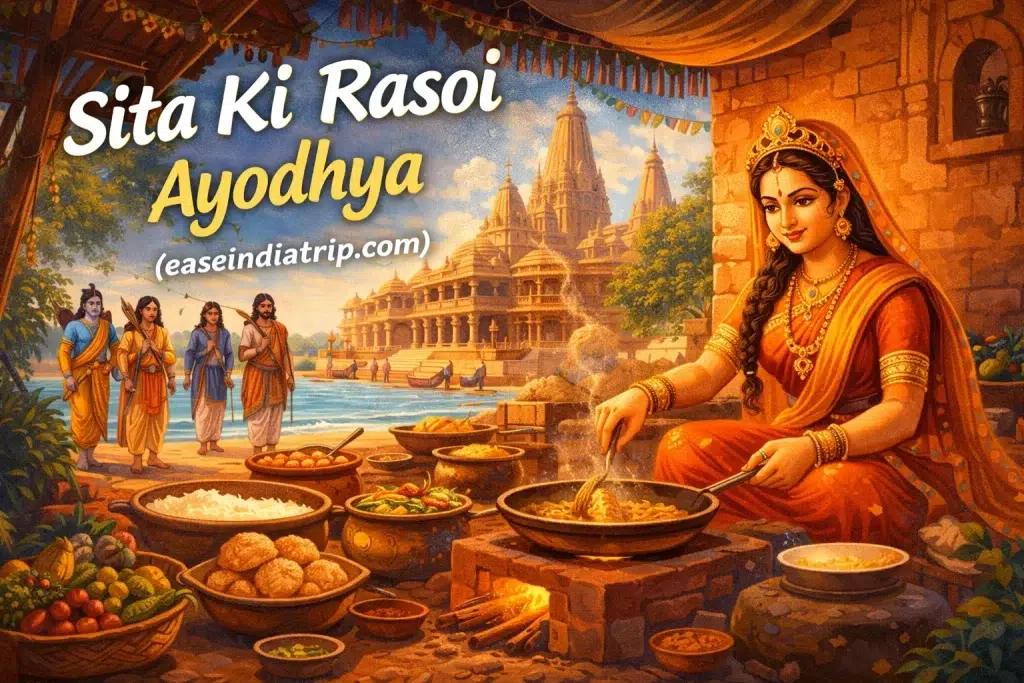
That’s what makes Sita Ki Rasoi feel different. People come to Ayodhya for the grand darshan, the big temple moments, the “once-in-a-lifetime” photos. But this small shrine offers a more intimate feeling: the story of divinity at home. Not a functional kitchen today, but a sacred space that honours Mata Sita as a symbol of nourishment, abundance, and grace.
Think of it as Ayodhya’s quiet reminder that devotion isn’t only in grand rituals. Sometimes it’s in the simplest act: feeding others, caring for family, and keeping the home warm.
If you’re planning Ayodhya as part of your Uttar Pradesh trip, you can also browse: Uttar Pradesh tours and Ram Janmabhoomi, Ayodhya.
Quick Facts for Visitors
- What it is: A small temple shrine associated with “Sita’s kitchen” tradition
- Location: Described on many travel references as on the north-western side of the Ram Janmasthan/Ram Janmabhoomi area, around Ramkot, close to landmarks like Ram Chabootra
- Suggested time needed: 1–2 hours
- Entry fee: None (usually free)
- Timings: Commonly listed as 8:00 AM to 6:00 PM (may vary on festivals)
- Phones/photos: Near the high-security temple zone; mobile phone restrictions apply inside the Ram Mandir premises
1) Historical & Spiritual Significance
The core legend: “first meal” after marriage
Across many Indian families, the first meal cooked by a newlywed bride in her new home is seen as a tender tradition. It’s not about cooking skills; it’s about belonging. It’s about the beginning of a shared household. Sita Ki Rasoi is linked to that emotional idea: Mata Sita as the ideal of love, duty, and warmth in domestic life.
In popular belief, this is the spot where Sita’s “first cooking” is remembered and worshipped. The story isn’t presented like a history museum with dates. It’s experienced like a living tradition that people still connect with.
Why Sita is worshipped here as the goddess of abundance
In this shrine, the focus shifts to Sita as a symbol of abundance and “ghar ka sukoon” (that homely peace). Food in pilgrim towns is not only a meal, it becomes seva. Feeding someone is considered a blessing. That’s why devotees often think of Sita here in the spirit of “Annapurna”: the one who ensures no one leaves hungry.
Hidden legend angle: “two Rasois” and the basement kitchen belief
Many travel references describe Sita Ki Rasoi as a basement kitchen-style shrine, and also mention that it is one among the kitchens revered in Sita’s name. That “two Rasois” detail is one of those quietly repeated local beliefs you’ll hear if you speak with locals or guides.
2) What You’ll Actually See Inside (Artifacts + Darshan)
Let’s set expectations properly: this isn’t a place filled with dozens of rooms or elaborate corridors. The visit is simple, devotional, and symbolic.
Symbolic kitchen artifacts
Visitors come to see the sacred representation of traditional kitchen elements. What’s commonly described:
- Chakla (rolling board) and belan (rolling pin) as symbolic artifacts
- A chulha-like structure linked to the “kitchen” memory
- A small setting where people offer prayers and quietly move on
The Ram-parivar presence (family theme)
Several references note that the temple also houses idols of Ram, Lakshman, Bharat, Shatrughan along with their wives Sita, Urmila, Mandvi, Shrutikriti. That detail matters because it reinforces what this shrine represents: divinity not only as a king or warrior, but as a family and a home.
What makes the atmosphere special
People often describe this spot as peaceful compared to the busier lanes, even though it’s close to the main temple zone. Many visitors don’t “do” much here. They simply stand, fold hands, and take a quiet minute. That’s the point.
3) Location & Layout (How to Find It Without Confusion)
Where is Sita Ki Rasoi in Ayodhya?
Sita Ki Rasoi is widely described as being on the north-western side of the Ram Janmasthan/Ram Janmabhoomi area, around Ramkot, and close to landmarks such as Ram Chabootra. :contentReference[oaicite:7]{index=7}
Practical tip: In Ayodhya, “near” can still feel like a short walk plus security routing. So instead of relying on one sentence from Google Maps, ask a local in simple words: “Sita Ki Rasoi kahan hai?” Most people will guide you instantly.
What the layout feels like
Expect a compact temple-like space with a devotional flow. You will likely spend more time in:
- Security movement / walking in the temple zone
- Waiting for your turn (on crowded days)
- Standing quietly and absorbing the space
4) Practical Travel Guide (Search Intent Answered)
Timings
Most mainstream travel listings mention 8:00 AM to 6:00 PM as a standard window. :contentReference[oaicite:8]{index=8} During major festivals, crowd management or rituals can affect entry flow, so keep a buffer.
Entry fee
Entry is generally listed as free. :contentReference[oaicite:9]{index=9} You may see donation boxes, but there is typically no ticket counter for this shrine.
Best time to visit (for peace + comfort)
- Early morning: calmer, softer light, less queue pressure
- Late afternoon: good for a slower vibe, but crowds can rise depending on the day
- Festival days: culturally rich, but expect heavy crowds and tighter security
Photography and phone rules (very important)
Because this shrine is close to the high-security temple zone, be prepared for strict rules. The Ram Mandir premises have had a complete ban on mobile phones announced by the temple trust/administration (reported in May 2024).
What this means for you as a traveller:
- Carry only essentials (ID, small cash, medicines if needed)
- Be mentally ready to deposit your phone if your route goes through restricted areas
- Don’t argue with security staff. Rules can change based on the day and crowd situation
How much time should you keep?
Travel sites usually suggest 1–2 hours for Sita Ki Rasoi. If you’re visiting the Ram Janmabhoomi circuit on the same day, keep extra buffer for security checks and walking time.
5) How to Plan Your Walk (Smart Route for a Smooth Day)
Ayodhya visits feel better when you follow a simple circuit instead of jumping randomly from one point to another. Here’s a practical half-day flow many pilgrims like:
Option A: Calm-first route (good for early mornings)
- Kanak Bhawan (start with peaceful darshan)
- Sita Ki Rasoi (quiet, symbolic shrine)
- Hanuman Garhi (strong devotional energy; can be crowded)
Option B: Temple-zone priority (if you want to finish security-heavy places first)
- Ram Janmabhoomi area (finish early, follow all restrictions)
- Sita Ki Rasoi
- Nearby temples/ghats as per your time and energy
For wider planning, you can also read: Tourist places near Ayodhya (within 100 km) and How to reach Ayodhya from Varanasi.
6) Pro Tips for Travellers (The Stuff People Forget)
1) Dress code and etiquette
- Wear modest clothes (covered shoulders and knees is a safe default)
- Carry a light scarf/dupatta if you prefer
- Footwear should be easy to remove and carry
2) What to carry
- Carry: ID, small cash, water, basic medicines, hand sanitiser
- Avoid: bulky bags, multiple gadgets, sharp objects, unnecessary items
3) Food and prasad experience
For a simple, authentic food experience, look for a clean sattvik bhojanalaya around the main temple/market area. Keep meals light if you’re doing multiple darshans. A thali-style meal is usually the most practical choice.
4) If you want the cultural experience: visit around Vivah Panchami
Vivah Panchami commemorates the marriage of Ram and Sita and is observed in places associated with Ram, including Ayodhya. :contentReference[oaicite:12]{index=12} If you love the “festival energy” side of pilgrimage towns, this season can feel special, but plan for crowds and tighter movement.
5) Common mistakes that spoil the visit
- Starting late and then rushing through everything
- Carrying too many items and getting stuck at security
- Assuming phones/photos are always allowed
- Trying to “cover Ayodhya” in one packed day without buffer time
Conclusion
Ayodhya is often remembered through its grand public moments. Sita Ki Rasoi gently pulls you into a quieter truth: divinity can also look like a home. A rolling board, a rolling pin, a humble “rasoi” idea, and the reminder that feeding others is one of the purest forms of seva.
If you visit, don’t rush. Give it time. Let the silence speak. And if you’ve already been, share your experience in the comments: did Sita Ki Rasoi feel like Ayodhya’s most peaceful corner to you too?