Sikkim in July is for travellers who enjoy mountains in their most dramatic and untouched form. This is peak monsoon season in the Eastern Himalayas, when hillsides turn a deep green, clouds drift through pine forests, waterfalls swell with rainwater, and quiet villages feel even more peaceful. The landscapes are incredibly beautiful, but July also requires flexibility because rain, fog, roadblocks, and changing conditions can affect sightseeing plans.
For travellers who expect bright mountain views every morning, July may not be the ideal month for Sikkim. However, for couples, nature lovers, photographers, slow travellers, and people who prefer lush scenery over crowded tourist hubs, Sikkim in July 2026 can be a memorable experience.
This guide covers Sikkim weather in July, the best places to visit, suggested travel routes, road conditions, permits, packing advice, safety tips, and practical planning information for a comfortable monsoon holiday.
Is July a Good Time to Visit Sikkim?
July is not considered the easiest month to travel in Sikkim, but it can be rewarding when planned correctly. The monsoon brings frequent rainfall across Gangtok, Pelling, Namchi, Ravangla, Yuksom, and other lower and mid-altitude destinations. The rain makes the valleys greener, fills the waterfalls, and creates atmospheric views of mist-covered mountains.
The main challenge is road travel. Landslides, fog, temporary road closures, and slow-moving traffic can affect long mountain drives. Therefore, visitors should avoid tightly packed itineraries and keep at least one flexible day in their Sikkim travel plan.
July is best for travellers who want:
- Green valleys, forests, tea gardens, and waterfalls
- Lower hotel rates compared with peak summer and autumn months
- Less crowded sightseeing places
- Peaceful stays in Gangtok, Pelling, Ravangla, Namchi, and village homestays
- Monsoon photography and cloud-covered Himalayan scenery
- A relaxed itinerary instead of a rushed road trip
It may not be ideal for travellers whose priority is trekking, snow views, high-altitude mountain passes, or guaranteed clear views of Kanchenjunga.
The India Meteorological Department has warned of heavy to very heavy rainfall spells across northeast India and Sub-Himalayan West Bengal and Sikkim during the current monsoon period. Conditions can change quickly, so travellers should review the latest district forecast and road updates before leaving for excursions.
Sikkim Weather in July 2026
July is one of the wettest months in Sikkim. Most areas receive regular rainfall, often in short intense spells followed by mist, cloudy weather, or brief sunny intervals. Rainfall patterns vary greatly by location because Sikkim has dramatic altitude differences.
Gangtok, located at a moderate Himalayan elevation, usually remains cool and humid. Pelling, Ravangla, Namchi, and Yuksom also experience regular showers, while high-altitude areas such as Tsomgo Lake and Nathula Pass remain much colder.
Average Temperature in Sikkim During July
| Destination | Day Temperature | Night Temperature | Weather Feel |
| Gangtok | 18°C to 24°C | 14°C to 18°C | Cool, humid and rainy |
| Pelling | 16°C to 22°C | 12°C to 16°C | Misty, green and pleasant |
| Ravangla | 15°C to 21°C | 11°C to 15°C | Cool with regular showers |
| Namchi | 18°C to 25°C | 15°C to 19°C | Mild and rainy |
| Yuksom | 16°C to 22°C | 12°C to 16°C | Wet, quiet and scenic |
| Tsomgo Lake | 7°C to 14°C | 3°C to 8°C | Cold, foggy and unpredictable |
These are broad seasonal ranges rather than a forecast. Actual temperatures can vary by altitude, rainfall intensity, and cloud cover.
July mornings can occasionally start with clear skies, especially after a night of rain. But clouds may gather quickly by late morning or afternoon. This is why early sightseeing is usually more practical in Sikkim during monsoon season.
What Makes Sikkim Beautiful in July?
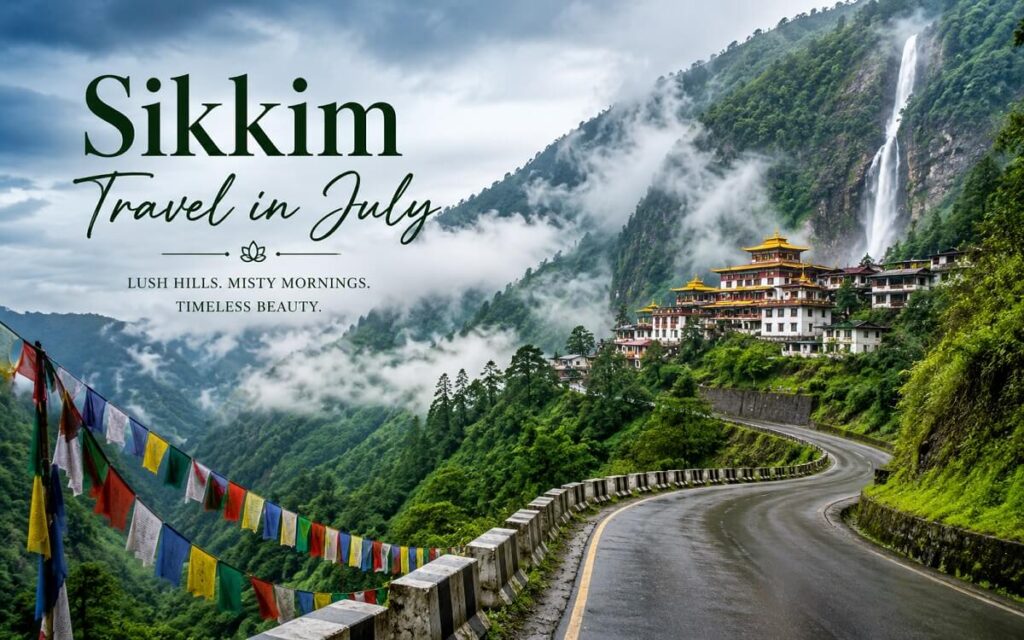
The monsoon transforms Sikkim into a rich green landscape. The forests become denser, waterfalls become more powerful, and mountain villages look fresh after rain. Even though Kanchenjunga views are not guaranteed, the mood of the destination becomes magical.
You may see:
- Clouds moving slowly across mountain roads
- Waterfalls flowing at full strength
- Moss-covered forests and lush valleys
- Rain-washed monasteries and colourful prayer flags
- Wildflowers and seasonal greenery
- Quiet roads and fewer tourist crowds
- Misty viewpoints with occasional clear mountain glimpses
Sikkim is known for its Himalayan scenery, Buddhist heritage, forests, high-altitude lakes, and mountain villages. The state combines natural landscapes with a rich cultural identity shaped by Lepcha, Bhutia, and Nepali communities.
Best Places to Visit in Sikkim in July 2026:
1. Gangtok
Gangtok is one of the best places to stay in Sikkim during July because it has better hotels, restaurants, transport options, cafes, and local sightseeing choices than remote mountain areas. It is a good base for first-time travellers, families, couples, and guests who want to avoid difficult road travel every day.
Even during rain, Gangtok has plenty to offer. MG Marg remains pleasant for evening walks, shopping, and local food. You can visit monasteries, viewpoints, museums, nearby waterfalls, and temples when weather conditions allow.
Popular places to visit in Gangtok include:
- MG Marg
- Rumtek Monastery
- Enchey Monastery
- Hanuman Tok
- Ganesh Tok
- Tashi View Point
- Banjhakri Falls
- Namgyal Institute of Tibetology
- Do Drul Chorten
- Flower Exhibition Centre
Gangtok is the capital of Sikkim and is known for its monasteries, culture, scenic surroundings, and adventure activities. Ganesh Tok, at roughly 6,500 feet, is especially popular for panoramic views when the weather clears.
Best July experience: Spend two or three relaxed nights in Gangtok, explore local attractions in the morning, and keep afternoons flexible for cafes, shopping, and indoor experiences.
2. Pelling
Pelling is one of the most scenic destinations in West Sikkim and a great choice for monsoon travellers. The town is famous for Kanchenjunga views, monasteries, waterfalls, forests, and peaceful mountain surroundings.
In July, the mountain may remain hidden behind clouds for much of the day, but the rain makes Pelling’s forests, waterfalls, and rural surroundings especially beautiful. Even without clear Himalayan views, the destination has enough attractions for a memorable stay.
Places to visit near Pelling include:
- Pemayangtse Monastery
- Rabdentse Ruins
- Kanchenjunga Falls
- Rimbi Waterfall
- Khecheopalri Lake
- Singshore Bridge
- Darap Village
- Pelling Skywalk
- Chenrezig Statue
Pelling sits at around 2,150 metres and is widely known for its views of the Kanchenjunga range, lush surroundings, waterfalls, and cultural heritage.
Best July experience: Stay for at least two nights. Avoid trying to cover every attraction in one day because rain can slow down local travel.
3. Ravangla
Ravangla is one of the best places to visit in Sikkim in July for peaceful scenery, monasteries, and a quieter hill-town atmosphere. Located between Gangtok and Pelling, Ravangla works well in a relaxed Sikkim itinerary.
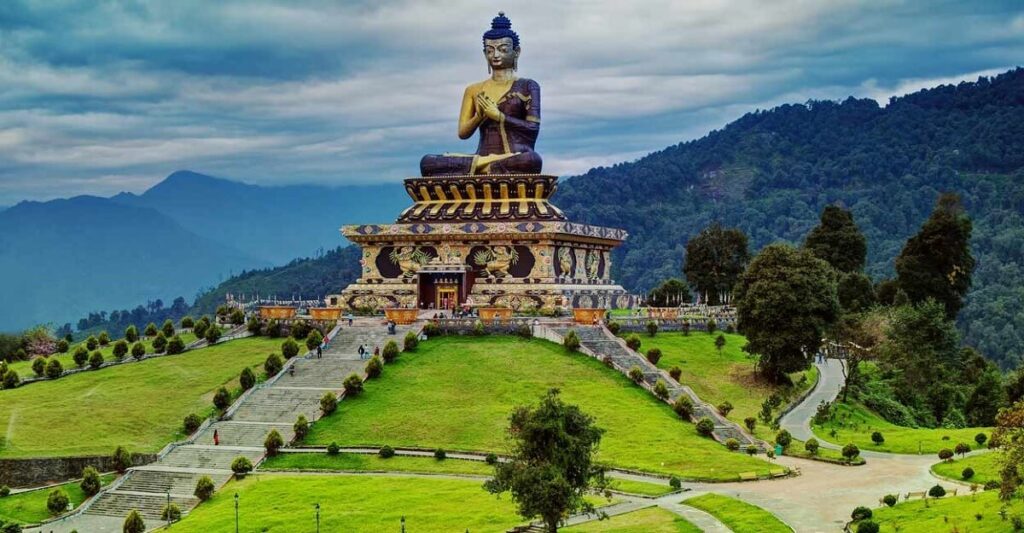
The town is known for Buddha Park, mountain views, forest trails, and its calm environment. In July, the park looks especially green, while clouds often create a peaceful backdrop around the large Buddha statue.
Top attractions in Ravangla include:
- Buddha Park
- Ralong Monastery
- Bon Monastery
- Rayong Sunrise View Point
- Temi Tea Garden
- Maenam Wildlife Sanctuary
- Borong Village
Borong, near Ravangla, is known for village tourism, natural scenery, hot springs, and trekking routes.
Best July experience: Stay in a quiet resort or homestay with a valley view. Ravangla is especially suitable for couples and travellers looking for a slower mountain holiday.
4. Namchi
Namchi is located in South Sikkim and is generally a more manageable monsoon destination than remote northern areas. It is known for spiritual sites, rolling hills, monasteries, and scenic viewpoints.
The town offers a mix of culture and nature. July rain makes the landscape fresh and green, while its lower elevation often makes it comparatively comfortable for travellers who are not used to very cold mountain weather.
Places to visit in Namchi include:
- Siddhesvara Dham
- Samdruptse Hill
- Char Dham
- Namchi Rock Garden
- Temi Tea Garden
- Ngadak Monastery
- Tendong Hill area
Namchi can be combined with Ravangla and Pelling for a smooth monsoon itinerary that avoids excessive high-altitude travel.
5. Yuksom
Yuksom is a historic and peaceful village in West Sikkim. It is often called the gateway to major Himalayan trekking routes, but even non-trekkers can enjoy its monasteries, forests, village walks, and traditional atmosphere.
July is not recommended for long treks from Yuksom because trails can become slippery and weather conditions may be difficult. However, it is a rewarding destination for travellers who want quiet mountain stays and local cultural experiences.
Yuksom is located at approximately 1,780 metres and is associated with Sikkim’s history, spirituality, and mountain landscapes.
Best July experience: Choose a comfortable village stay, take short walks only when weather permits, and do not depend on trekking plans.
6. Tsomgo Lake
Tsomgo Lake, also known as Changu Lake, is one of Sikkim’s most famous high-altitude attractions. Located around 40 kilometres from Gangtok, the lake sits at approximately 3,753 metres above sea level.
In July, the lake area can be cold, wet, foggy, and affected by changing road conditions. Visibility may be poor, and permits are required. Still, if the route is open and weather is stable, Tsomgo Lake can be a beautiful excursion from Gangtok.
Travellers should not treat a Tsomgo Lake visit as guaranteed during monsoon. It should be kept as a weather-dependent option.
7. Khecheopalri Lake
Khecheopalri Lake is one of the most peaceful places to visit near Pelling. Surrounded by forested hills, this sacred lake has a calm and spiritual atmosphere. July rain makes the route lush, although visitors should be careful on wet walking paths.
The lake is best visited early in the day, when rain is often lighter and the area is quieter.
8. Temi Tea Garden
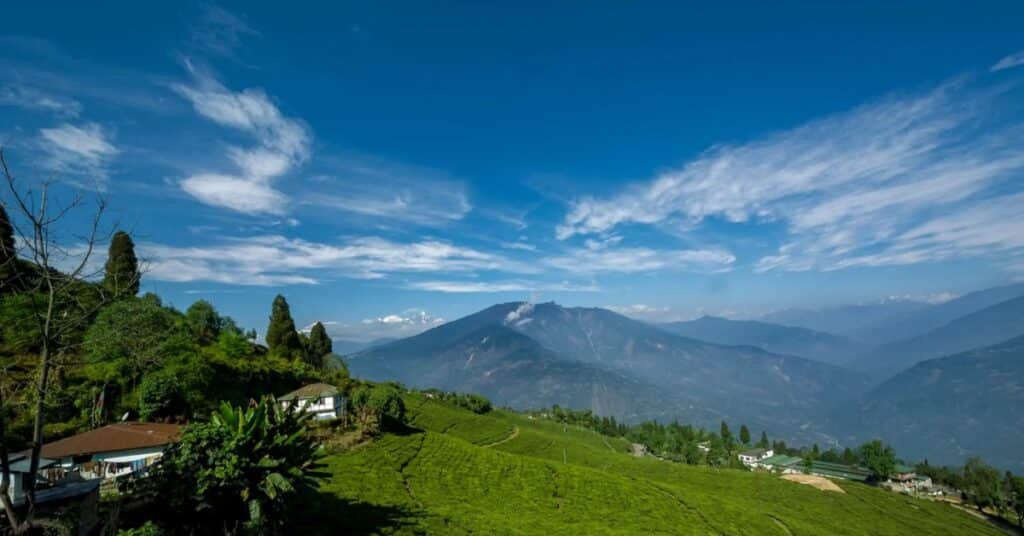
Temi Tea Garden is a lovely addition to a July itinerary in South Sikkim. The slopes look exceptionally green during monsoon, and the drive through tea plantations can be scenic when visibility is good.
It is an excellent stop between Gangtok, Ravangla, and Namchi. Avoid walking far into wet plantation paths, but enjoy the views, tea breaks, and photography from safe roadside points.
Places to Avoid or Visit Carefully in July
Some places are not impossible to visit in July, but they are more vulnerable to weather disruptions.
These include:
- North Sikkim
- Lachung
- Lachen
- Yumthang Valley
- Zero Point
- Gurudongmar Lake
- Nathula Pass
- Zuluk
- Silk Route areas
- Long trekking routes
North Sikkim is exceptionally beautiful, but roads may be affected by heavy rain, landslides, and temporary restrictions. Travellers should only include it after confirming current road conditions, permits, and weather updates with an authorised local operator.
Do not book a short four-day trip that depends entirely on North Sikkim in July. A better approach is to focus on Gangtok, Pelling, Ravangla, Namchi, and nearby destinations.
Sikkim Permits for July 2026
Many parts of Sikkim require permits because of their proximity to international borders and protected areas. Permit rules can change, so travellers should confirm requirements before booking.
Indian nationals commonly require permits for areas such as Nathula Pass and certain protected regions. Foreign nationals require additional permits for some areas, including restricted and protected routes.
The Government of Sikkim’s Tourism and Civil Aviation Department lists district tourism offices that issue permits for Indian and foreign tourists for destinations including Tsomgo Lake, Nathula-related routes, Lachung, Lachen, Thangu, Yumthang, and other protected areas.
For a smooth permit process, carry:
- Government-issued photo identification
- Passport-size photographs
- Passport and valid Indian visa for foreign travellers
- Hotel booking confirmations
- Local travel operator details, where required
- Printed and digital copies of documents
For border-region excursions, book through a recognised local operator rather than depending on last-minute arrangements.
How to Reach Sikkim in July:
By Air
The nearest major airport is Bagdogra Airport near Siliguri in West Bengal. From Bagdogra, Gangtok is usually reached by road. Travel time depends heavily on weather, traffic, and road conditions.
Pakyong Airport is closer to Gangtok, but flight availability can be limited and weather may affect operations during monsoon.
By Train
New Jalpaiguri Railway Station, commonly called NJP, is the main railhead for travellers visiting Sikkim. It is well connected with Kolkata, Delhi, Guwahati, Mumbai, Bengaluru, and other Indian cities.
From NJP, travellers can hire a private cab or take a shared taxi to Gangtok.
By Road
The road journey from Bagdogra or NJP to Gangtok is scenic but can be slow in July due to rainfall and traffic. Start early in the morning and avoid late-evening mountain travel where possible.
Do not plan a flight or train departure immediately after a long drive from remote areas. Keep a buffer of at least one night near Gangtok, Siliguri, Bagdogra, or NJP before your return journey.
Suggested 7-Day Sikkim Itinerary for July:
Day 1: Arrive at Bagdogra or NJP and Transfer to Gangtok
Reach Gangtok, check into your hotel, and rest after the mountain drive. In the evening, visit MG Marg if the weather is comfortable.
Day 2: Gangtok Local Sightseeing
Visit Banjhakri Falls, Namgyal Institute of Tibetology, Do Drul Chorten, Ganesh Tok, Hanuman Tok, and local monasteries. Keep the day flexible in case of rain.
Day 3: Gangtok to Tsomgo Lake or Local Alternative
If permits, road conditions, and weather are favourable, take an excursion to Tsomgo Lake. If not, explore Rumtek Monastery, local cafes, markets, and nearby viewpoints.
Day 4: Gangtok to Ravangla
Travel to Ravangla through scenic mountain roads. Check in and visit Buddha Park if weather allows.
Day 5: Ravangla to Pelling
Continue to Pelling. Spend the evening enjoying the misty mountain setting from your hotel.
Day 6: Pelling Sightseeing
Visit Pemayangtse Monastery, Rabdentse Ruins, Kanchenjunga Falls, Rimbi Waterfall, Darap Village, and Khecheopalri Lake depending on road conditions.
Day 7: Pelling to NJP or Bagdogra Departure
Leave early for NJP or Bagdogra. Keep enough time for weather-related traffic delays.
What to Pack for Sikkim in July
Packing correctly is essential for a monsoon trip to Sikkim.
Carry:
- Lightweight rain jacket or poncho
- Compact umbrella
- Quick-dry T-shirts and trousers
- Waterproof trekking or walking shoes
- Extra socks
- Warm jacket or fleece for evenings
- Waterproof bag cover
- Small daypack
- Power bank
- Reusable water bottle
- Basic medicines
- Motion sickness tablets
- Insect repellent
- Torch or phone flashlight
- Photocopies of permits and ID documents
- Plastic or waterproof pouches for electronics
Avoid carrying heavy denim, open sandals, or expensive luggage that can be easily damaged by rain.
Important Travel Tips for Sikkim in July 2026:
Keep Your Itinerary Flexible
This is the most important tip. Rainfall may delay travel, change sightseeing plans, or close roads temporarily. Do not schedule too many destinations in a short time.
Start Road Journeys Early
Morning departures are safer and more practical. Afternoon rainfall can become heavier, and fog may reduce visibility on mountain roads.
Stay in Reliable Hotels
Choose hotels with proper heating, room service, clean bathrooms, power backup, and easy road access. In remote monsoon locations, basic comfort matters more than a luxury view.
Avoid Self-Driving in Remote Areas
Unless you have strong mountain-driving experience, use a local driver. They understand road conditions, weather patterns, and safe alternate routes.
Check Road Conditions Daily
Speak with your hotel, driver, local travel operator, or district tourism office before starting a major excursion. Do not rely only on an itinerary prepared weeks earlier.
Respect Local Advice
If authorities, hotel staff, or drivers recommend postponing a high-altitude excursion, follow their advice. Mountain weather can change suddenly.
Do Not Chase Waterfalls Too Closely
Waterfalls are powerful in July. Enjoy them from designated viewpoints and avoid slippery rocks, riverbanks, or unprotected trails.
Food to Try in Sikkim During July
The rainy weather makes Sikkim’s warm local food even more enjoyable. Try simple meals from clean, well-reviewed restaurants and homestays.
Popular food options include:
- Momos
- Thukpa
- Phagshapa
- Gundruk soup
- Sha phaley
- Kinema dishes
- Sel roti
- Tibetan bread
- Local tea
- Hot butter tea in some traditional settings
Gangtok has the widest range of cafes and restaurants, while Pelling, Ravangla, and village stays offer simpler local food experiences.
Is Sikkim Safe to Visit in July?
Sikkim can be safe in July when travellers plan responsibly. The main concerns are not crime but weather-related travel disruptions, road conditions, landslides, and altitude-related discomfort in higher regions.
Avoid travelling during official warnings for heavy rain, do not drive at night in remote mountain areas, and always keep transport and hotel contact details available.
Travellers should also purchase travel insurance that covers trip delays, cancellations, medical needs, and weather-related disruptions.
Final Thoughts
Sikkim in July 2026 is not a conventional mountain holiday. It is a monsoon journey filled with misty roads, lush forests, overflowing waterfalls, quiet monasteries, steaming local food, and unexpected moments of Himalayan beauty.
The key is to travel slowly. Stay longer in fewer places, choose reliable hotels, use experienced local drivers, and leave room for weather changes. A trip focused on Gangtok, Ravangla, Pelling, Namchi, and nearby cultural attractions can be far more enjoyable than trying to cover every high-altitude destination.
For travellers who love rain-washed landscapes and peaceful Himalayan experiences, Sikkim in July offers a side of the mountains that peak-season visitors rarely see.
Frequently Asked Questions About Sikkim in July
Does it rain every day in Sikkim in July?
Rain is frequent in July, but it may not rain continuously all day. You can experience showers, mist, cloudy periods, and occasional clear intervals.
Can I see Kanchenjunga in July?
Clear views are possible but not guaranteed. Clouds and rain often block the mountain. Pelling, Gangtok, Ravangla, and nearby viewpoints may offer occasional visibility after rain.
Is North Sikkim open in July?
North Sikkim may be open on certain days, but access depends on weather, road conditions, permits, and local administrative decisions. It should not be treated as guaranteed.
Is Gangtok worth visiting in July?
Yes. Gangtok is one of the better Sikkim destinations for July because it has good accommodation, local sightseeing, restaurants, cafes, and easier access to transport.
What clothes should I wear in Sikkim in July?
Wear light layers, quick-dry clothes, waterproof shoes, and a rain jacket. Carry a warm fleece or jacket for evenings and high-altitude destinations.
Is July suitable for a honeymoon in Sikkim?
Yes, for couples who enjoy quiet hotels, misty scenery, green valleys, and a relaxed itinerary. Avoid overpacking the schedule and choose comfortable stays in Gangtok, Pelling, or Ravangla.