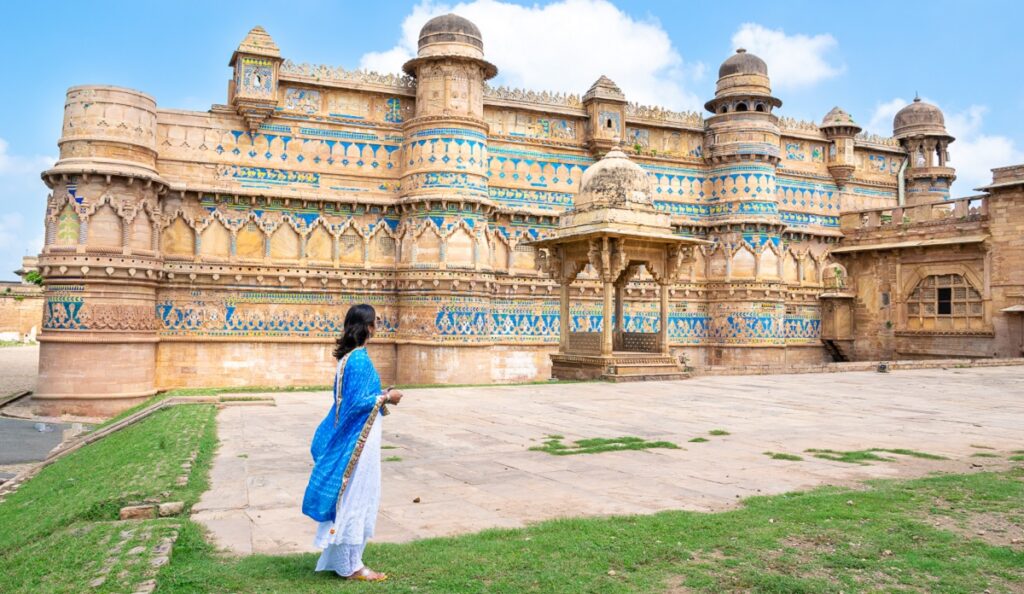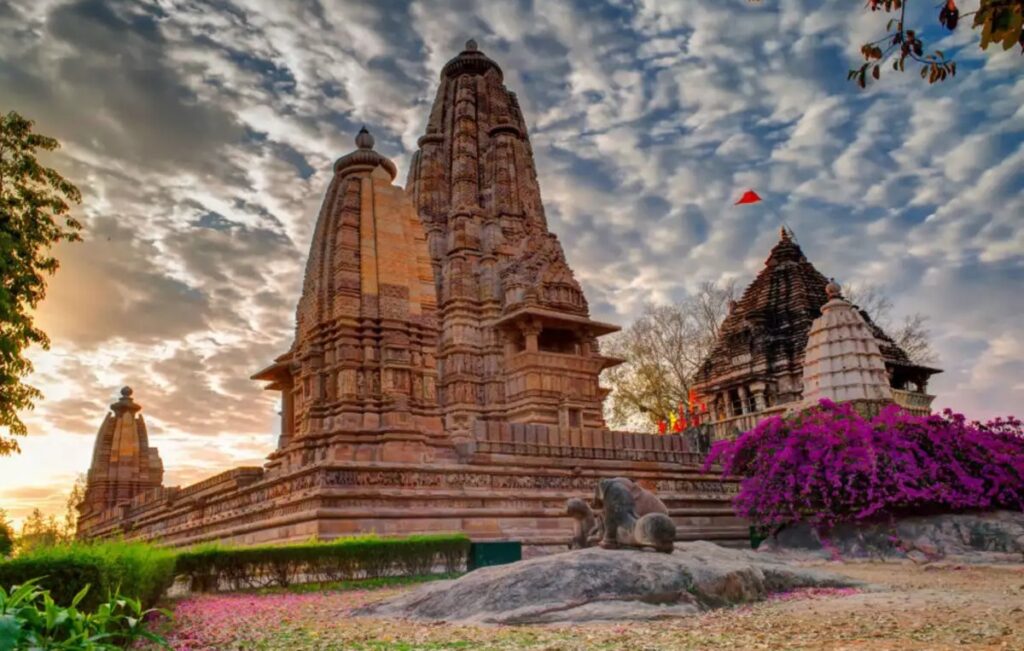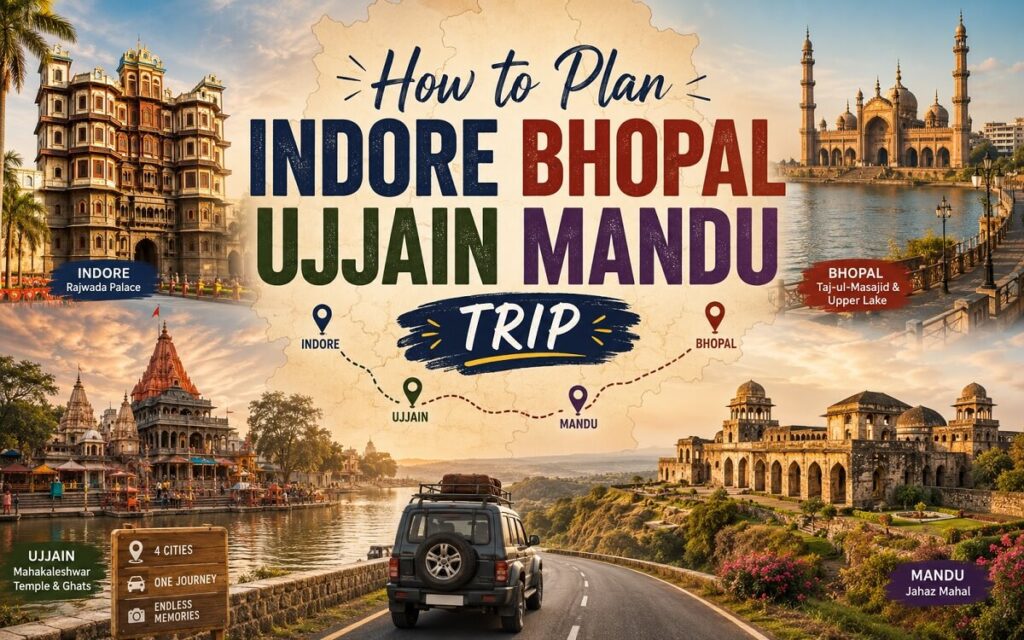
Madhya Pradesh is often called the heart of India, and a journey through Indore, Ujjain, Mandu, and Bhopal explains why. This route combines sacred temples, royal palaces, ancient monuments, lively food streets, peaceful lakes, archaeological treasures, and fascinating stories from different periods of Indian history.
Indore introduces you to the region through Holkar heritage and one of India’s most exciting street-food cultures. Ujjain adds a deeply spiritual experience centred around the Mahakaleshwar Jyotirlinga. Mandu offers romantic ruins, Afghan architecture, hilltop landscapes, and monsoon scenery. Bhopal completes the journey with beautiful lakes, museums, historic mosques, and convenient excursions to Sanchi and Bhimbetka.
Planning an Indore Bhopal Ujjain Mandu trip may initially seem complicated because the destinations lie in different directions. However, with the right route, you can cover them comfortably in six to eight days without spending too much time backtracking.
This complete Indore Bhopal Ujjain Mandu trip guide explains the best route, ideal duration, places to visit, transport choices, accommodation options, expected budget, food experiences, and practical travel tips.
Why Plan an Indore, Ujjain, Mandu and Bhopal Trip?
These four destinations showcase four distinct sides of Madhya Pradesh.
Indore is modern, energetic, commercially important, and famous for its food. Ujjain is one of India’s most sacred cities and an important pilgrimage centre. Mandu is known for palaces, gateways, tombs, legends, and hilltop views. Bhopal combines historic neighbourhoods with lakes, museums, green spaces, and nearby UNESCO-listed attractions.
Together, they create a balanced itinerary suitable for families, couples, senior travellers, pilgrims, history enthusiasts, photographers, and first-time visitors to Madhya Pradesh.
The official Madhya Pradesh Tourism website also promotes itineraries linking Indore, Ujjain, Mandu, Maheshwar, and Omkareshwar, confirming that these destinations work well as a connected travel circuit.
Best Route for an Indore Bhopal Ujjain Mandu Trip
The most practical route is:
Indore → Ujjain → Indore → Mandu → Bhopal
You can also follow:
Indore → Mandu → Ujjain → Bhopal
However, the first option is generally more convenient because Ujjain is close enough to Indore for a day trip or one-night excursion. Mandu lies southwest of Indore, while Bhopal is northeast of Indore, so returning briefly through Indore makes the road journey easier to organise.
For travellers arriving by flight, Indore is usually a convenient starting point because Devi Ahilyabai Holkar Airport serves the Indore metropolitan region and offers connections with major Indian cities.
An equally good alternative is to begin in Bhopal and end in Indore:
Bhopal → Ujjain → Indore → Mandu → Indore
This route is suitable when flight or train fares to Bhopal are better from your home city.
Suggested Travel Distances
Approximate road distances are:
- Indore to Ujjain: 55 to 60 kilometres
- Indore to Mandu: 95 to 100 kilometres
- Indore to Bhopal: around 190 kilometres
- Ujjain to Bhopal: around 185 kilometres
- Mandu to Bhopal: around 285 to 300 kilometres
Travel times can change because of roadwork, city traffic, religious gatherings, weather, and festival crowds. Always leave extra time when travelling to Ujjain during major religious events.
How Many Days Are Needed?
A minimum of six days is recommended for an Indore, Ujjain, Mandu and Bhopal tour.
Seven days is better if you want a relaxed pace, while eight days allows you to add Sanchi, Bhimbetka, Maheshwar, or Omkareshwar.
Here is a simple duration guide:
5 days: Possible, but rushed
6 days: Covers the four main destinations
7 days: Comfortable and balanced
8 days: Best for adding Sanchi and Bhimbetka
9 days: Suitable for including Maheshwar and Omkareshwar
For most travellers, a seven-night or eight-day plan offers the best combination of sightseeing and comfortable travel.
7-Day Indore Bhopal Ujjain Mandu Itinerary:
Day 1: Arrival in Indore and Local Sightseeing
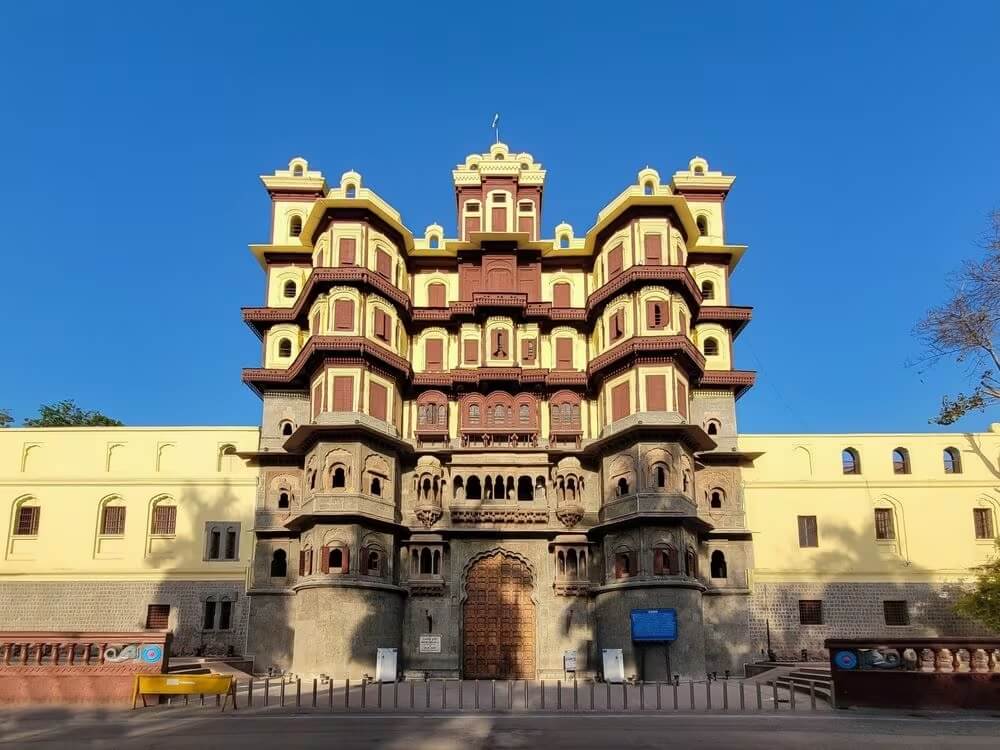
Arrive in Indore by flight, train, bus, or private vehicle. Check in at your hotel and rest before beginning the sightseeing tour.
Start with Rajwada Palace, one of Indore’s most recognizable historical landmarks. The palace reflects the influence of the Holkar dynasty and stands close to the old markets of the city. Walk around the surrounding lanes to experience the atmosphere of traditional Indore.
Continue to Krishnapura Chhatris, a group of beautiful memorial structures built in honour of members of the Holkar royal family. The architecture, carved pillars, domes, and riverside setting make it a worthwhile stop for photography.
Later, visit Kanch Mandir, a Jain temple famous for its mirror-covered interiors. Nearly every visible surface inside the temple is decorated with glass, mirrors, and intricate artwork.
In the evening, visit Sarafa Bazaar. The jewellery market transforms into a lively street-food destination after the shops begin closing. Popular local dishes include poha, jalebi, bhutte ka kees, garadu, sabudana khichdi, dahi bada, khopra patties, and different varieties of sweets.
Keep your first day relatively light, especially when arriving after a long journey.
Overnight stay: Indore
Day 2: Indore to Ujjain and Ujjain Sightseeing
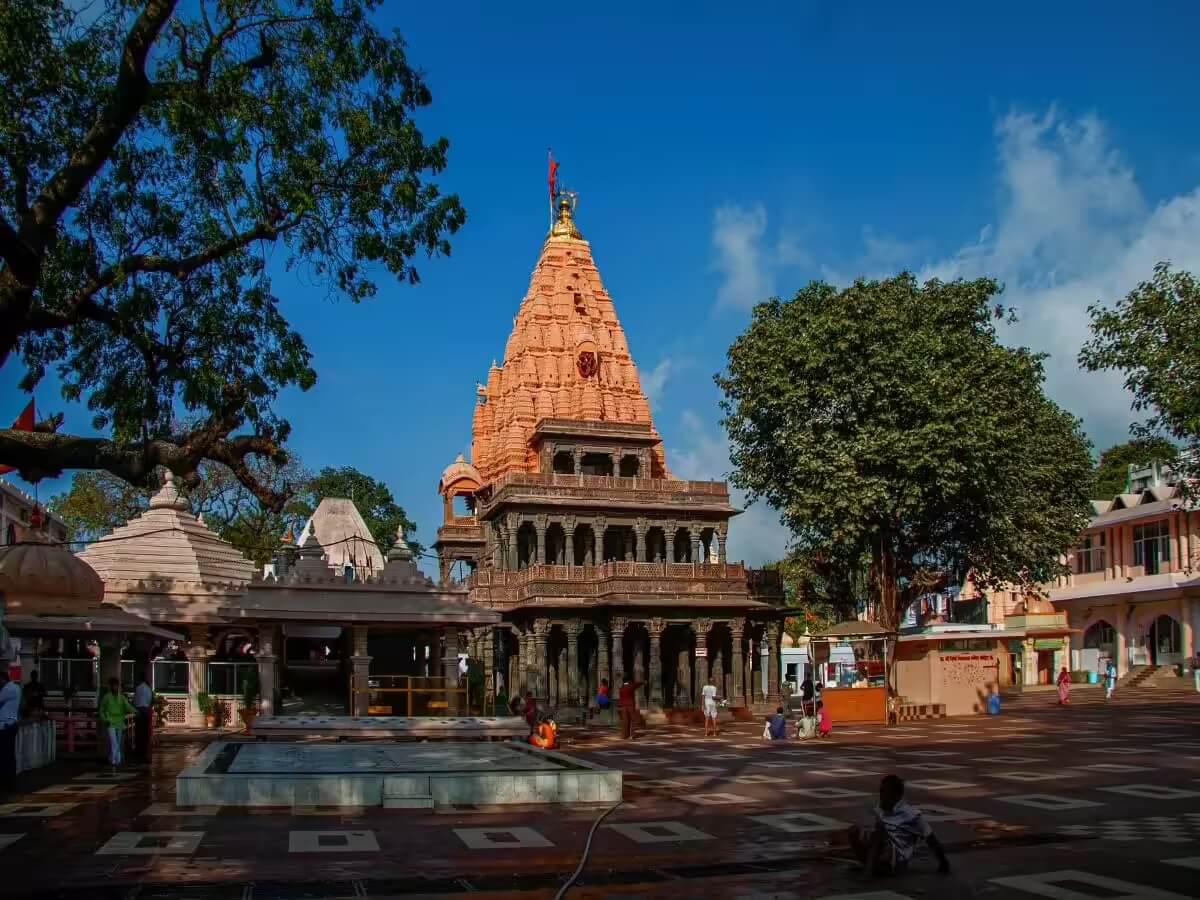
After an early breakfast, drive from Indore to Ujjain.
Ujjain is one of India’s most important Hindu pilgrimage cities and is situated along the Shipra River. It is closely associated with Lord Shiva and is also one of the four locations where the Kumbh Mela is held.
Begin at the Mahakaleshwar Temple, home to one of the twelve Jyotirlingas. The temple attracts large numbers of devotees throughout the year, so advance planning is important.
Travellers wishing to attend the Bhasma Aarti should check the latest registration procedure, reporting time, identification requirements, and dress rules through official temple channels before travelling. Procedures can change, particularly during festivals and high-demand periods.
After darshan, visit the nearby Bade Ganeshji Ka Mandir and walk towards Harsiddhi Mata Temple. This temple is especially atmospheric in the evening when its tall lamp towers are illuminated.
Continue to Ram Ghat on the banks of the Shipra River. Pilgrims come here for ritual bathing, prayers, and evening ceremonies. Spend some time walking along the ghats and observing the spiritual character of the city.
Other notable places in Ujjain include:
- Kal Bhairav Temple
- Mangalnath Temple
- Sandipani Ashram
- Gopal Mandir
- Gadkalika Temple
- Bhartrihari Caves
- Vedh Shala or Jantar Mantar
Kal Bhairav Temple is one of the city’s most distinctive religious sites and is often included in Ujjain pilgrimage circuits. Mangalnath Temple is associated with the planet Mars, while Sandipani Ashram is traditionally linked to the education of Lord Krishna.
You may return to Indore in the evening, but staying overnight in Ujjain is preferable when you want to attend an early morning temple ceremony.
Overnight stay: Ujjain or Indore
Popular Madhya Pradesh Holiday Packages:
- Indore, Ujjain and Mandu Tour for 4 Days
- Jabalpur, Amarkantak and Kanha Tour for 5 Days
- Ujjain, Omkareshwar, Maheshwar and Indore Tour for 6 Days
- Best of Madhya Pradesh Itinerary for 8 Days
- Madhya Pradesh Cultural Tour for 9 Days
- Explore Madhya Pradesh Tour Itinerary for 10 Days
Day 3: Ujjain to Indore and Indore Exploration
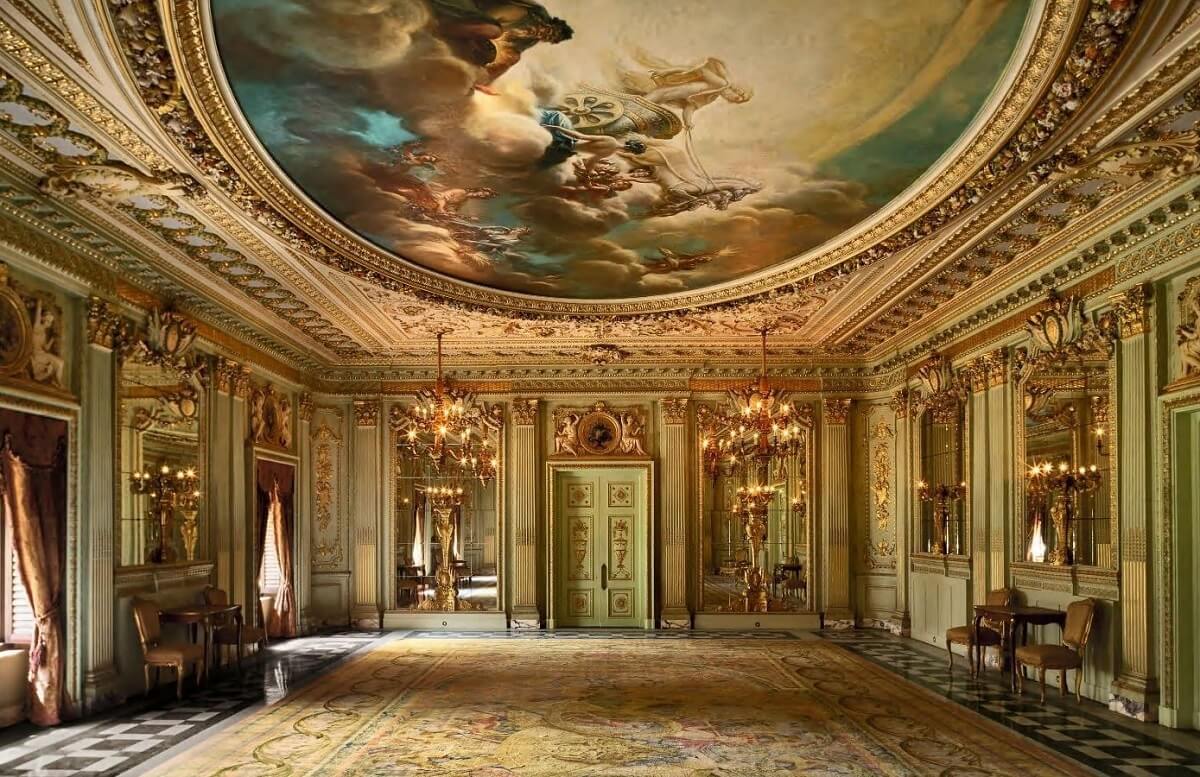
When staying in Ujjain, complete any remaining temple visits in the morning before returning to Indore.
After reaching Indore, visit Lal Bagh Palace. Once a residence of the Holkar rulers, the palace provides insight into the royal lifestyle and European influences adopted by the dynasty.
Continue to the Central Museum, also known as Indore Museum, if you are interested in regional archaeology, sculptures, coins, and historical objects.
Later, visit Annapurna Temple, known for its colourful entrance and religious importance. You can also include Khajrana Ganesh Temple, one of the city’s most visited temples.
During the evening, explore Chappan Dukan. Unlike Sarafa Bazaar, which becomes active late at night, Chappan Dukan is a convenient food area throughout the day and evening. It offers snacks, desserts, beverages, fast food, and traditional Indore specialities.
Try to keep some free time for shopping. Indore is known for textiles, namkeen, sweets, handcrafted items, and Maheshwari or Chanderi fabrics sold in local stores.
Overnight stay: Indore
Day 4: Indore to Mandu
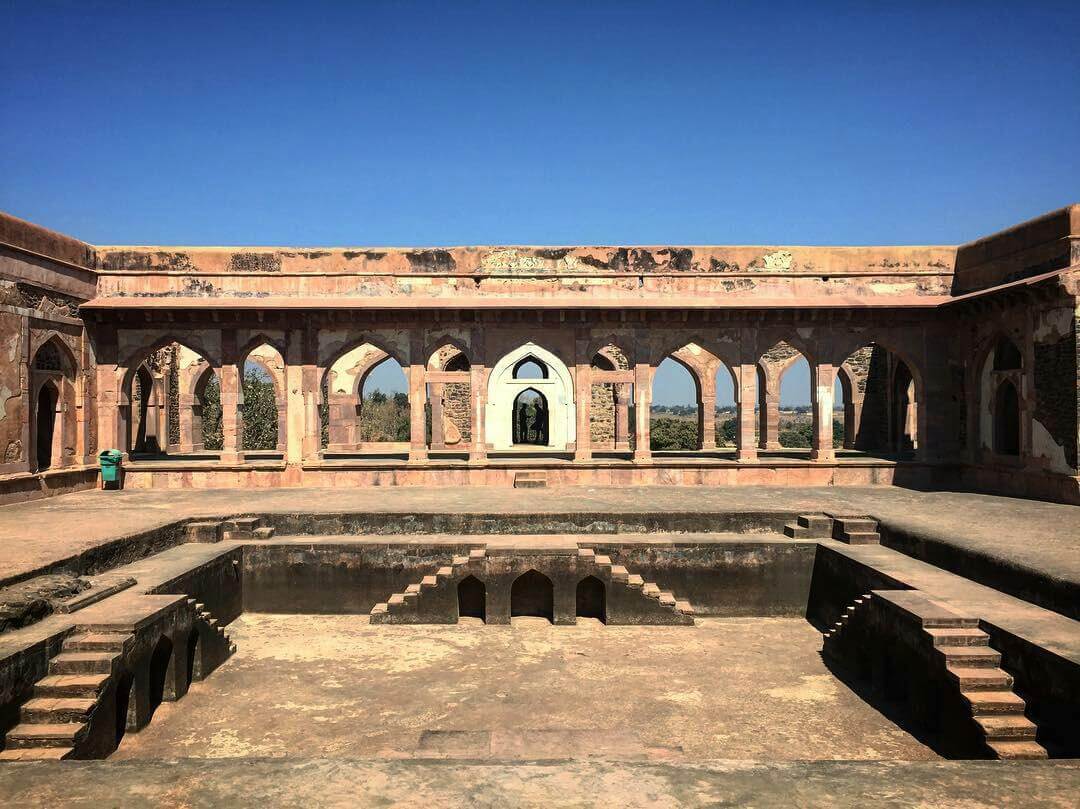
After breakfast, drive towards Mandu, passing through the landscapes of Dhar district.
Mandu, historically known as Mandav or Mandavgad, is a fortified settlement located on a plateau. It is filled with gateways, palaces, mosques, tombs, reservoirs, pavilions, and stories associated with rulers such as Baz Bahadur and Rani Roopmati.
Madhya Pradesh Tourism describes Mandu as a destination filled with forts, palaces, gateways, temples, and architectural treasures.
On arrival, check in at your hotel and begin with the Royal Enclave.
The main attraction here is Jahaz Mahal, or Ship Palace. Built between two water bodies, the long palace appears like a ship floating on water when the reservoirs are full.
Nearby attractions include:
- Hindola Mahal
- Champa Baoli
- Dilawar Khan’s Mosque
- Taveli Mahal
- Gada Shah’s Palace
- Royal baths and water structures
Hindola Mahal is known for its dramatically sloping side walls, which create the impression of a swinging palace. Jahaz Mahal and Hindola Mahal are among Mandu’s most photographed monuments.
Spend the late afternoon exploring the complex at a relaxed pace. Mandu is not merely a collection of individual monuments. The pleasure lies in walking between ruins, observing the plateau landscape, and understanding how water systems supported life inside the fortified city.
Enjoy sunset from a suitable viewpoint before returning to your hotel.
Overnight stay: Mandu
Day 5: Mandu Sightseeing and Return to Indore
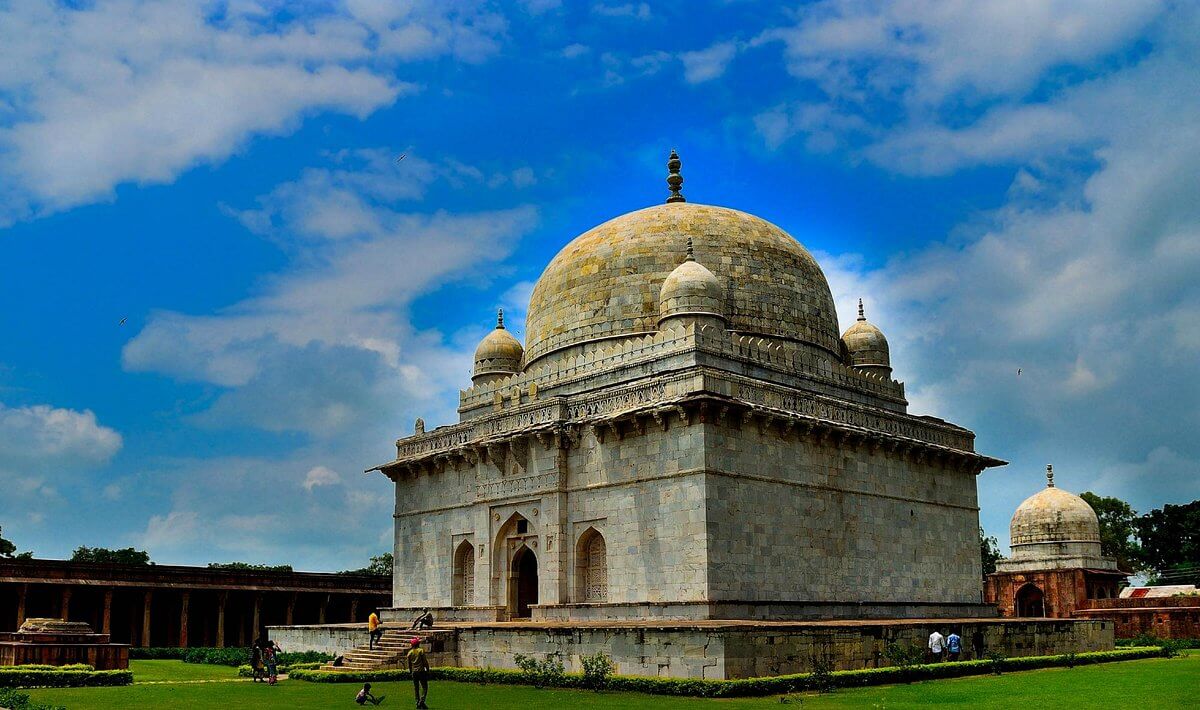
Begin early to cover Mandu’s remaining monument groups.
Visit the Central Group, where you will find Jami Masjid, Hoshang Shah’s Tomb, and Ashrafi Mahal.
Jami Masjid is one of Mandu’s grandest structures, with a large courtyard, domes, arches, and a powerful sense of symmetry. Hoshang Shah’s Tomb is admired for its marble architecture and is considered one of the region’s most significant historic buildings.
Cross the road to explore Ashrafi Mahal, which was originally associated with educational and royal structures. Although much of the complex now lies in ruins, it helps visitors understand the scale of medieval Mandu.
Next, visit the Rewa Kund Group.
Here you can explore Baz Bahadur’s Palace, Rewa Kund, and Rani Roopmati’s Pavilion. These monuments are connected to the well-known story of Sultan Baz Bahadur and the singer Rani Roopmati.
Rani Roopmati’s Pavilion stands at a high point and offers far-reaching views over the plains. On clear days, the landscape appears vast and dramatic. During the monsoon, the plateau becomes greener and clouds often move across the surrounding hills.
You may also visit:
- Nilkanth Mahadev Temple
- Echo Point
- Lohani Caves
- Dai Ka Mahal
- Dai Ki Chhoti Bahen Ka Mahal
- Sagar Talao
- Darya Khan’s Tomb
After completing the sightseeing, drive back to Indore.
An alternative is to continue to Maheshwar after Mandu. However, adding Maheshwar is easier when you have an additional day, as rushing both destinations reduces the experience.
Overnight stay: Indore
Day 6: Indore to Bhopal
After breakfast, check out and travel from Indore to Bhopal.
The road journey generally takes around four to five hours, depending on the route, traffic, rest stops, and road conditions. You can travel by private car, intercity taxi, bus, or train.
After arriving in Bhopal, check in at your hotel and begin with a relaxed city tour.
Bhopal is the capital of Madhya Pradesh and is known for its combination of lakes, historic areas, modern neighbourhoods, mosques, markets, and cultural institutions. The district administration describes it as a meeting point of natural beauty, historic urban areas, and modern planning.
Visit Upper Lake, also called Bhojtal, and spend the evening near the waterfront. Depending on operating conditions, boating may be available.
Continue to Van Vihar National Park, located near the lake, when time permits. It is an urban protected area where visitors can observe animals and birdlife in relatively natural surroundings.
End your day with dinner at a local restaurant. Bhopal is known for both vegetarian and meat-based cuisine, including kebabs, curries, biryanis, poha, sweets, and local snacks.
Overnight stay: Bhopal
Day 7: Bhopal Sightseeing
Begin with Taj-ul-Masajid, one of Bhopal’s most impressive religious landmarks. Its large courtyard, minarets, domes, and pink-toned façade make it an architectural highlight of the old city.
Continue to Moti Masjid, another historic mosque that reflects the influence of Bhopal’s Begums. The women rulers of Bhopal played an important role in shaping the city’s architecture, administration, education, and public institutions.
Visit the State Museum to learn more about Madhya Pradesh’s archaeology, tribal cultures, manuscripts, sculptures, coins, and regional history.
The Tribal Museum is another essential attraction. Its galleries use immersive displays, large installations, recreated structures, and artistic interpretation to introduce visitors to the lives, beliefs, customs, and creativity of tribal communities from Madhya Pradesh.
You can also visit Bharat Bhavan, a multidisciplinary arts centre overlooking the lake. It hosts spaces connected with visual arts, theatre, literature, music, and cultural events.
Other places to consider include:
- Gohar Mahal
- Shaukat Mahal
- Sadar Manzil
- Birla Museum
- Birla Mandir
- Regional Science Centre
- Gauhar Mahal market area
- Lower Lake
- Manuabhan Tekri
Spend your final evening near Upper Lake or explore the old-city markets before concluding the trip.
Overnight stay: Bhopal, or departure according to schedule
Extending the Trip to Eight Days:
An eight-day itinerary gives you time for an excursion from Bhopal to Sanchi or Bhimbetka.
Option 1: Sanchi Day Trip
Sanchi is one of India’s most important Buddhist heritage destinations. Its stupas, pillars, gateways, monasteries, temples, and archaeological remains represent centuries of Buddhist activity.
The Great Stupa is the main attraction and is particularly admired for its carved gateways. Visit the archaeological museum as well, subject to its opening schedule.
Sanchi can be combined with Udayagiri Caves when you start early and use a private vehicle.
Option 2: Bhimbetka Day Trip
The Bhimbetka rock shelters are known for prehistoric rock art, ancient shelters, unusual geological formations, and their archaeological importance.
A Bhimbetka excursion may also be combined with Bhojpur, where the Bhojeshwar Temple houses a massive Shiva lingam.
Choose Sanchi when you are more interested in Buddhist history and ancient architecture. Choose Bhimbetka when you enjoy archaeology, rock formations, prehistoric art, and nature.
Alternative 8-Day Itinerary
A well-paced eight-day route can be planned as follows:
Day 1: Arrival and Indore sightseeing
Day 2: Ujjain excursion and overnight stay
Day 3: Return to Indore and city sightseeing
Day 4: Indore to Mandu and Royal Enclave
Day 5: Mandu sightseeing and return to Indore
Day 6: Indore to Bhopal and lake visit
Day 7: Bhopal city sightseeing
Day 8: Sanchi or Bhimbetka excursion and departure
This is one of the best itineraries for first-time visitors because it avoids packing too many attractions into a single day.
Best Time to Visit Indore, Bhopal, Ujjain and Mandu:
October to March
October to March is generally the best period for this Madhya Pradesh circuit. The weather is more comfortable for temple visits, monument walks, road journeys, markets, and outdoor sightseeing.
December and January can be cool, particularly during mornings and evenings. Carry a light jacket or warmer layers.
This is also a popular travel period, so reserve hotels and transport in advance around weekends, public holidays, Christmas, New Year, and important religious dates.
July to September
The monsoon is a beautiful season for Mandu. The plateau turns green, reservoirs fill with water, and the historic buildings appear especially atmospheric under cloudy skies.
However, rain can cause slippery pathways, reduced visibility, slower road journeys, and occasional disruptions. Carry footwear with a good grip, rain protection, and waterproof covers for electronics.
April to June
Summer can be extremely hot, especially during afternoon sightseeing. Temple queues and exposed monument complexes may become tiring.
When travelling during summer, begin early, rest around midday, stay hydrated, wear a hat, and keep outdoor activities for the morning or late afternoon.
How to Reach Indore:
By Air
Devi Ahilyabai Holkar Airport is the main airport serving Indore. It is a practical entry point for travellers planning to visit Indore, Ujjain, Mandu, Maheshwar, and Omkareshwar.
Taxis and app-based transport may be available between the airport and different parts of the city.
By Train
Indore Junction is connected with several major cities. Train availability, journey time, and frequency depend on the departure city and travel date.
Book early during festivals and school holidays.
By Road
Indore is connected by road with Bhopal, Ujjain, Ahmedabad, Vadodara, Mumbai, Pune, Kota, and other regional centres. Both government and private buses operate on many routes.
How to Reach Bhopal
Bhopal can be reached by air, rail, and road.
Raja Bhoj Airport serves the city, while Bhopal Junction and Rani Kamlapati Railway Station provide rail connectivity.
Bhopal works well as either the starting or ending point of the itinerary. Starting in Indore and ending in Bhopal is especially convenient when you want to avoid returning to the same city.
Best Transport for the Complete Trip
Private Car with Driver
A private car is the most convenient choice for families, couples, senior travellers, and small groups.
It offers flexibility for temple visits, meal breaks, luggage handling, photography stops, and rural road sections. It is especially useful in Mandu, where monuments are spread across different groups.
Ask the operator whether the quotation includes:
- Fuel
- Driver allowance
- Parking charges
- Toll fees
- State taxes
- Airport or railway transfers
- Night charges
- Extra kilometre charges
Obtain the inclusions in writing before confirming.
Train and Local Taxi Combination
Budget travellers can use trains between major cities and hire local taxis for sightseeing.
Indore and Bhopal are well connected by rail, while Ujjain also has a railway station. Mandu does not have a major railway station, so the final journey must be completed by road.
Bus Travel
Buses are economical but provide less flexibility. They work better between Indore, Ujjain, and Bhopal than for sightseeing around Mandu.
Bus schedules can change, so confirm departure points and arrival locations before travelling.
Where to Stay
Indore
Choose Vijay Nagar for modern hotels, restaurants, shopping areas, and convenient transport. Stay near Rajwada when you prefer old-city atmosphere and easier access to traditional markets.
Ujjain
Stay near Mahakaleshwar Temple when temple darshan is your priority. However, these areas can become crowded and noisy. Hotels slightly away from the temple may offer better vehicle access and a quieter environment.
Mandu
Stay inside or close to Mandu when you want to experience sunset, sunrise, and the relaxed atmosphere after day visitors leave.
Accommodation choices are more limited than in Indore or Bhopal, so book early during monsoon weekends and winter holidays. Madhya Pradesh Tourism also lists accommodation options for Mandu through its tourism platforms.
Bhopal
MP Nagar is convenient for business hotels, restaurants, and transport. Areas near Upper Lake provide a more scenic setting, while old Bhopal is suitable for travellers interested in historic markets and traditional food.
Estimated Trip Budget
The total cost depends on hotel category, number of travellers, vehicle type, season, meals, and sightseeing preferences.
For a seven-day trip, an approximate per-person budget can be:
Budget trip: ₹18,000 to ₹28,000
Comfortable mid-range trip: ₹30,000 to ₹48,000
Premium private trip: ₹55,000 and above
These estimates may include accommodation, local transport, intercity travel, breakfast, and basic sightseeing. Flights, premium temple services, shopping, personal expenses, special guides, and some entrance charges may be additional.
Travelling with three or four people often reduces the per-person transport cost because the private vehicle expense is shared.
Food to Try During the Trip
Indore
Do not miss:
- Poha and jalebi
- Bhutte ka kees
- Garadu
- Sabudana khichdi
- Dahi bada
- Khopra patties
- Indori namkeen
- Shikanji
- Malpua and rabri
Sarafa Bazaar and Chappan Dukan are the main food experiences, but choose clean and busy stalls.
Ujjain
Try simple vegetarian meals, temple-area snacks, kachori, poha, sweets, lassi, and traditional thalis.
Mandu
Food options are more limited, particularly late in the evening. Eat at your hotel or a reliable restaurant and carry drinking water and light snacks during sightseeing.
Bhopal
Bhopal offers poha, jalebi, kebabs, biryani, meat curries, bakery products, sweets, and vegetarian dishes. Old Bhopal is especially known for traditional flavours.
Important Travel Tips
- Reserve Mahakaleshwar darshan arrangements before arrival when visiting during a busy period.
- Wear modest clothing at temples and mosques. Some religious places may require visitors to cover their heads, remove footwear, or follow separate entry procedures.
- Keep at least two nights in Indore because it acts as the transport hub for Ujjain and Mandu.
- Avoid planning Mandu as a rushed half-day trip. Its monuments are spread across several areas and deserve at least one full day.
- Hire a knowledgeable local guide in Mandu when you are interested in architecture, water systems, dynastic history, and the stories associated with the monuments.
- Carry cash in smaller denominations. Digital payments are common in cities, but network issues can occur around smaller vendors and remote areas.
- Check monument timings before travelling. Museum closing days, temple rules, entrance fees, and photography policies can change.
- During the monsoon, avoid standing near unprotected edges or climbing wet ruins.
- Use bottled or properly filtered water and choose freshly prepared food.
- Keep buffer time before flights and trains, particularly when travelling from another city on the departure day.
Frequently Asked Questions
What is the best route for Indore, Ujjain, Mandu and Bhopal?
The most convenient route is Indore to Ujjain, back to Indore, then Mandu, Indore, and Bhopal. Travellers can start in Bhopal and finish in Indore when that provides better flight or train connections.
How many days are enough for the trip?
Seven days are enough to cover the main attractions at a comfortable pace. Eight days are recommended when adding Sanchi or Bhimbetka.
Can Ujjain be visited as a day trip from Indore?
Yes. Ujjain can be covered as a day trip from Indore. Start early and prioritise Mahakaleshwar Temple, Harsiddhi Temple, Kal Bhairav Temple, and Ram Ghat. Stay overnight when attending an early morning ceremony.
Is Mandu possible as a day trip from Indore?
Yes, but it will be a long day. Leave early and focus on Jahaz Mahal, Hindola Mahal, Jami Masjid, Hoshang Shah’s Tomb, Baz Bahadur’s Palace, and Rani Roopmati’s Pavilion. Staying overnight provides a more relaxed experience.
Should I stay in Mandu or return to Indore?
Stay in Mandu when you enjoy heritage, photography, quiet evenings, or monsoon landscapes. Return to Indore when you have limited time or prefer a wider choice of hotels and restaurants.
Can Maheshwar be added to this itinerary?
Yes. Add one additional day for Maheshwar. It is best combined with Mandu or planned as a separate excursion from Indore.
Can Omkareshwar be included?
Yes. Omkareshwar can be added as a day trip from Indore or combined with Maheshwar. Add at least one more day rather than reducing time in Mandu or Bhopal.
Is this trip suitable for senior citizens?
Yes, but the itinerary should include shorter sightseeing days, hotels with lifts, comfortable vehicles, and rest breaks. Some Mandu monuments involve uneven surfaces and walking, so select the most accessible attractions.
Is a guide needed in Mandu?
A guide is not compulsory, but a trained guide can significantly improve the visit by explaining the monument groups, architecture, royal history, water-management systems, and legends.
Is the route suitable for children?
Yes. Children may particularly enjoy the palaces of Mandu, boating areas in Bhopal, museums, open spaces, and food experiences in Indore. Avoid overly long temple queues and afternoon monument visits during summer.
More Madhya Pradesh Travel Guides:
- Madhya Pradesh in July 2026: Weather, Places and Travel Tips
- Madhya Pradesh in May 2027: Weather, Best Places and Trip Guide
- Madhya Pradesh in April 2027: Places to Visit and Travel Tips
- Delhi to Khajuraho Travel Guide: Train, Road and Flight Options
- Khajuraho Travel Guide: Tickets, Temples and Visitor Tips
- Bhopal to Sanchi Stupa: Route, Distance and Travel Tips
- Sanchi Monuments Guide: History, Tickets and Best Time to Visit
- Omkareshwar Jyotirlinga in February 2027: Darshan and Travel Tips
- Kanha National Park Guide: Safari, How to Reach and Trip Planning
- Madhya Pradesh in December 2026: Best Places and Travel Ideas
- Satpura National Park Guide: Safari, Routes and Visitor Tips
- Best Weekend Getaways Near Indore for a Short Trip
- Famous Tigers of Pench: Safari Stories and Wildlife Sightings
- Pench Birdwatching Guide: Best Zones, Birds and Travel Tips
- Best Day Trips from Ujjain: Omkareshwar, Mandu and Indore
- Ujjain Day Tour Guide: Temples, Ghats and Local Experiences
- Mahakal Bhasma Aarti Guide: Timings, Ritual and Visitor Tips
- Ujjain to Omkareshwar Travel Guide: Route, Distance and Tips
- Ujjain in November 2026: Weather, Darshan and Travel Guide
- Best Waterfalls in Madhya Pradesh for Nature Lovers
- Madhya Pradesh UNESCO Sites: Complete Heritage Travel Guide
- Madhya Pradesh Food Guide: Famous Dishes and Local Flavours
Final Thoughts
An Indore Bhopal Ujjain Mandu trip is one of the most rewarding ways to experience Madhya Pradesh. The journey moves naturally between food, spirituality, history, architecture, archaeology, royal heritage, and scenic landscapes.
Start in Indore for convenient transport and memorable local food. Visit Ujjain for Mahakaleshwar and the spiritual atmosphere of the Shipra River. Spend enough time in Mandu to appreciate its palaces, tombs, pavilions, reservoirs, and hilltop views. Finish in Bhopal with lakes, museums, historic neighbourhoods, and optional excursions to Sanchi or Bhimbetka.
The ideal plan is seven to eight days, with a private car providing the greatest comfort and flexibility. Avoid trying to include too many additional destinations in a short itinerary. A slower route allows you to understand each place rather than simply checking attractions off a list.
With careful hotel selection, advance temple planning, early departures, and realistic travel times, this central India circuit can become a comfortable, diverse, and unforgettable holiday.