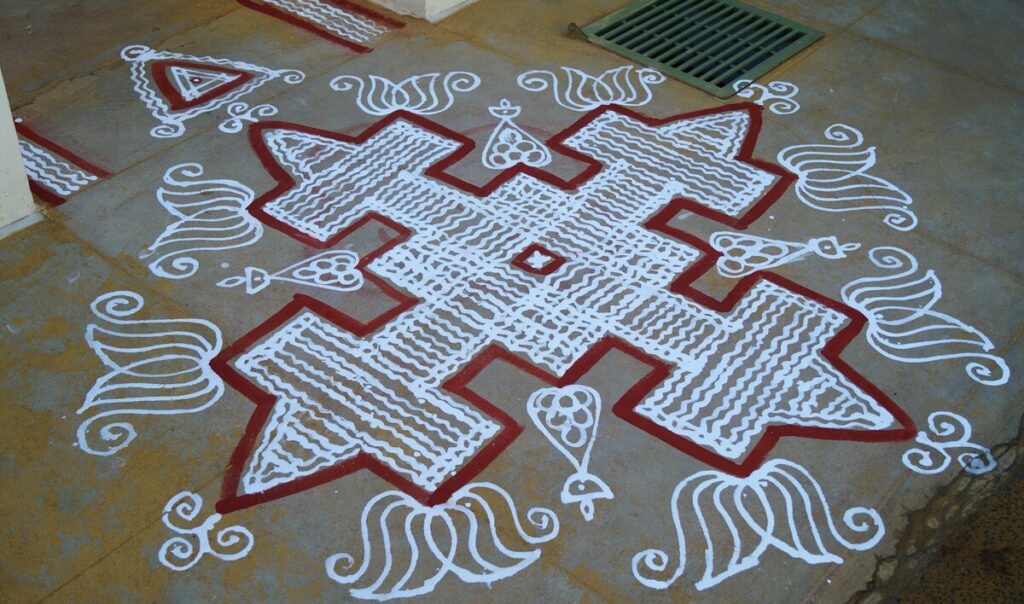
In many homes across Tamil Nadu, a quiet and beautiful ritual happens every morning. Just before sunrise, women bend down in front of their doorways and begin to draw with rice flour. Soon, intricate white patterns bloom on the ground. These patterns are called Kolams.
To some, Kolam might look like simple decoration. But look closer, and you’ll find a world of culture, mathematics, spirituality, and community all woven into each design. In this blog, we’ll explore the deeper meaning behind Kolam, how it’s made, and why it matters even today.
1. What is Kolam?
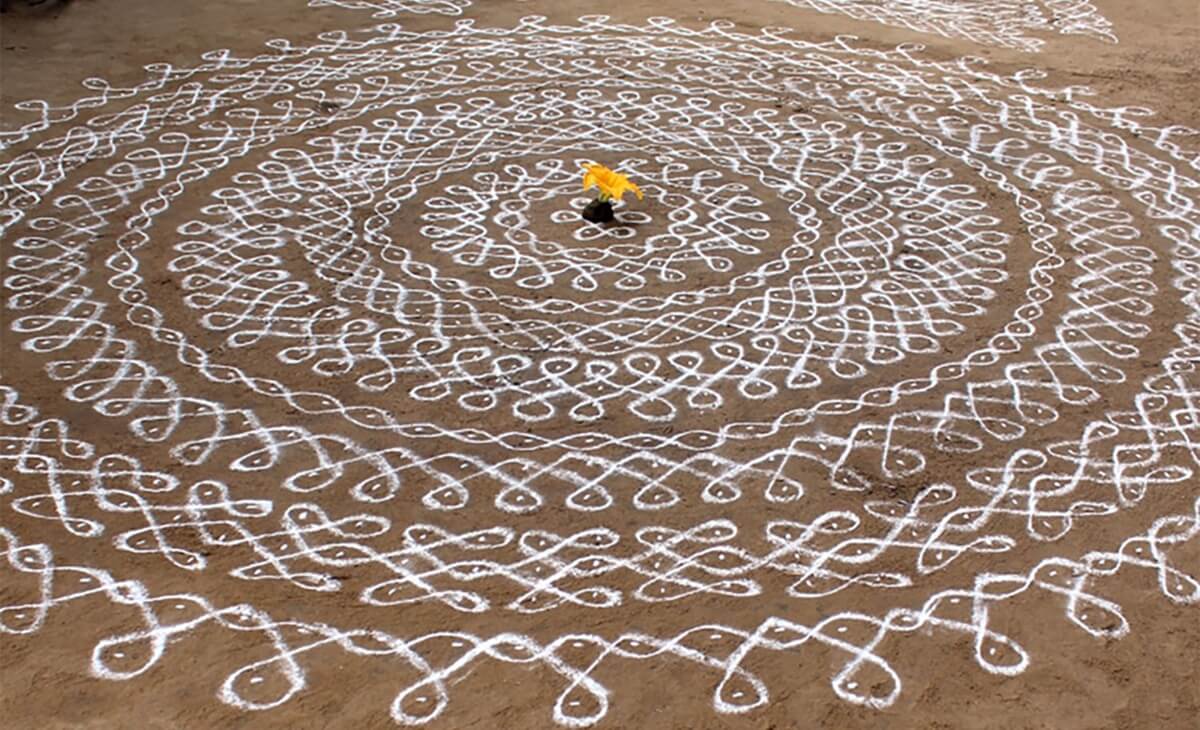
Kolam is a traditional form of floor art made using rice flour, chalk powder, or rock powder. It is mostly practiced by women in Tamil Nadu and parts of South India. The designs are drawn in front of homes, temples, and even shops.
Kolams are usually drawn early in the morning, before the sun rises. The air is fresh, the roads are quiet, and it’s a peaceful time for this mindful activity. The act of drawing Kolam is calming, almost like a form of meditation.
These designs range from simple dots and lines to complex geometric patterns. Some are drawn freehand, while others follow a grid of dots. Every Kolam is unique, yet they all follow a sense of symmetry and balance.
2. A Daily Ritual with Deep Roots
Kolam is not just an art form—it is also a daily offering. The rice flour used in traditional Kolams feeds ants, birds, and insects. This act reflects the idea of sharing and living in harmony with nature.
In Hindu belief, Kolams invite positive energy and keep away evil spirits. Drawing a Kolam at the entrance is a way to welcome Lakshmi, the goddess of wealth and prosperity, into the home. It’s a sign of cleanliness, beauty, and respect for guests.
During festivals like Pongal, Kolams become larger and more colorful. People add flowers, colors, and even lamps. These festive Kolams tell stories, show devotion, and bring communities together. The Art of Theyyam and Other Ritualistic Folk Arts
3. The Mathematics of Kolam
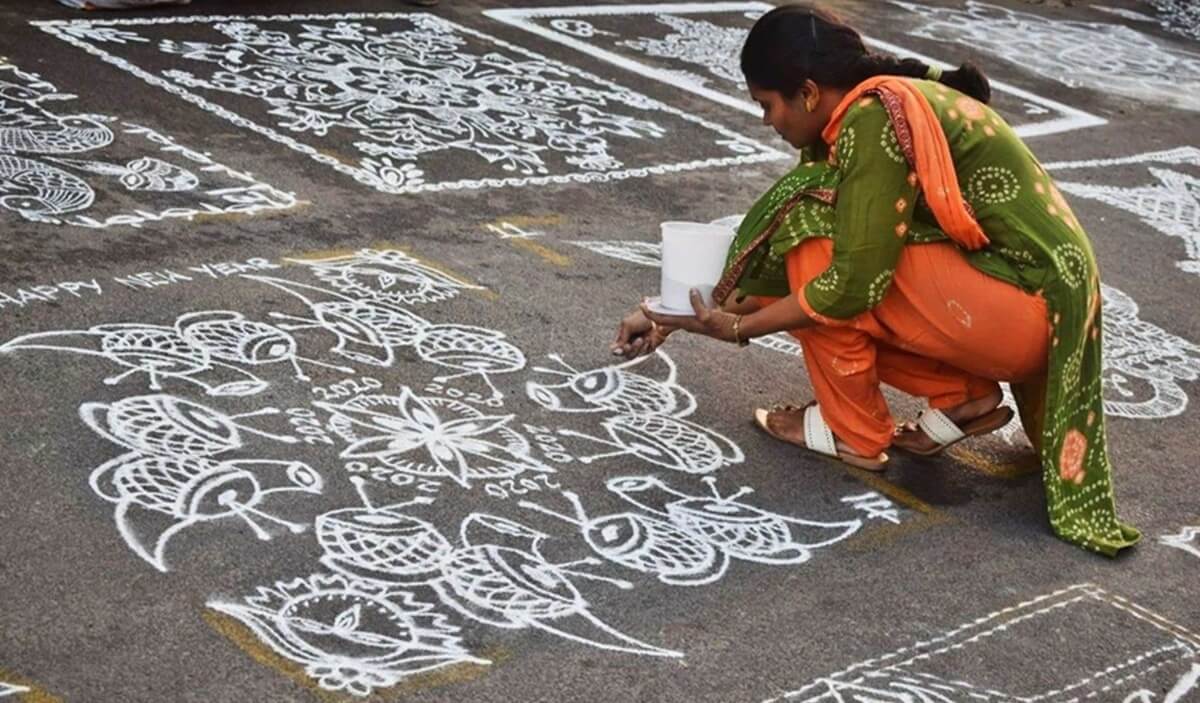
Kolams are not just beautiful—they are also full of math! Many Kolams are based on a dot grid system called “pulli kolam.” Artists place dots in a grid and then connect them with loops, curves, and lines.
The patterns often follow rules of symmetry, rotation, and repetition. This means the design looks the same when flipped or turned. Some Kolams are even studied by mathematicians because they follow complex paths without lifting the hand or crossing a line twice.
Kolam drawing teaches pattern recognition, spatial awareness, and logical thinking. That’s why schools and researchers have started studying Kolams as a way to explore math through art.
Long-tail keyword focus: The mathematical patterns and spiritual meaning behind a traditional Tamil Kolam design is more than just a title—it’s the heart of this tradition.
4. Kolam and Cultural Identity
Kolam is a symbol of Tamil identity. It connects generations of women—grandmothers teach mothers, who then teach daughters. Each family may have its own favorite styles or special festival patterns.
Learning to draw Kolam is a rite of passage for many young girls. It’s a skill that teaches patience, creativity, and cultural values. Even in cities, where life is fast and space is limited, you can still spot Kolams drawn on apartment doorsteps.
In villages, Kolam competitions are held during festivals. Women gather, share stories, and display their best designs. It’s more than art—it’s a celebration of tradition and togetherness.
Today, Kolam is also seen in modern spaces like fashion, design, and digital art. It has crossed borders and inspired artists around the world. Mamallapuram Dance Festival: A Complete Guide
5. Kolam in the Modern World
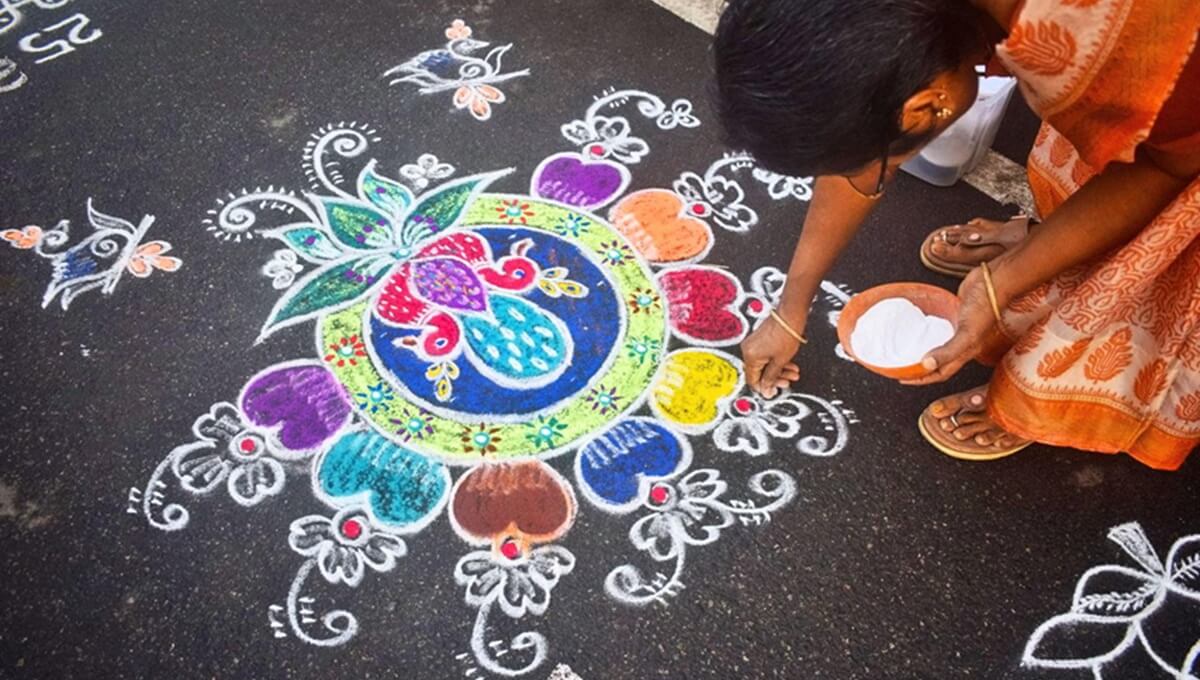
While the practice of Kolam remains strong, it’s also changing with time. Busy lifestyles mean fewer people draw Kolams daily. But many are finding new ways to keep the tradition alive.
Digital apps now help people learn Kolam designs. Online tutorials and competitions keep the spirit alive. Some people use colored chalks or ready-made stickers—but the intention remains the same.
Kolam has also entered public art spaces. You’ll find Kolam-inspired murals, textiles, and even logos. It’s being used in classrooms to teach symmetry and in science to study patterns.
In a way, Kolam continues to adapt—staying both timeless and modern.
Conclusion: Drawing Harmony with Every Line
Kolam is more than just decoration. It is a story drawn in white powder—a story of culture, kindness, and creativity. It teaches us to live in harmony with nature, to welcome others with beauty, and to see art in everyday life.
Whether you’re a traveler visiting Tamil Nadu, a student of culture, or simply someone who loves patterns, Kolam has something to offer. It shows how even the simplest things—a bit of rice flour and a steady hand—can carry deep meaning.
So next time you see a Kolam, take a moment to look closer. Behind every dot and curve lies a world of tradition, science, and spirit—a perfect blend of the mathematical patterns and spiritual meaning behind a traditional Tamil Kolam design.
You Might Also Like:
- Top 14 Hill Stations in Tamil Nadu for a Scenic Getaway
- Adventure in Tamil Nadu: Check the Madurai Travel Expo Details!
- Explore Mahabalipuram: Tamil Nadu’s Ancient Coastal Wonder
- Uncover the Forgotten Forts of South India
- Best Heritage Sites to Visit in August Across India
- Top 9 Hill Stations in India to Visit This August
- My Culture Shock in India Turned into a Life-Changing Trip
- 14 Affordable Indian Travel Spots for August Under ₹50K
- 10 Hidden Honeymoon Gems in India to Visit During Monsoon
- Explore Karnataka: 12 Must-Visit Places in September
- 12 Best Hill Stations to Discover in India This September
- Explore 8 Lesser-Known Travel Spots in India for September
- 11 Shiva Temples to Visit During Sawan for Blessings
- Top Beach Resorts in South India Perfect for Families