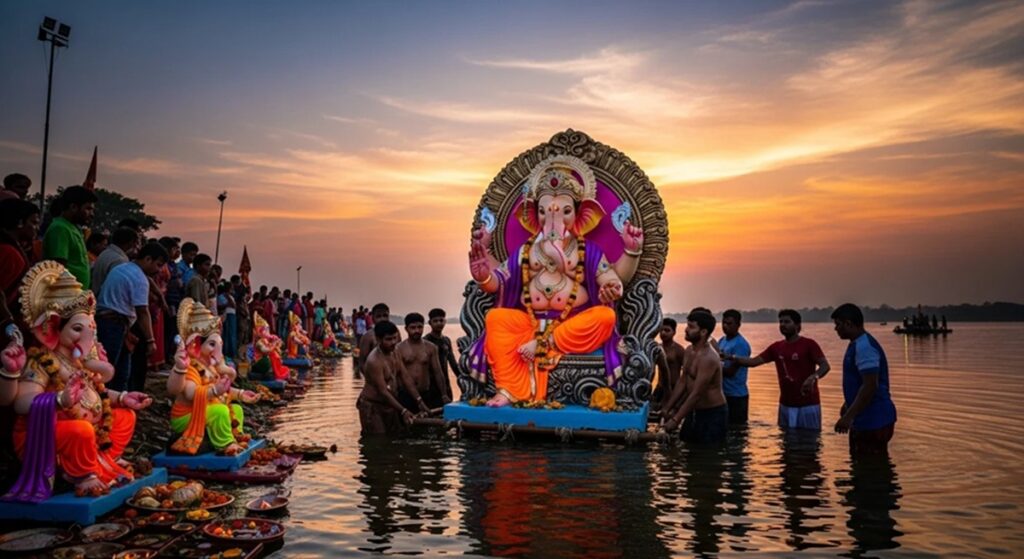
Anant Chaturdashi is one of the most significant Hindu festivals, observed with devotion, grandeur, and a deep spiritual meaning across India. Falling on the 14th day of the bright fortnight (Shukla Paksha) in the month of Bhadrapada, this festival comes right after the ten-day celebration of Ganesh Chaturthi. While for many, it marks the day of bidding farewell to Lord Ganesha through visarjan (immersion), for others it is a day dedicated to worshipping Lord Vishnu in his infinite form—Anant, symbolizing eternity and cosmic balance.
Celebrated with great enthusiasm in Maharashtra, Gujarat, Goa, Madhya Pradesh, Rajasthan, and northern states like Uttar Pradesh and Bihar, Anant Chaturdashi is a blend of ritual devotion and cultural festivity. The sight of massive processions carrying beautifully crafted idols of Lord Ganesha, accompanied by chants, music, and dance, leaves a lasting impression on anyone witnessing it. Simultaneously, households and temples conduct rituals for Anant Vishnu with sacred threads (Anant Sutra), emphasizing vows of prosperity and family harmony.
For travelers, Anant Chaturdashi is not just a festival but an immersive cultural experience. This guide explores its origins, rituals, regional traditions, best places to witness celebrations, travel tips, and FAQs so you can plan your visit with clarity and confidence.
Historical Origins of Anant Chaturdashi

The roots of Anant Chaturdashi trace back to Hindu mythology, primarily centered on Lord Vishnu as the eternal preserver of the universe. The word “Anant” means infinite, representing timeless continuity, while “Chaturdashi” signifies the 14th day of the lunar cycle. Together, the festival acknowledges Vishnu’s infinite cosmic presence and blessings.
According to the Mahabharata, Yudhishthira, the eldest of the Pandavas, once observed the Anant vow after advice from Lord Krishna. He tied a sacred thread on his wrist and performed puja to seek divine intervention during difficult times. This act symbolized unwavering faith and reliance on eternal truth. Since then, the festival has been regarded as a means to restore balance, remove obstacles, and bring peace to life.
Over centuries, regional cultures intertwined with this tradition. In Maharashtra, the date coincided with the conclusion of Ganesh Utsav started by Bal Gangadhar Tilak during the freedom movement, making the day doubly significant. In states like Bihar and Uttar Pradesh, families worship Anant Vishnu, tie sacred threads, and recite stories of his infinite form. This historical continuity ensures the festival remains relevant across both devotional and cultural dimensions.
Travelers exploring India during this time will witness how mythology, spirituality, and community gatherings merge into a powerful celebration that embodies both faith and festivity.
Spiritual Significance
The essence of Anant Chaturdashi lies in recognizing the infinite power of divinity and its role in guiding human life. Devotees believe that worshipping Anant Vishnu ensures prosperity, removes sorrows, and strengthens familial harmony. The sacred vow, or Anant Vrata, is performed by tying a special thread—red and yellow with fourteen knots—around the wrist. Each knot symbolizes eternal values like truth, patience, compassion, and devotion.
For women, tying this thread represents a prayer for their family’s well-being, while men take the vow as a mark of lifelong devotion. The ritual highlights continuity beyond material desires, directing faith toward spiritual abundance.
The link with Lord Ganesha is equally strong. As the festival concludes Ganesh Chaturthi, it represents the cycle of arrival and departure, teaching devotees to embrace change with faith in eternity. The immersion of Ganesha idols into rivers and seas is symbolic: life is transient, but devotion and divine presence remain infinite.
For spiritual travelers, Anant Chaturdashi offers a chance to experience living philosophy through rituals and public devotion. Whether in temples, households, or grand processions, the festival radiates a sense of surrender to the infinite that transcends boundaries of caste, creed, and region. Get Ready for Ram Leela in Delhi – Explore the Celebrations!
When Is Anant Chaturdashi in 2025?

In 2025, Anant Chaturdashi will be celebrated on Saturday, September 6, 2025. According to the Hindu lunar calendar, it falls on the Shukla Paksha Chaturdashi of the Bhadrapada month, which usually corresponds to August or September in the Gregorian calendar.
Key Timings in 2025:
- Chaturdashi Tithi Begins: 09:15 AM, September 6, 2025
- Chaturdashi Tithi Ends: 06:35 AM, September 7, 2025
- Auspicious Time for Anant Puja: Afternoon hours of September 6 (Pradosh Kaal)
Travelers planning to witness the celebrations should note that the Ganesh Visarjan processions typically start in the morning and continue late into the night. Cities like Mumbai, Pune, and Hyderabad experience large gatherings, with major traffic diversions and security arrangements in place.
Booking accommodation well in advance is strongly advised, as hotels near prime immersion sites often reach full capacity. For those interested in witnessing the Anant Vrata puja, temples dedicated to Lord Vishnu or community halls in northern states host rituals accessible to visitors.
Thus, the date in 2025 provides an excellent opportunity for travelers to immerse themselves in both the farewell of Ganesha and the eternal devotion of Vishnu.
Explore Also: See How Travel Honors Education – Celebrate Teachers on the Go!
Rituals and Puja Vidhi
The rituals of Anant Chaturdashi vary by region but share a common devotion to Lord Vishnu and Lord Ganesha. The day begins with a ritual bath and setting up of puja arrangements at home or in temples.
Steps of the Anant Vrata Puja:
- Kalash Sthapana – A brass or copper pot is filled with water, symbolizing purity.
- Lord Vishnu Idol or Image – Decorated with flowers, tulsi leaves, and offerings.
- Sacred Thread (Anant Sutra) – A red-yellow cotton thread with fourteen knots is sanctified during the puja.
- Offerings – Fruits, sweets, milk, flowers, and special dishes are placed before the deity.
- Recitation of Anant Katha – The story of Yudhishthira’s vow and its significance is narrated.
- Wearing the Thread – Men tie it on the right wrist, women on the left.
- Prayers for Family and Prosperity – The ritual concludes with aarti and distribution of prasad.
Alongside, devotees participate in Ganesh Visarjan, carrying idols in processions filled with music, dhol-tasha, and devotional chants like Ganpati Bappa Morya. Immersion in rivers, lakes, or seas signifies both farewell and continuity of faith.
The blend of calm puja rituals and vibrant public celebrations makes Anant Chaturdashi uniquely immersive for travelers.
Ganesh Visarjan: The Grand Farewell
For millions of devotees, Anant Chaturdashi is synonymous with the final day of Ganesh Utsav. After ten days of worship, devotees prepare for the immersion of Lord Ganesha’s idols into water bodies—a ritual called Visarjan.
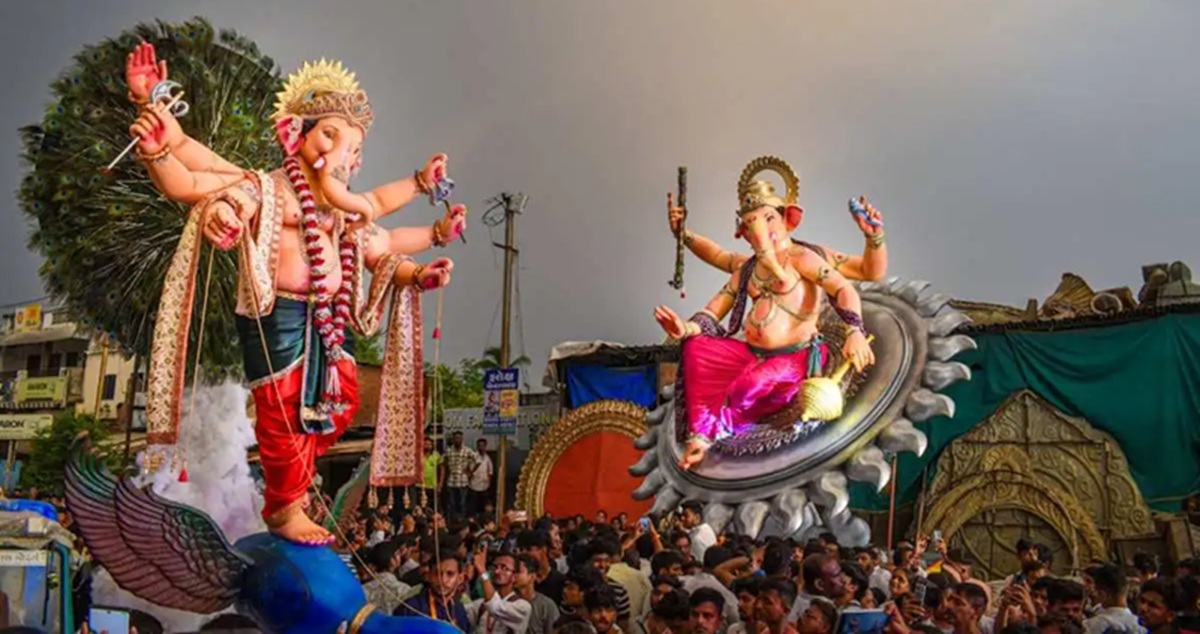
The day begins with preparations at homes, societies, and public pandals. Idols are decorated with garlands, sweets are offered, and devotees chant heartfelt prayers before bidding farewell. In cities like Mumbai, Pune, and Hyderabad, the atmosphere transforms into a massive street festival. Thousands join processions accompanied by dhol, tasha, lezim dancers, and chants of “Ganpati Bappa Morya, Pudhchya Varshi Lavkar Ya!” (Come back soon next year).
Iconic spots such as Mumbai’s Girgaon Chowpatty, Pune’s Kasba Peth, and Hyderabad’s Hussain Sagar Lake see lakhs of devotees gathering to immerse idols of all sizes, from small household Ganpatis to gigantic community ones.
For travelers, this is an unparalleled spectacle—an explosion of devotion, music, colors, and community spirit. However, it also demands patience, as traffic diversions, crowd management, and long hours are part of the experience. Witnessing Ganesh Visarjan is both emotional and electrifying, making Anant Chaturdashi unforgettable.
Perfect — let’s continue. Below are the next 8 detailed sections, each ~200–250 words, keeping the tone consistent. This extends our blog toward the 4,800-word target.
Regional Celebrations of Anant Chaturdashi
Anant Chaturdashi is celebrated across India, but each region highlights unique traditions that reflect its culture.
In Maharashtra, the festival is inseparable from Ganesh Visarjan. Streets in Mumbai, Pune, and Nagpur flood with processions. Public pandals showcase idols several feet tall, carried with music and dance until they are immersed in the sea or rivers.
In Gujarat and Rajasthan, the focus is more on Anant Vishnu puja. Families observe the Anant Vrata, tying sacred threads on wrists, while community temples conduct group prayers and recitations of the Anant Katha.
In Goa, the festival blends the Ganesh Visarjan with regional Konkani rituals. Traditional folk performances and village feasts often accompany the celebrations.
In Bihar and Uttar Pradesh, the Vishnu-centric aspect dominates. Devotees tie the Anant Sutra and offer milk-based sweets, fruits, and tulsi leaves. Riverbanks like those in Varanasi and Patna see small-scale idol immersions, combined with Vishnu puja.
In South India, while the festival is not as widely celebrated, some Vishnu temples mark the day with special prayers and recitals.
Travelers exploring different states will notice how one festival takes on diverse forms, blending Ganesh devotion with Vishnu worship, uniting communities under the same spiritual essence.
Best Cities to Experience Anant Chaturdashi
Travelers looking for a grand experience should choose cities where Anant Chaturdashi celebrations are at their peak.
- Mumbai, Maharashtra: The heart of Ganesh Visarjan. Girgaon Chowpatty and Juhu Beach witness the immersion of thousands of idols, with massive crowds and electrifying energy. It is an unforgettable sight, though patience is required due to the scale.
- Pune, Maharashtra: Known for traditional dhol-tasha pathaks and historic Ganesh mandals like Dagdusheth Halwai Ganpati, the city balances devotion with cultural performances.
- Nagpur: Offers a mix of grand processions and smaller community celebrations, perfect for travelers who want to experience the energy without overwhelming crowds.
- Hyderabad, Telangana: Hussain Sagar Lake becomes the focal point as towering Ganesh idols are immersed with fanfare.
- Varanasi, Uttar Pradesh: Famous for the Anant Vishnu rituals, temples along the Ganga perform elaborate pujas. The riverbanks glow with lamps and chants.
- Patna, Bihar: A hub for Anant Vrata observances, where families tie the sacred thread and participate in group prayers.
Each of these cities offers a different lens of devotion—from high-energy public processions to serene Vishnu rituals. Choosing where to go depends on whether you seek vibrant celebrations or peaceful spirituality.
Food and Sweets Prepared on Anant Chaturdashi
Festivals in India are incomplete without food, and Anant Chaturdashi has its share of delicious offerings. Devotees prepare special prasads and festive dishes to offer during the puja and distribute among family and neighbors.
In Maharashtra, popular sweets like modaks (Lord Ganesha’s favorite) are still prepared for the final day, alongside puran poli (sweet flatbread stuffed with lentils and jaggery).
In Bihar and Uttar Pradesh, milk-based sweets such as kheer, peda, and laddu dominate offerings. Fruits, especially bananas and coconuts, are also integral.
In Goa and Gujarat, traditional farsan (savory snacks), coconut laddus, and rice dishes form part of the family feast.
The Anant Vrata prasad often includes items made with tulsi leaves, symbolizing devotion to Vishnu. Some families also prepare fourteen food items, representing the fourteen knots of the sacred thread.
For travelers, sampling these festive foods is a delight. Street vendors during processions also sell local snacks, cold drinks, and sweets, making it a lively culinary experience. Participating in food sharing rituals allows visitors to not only taste but also connect with the hospitality and inclusiveness that Indian festivals embody.
Eco-Friendly Celebrations and Idol Immersions
With increasing awareness of environmental issues, many communities now emphasize eco-friendly celebrations during Anant Chaturdashi. Traditional Plaster of Paris (PoP) idols are harmful to rivers and seas, so artisans and families are switching to clay idols, natural dyes, and biodegradable decorations.
Cities like Mumbai and Pune actively promote artificial immersion tanks to reduce water pollution. Families bring idols for visarjan in these managed pools, ensuring rituals continue while preserving aquatic life.
Some households have adopted home visarjan, where smaller idols are dissolved in tubs of water and later used for gardening. This trend resonates with younger generations who want to keep traditions alive responsibly.
Eco-conscious communities also avoid plastic flowers, thermocol, and chemical paints. Instead, they decorate idols with fresh flowers, organic colors, and sustainable materials.
Travelers can support eco-friendly initiatives by visiting pandals that openly declare their sustainable practices. Joining local NGOs during immersion events also provides a chance to contribute positively.
Witnessing these practices reminds us that devotion can harmonize with environmental responsibility, making the festival both spiritually fulfilling and ecologically sound.
Travel Itinerary for Foreign Visitors
For international travelers, experiencing Anant Chaturdashi can be both awe-inspiring and overwhelming. Here’s a suggested 3-day itinerary for Mumbai, the most iconic destination:
- Day 1 (Two days before): Explore Mumbai’s famous Ganesh pandals such as Lalbaugcha Raja, Andhericha Raja, and Mumbaicha Raja. This gives you a sense of scale before the visarjan day.
- Day 2 (One day before): Visit Siddhivinayak Temple for a traditional darshan, then explore cultural spots like Gateway of India or Elephanta Caves. Reserve energy for the next day.
- Day 3 (Festival Day): Join morning rituals at a local family or temple to witness the Anant Vrata puja. In the afternoon, head to Girgaon Chowpatty or Juhu Beach to watch the processions. Arrive early to secure a good spot, carry essentials like water, and prepare for long hours.
Alternate destinations like Pune, Hyderabad, or Varanasi are also suitable for travelers who prefer a less crowded yet equally devotional experience.
This itinerary ensures a balance of spiritual immersion, cultural exploration, and practical comfort, making the trip memorable.
Photography and Safety Tips
Anant Chaturdashi is a photographer’s paradise, but capturing its vibrancy requires preparation and caution.
- Best Shots: Focus on processions, idol details, and candid moments of devotion. Early morning or late evening provides natural light and vibrant colors.
- Equipment: Carry a DSLR or mirrorless camera with wide-angle and telephoto lenses. However, if you’re moving in crowded areas, a smartphone with good low-light capacity is safer.
- Safety in Crowds: Keep belongings in a secure, zipped bag. Avoid carrying valuables or large cash. Stay hydrated and wear comfortable clothing and footwear.
- Permission: Always ask before photographing individuals, especially women, children, or during private puja rituals. Respect personal boundaries.
- Eco-Conscious Clicks: Highlight sustainable practices, clay idols, and artificial tanks to promote awareness through your pictures.
- Stay Alert: During visarjan, crowds can get extremely dense. Stick with a group, follow police instructions, and identify exit routes beforehand.
For photographers, the key lies in balancing creativity with cultural sensitivity and personal safety. Respecting the spirit of the festival ensures your memories are not just visual but also meaningful.
Cost and Budgeting Guide
Experiencing Anant Chaturdashi can be done on various budgets, depending on your travel style.
- Accommodation: Budget hotels in Mumbai and Pune start from ₹1,000–₹1,500 per night, while mid-range stays range ₹3,000–₹5,000. Luxury hotels go beyond ₹8,000. During the festival, rates increase, so early booking is essential.
- Food: Street food and local eateries cost around ₹200–₹400 per meal. Restaurants range from ₹700–₹1,500 for two people.
- Transport: Local trains, buses, and metro are cheapest (₹20–₹50 per ride). Taxis and app-based cabs may cost ₹500–₹1,000 per day depending on usage.
- Festival Expenses: Entry to pandals is usually free, but donations are common. Expect to spend ₹200–₹500 if contributing. Buying small idols, souvenirs, or festive sweets may add another ₹500–₹1,000.
- Miscellaneous: Photography gear, safety kits, and eco-friendly donations can range from ₹1,000–₹2,000.
On average, a 3-day trip to Mumbai for Anant Chaturdashi costs between ₹12,000–₹20,000 per person depending on comfort level. Travelers can reduce costs by booking early, using public transport, and opting for homestays.
Season-Wise Travel Advice
Anant Chaturdashi falls in August–September, coinciding with the late monsoon season in India. Weather conditions play a big role in planning.
- Monsoon (July–September): Expect heavy rainfall, especially in Mumbai and Pune. Carry raincoats, umbrellas, and waterproof bags. While crowds are massive, the festive spirit is unbeatable.
- Post-Monsoon (October–November): If visiting other temples dedicated to Vishnu after the festival, this season offers pleasant weather.
- Winter (December–February): Not directly related to the festival but great for following up with spiritual tours across India, such as Varanasi, Mathura, and Rameshwaram.
- Summer (March–June): Not ideal for Anant Chaturdashi, but travelers interested in learning about its traditions can attend smaller temple observances.
The best way to experience the festival is to embrace the monsoon atmosphere, even if it means getting wet. Waterproof footwear, light cotton clothes, and flexible planning are musts. For those less comfortable with rain, Varanasi and Patna are good alternatives with milder conditions compared to coastal Maharashtra.
Frequently Asked Questions about Anant Chaturdashi
Q. What is Anant Chaturdashi?
Anant Chaturdashi is the 14th day of the bright fortnight (Shukla Paksha) in Bhadrapada. Devotees worship
Lord Vishnu as Anant (the Infinite) and many also bid farewell to Lord Ganesha with the
grand Ganesh Visarjan. Families perform the Anant Vrata seeking prosperity,
harmony, and spiritual protection.
Q. When is Anant Chaturdashi in 2025?
In 2025, Anant Chaturdashi falls on Saturday, 6 September 2025. Local puja timings
(muhurat) can vary by city and tradition, so confirm with your temple or a reliable panchang for your exact location.
Q. What is the Anant Vrata and how do I perform it?
The Anant Vrata is a vow to Lord Vishnu for well-being and prosperity. After a ritual bath,
set up a clean altar with Vishnu’s image, tulsi leaves, flowers, fruits, and sweets. Sanctify a red-yellow
Anant Sutra (thread) with fourteen knots, recite the Anant Katha,
offer prayers and aarti, then tie the thread on the wrist. Distribute prasad and keep the vow with sincerity.
Q. Which wrist should the Anant Sutra be tied on?
Traditionally, men tie it on the right wrist and women on the left.
The thread carries fourteen knots symbolising values like truth, patience, devotion, and compassion.
Q. Why is Ganesh Visarjan done on Anant Chaturdashi?
It marks the farewell to Lord Ganesha at the end of the ten-day Ganesh Utsav. Immersion
symbolises the cycle of arrival and departure, reminding us that material forms are temporary while devotion and
divine grace are eternal.
Q. Where are the best places to experience the festival?
For grand processions, choose Mumbai (Girgaon Chowpatty, Juhu), Pune
(historic mandals and dhol-tasha), Hyderabad (Hussain Sagar), and Nagpur.
For Vishnu-centric rituals and the Anant Vrata, visit Varanasi and Patna.
Q. What should I wear and carry if I attend the processions?
Wear light, quick-dry clothing and comfortable waterproof footwear. Carry water, a light
snack, a rain jacket or umbrella, a small first-aid kit, and a secure crossbody bag. Keep valuables to a
minimum and bring cash in small denominations.
Q. Is it safe for tourists to join the crowds on Visarjan day?
Yes, provided you follow crowd-safety basics: arrive early, stay with your group, follow
police instructions, identify exits, and avoid standing near crane zones or water edges. If you feel
uncomfortable in dense crowds, choose smaller neighborhood immersions or view from cordoned areas.
Q. How can I celebrate in an eco-friendly way?
Opt for clay idols with natural dyes, decorate with fresh flowers and paper instead of plastic,
and use artificial immersion tanks where offered. Households with small idols can do a home
visarjan in a tub and reuse the water for plants. Carry reusable bottles and avoid single-use items.
Q. Can non-Hindus or international visitors participate?
Yes. Visitors are welcome to observe and participate respectfully. Remove footwear where required, avoid touching
idols, ask before photographing people or private rituals, and follow local volunteers’ guidance. Dress modestly
and be mindful of space during aarti and immersion.
Q. What are typical costs for a 3-day trip to Mumbai for the festival?
Budget stays start around ₹1,000–₹1,500 per night; mid-range ₹3,000–₹5,000; premium ₹8,000+. Local meals
₹200–₹400; cabs and metro/trains keep transport affordable. Plan for a total of roughly ₹12,000–₹20,000
per person depending on comfort and bookings.
Q. How do I get around on Visarjan day with road closures?
Use local trains and metro where available and expect diversions near immersion routes. Check
your city police/social handles for route advisories, leave early, and plan a return route before crowds peak.
App cabs may have surge pricing or restricted pickup zones near beaches and lakes.
Q. What foods and sweets are common on Anant Chaturdashi?
Offerings vary by region. In Maharashtra you’ll still see modak and puran poli
on the final day. In the north, milk-based kheer, peda, and laddus
are popular. Many also include tulsi in offerings for Vishnu and prepare simple satvik meals at home.
Q. Is fasting required for the Anant Vrata?
Practices differ by family and region. Some observe a satvik fast until the puja is complete,
while others take one main meal after the vow. If you have health conditions, consult a doctor and your family
priest for a practical and safe observance.
Q. How is Anant Chaturdashi different from Ganesh Chaturthi?
Ganesh Chaturthi is the first day that welcomes Lord Ganesha and begins the ten-day festival.
Anant Chaturdashi is the final day, dedicated both to Anant (Vishnu) and to
Ganesh Visarjan, closing the celebrations with immersion and the Anant Vrata at home or temples.
Conclusion
Anant Chaturdashi is more than a festival—it is an experience that brings together spirituality, culture, and community. For devotees, it marks the culmination of ten days of devotion to Lord Ganesha and the eternal blessings of Lord Vishnu. For travelers, it offers an extraordinary chance to witness India’s rich traditions, music, rituals, and the philosophy of impermanence and infinity.
From the grand immersion processions in Mumbai and Pune to the serene Vishnu pujas in Bihar and Uttar Pradesh, every region celebrates this day in its own unique way. The festival also highlights an important balance between tradition and modern awareness, with eco-friendly practices shaping the way communities worship and celebrate.
If you plan your trip carefully—accounting for weather, crowds, and accommodation—you will experience not just a festival, but a living cultural journey. Whether you are a devotee seeking spiritual fulfillment or a traveler curious about India’s vibrant heritage, Anant Chaturdashi will leave you with memories of devotion, joy, and togetherness.
This guide has covered history, rituals, regional traditions, food, eco-friendly practices, itineraries, safety, costs, and FAQs to ensure you have all the insights needed. Anant Chaturdashi is an invitation to celebrate life’s cycles, embrace the infinite, and witness one of India’s most iconic festivals.
You Might Also Like:
- Join the Celebration – Ganesh Chaturthi 2025 Dates & Rituals
- Plan Your Dream Romantic Getaway in India This September
- Escape to the Hills – Best September Hill Stations in India
- Explore Offbeat Destinations of India This September
- Relax & Unwind – Top Indian Beaches to Visit in September
- Find Your Perfect September Travel Spot in India
- Discover Karnataka’s Must-Visit Places This September
- Book a Hidden Honeymoon Escape in India’s Monsoon
- Travel North – 12 Best Places to Visit in September
- Go Wild – Top Wildlife Reserves Open in September
- Start Your Kedarnath Yatra September 2025 – Complete Guide
- Experience Rajasthan – Top Things to Do This September
- Seek Blessings – 11 Must-Visit Shiva Temples in Sawan
- Don’t Miss It – Hoi An Lantern Festival 2025 Dates & Details
- Discover the Difference – Diwali vs Dussehra Explained
- Celebrate the Colours – Top Indian Festivals in October
- Walk Through Wonder – Kolkata Durga Puja Pandals Guide
- Mark Your Calendar – Karwa Chauth Date & Significance
- Know Why Diwali Date Changes & When It Falls in 2025
- Celebrate Prosperity – Dhanteras 2025 Date & Rituals
- Join the YaanaM Kerala Literary Festival – Read the Full Guide Now!
- Discover Abhaneri Festival & Chand Baori – Plan Your Visit Now!
- Celebrate Navratri Away – Discover the Best Getaways in India!