
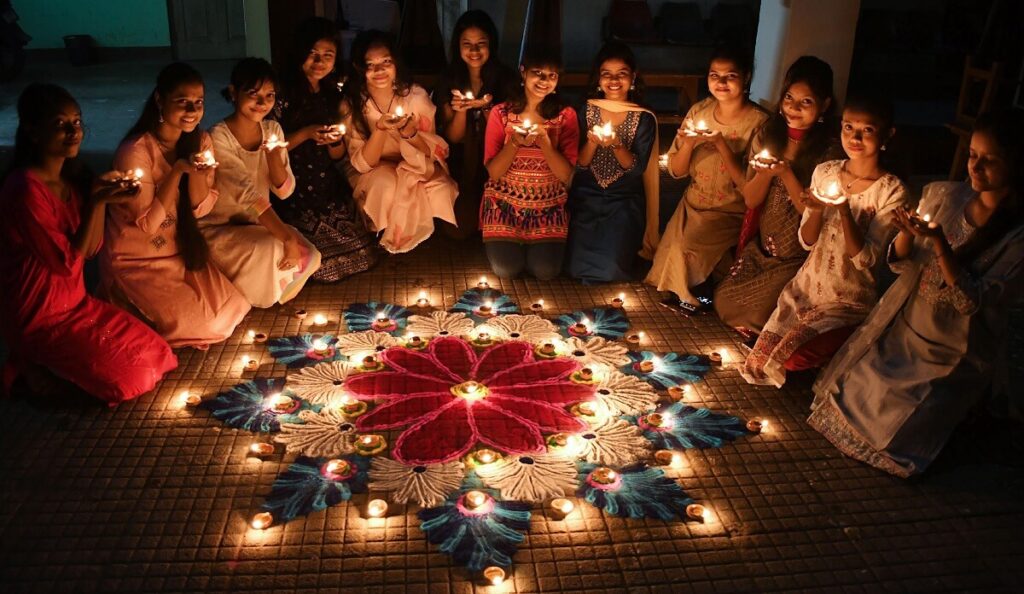
Diwali, the Festival of Lights, is one of the most celebrated events in India. It brings together spirituality, family traditions, and joyous community gatherings. Yet, unlike Christmas or New Year’s Day, Diwali does not fall on the same date every year. If you are planning to travel to India for the festival, this shifting schedule can feel confusing. One year it may arrive in late October, and the next it might be in early November. Travelers often ask: why does the date move, and when is the exact day in 2025?
The quick answer is that Diwali in 2025 will be celebrated on Monday, 20 October. This is the main night of Lakshmi Puja, when families light diyas, worship Goddess Lakshmi, and invite prosperity into their homes. But Diwali is not just a single night—it is a five-day festival with each day holding its own traditions and rituals. This means if you plan your trip around mid-October 2025, you can enjoy the complete cultural arc from Dhanteras to Bhai Dooj.
Why does this matter to you as a traveler? Diwali is peak festive season across India. Flights, trains, and hotels fill up quickly. Major cities like Delhi, Jaipur, Varanasi, and Mumbai glow with decorations, and temple queues stretch long into the night. If you’re visiting from abroad, timing your journey correctly ensures you do not miss the highlight celebrations.
This blog will explain the cultural and astronomical reasons behind Diwali’s shifting date, describe how the festival is calculated each year, and provide the exact 2025 schedule. By the end, you will not only know why the date changes but also how to plan your trip around Diwali 2025 in India for the best experience.
2. What is Diwali? The Festival’s Meaning and What Travelers Will Experience
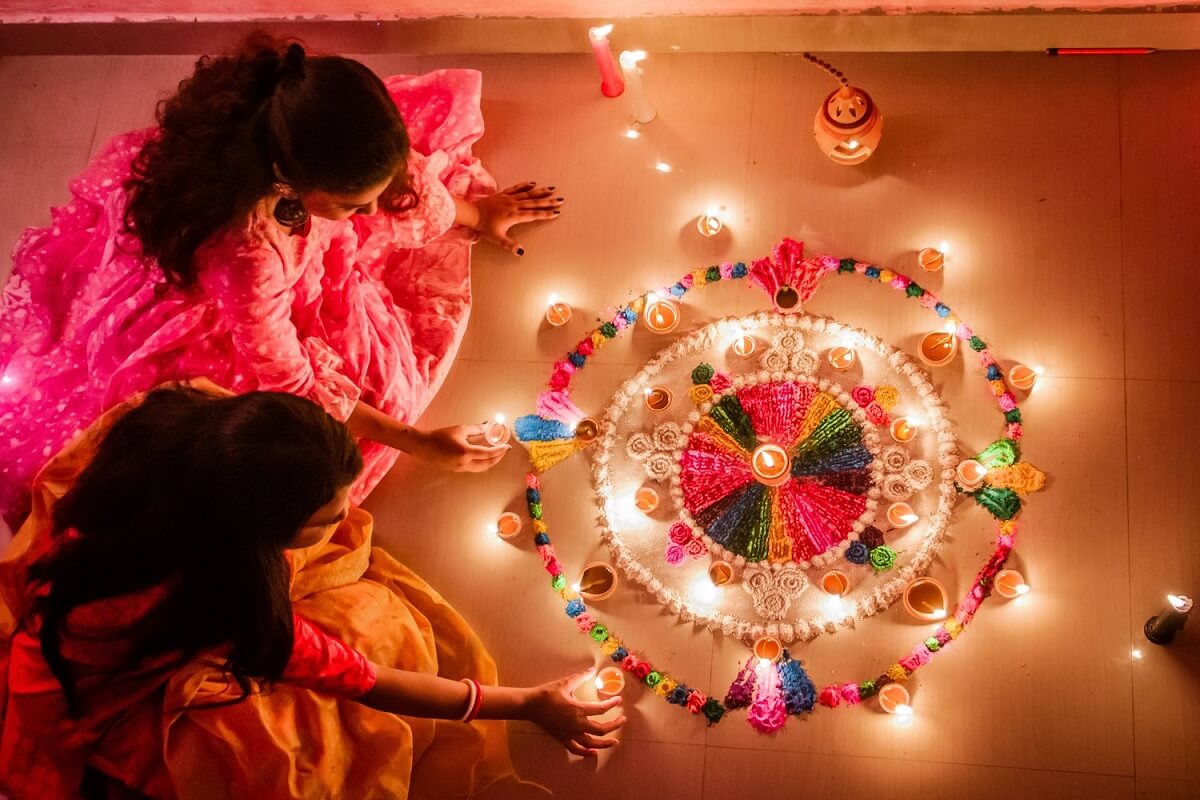
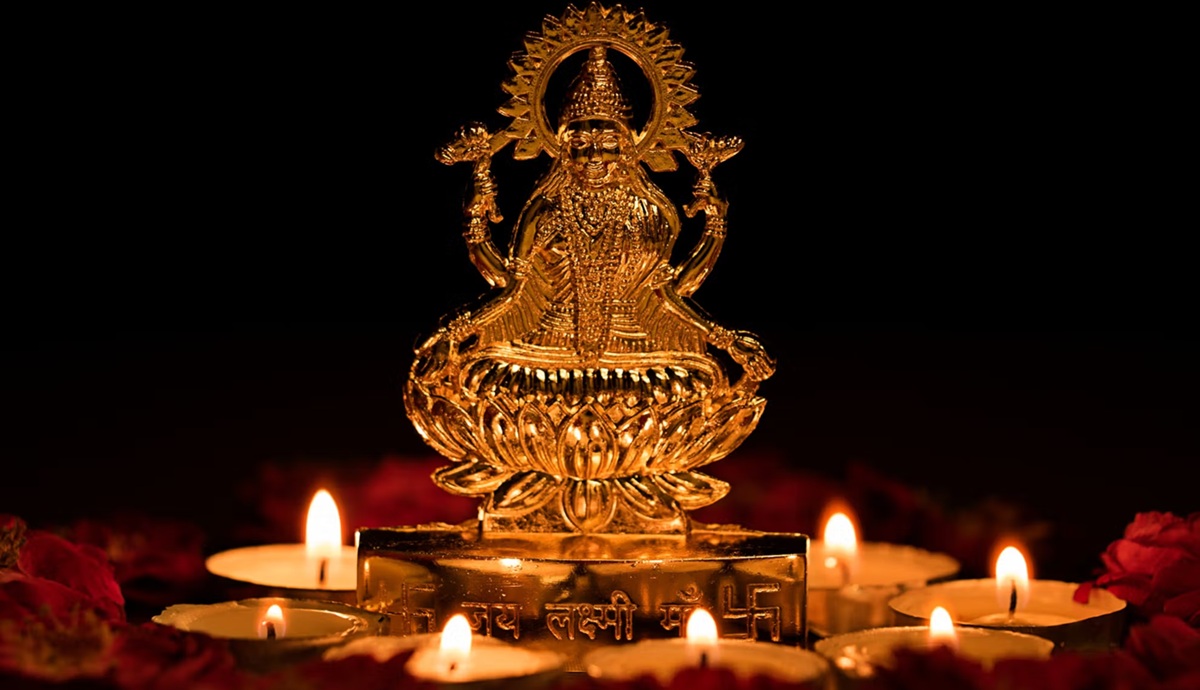
Diwali, also called Deepavali, literally means “row of lights.” At its core, it is a celebration of light triumphing over darkness and good triumphing over evil. For Hindus, it is deeply spiritual, symbolizing the victory of knowledge, truth, and hope. Families worship Goddess Lakshmi, the goddess of wealth, along with Lord Ganesha, remover of obstacles, to invite prosperity into their homes. In some traditions, the day also honors Lord Rama’s return to Ayodhya after his victory over Ravana, symbolizing the restoration of dharma.
As a traveler, what you will actually see and feel during Diwali is breathtaking. Streets sparkle with fairy lights, doorways are decorated with colorful rangoli patterns, and shops overflow with sweets, dry fruits, and festive gifts. On the main night, neighborhoods light thousands of oil lamps, creating a magical golden glow that feels both intimate and grand. Fireworks brighten the night sky, children burst crackers, and the air carries the fragrance of incense and fresh marigold garlands.
Different regions of India celebrate with their own variations. In West Bengal, the same night is marked as Kali Puja, dedicated to Goddess Kali. In South India, more emphasis is placed on Naraka Chaturdashi, celebrated the day before Diwali. Traders in Gujarat consider Diwali the start of their financial new year, while in Varanasi, the ghats of the Ganges host massive aarti ceremonies with fire and chanting.
For visitors, this variety is an opportunity. You can choose to experience Diwali’s spiritual side in holy cities, its colorful bazaars in Delhi or Jaipur, or its vibrant rituals in Bengal. No matter where you go, the warmth of Indian hospitality ensures you will be welcomed into the spirit of celebration.
3. Why Does the Date of Diwali Change Every Year?
The reason Diwali’s date is never fixed is because it follows the Hindu lunar calendar instead of the solar Gregorian calendar used worldwide. The Hindu calendar is a luni-solar system—it tracks the moon’s cycles while also keeping alignment with the sun’s seasonal changes. This causes most Hindu festivals, including Diwali, to shift each year on the Western calendar.
Diwali is celebrated on the new moon night (Amavasya) of the month of Kartika, one of the most sacred months in the Hindu calendar. Because lunar months are shorter than solar months, this new moon falls on different dates each year when converted to the Gregorian system. That is why in some years Diwali happens in late October, while in other years it arrives in early or mid-November.
Another interesting point is that the exact date can vary slightly depending on time zones and the precise calculation of lunar phases. Hindu astrologers and priests consult the panchang (traditional almanac) to determine when the Amavasya tithi (lunar day) occurs during the evening hours, as that is when Lakshmi Puja is performed. This is why you may sometimes see two different dates listed online for Diwali, but for India as a whole, one official date is recognized.
For travelers, the key takeaway is this: while Diwali’s timing may look unpredictable, it always falls on a new moon night in October or November. That’s why the date “changes” each year, even though the cycle itself is consistent.
4. How is the Date of Diwali Decided?
The process of fixing Diwali’s date each year is rooted in both astronomy and tradition. Hindu priests and scholars calculate the festival using the panchang, which records lunar phases, solar positions, sunrise and sunset times, and auspicious periods called muhurats.
The deciding factor is the presence of Amavasya (new moon) during the Pradosh Kaal—the twilight period after sunset. If the new moon is active during these evening hours, that civil date becomes the Diwali date for that year. In cases where the new moon begins late at night or ends before evening, astrologers determine whether the day before or after should be observed.
In practice, this means Diwali can occasionally cause debates between different regions or traditions. But to keep things uniform, India’s government issues an official holiday calendar each year marking the recognized date. This ensures that schools, offices, and businesses observe Diwali together.
As a traveler, you don’t need to worry about the detailed calculations. The important part is that the main Lakshmi Puja night is always announced well in advance and is consistent nationwide. However, if you want to join temple ceremonies, it’s helpful to check the local puja timings in the city you’ll be visiting. Major temples, especially in Varanasi, Ayodhya, and South Indian towns, often publish detailed schedules so visitors can align their plans. October in India: A Traveler’s Dream – Check Out the Weather
5. When is Diwali in October 2025?

For 2025, the calculations align to make Monday, 20 October the main day of Diwali in India. This is the night of Lakshmi Puja, when families gather, light lamps, and pray for wealth, peace, and prosperity. For travelers, this is the evening you absolutely should not miss. Streets will be at their brightest, homes will glow with thousands of diyas, and public spaces will host vibrant celebrations.
But Diwali is more than just one evening—it is a five-day festival:
- Dhanteras (18 October 2025): The festival begins with buying gold, silver, or utensils as a symbol of good fortune. Markets will be bustling, making this a perfect day to explore bazaars.
- Naraka Chaturdashi / Chhoti Diwali (19 October 2025): Celebrated with early morning rituals and smaller fireworks in the evening. A day to witness family traditions.
- Diwali / Lakshmi Puja (20 October 2025): The main night, with diyas, puja ceremonies, and massive firework displays.
- Govardhan Puja / Annakut (21 October 2025): Temples prepare large food offerings, and in North India, communities recreate Krishna’s lifting of Govardhan hill.
- Bhai Dooj (22 October 2025): A festival celebrating the bond between brothers and sisters, marked by family gatherings and sweets.
For travelers, it is best to arrive by 17 October 2025 if you want to enjoy the full stretch of festivities. If your schedule is tight, plan your trip so you are in a city like Varanasi, Jaipur, or Delhi on the 20th, when Diwali reaches its peak.
Perfect. Let’s continue with Sections 6–10, each developed in detail (~400 words per section), keeping the style consistent: original, clear, and useful for both travelers and readers seeking cultural depth. Don’t Miss Delhi’s Ram Leela – Plan Your Visit Today!
6. The Five Days of Diwali 2025: A Traveler’s Guide
Although the main attraction of Diwali is the Lakshmi Puja night on 20 October 2025, the entire celebration unfolds over five days, each with its own rituals and atmosphere. As a traveler, understanding this schedule helps you decide where to be and when, so you don’t miss the highlights.
Day 1 – Dhanteras (18 October 2025):
The festival begins with Dhanteras, a day considered highly auspicious for shopping. Traditionally, families buy utensils, jewelry, or gold to invite prosperity. Markets across India are packed with festive shoppers, and bazaars look more colorful than usual. If you enjoy vibrant local markets, this is the perfect day to explore Delhi’s Chandni Chowk or Jaipur’s Johari Bazaar.
Day 2 – Naraka Chaturdashi / Chhoti Diwali (19 October 2025):
This day is associated with the legend of Lord Krishna defeating the demon Narakasura. Families often start with early morning oil baths and light lamps in the evening. Some neighborhoods set off small fireworks. It’s a quieter day than the main Diwali, giving you a chance to soak in the anticipation.
Day 3 – Diwali / Lakshmi Puja (20 October 2025):
This is the heart of the festival. Families clean and decorate homes, create rangoli designs, light diyas, and perform evening Lakshmi Puja. As a traveler, this is the best night to witness Indian culture in its brightest form. Varanasi’s ghats shine with lamps, Jaipur’s Pink City glows under decorative lighting, and Udaipur’s palaces host cultural shows.
Day 4 – Govardhan Puja (21 October 2025):
Dedicated to Lord Krishna, this day commemorates his lifting of Govardhan Hill. Temples, especially in Mathura and Vrindavan, prepare massive food offerings known as Annakut. It’s a great day to visit temples and witness unique rituals.
Day 5 – Bhai Dooj (22 October 2025):
This day celebrates the bond between brothers and sisters. Families gather for rituals and feasting. It’s less public, but you may be welcomed into a local home if you have connections.
For travelers, the advice is simple: arrive before Dhanteras and stay until at least Govardhan Puja. This way, you get both the bustling markets and the grand temple traditions.
7. Why is Diwali Sometimes in October and Sometimes in November?
If you’ve noticed that Diwali can fall in either October or November, you’re not alone. Travelers often ask why the festival doesn’t stick to one month like most international holidays. The answer lies in the way the Hindu lunar calendar interacts with the solar year.
The Hindu calendar months are tied to moon cycles. Diwali specifically occurs on the new moon night (Amavasya) of the Kartika month. But lunar months are shorter than solar months—about 29.5 days—so over time, they shift relative to the solar calendar we use globally. This shifting cycle is why Diwali may sometimes occur in the second half of October, and other times in early or mid-November.
For example, in 2023 Diwali was celebrated in November, while in 2025 it moves earlier to October 20. The difference isn’t random—it’s entirely predictable by lunar calculations. The festival always falls within a window from late October to mid-November, never earlier or later.
Another reason for the confusion is the way the lunar day, or tithi, overlaps with civil days. The new moon may begin on one evening and end the next afternoon, creating variations in how different regions observe the date. Still, the government holiday calendar ensures a unified national date each year.
For travelers, the takeaway is that if you are planning a trip to India in late October or early November, check the specific year’s date well in advance. Tour operators, airlines, and hotels often release Diwali packages around this time because demand spikes. Long-tail search queries like “Diwali in October or November India travel” or “which month Diwali falls in 2025” are common, and the answer is always tied to these lunar shifts.
8. Astronomical and Astrological Significance of Diwali’s Date
Beyond culture and travel, Diwali’s timing has deep astronomical and astrological meaning. The festival falls on Amavasya, the new moon night, when the sky is at its darkest. This astronomical alignment is seen as spiritually powerful because it symbolizes renewal and the chance to invite light, prosperity, and divine blessings into one’s life.
In Hindu astrology, Diwali is celebrated during Pradosh Kaal, the twilight hours after sunset when cosmic energy is believed to be most balanced. Performing Lakshmi Puja during this window is thought to maximize prosperity and well-being. Priests calculate the exact muhurat (auspicious time) for each city, which can vary slightly depending on longitude and latitude.
The choice of Amavasya is also practical and symbolic. On the darkest night, the glow of thousands of diyas is most visible, creating an enchanting sight that symbolizes hope and positivity. For travelers, this is the reason why Diwali is so photogenic—there is a natural contrast between the dark sky and the flickering lights.
Astrologically, Diwali also marks a turning point in the Hindu calendar. It falls at the end of the harvest season and signals the approach of winter. Traders in Gujarat and Maharashtra open new financial books on this day, aligning spiritual timing with business prosperity.
As a visitor, knowing the astronomical background adds depth to your experience. When you see families lighting lamps or temples glowing with thousands of diyas, you can appreciate it not just as a beautiful sight but as a moment aligned with cosmic rhythms. October Weekend Escapes from Delhi – Find Your Ideal Destination Today!
9. Spiritual Importance of Celebrating Diwali on the Darkest Night
For Hindus, the fact that Diwali is celebrated on the darkest night of the lunar cycle carries profound symbolism. It represents the victory of inner light over outer darkness and the triumph of spiritual knowledge over ignorance. On a night when the moon disappears, humans themselves create light—through lamps, candles, and fireworks—as a reminder of resilience and hope.
The ritual of lighting diyas is not only for decoration. Each flame is believed to invite Goddess Lakshmi into the home, bringing prosperity and good fortune. The darkness of the Amavasya night represents challenges, negativity, and fears. Lighting the lamp is a spiritual act of dispelling these obstacles.
For travelers interested in spirituality, this symbolism is striking. Standing on the ghats of Varanasi or in the courtyards of Jaipur’s palaces during Diwali night, you’ll see thousands of lamps illuminating spaces that would otherwise be pitch black. It is a reminder of why Diwali resonates not just as a religious festival but as a universal celebration of hope and positivity.
The darkest night also emphasizes introspection. Many Hindus meditate, fast, or chant mantras during Diwali, reflecting on personal growth. For international visitors, participating in even a small puja or lighting a single diya can be a powerful cultural experience. It connects you to a tradition that views darkness not with fear, but as a canvas on which light shines brighter.
10. Diwali Dates and Global Celebrations

Diwali may have originated in India, but today it is celebrated around the world. Indian diaspora communities in the United States, United Kingdom, Canada, Australia, and across Latin America mark the occasion with just as much enthusiasm, though sometimes with local adaptations.
In countries with significant Indian populations, you’ll find public Diwali events featuring cultural performances, bazaars, and fireworks. Leicester in the UK, for example, hosts one of the largest Diwali light festivals outside India. In New York and Toronto, city squares are lit up with lamps, and community temples organize pujas. Even in places like Mauritius, Fiji, and Trinidad, Diwali is a public holiday.
The date of Diwali abroad usually follows the Indian calendar, but time zone differences mean some communities may observe it a day earlier or later. For instance, if the new moon night falls on October 20 in India, in the Americas the corresponding civil date might shift slightly depending on when Amavasya occurs locally. Communities rely on local temples and organizations to announce the confirmed date.
For travelers who cannot make it to India in October 2025, experiencing Diwali abroad is still worthwhile. The celebrations may be smaller, but the essence—lighting lamps, sharing sweets, and welcoming prosperity—remains the same.
For those visiting India, knowing that Diwali is part of a global celebration adds perspective. When you light a diya on October 20, 2025, millions around the world will be doing the same, creating a truly global festival of light.
11. Planning Travel Around Diwali 2025

If you are planning to experience Diwali in India, timing and preparation are everything. The festival is one of the busiest travel seasons of the year. From packed trains to soaring hotel prices, everything needs to be arranged in advance.
Best Cities to Experience Diwali
- Varanasi: Famous for its Dev Deepawali on the Ganga ghats (celebrated a few weeks after Diwali), the city glows with lamps and holds grand evening aartis.
- Jaipur: Known as the “Pink City,” Jaipur is decorated with millions of lights. The city even organizes a contest for the best-lit market, turning shopping areas into magical spaces.
- Ayodhya: Mythologically tied to Lord Rama’s return, Ayodhya creates the largest diya-lighting event in the world, often making headlines for record-breaking displays.
- Delhi: Neighborhood markets, temples, and India Gate light up, giving you a taste of both traditional and modern celebrations.
- Kolkata: Celebrates Kali Puja on the same night as Diwali, offering a slightly different but equally spectacular experience.
When to Book
Book flights and trains at least three to four months in advance. Hotels in major tourist cities sell out quickly, and prices rise closer to the festival.
What to Pack
- Festive but modest clothing (kurta-pajama for men, salwar kameez or saree for women if you want to blend in).
- A shawl or light sweater, as evenings in October can be cooler in northern India.
- Gifts or sweets if you’re invited to a local home.
Travel Tips
- Avoid over-indulging in fireworks; many cities have restrictions due to air pollution.
- Use public transport or book cabs early on Diwali night, as traffic can be chaotic.
- Carry a camera—photography opportunities are endless during the festival of lights.
By planning early and choosing the right city, your Diwali 2025 trip can become one of the most memorable cultural experiences of your life.
12. Frequently Asked Questions About Diwali 2025
1. Why does Diwali not fall on the same date every year?
Because it follows the Hindu lunar calendar and is tied to the new moon of Kartika month, not the fixed solar calendar.
2. When is Diwali in 2025?
Diwali will be celebrated on Monday, 20 October 2025 in India.
3. How long does Diwali last?
It is a five-day festival: Dhanteras (18 Oct), Naraka Chaturdashi (19 Oct), Diwali (20 Oct), Govardhan Puja (21 Oct), and Bhai Dooj (22 Oct).
4. Where is the best place to experience Diwali in India?
Varanasi for spiritual rituals, Jaipur for city lights, Ayodhya for mythological significance, Delhi for markets, and Kolkata for Kali Puja.
5. Can tourists participate in Diwali celebrations?
Yes, tourists are often welcomed to join family pujas, enjoy fireworks, or visit decorated temples. Carry small sweets or gifts as a token of respect.
6. Is Diwali always in October?
No, it can also fall in November depending on the lunar cycle.
7. Do other countries celebrate Diwali on the same date?
Yes, Indian diaspora communities worldwide celebrate on the same lunar date, though time zone differences may shift the civil date by a day.
8. What should I wear for Diwali in India?
Festive Indian attire is best, but modest Western clothing is also acceptable. Bright colors are encouraged, as Diwali is a festival of joy.
Explore These Topics:
- Discover Anant Chaturdashi 2025 – Rituals, Puja & Celebration Guide
- Celebrate Dhanteras 2025 – Date, Significance & Traditions Explained
- Explore 9 Must-See Festivals in India This September 2025
- Join Radha Ashtami 2025 – Date, Rituals, Legends & Puja Timings
- Plan Your Trip to Ziro Music Festival 2025 – Lineup, Passes & Travel Guide
- Experience Durga Puja 2025 – Traditions, Celebrations & Travel Tips
- Best Destinations for Diwali Celebrations in India
- Diwali or Dussehra – Know the Difference, Celebrate Right!
- Celebrate with Colour – Check Out India’s October Festivals!
- Ready for Kolkata Durga Puja? Browse Pandals Guide Today!
- When is Karwa Chauth in October and Why is it Important?
- What is Durga Puja and How Is It Celebrated? – A Complete Guide


