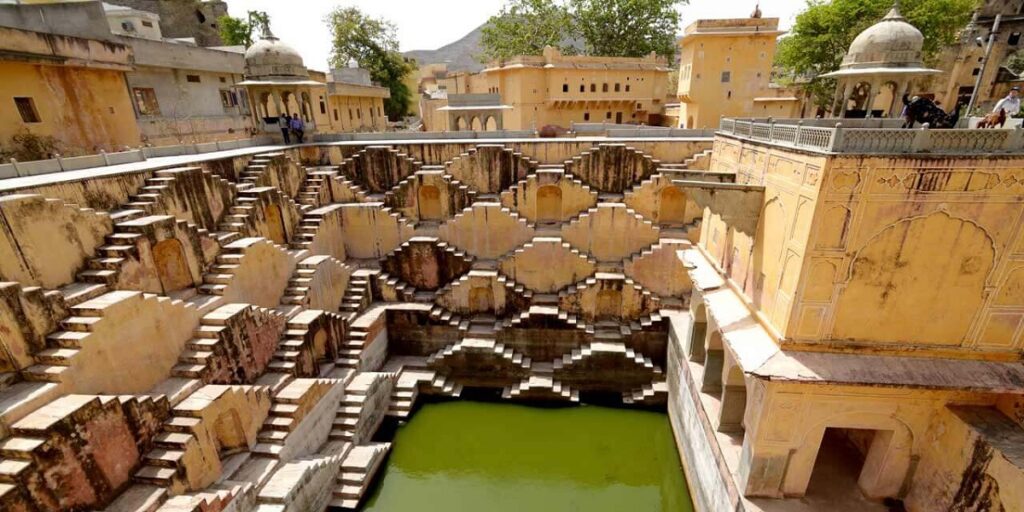
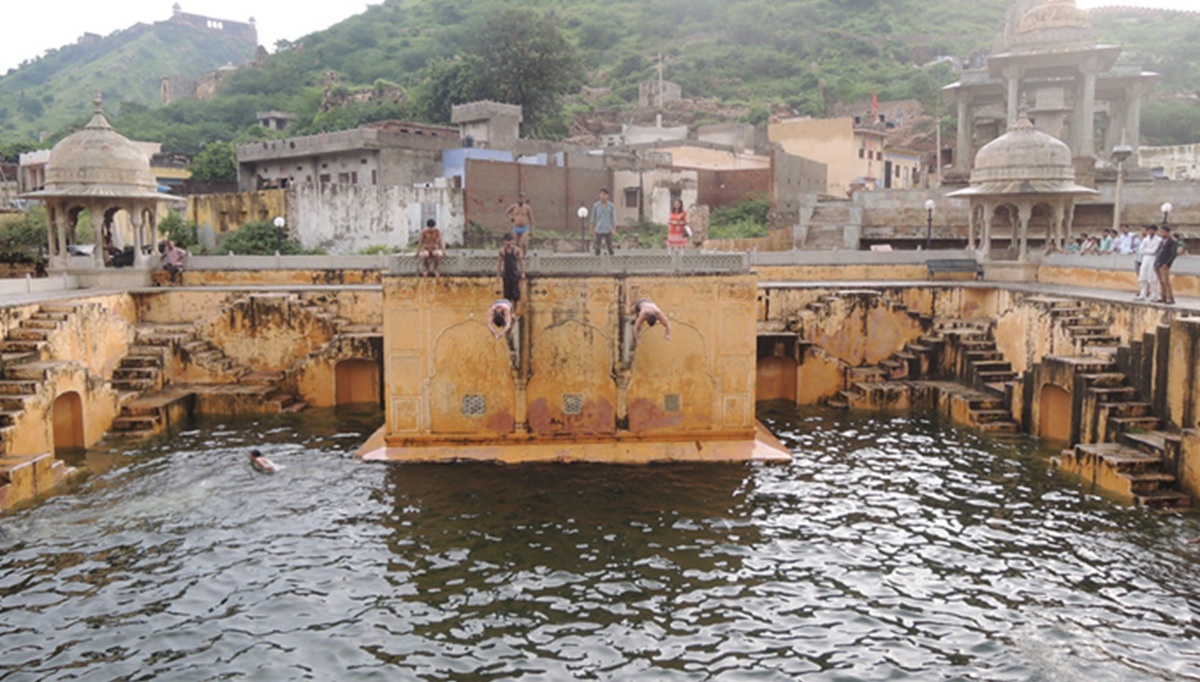
Among Jaipur’s many wonders, Panna Meena ka Kund remains a gem that blends history, functionality, and beauty. Located near Amer Fort, this ancient stepwell is admired for its symmetrical stairways, cool atmosphere, and peaceful setting. Unlike other tourist spots, it is less crowded, offering travelers a chance to pause and experience the city’s heritage calmly.
Stepwells, or “baoris,” were essential water reservoirs in Rajasthan, built centuries ago to store water in arid conditions. They also served as gathering spaces for locals, combining practical needs with cultural significance. Panna Meena ka Kund is one of the best-preserved examples, reflecting the ingenuity of Rajput architecture.
In this detailed guide, you’ll learn about its history, design, legends, visiting tips, and photography opportunities.
History of Panna Meena ka Kund
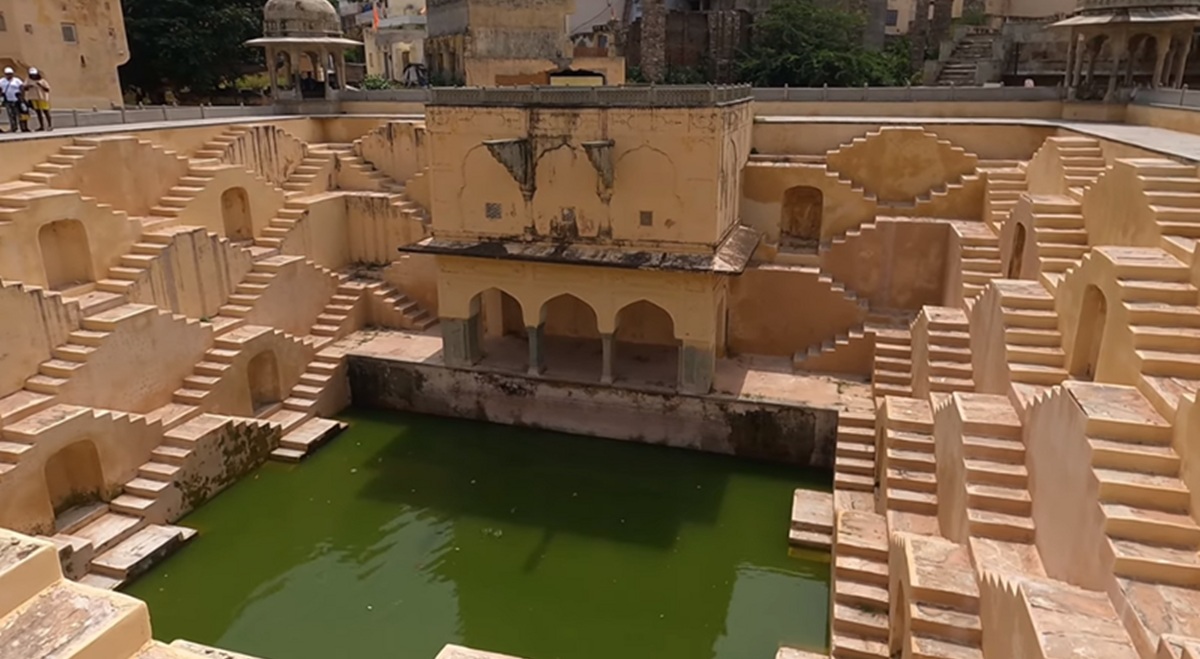
Historians date the construction of Panna Meena ka Kund to the 16th century during the reign of Maharaja Jai Singh I. Built as a community water tank, it supplied water to the residents of Amer. Stepwells at the time were not only engineering marvels but also played a social role, serving as meeting points for women who came to fetch water, rest, and converse.
Its name is often linked to “Panna Meena,” believed to be a noble or local figure who contributed to its construction. Over time, the stepwell became an important part of Amer’s daily life, especially in summers, when it acted as a natural cooling spot.
Although it lost its primary purpose after modern water systems were developed, the stepwell has been preserved for cultural and architectural significance, attracting both history lovers and photographers.
Architectural Features of Panna Meena ka Kund
The architecture of Panna Meena ka Kund is its most captivating aspect. Unlike plain water tanks, this stepwell is a stunning example of symmetric design. Key features include:
- Eight Levels of Staircases: The stepwell has stairways arranged in a crisscross manner, forming a geometric pattern that fascinates architects and visitors alike.
- Perfect Symmetry: The steps are aligned in such a way that from any angle, the design looks balanced and flawless.
- Cool Interiors: The depth of the stepwell ensures a natural cooling effect, making it a refreshing escape during Jaipur’s hot summers.
- Simple Yet Striking Walls: The walls are made of yellow sandstone, giving the structure a rustic charm that contrasts with the vibrant patterns of Jaipur palaces.
Architects often describe the design as both artistic and mathematical, a reflection of the advanced knowledge of builders during Rajput times.
Legends and Cultural Beliefs
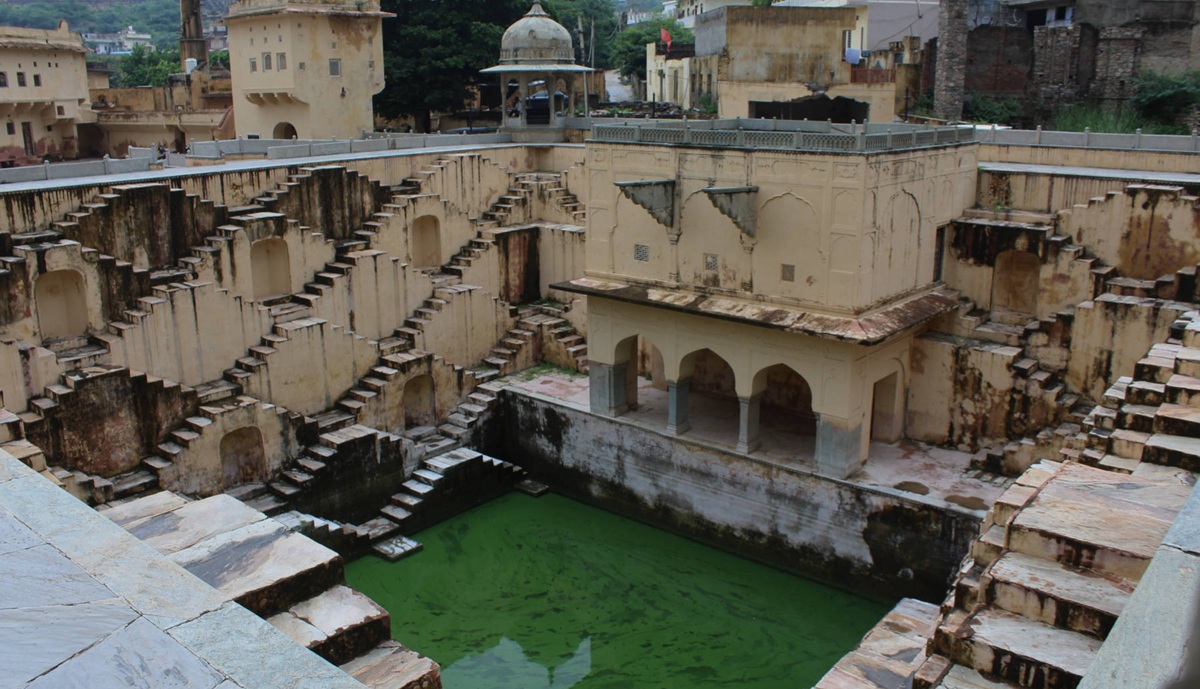
Like most ancient Indian structures, Panna Meena ka Kund is tied to legends. Locals believe that no one can use the same set of stairs to go down and then climb back up, adding a mysterious aura to the stepwell. Visitors often test this belief, making it part of the fun of exploring the site.
Another belief is that the water of the stepwell was considered sacred, used not only for daily needs but also for small rituals. Some locals even say it had medicinal properties, thanks to its underground reserves and natural filtering process.
Though such legends are hard to verify, they add to the stepwell’s charm, making it more than just an old water tank.
Explore Day-by-Day Travel Itinerary: 9 Days Rajasthan Heritage Tour from Jaipur to Udaipur
The Stepwell as a Social Hub
Beyond water storage, Panna Meena ka Kund was a community space. In olden times, women gathered here to fetch water, share news, and enjoy respite from the heat. It acted as a center of daily life in Amer, connecting people socially and culturally.
Stepwells also hosted religious rituals and seasonal festivals. Villagers decorated the area with flowers, lamps, and colors, celebrating monsoon rains when the tank filled up. These traditions made the stepwell an inseparable part of life in Amer.
Read Also: Galtaji Temple Jaipur – Monkey Temple, Timings & Travel Info
Visitor Experience for visit Panna Meena ka Kund
Today, visiting Panna Meena ka Kund is a serene experience compared to Jaipur’s busier landmarks. Here’s what you can expect:
- Peaceful Atmosphere: Fewer tourists mean you can enjoy the architecture and take photos without crowds.
- Guides Available: Local guides around Amer often include the stepwell in walking tours, explaining its history and legends.
- Natural Cooling: Even in peak summer, the lower levels feel cooler, giving visitors a unique escape.
- Short Stop: Most travelers spend 30–45 minutes here, usually after visiting Amer Fort.
Since the site is still under partial conservation, access to step inside the well is restricted for safety reasons, but you can view it entirely from above.
Explore Also: Raj Mandir Cinema Jaipur – Famous Movie Hall & Ticket Guide
Best Time to Visit Panna Meena ka Kund
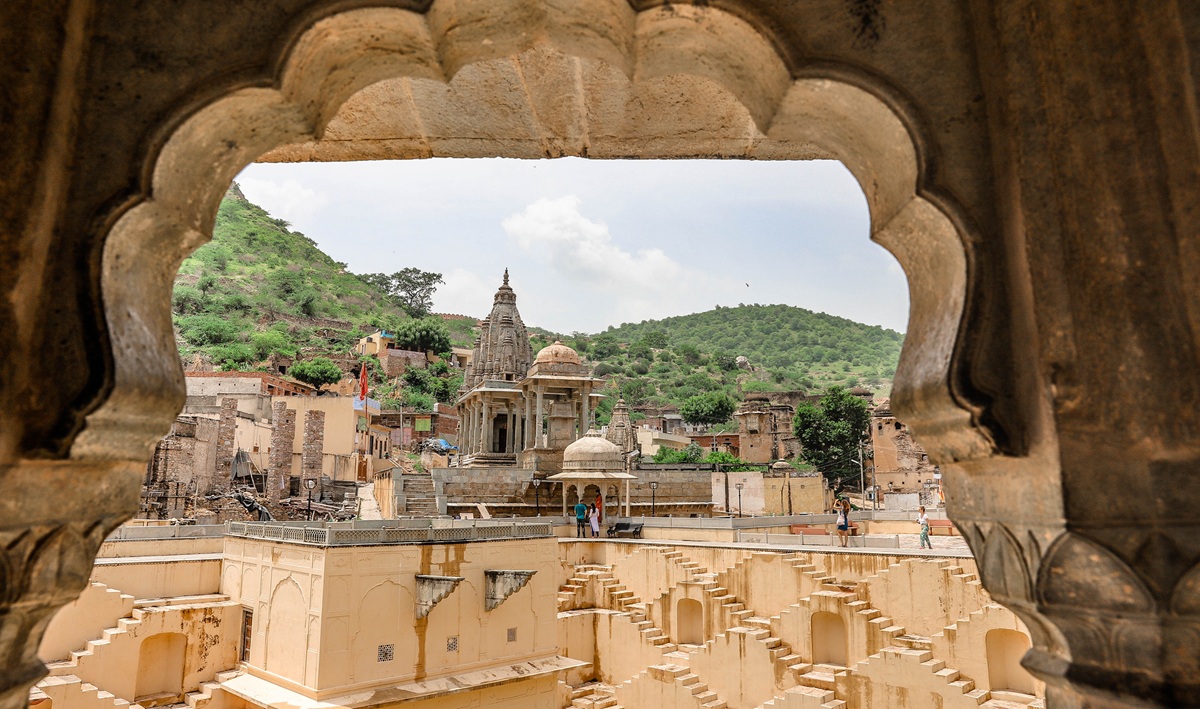
- Season: The best time to visit Jaipur and Panna Meena ka Kund is from October to March, when the weather is pleasant.
- Time of Day: Early mornings (8:00–10:00 AM) and late afternoons (4:00–6:00 PM) are ideal for photography due to soft natural light.
- Avoid Midday: The overhead sun creates harsh shadows, making it less favorable for photos.
Explore Day-by-Day Travel Itinerary: 4 Days Jaipur, Ajmer & Pushkar Tour Package
Photography Guide
Panna Meena ka Kund is a photographer’s paradise. Its symmetry, textures, and angles attract both amateurs and professionals.
Tips for capturing the best shots:
- Use the staircases to frame your photos symmetrically.
- Wide-angle shots work well to capture the entire geometry.
- Play with shadows in the morning or evening for dramatic effects.
- Wear bright-colored clothes if you want yourself in the photo, as they contrast beautifully with the yellow stone.
The stepwell has become increasingly popular on Instagram, making it a favorite stop for influencers and travel bloggers.
See the Full Itinerary for Your Trip: 5 Days Jaipur & Ranthambore Safari Itinerary
How to Reach Panna Meena ka Kund
- Location: Panna Meena ka Kund is located near Amer Fort, about 11 km from Jaipur city center.
- By Car/Taxi: A taxi or auto-rickshaw from the city center takes around 20–25 minutes.
- By Bus: Local buses towards Amer stop nearby, though not as convenient as private transport.
- By Walking Tour: Many guided walking tours of Amer include this stepwell along with Amer Fort and nearby temples.
Its proximity to Amer Fort makes it easy to combine both visits in one trip.
Expand Your Knowledge on Tripolia Bazaar Jaipur – Shopping Guide for Crafts & Bangles
Entry Fees and Timings
- Entry Fee: Free of charge for all visitors.
- Timings: Open daily from 7:00 AM to 6:00 PM.
- Guides: Optional, but hiring a local guide can enhance your understanding of the history and culture.
Check the Complete Itinerary Details: Jaipur, Udaipur & Chittorgarh Tour – 5 Days Trip
Nearby Attractions of Panna Meena ka Kund
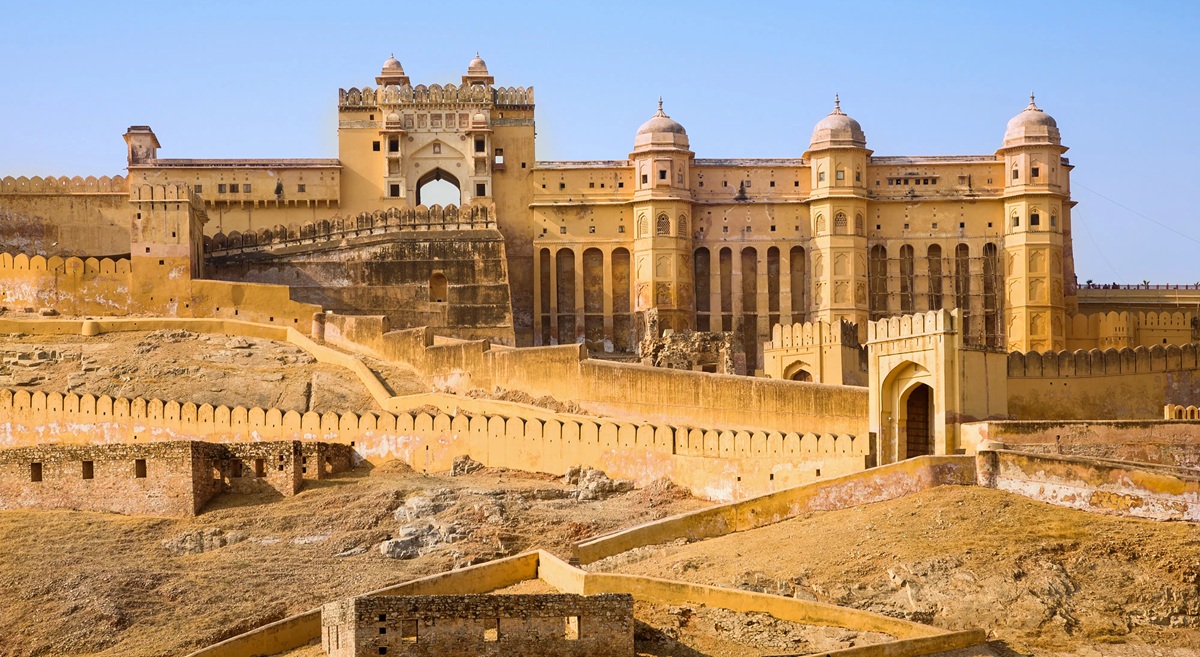
When visiting Panna Meena ka Kund, you can also explore:
- Amer Fort: A UNESCO World Heritage Site with palaces, courtyards, and the famous Sheesh Mahal (Mirror Palace).
- Jaigarh Fort: Known for its massive cannon, Jaivana, and scenic views of Amer.
- Anokhi Museum: A museum dedicated to block printing, located close to Amer Fort.
- Jal Mahal: The Water Palace located on Man Sagar Lake, perfect for evening photos.
Travel Tips for Visitors visit Panna Meena ka Kund
- Wear comfortable footwear for walking around Amer and nearby attractions.
- Carry water, especially in summer.
- Respect the conservation rules and avoid trying to climb down into the stepwell.
- Combine the visit with Amer Fort for a half-day itinerary.
- Hire a guide for a richer experience, as local stories add depth to the visit.
Dive Deeper Into Sisodia Rani Garden Jaipur – History, Murals & Visitor Tips
FAQs
Q. Why is Panna Meena ka Kund famous in Jaipur?
Panna Meena ka Kund is famous for its stunning symmetrical stepwell design, dating back to the 16th century. The crisscross staircases built in geometric patterns create a unique visual effect, making it a favorite for photographers and history enthusiasts. It also served as a community water reservoir and a social gathering spot for villagers in ancient times.
Q. What are the entry timings for Panna Meena ka Kund?
Panna Meena ka Kund is open daily from sunrise to sunset. Visitors usually prefer early morning (7:00 AM – 9:00 AM) or late afternoon (4:00 PM – 6:00 PM) for a quieter experience and better lighting for photography. Being an open heritage site, it does not operate on strict ticketed hours like major forts or palaces.
Q. Is there an entry fee to visit Panna Meena ka Kund?
No, there is no entry fee to visit Panna Meena ka Kund. It is a free attraction in Jaipur, making it popular among budget travelers, history buffs, and photographers. Since it is a protected heritage site, visitors are encouraged to maintain cleanliness and respect the historical monument during their visit.
Q. How can I reach Panna Meena ka Kund in Jaipur?
Panna Meena ka Kund is located near the Amber Fort, about 10 km from Jaipur city center. Visitors can take an auto-rickshaw, taxi, or app-based cab services like Ola and Uber. It is usually included in sightseeing tours of Amber Fort and nearby attractions such as Jaigarh Fort and Nahargarh Fort. The site is easily walkable from Amber village.
Q. Can tourists walk down the steps of Panna Meena ka Kund?
No, tourists are not allowed to walk down the steps of Panna Meena ka Kund for safety and preservation reasons. The Archaeological Survey of India has restricted access to the staircases to prevent accidents and structural damage. Visitors can, however, admire and photograph the stepwell from above, which still offers spectacular views of its unique geometry.
Q. What is the history behind Panna Meena ka Kund?
Panna Meena ka Kund was built in the 16th century during the reign of Maharaja Jai Singh to provide water storage for the local community. Stepwells were vital in Rajasthan due to its arid climate, and this kund served both functional and social purposes. Villagers gathered here to collect water, rest, and interact. Its architecture reflects the ingenuity of ancient water management systems in India.
Q. What is the best time of year to visit Panna Meena ka Kund?
The best time to visit Panna Meena ka Kund is from October to March when Jaipur experiences pleasant weather. The cooler months make it easier to explore the Amber region, including Amber Fort, Jaigarh Fort, and the stepwell. During the summer months (April–June), the heat can be intense, while monsoon (July–September) sometimes adds a green backdrop to the site.
Q. What else can I explore near Panna Meena ka Kund?
Near Panna Meena ka Kund, travelers can visit the majestic Amber Fort, located within walking distance. Other nearby attractions include Jaigarh Fort, Nahargarh Fort, and the Anokhi Museum of Hand Printing. The local village of Amber also offers traditional shops, temples, and eateries that reflect Rajasthani culture. Combining the stepwell with these landmarks makes for a complete Jaipur heritage tour.
Why Panna Meena ka Kund Is Worth Visiting
Unlike Jaipur’s grand forts and palaces, Panna Meena ka Kund offers intimacy and simplicity. Its quiet charm, perfect symmetry, and deep history make it one of Jaipur’s most rewarding hidden gems. It may not overwhelm with grandeur, but it fascinates with detail, design, and mystery.
For travelers looking to explore beyond the obvious, the stepwell provides a memorable stop that reflects Rajasthan’s traditions of water management, architecture, and community life.
Continue Your Journey for visit Jaipur:
- Moti Dungri Ganesh Ji Temple: Visitor Guidelines
- Birla Mandir Jaipur – Marble Temple, Best Time & Visitor Guide
- Patrika Gate Jaipur – Best Photography Spots & Timings
- Chokhi Dhani Jaipur – Village Experience, Shows & Food
- Govind Devji Temple Jaipur – Darshan Timings & Significance
- How to Reach Ranthambore from Jaipur – Complete Travel Guide
- Top Temples in Jaipur – Spiritual Sites You Must Visit
- Things to Do in Jaipur with Kids – Family Activities & Fun
- Jaipur Monuments Guide – Entry Fees & Tourist Information
- Best Cooking Classes in Jaipur – Learn Rajasthani Cuisine
- Jaipur Literature Festival 2025 – Dates, Venue & Highlights
- Hawa Mahal Jaipur – History, Entry Fees & Photo Spots
- Bapu Bazaar Jaipur – Best Shops, Things to Buy & Bargaining Tips
- Johari Bazaar Jaipur – Jewelry Shopping, Gold & Opening Hours
- Chokhi Dhani Jaipur – Rajasthani Village Experience & Booking Guide
- Explore Neemrana Fort from Delhi – Start Your Journey Today!
- Experience Jaipur’s Highlights in One Day – Catch the Train from Delhi!