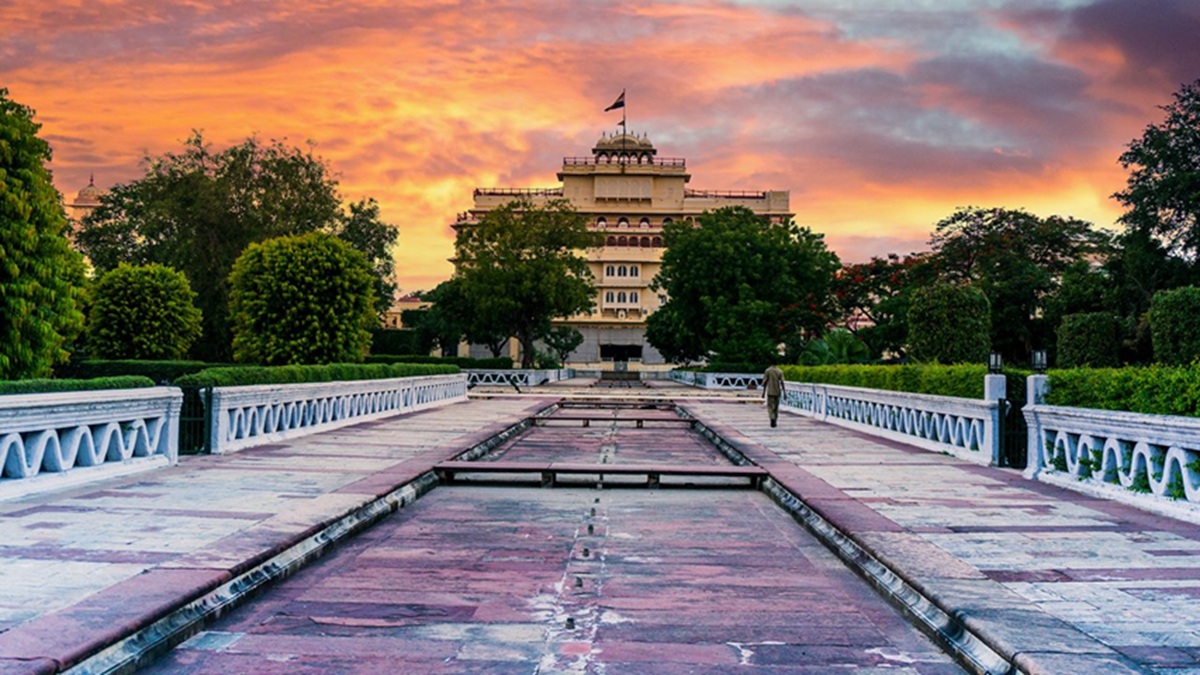
The Govind Devji Temple in Jaipur is one of the most important and beloved temples in Rajasthan. Dedicated to Lord Krishna, the temple is situated inside the City Palace complex, making it easy for visitors to combine a cultural tour with a spiritual stop. Built in the 18th century by Maharaja Sawai Jai Singh II, the founder of Jaipur, this temple holds deep emotional value for both locals and devotees from across India.
What makes Govind Devji Temple unique is the belief that the idol of Lord Krishna here closely resembles his real appearance on earth. This divine statue was originally brought from Vrindavan and enshrined in Jaipur to protect it during times of political unrest.
The temple is not only a religious center but also a hub for cultural traditions, daily rituals, and grand festivals. It attracts thousands of devotees every day, especially during Janmashtami and Holi. Whether you are a pilgrim or a traveler exploring Jaipur, the temple offers an experience filled with devotion, chants, and the rich spiritual energy of Rajasthan.
History of Govind Devji Temple
The history of Govind Devji Temple dates back to the 16th century when the idol of Lord Krishna was found in Vrindavan by Raja Man Singh, a trusted general of Emperor Akbar. The idol was revered for its resemblance to the original form of Krishna. Later, during Aurangzeb’s reign, when many temples faced destruction, the idol was secretly moved to Jaipur for safety.
Maharaja Sawai Jai Singh II, a great devotee of Lord Krishna, constructed this temple inside his City Palace complex. He placed the idol of Govind Devji in a manner that he could view the deity directly from his palace. This special arrangement showed the king’s dedication and the temple’s importance in Jaipur’s spiritual life.
Over time, Govind Devji Temple became one of the seven most important temples of Thakur of Vrindavan, linking Jaipur’s culture with the holy land of Krishna. Today, it remains an active center of devotion, with its history still alive in the daily rituals and hymns sung by priests and devotees.
Check out the Jaipur itinerary: Explore Jaipur, Ajmer & Pushkar – 4 Days Tour
Architectural Style of the Temple
The temple showcases a unique blend of Rajput and Mughal architecture, reflecting the artistic vision of Jaipur’s rulers. Unlike many temples that are elaborately carved, Govind Devji Temple stands out for its simplicity and elegance. Its large courtyard, open halls, and symmetrical design allow thousands of devotees to gather during major festivals.
The temple’s sanctum houses the idol of Govind Devji, adorned with intricate jewelry and colorful attire that changes several times a day during different darshan sessions. Beautiful marble floors, arched gateways, and delicate jaali work add to its charm.
The placement of the temple within the City Palace ensures a continuous flow of spiritual and royal energy. Devotees not only admire the deity but also the surrounding architecture, which reflects Jaipur’s grand heritage. The harmony of simplicity and divinity makes this temple different from the grand temples of South India or the heavily ornamented shrines of North India.
Read more: Top 5 Temples in Jaipur for a Spiritual Visit
Darshan Timings of Govind Devji Temple

One of the most important aspects of visiting Govind Devji Temple is knowing the darshan timings. Unlike many temples, darshan here is divided into seven sessions each day, where the idol is unveiled to devotees with unique decorations and offerings. Each darshan is accompanied by bhajans (devotional songs) and the sound of bells, creating a deeply spiritual atmosphere.
The usual darshan timings are:
- Mangla Aarti: 5:00 AM – Early morning offering
- Dhoop Darshan: 7:30 AM – Morning prayers
- Shringar Darshan: 9:30 AM – Adorning the idol with jewelry and clothes
- Rajbhog Darshan: 11:00 AM – Food offering (Bhog)
- Utthapan Darshan: 5:30 PM – Evening awakening of the deity
- Sandhya Aarti: 6:30 PM – Evening prayers with lamps
- Shayan Darshan: 9:00 PM – Night darshan before the deity rests
Timings may change during festivals and special occasions. It is recommended to arrive early, as the temple becomes crowded, especially during the first morning darshan.
Check out the Jaipur itinerary: Jaipur Short Trip – 2 Nights 3 Days Package
Rituals and Daily Worship
The rituals at Govind Devji Temple are carried out with great devotion and follow Vaishnavite traditions. Each darshan session has its own rituals, starting from Mangla Aarti, where the deity is awakened with chants and bells, to Shayan Darshan, where the idol is put to rest with lullabies.
Priests offer fresh flowers, incense, milk, butter, and sweets to Lord Krishna during the day. The deity is dressed in new clothes multiple times, symbolizing the different moods of Krishna. Devotees actively participate by singing bhajans, clapping, and swaying with joy.
One unique aspect of this temple is the closeness of the deity to devotees. Unlike many temples where idols are placed far inside sanctums, here the idol is visible from a short distance, making the darshan more personal and intimate.
Festivals Celebrated at Govind Devji Temple
Festivals are celebrated with grandeur at Govind Devji Temple, and each one attracts massive crowds of devotees and tourists. Some of the most significant celebrations include:
- Janmashtami: The birthday of Lord Krishna is celebrated with special rituals, night-long bhajans, dances, and grand decorations. The temple remains open throughout the night.
- Holi: Known as the festival of colors, Holi at Govind Devji is special because of the traditional way colors and flowers are offered to the deity and devotees.
- Diwali: The temple is lit with thousands of diyas, creating a magical spiritual atmosphere.
- Sharad Purnima: Special milk offerings and night darshans are held, reflecting Krishna’s association with the moonlit Raas Leela.
During these festivals, Jaipur’s spiritual life revolves around Govind Devji Temple, with devotees traveling from far and wide to be part of the celebrations.
Why Govind Devji Temple is So Revered
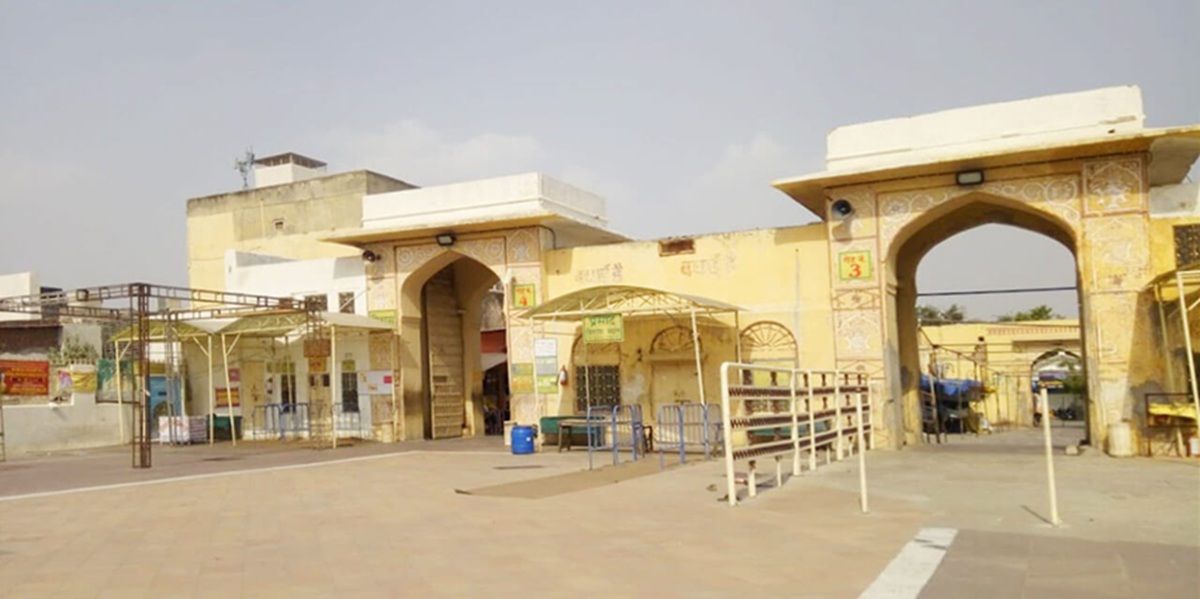
The temple is revered for several reasons. First, the belief that the idol resembles Krishna’s real form makes it especially sacred. Second, the temple has been a symbol of devotion for Jaipur’s rulers and citizens for centuries. Third, the accessibility of darshan, where devotees feel close to the deity, enhances its spiritual importance.
Unlike temples where rituals can seem distant, Govind Devji allows direct participation. The chants, the prasad, and the simple yet powerful rituals bring a sense of peace and joy. For many, a single visit here is considered equivalent to visiting Krishna’s holy land of Vrindavan.
The temple also represents Jaipur’s blend of devotion and culture, making it not only a place of worship but also a cultural landmark.
Check out Itinerary: Rajasthan Heritage Tour – 9 Days Jaipur to Udaipur
Visitor Guidelines for Govind Devji Temple
If you plan to visit Govind Devji Temple, here are some important tips:
- Dress modestly: Traditional Indian attire is preferred. Women can wear sarees or salwar suits, while men should avoid shorts.
- Follow timings: Check darshan schedules beforehand to avoid missing aarti.
- Avoid photography: In many areas of the temple, photography is not allowed, especially during rituals.
- Respect rituals: Join bhajans, clap along, but maintain silence during aarti when requested.
- Footwear: Remove shoes outside before entering the temple complex.
- Prasad: Don’t miss the prasad (sweets) distributed after darshan, often laddoos or peda.
By respecting these guidelines, you ensure a smoother and more meaningful experience.
Read: Rajasthani Culture – Traditions, Heritage & Lifestyle
How to Reach Govind Devji Temple Jaipur
Govind Devji Temple is located inside the City Palace complex, making it easy to reach by various modes of transport:
- By Air: The nearest airport is Jaipur International Airport, about 12 km away. Taxis and app-based cabs are easily available.
- By Train: Jaipur Junction is about 5 km from the temple. Auto-rickshaws and cabs are the best options to reach directly.
- By Road: Jaipur is well connected by highways to Delhi, Agra, Udaipur, and other cities. The temple is accessible by local buses, auto-rickshaws, and taxis.
Once inside the City Palace area, signs and directions guide you to the temple entrance.
Read: 17 Famous Temples in Rajasthan You Must Visit
Nearby Attractions to Explore
Since Govind Devji Temple is part of the City Palace, you can easily explore other attractions nearby:
- City Palace Jaipur: A blend of Rajasthani and Mughal architecture with museums and royal courtyards.
- Jantar Mantar: An astronomical observatory and UNESCO World Heritage Site.
- Hawa Mahal: The Palace of Winds, known for its intricate façade and history.
- Albert Hall Museum: Rajasthan’s oldest museum showcasing art, textiles, and history.
- Local Bazaars: Johari Bazaar and Tripolia Bazaar are nearby, perfect for jewelry and handicraft shopping.
Combining temple darshan with these attractions makes your visit more fulfilling.
Read Also: Family-Friendly Resorts in Rajasthan with Kids Activities
Best Time to Visit Govind Devji Temple
The temple is open throughout the year, but the experience varies with seasons:
- Winter (October to March): Pleasant weather makes darshan and sightseeing comfortable.
- Summer (April to FJune): Early morning darshan is better, as Jaipur can get very hot.
- Monsoon (July to September): Rain brings a refreshing atmosphere but sometimes causes crowding indoors.
For festivals like Janmashtami and Holi, plan in advance as the temple attracts massive crowds during these celebrations.
Read Also: Attractions Near Khatu Shyam Ji Temple – Travel Guide
Conclusion
The Govind Devji Temple in Jaipur is more than a place of worship; it is the beating heart of the city’s spiritual and cultural life. With its historical background, unique architecture, detailed daily rituals, and grand festivals, the temple continues to draw devotees and travelers alike.
Whether you seek spiritual connection, cultural immersion, or historical curiosity, visiting Govind Devji Temple offers all three. The chants, the darshan, and the warmth of the Rajasthani tradition leave an everlasting impression.
A trip to Jaipur is incomplete without experiencing the devotion and heritage of this revered temple.
Continue Your Journey Here:
- Elephant Festival Jaipur 2025 – Events & Highlights
- How to Reach Ranthambore from Jaipur
- Holi Festival 2025 in Jaipur – Colors & Traditions
- Famous Temples to Visit in Jaipur
- Bapu Bazaar Jaipur – Best Shopping Guide
- Things to Do in Jaipur with Kids & Family
- Jaipur Monuments – Entry Fees & Travel Info
- Rajasthani Cooking Classes in Jaipur
- Jaipur Literature Festival 2025 – Dates & Venue
- Ranthambore Safari Tickets & Booking Guide
- Ranthambore Fort – History & Visitor Guide
- Jhalana Leopard Safari – Timings & Entry Fee
- Albert Hall Museum Jaipur – Visitor Guide
- Abhaneri Stepwell – History & Travel Guide
- Rajasthan Travel Guide & Festival Celebrations
- Chand Baori Stepwell – Visitor Guide
- Chokhi Dhani Jaipur – Attractions & Activities
- Patrika Gate Jaipur: Ultimate Instagram Guide
- Quick Jaipur Getaway: Compare Car vs Train & Plan Your Day Trip!
- Escape Delhi: Visit Neemrana Fort – See the Tour Details!
- See Jaipur’s Beauty in Just One Day – Travel by Train from Delhi!