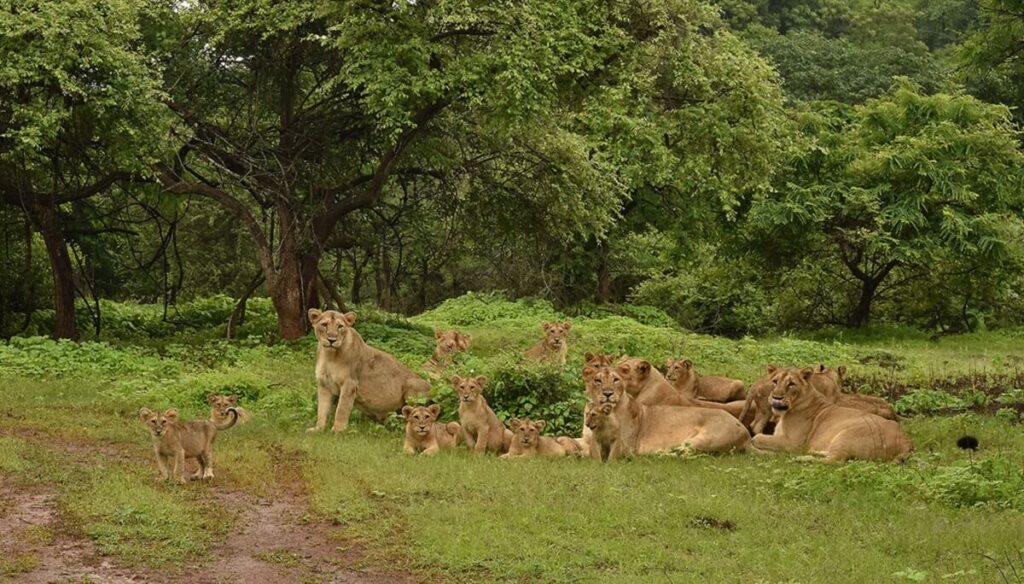
There’s a sound that defines Gir before you ever see it — the low, resonant call of a lion echoing through the teak forests at dawn. It’s not the roar of the African savannah but something more measured, more regal, as if the king of Sasan-Gir knows his kingdom is the last of its kind.
Gir National Park, or Gir Lion Sanctuary, is India’s only home of the Asiatic lion — a species once on the brink of extinction, now thriving through careful protection and coexistence with local Maldhari herdsmen.
In November 2026, Gir reopens after its monsoon rest, lush and alive. The rains have washed the dust from the forest leaves, filled rivers and waterholes, and softened the earth underfoot. The lions are lean, golden, and easy to spot; the air hums with the calls of peacocks and parakeets.
For travelers, it’s the perfect season — not too hot, not yet winter-cold, and full of color. This is Gir at its most generous: the light clear, the air scented with teak and dust, and the wilderness balanced between stillness and vitality.
Where Is Gir and What Makes It So Special?
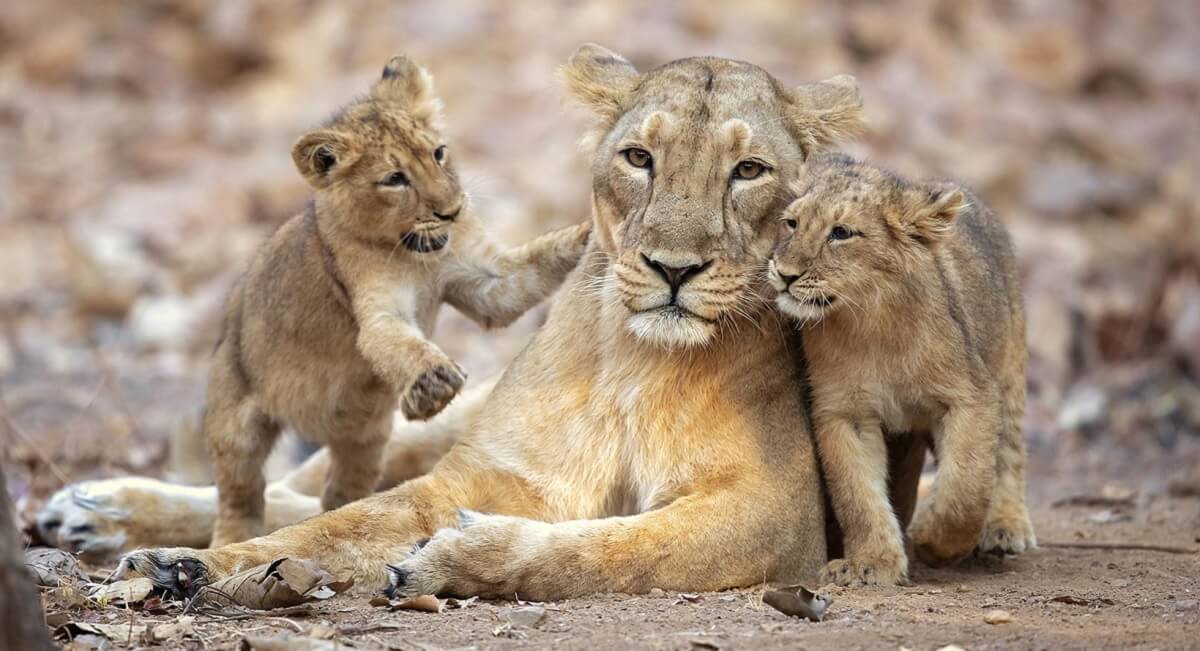
Nestled in southern Gujarat, about 65 km southeast of Junagadh, the Gir Forest National Park and Wildlife Sanctuary covers over 1,400 square kilometers of dry deciduous forest, grassland, and rocky hills.
What sets Gir apart isn’t just its wildlife — though lions are the main draw — but the harmony of life within. The Maldhari tribes, semi-nomadic pastoralists, still graze cattle within the buffer zone, coexisting peacefully with predators. Leopards share the same cliffs as eagles; langurs leap over streams where mugger crocodiles sun themselves.
The forest feels ancient and surprisingly intimate. Unlike African savannahs, Gir’s terrain hides and reveals its life slowly — a flash of tawny fur in tall grass, paw prints at a waterhole, a rustle that might be wind or something wilder.
What’s the Weather Like in Gir in November?
November is one of the most comfortable and picturesque months to visit Gir.
- Temperature: 18°C to 30°C
- Rainfall: Minimal; monsoon ends in mid-October
- Humidity: Moderate, around 60%
- Visibility: Excellent for safaris — clear light, fresh foliage
- Sunrise/Sunset: Around 6:45 a.m. / 6:05 p.m.
The forest, rejuvenated by monsoon rains, wears a fresh green canopy. Water sources are plentiful, drawing lions and leopards into the open. The grass glows gold in the afternoon light, and early mornings carry a hint of mist — photographers’ paradise.
Days are warm enough for comfort in open jeeps; evenings are cool enough for fireside dinners at your lodge. November also avoids the holiday crowds of December and January. Adventure Awaits: 5 Days Gujarat Wildlife & Beach Tour Plan
How Do You Reach Gir?

By Air
The nearest airport is Diu (100 km), serviced by regular flights from Mumbai, Ahmedabad, and Surat. The scenic coastal drive from Diu to Gir takes about 2 hours, winding through coconut groves and rural hamlets.
Alternatively, Rajkot Airport (165 km) and Ahmedabad Airport (365 km) offer wider connectivity.
By Train
The nearest railway stations are Junagadh Junction (65 km) and Veraval (45 km), both linked to major Indian cities. Overnight trains from Mumbai or Ahmedabad are efficient and comfortable.
By Road
From Ahmedabad, it’s about an 8-hour drive (360 km) via NH8D, with good highway facilities. Many travelers combine Gir with stops at Somnath Temple or Diu Beach, forming a perfect coastal circuit.
Local transfers between lodges and safari gates are easily arranged by resort staff.
Where to Stay — From Forest Lodges to Heritage Havens
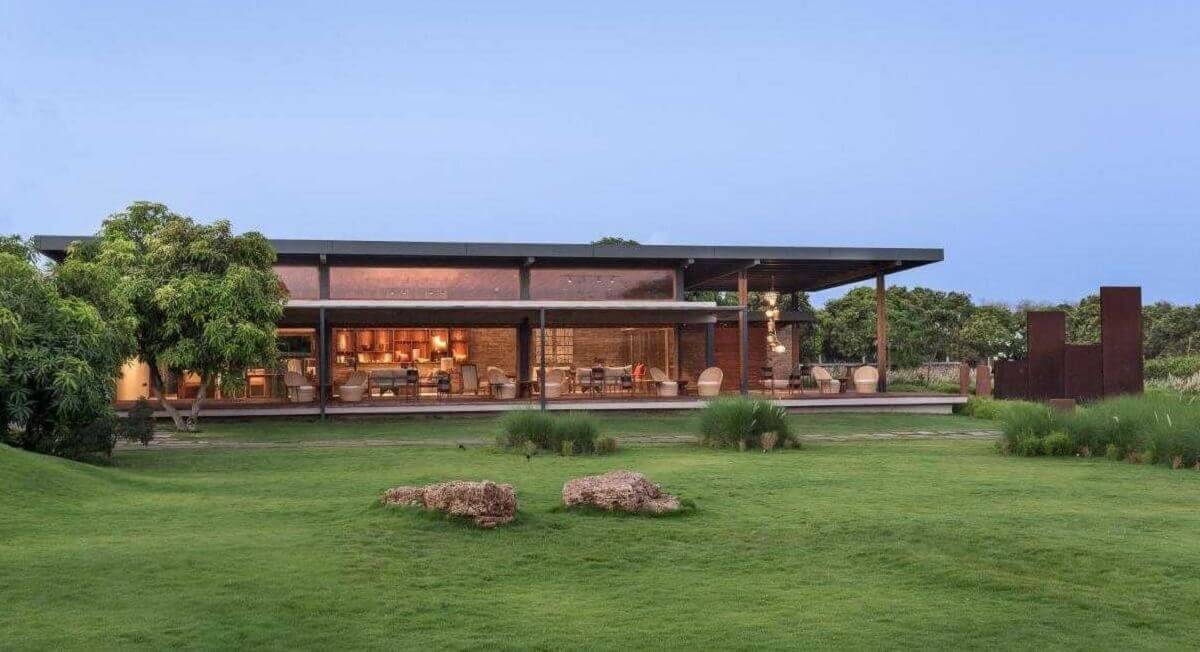
Gir offers a spectrum of stays — from luxury eco-lodges to rustic camps — each emphasizing sustainability and proximity to nature.
Luxury & Boutique Lodges
- The Gateway Hotel Gir Forest (Taj Group): Overlooks the Hiran River; polished yet close to the wild.
- Woods at Sasan: A contemporary wellness eco-resort integrating Ayurveda, yoga, and wilderness.
- Gir Serai (IHCL SeleQtions): Refined design and guided nature experiences.
- Aramness Gir: Ultra-luxury lodge blending village architecture with modern indulgence — private courtyards, pools, and gourmet local cuisine.
Mid-Range & Nature Resorts
- Lion Safari Camp: Tent cottages near Kamleshwar Dam, eco-conscious and family-friendly.
- Gir Jungle Lodge: Comfortable cottages with safari bookings included.
- Gir Pride Resort: Mid-range comfort with traditional Gujarati hospitality.
Many properties offer night walks, local village visits, and astronomy sessions — November’s clear skies are perfect for stargazing. Explore Gujarat in 7 Days – Full Tour Package & Itinerary
How Does a Gir Lion Safari Work?
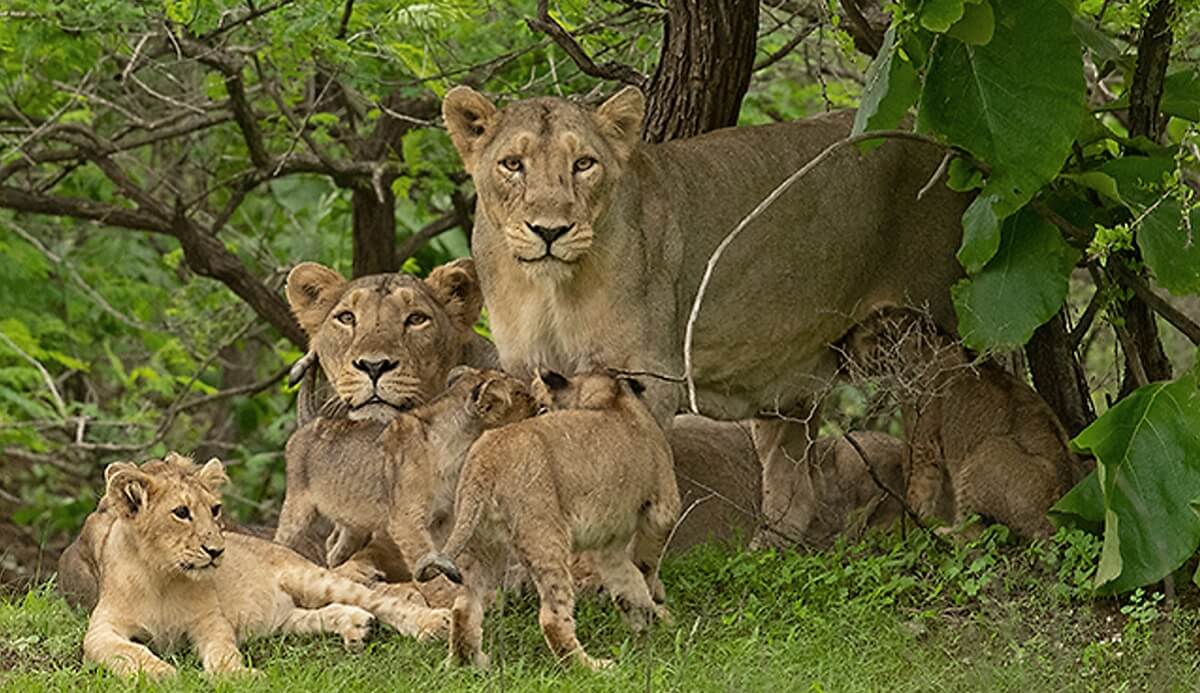
Safaris in Gir are meticulously organized by the Forest Department of Gujarat. The park is divided into tourism zones, each offering varied terrain and wildlife density.
Booking Your Safari
- Book online in advance via girlion.gujarat.gov.in.
- Each jeep accommodates up to 6 passengers plus a naturalist guide.
- Safari timings (subject to sunrise/sunset):
- Morning: 6:30 a.m. – 9:30 a.m.
- Afternoon: 3:00 p.m. – 6:00 p.m.
- Entry Gates: Sinh Sadan (Sasan Gir HQ) and Devalia Safari Park (Gir Interpretation Zone).
Safari Experience
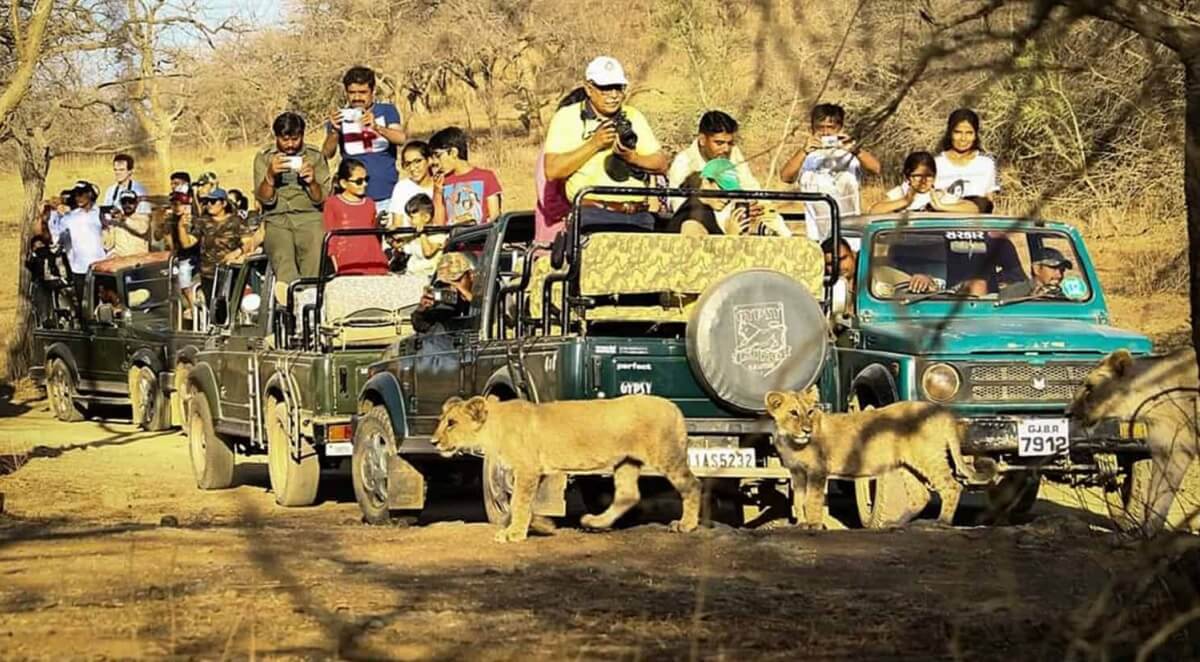
Open Gypsies (4×4 jeeps) traverse gravel paths, riverbeds, and teak groves. The guides — trained naturalists — are skilled at reading tracks and sounds.
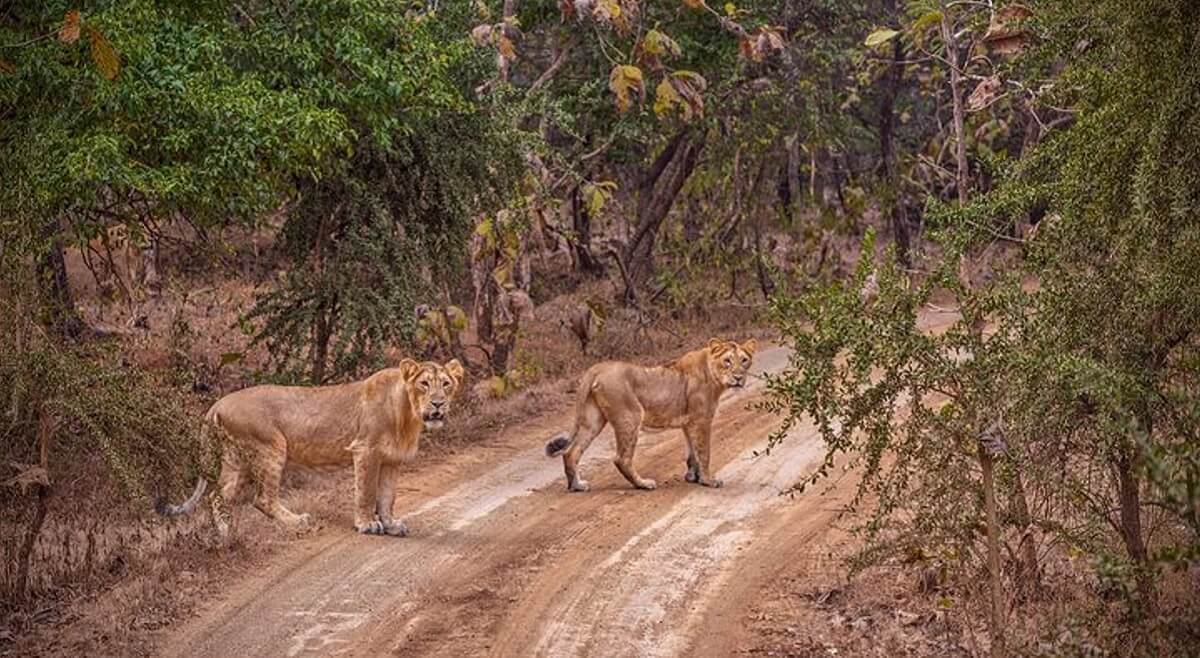
Mornings start misty; the forest smells of wet leaves. Peacocks display in shafts of sunlight, spotted deer graze nervously. Then — a movement. A lion, tawny and powerful, emerges from shade, walking with the slow confidence of royalty.
Unlike African prides, Asiatic lions live in smaller groups — often a dominant male with two or three females. They’re slightly smaller than their African cousins, but with richer manes and an aura of quiet dignity.
Devalia Safari Park
For travelers short on time, Devalia Interpretation Zone offers a 30-minute mini-safari with guaranteed sightings of lions, deer, and birds in a fenced area. It’s ideal for families or those who couldn’t secure main-park permits.
What Wildlife Can You Expect to See?
Beyond lions, Gir is a thriving biodiversity reserve.
- Leopards: Elusive yet surprisingly numerous — sightings are common near the park’s periphery.
- Crocodiles: Bask along the Kamleshwar Dam, the park’s main waterbody.
- Sambar & Chital Deer: Prey species, often the first hint that a predator is near.
- Nilgai (Blue Bull): India’s largest antelope, regal against the dry grass.
- Jackals, Hyenas, Porcupines, and Wild Boars: Common along the trails.
- Birds: Over 300 species, including crested serpent eagles, paradise flycatchers, and painted storks.
November marks the arrival of migratory birds — pelicans, flamingos, and rosy starlings — adding color to lakes and wetlands.
What Makes November Ideal for Photography and Nature Lovers?
- The post-monsoon greenery frames wildlife beautifully.
- Dust-free air ensures crisp, vibrant colors.
- The golden morning light accentuates the lions’ tawny coats.
- Waterholes are full, attracting multiple species to one spot.
- Skies are blue, sunsets fiery — perfect for landscapes.
Carry telephoto lenses (200–400mm range), binoculars, and plenty of memory cards. The forest’s mood shifts hourly — misty, golden, deep green, then ochre — each worth capturing.
Cultural Encounters — The Maldhari Villages
One of Gir’s rare charms is the coexistence of humans and lions. The Maldhari people, who have lived here for centuries, still herd cattle inside the buffer zones. Their round huts (nesses), decorated with cow-dung plaster and tribal art, form gentle interruptions in the forest.
Many lodges organize visits to these villages, where you can meet families, learn about their traditions, and witness how they live in harmony with predators. Maldharis revere the lion as a guardian, not a threat — a philosophy of coexistence the world could learn from.
Nearby Attractions — Beyond the Lions
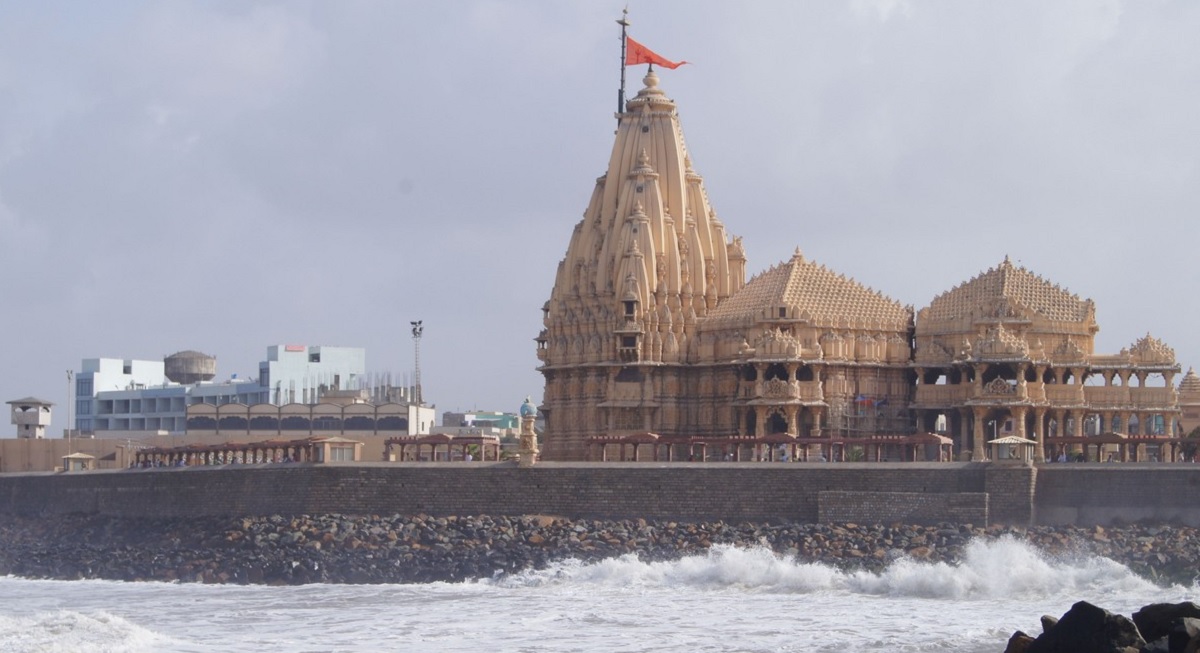
Somnath Temple (70 km)
One of India’s 12 Jyotirlinga shrines, Somnath is a masterpiece of coastal architecture — its golden spire rising against the Arabian Sea. Visit at sunset when the temple bells echo with the waves.
Junagadh (65 km)
A historic city with Uparkot Fort, Ashokan Rock Edicts, and Girnar Hill — a revered pilgrimage climb offering sweeping views of the plains.
Diu Island (100 km)
Combine wildlife with leisure. Diu’s beaches, Portuguese fort, and seafood make a relaxed post-safari retreat.
What to Eat — Gujarati & Saurashtra Flavors
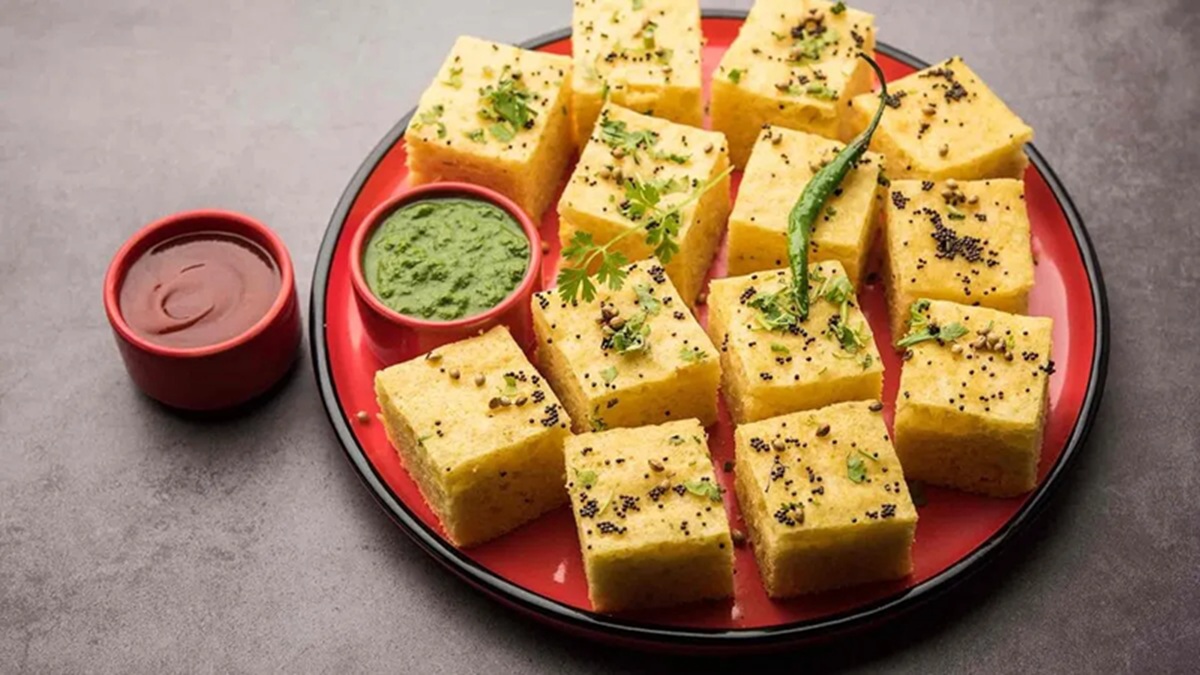
Gir’s cuisine reflects its region: wholesome, spiced, and slightly sweet.
Must-Try Dishes
- Undhiyu: Mixed vegetables cooked underground with herbs — a winter specialty.
- Thepla & Dhokla: Perfect snacks for safaris.
- Kathiawadi Thali: Spicy lentils, millet rotis, garlic chutney, and jaggery.
- Mango Pickles & Chaas (Buttermilk): Local staples, cooling after safari heat.
Recommended Dining
- Machan Restaurant (Gateway Hotel) – Fine dining with Gujarati thalis.
- Woods Kitchen – Farm-to-table ingredients at the eco-lodge.
- Gir Pride Resort Dhaba – Authentic local flavors in open-air setting.
November’s mild evenings make outdoor dinners delightful — try one under a banyan tree, lanterns swinging in the breeze. Book Now: 2 Nights, 3 Days Statue of Unity Tour – Full Itinerary
Suggested 3-Day Gir Itinerary
Day 1 – Arrival & Introduction to the Forest
Arrive via Diu or Junagadh. Check into your lodge by afternoon.
Evening: Visit Devalia Safari Park for your first glimpse of lions. Dine under the stars as crickets hum beyond the treeline.
Day 2 – Full-Day Safari & Village Visit
Morning: Early safari into the main park — track lions and leopards through teak valleys.
Afternoon: Relax by the pool or take a guided walk through Maldhari hamlets.
Evening: Attend an interpretive session or local folk performance at your lodge.
Day 3 – Nature Walk & Departure
Optional dawn birdwatching along the Hiran River. After breakfast, depart for Somnath Temple or Diu Beach.
Extend another day to explore Junagadh or undertake a photography workshop with a naturalist.
Experience Gujarat Deeply – 15 Days Complete Tour Package
What Should You Pack for a November Safari?
- Lightweight, neutral-colored clothing (avoid bright hues).
- Warm jacket for early-morning safaris.
- Sturdy shoes for uneven forest terrain.
- Hat, sunglasses, and sunscreen.
- Binoculars and camera with zoom lens.
- Insect repellent.
- Reusable water bottle (plastic banned inside park).
- Copy of ID/passport for park entry.
November’s mornings are crisp; afternoons warm — layering is key.
Conservation & Responsible Travel
Gir’s success story rests on conservation ethics. A century ago, fewer than 20 lions remained; today, over 700 thrive here. Travelers play a role in sustaining this balance.
- Respect park rules — no loud music, feeding animals, or off-road driving.
- Avoid single-use plastics and leave no trace.
- Book official safaris only — unauthorized tours harm habitat integrity.
- Support local guides and handicrafts.
- Visit during permitted hours — lions need rest too.
Every responsible visitor contributes to keeping Gir wild and thriving.
Why November 2026 Is the Ideal Moment to Visit
By November 2026, India’s eco-tourism infrastructure will be in full stride. Safari bookings are streamlined online, luxury eco-lodges emphasize sustainability, and the park — freshly reopened from monsoon closure — bursts with color and life.
It’s also the calm before peak season — fewer vehicles, quieter trails, and more authentic encounters. The forest’s post-rain vitality, paired with perfect light, makes this month a photographer’s dream and a wildlife lover’s blessing.
A Final Reflection — The Call of the Wild
As dawn unfolds over Gir, mist hangs low over the trees. A sambar deer calls, a peacock fans its feathers, and somewhere deep in the forest, a lion answers — a sound ancient, noble, and strangely human.
We sit in our jeep, engines off, listening. The sun breaks through the branches, and for a moment, the forest holds its breath. Then life resumes — birds, insects, the rustle of leaves — as if nothing extraordinary had happened.
But something has. We’ve heard the heartbeat of a species that almost vanished, and the whisper of a land that chose to protect it.
In November 2026, when the air is cool and the forest green, Gir offers more than a safari — it offers perspective. A reminder that coexistence is possible, that silence can be eloquent, and that even the fiercest creatures thrive best in peace.
Come for the lions, stay for the lessons the wild still teaches.
Because in Gir, the king does not roar — he reigns quietly, as nature intended.
Read also:
- Explore the Thrilling Safari Zones in Gir National Park
- Discover the Best Time to Visit Rani Ki Vav – Plan Your Trip Now
- Plan Your Surat to Gir Journey – Find Routes & Travel Tips
- Follow This Easy Route from Rajkot to Gir National Park
- Weekend Getaways Near Ahmedabad – Explore Top Spots Within 200km
- Unwind in Style – Find the Best Resorts Near Gir National Park
- Top 10 Luxury Resorts Near Gir National Park for a Perfect Stay
- Experience the Wild Side – Best Safari Zones in Gir for Adventure Seekers
- Surat to Gir National Park Travel Plan – Routes, Distance & Guide
- Rajkot to Gir National Park – Complete Route Map & Travel Info
- Ahmedabad to Gir National Park – Find the Best Way to Reach