
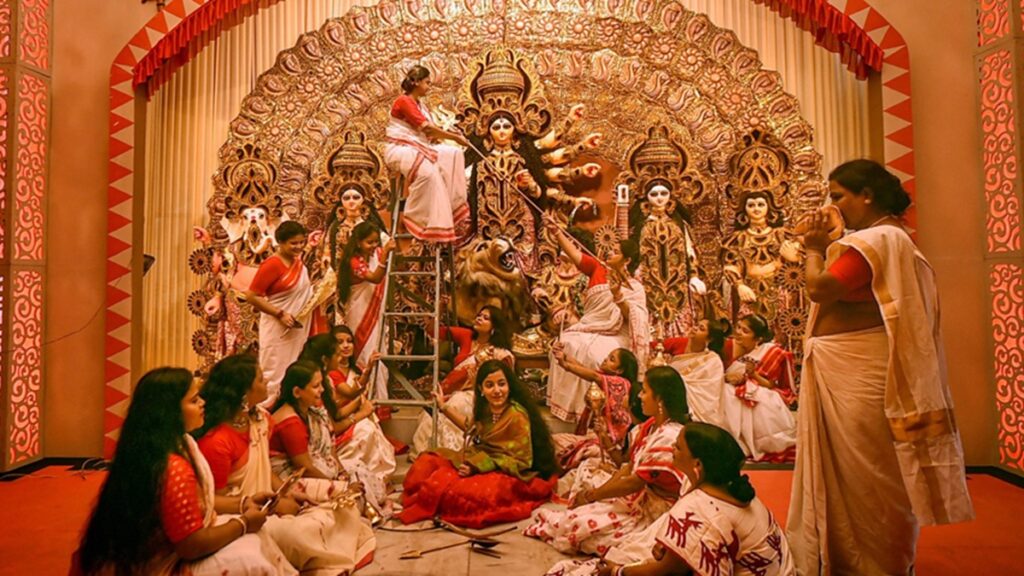
Durga Puja is one of the grandest festivals of India, celebrated with unmatched devotion, music, dance, and artistic brilliance. More than a religious event, it is a cultural spectacle that brings people together, irrespective of age or background. This celebration honors Goddess Durga, symbolizing the victory of good over evil. For many, Durga Puja is not only about prayers but also about tradition, community bonding, art, and joy.
In this guide, you’ll learn:
- The spiritual meaning of Durga Puja
- How it is celebrated across India and abroad
- The rituals followed during the nine days
- Food, music, and cultural experiences tied to the festival
- Practical travel tips for attending Durga Puja
The Story Behind Durga Puja
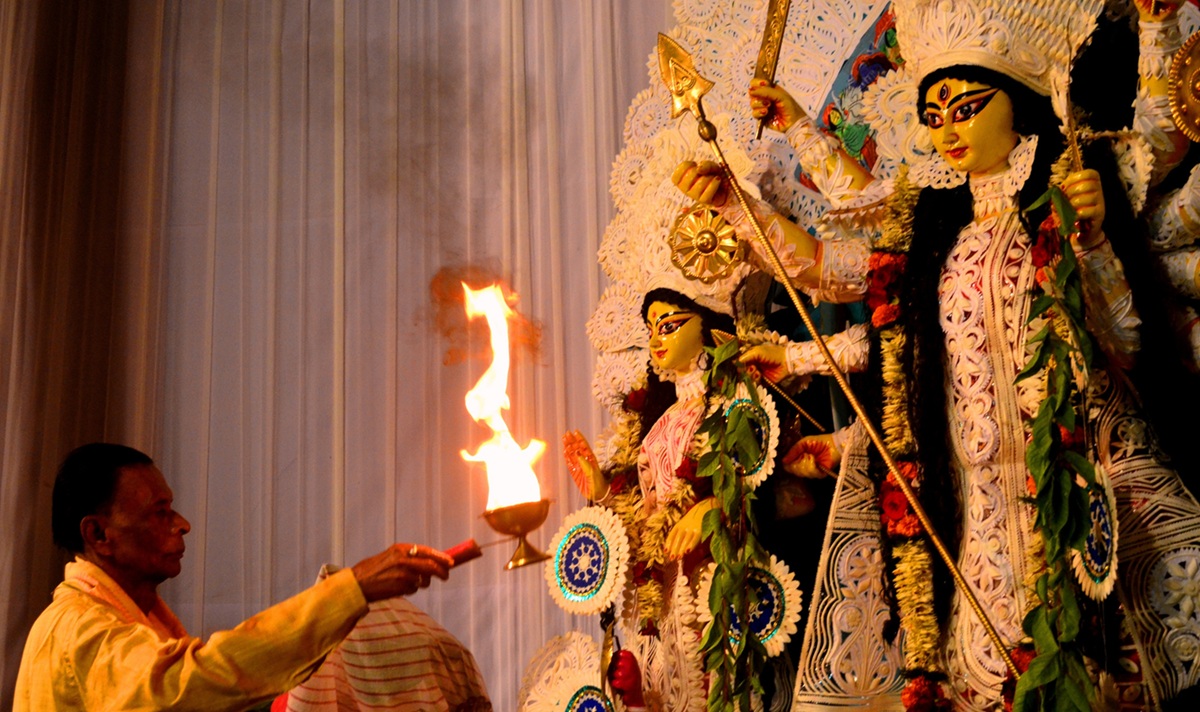
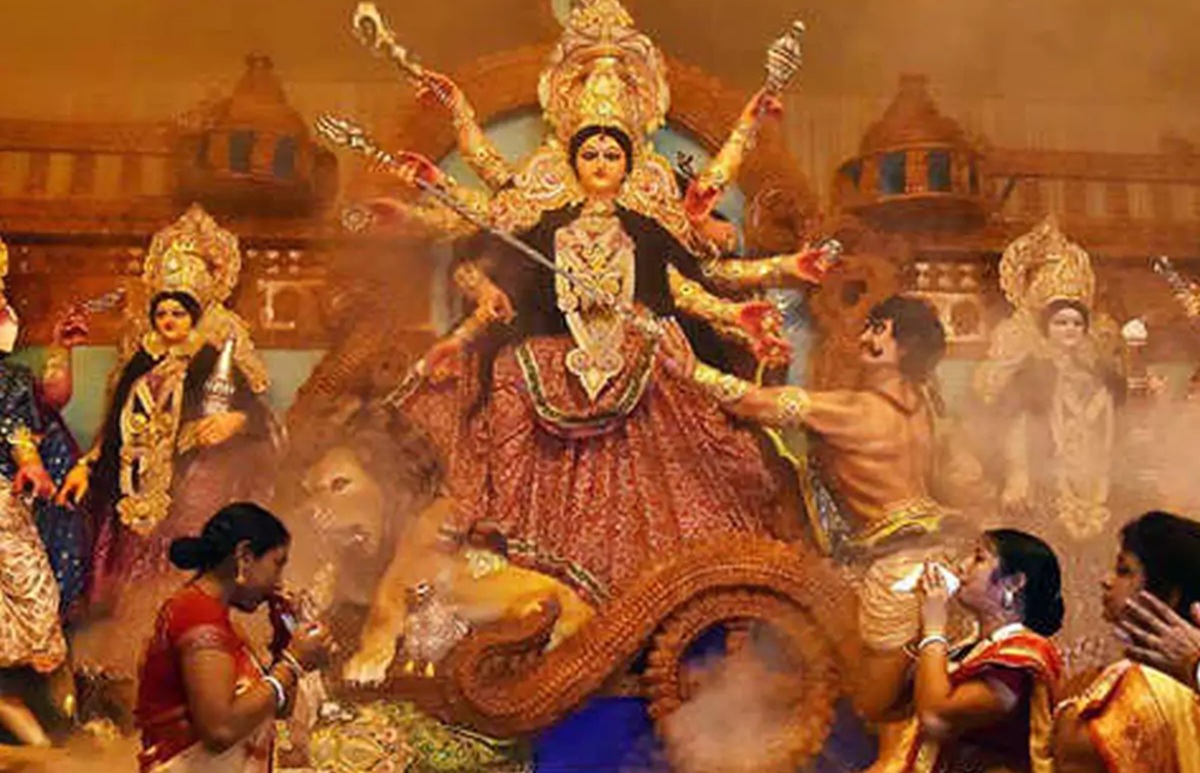
The roots of Durga Puja go deep into Hindu mythology. According to the scriptures, Goddess Durga was created by the combined powers of the gods—Brahma, Vishnu, and Shiva—to destroy the demon Mahishasura. The demon had received a boon that no man or god could kill him. To end his tyranny, the divine feminine energy took the form of Durga, riding a lion and carrying weapons in her ten hands.
The story is about courage, strength, and justice. It teaches that whenever evil rises, divine power will appear to protect the righteous. For devotees, worshipping Durga means worshipping Shakti, the energy that sustains life.
When is Durga Puja Celebrated?

Durga Puja usually takes place in the month of Ashwin (September–October), according to the Hindu calendar. It coincides with Navratri, a nine-night celebration observed across India.
Key dates:
- Mahalaya – The invocation of the goddess begins. Priests chant mantras and devotees listen to the traditional Mahishasura Mardini hymns.
- Shashthi (6th day) – The idols of Durga are unveiled.
- Saptami, Ashtami, Navami (7th to 9th day) – These are the main worship days, marked by elaborate rituals, prayers, and cultural events.
- Dashami (10th day) – Known as Vijaya Dashami, it marks Durga’s victory over Mahishasura. Idols are immersed in rivers or lakes, symbolizing her return to her heavenly abode. Celebrate with Delhi – Discover the Ram Leela Festivities Now!
Rituals of Durga Puja – Step by Step
Mahalaya
- Marks the beginning of the festival.
- Early morning chants of Chandi Path fill homes and temples.
- Believers draw alpona (sacred designs) in front of their houses to welcome the goddess.
Shashthi
- The goddess is formally invited to Earth.
- The eyes of the idol, called Chokkhu Daan, are drawn, bringing the goddess to life.
Saptami
- Starts with Nabapatrika Snan (bathing of nine sacred plants symbolizing Durga’s form).
- Devotees perform the first set of major prayers.
Ashtami
- The most significant day.
- People offer pushpanjali (flower offerings) in the morning.
- The traditional Sandhi Puja takes place at dusk, believed to be the moment when Durga killed Mahishasura.
Navami
- The final day of worship, dedicated to victory.
- Families host feasts and distribute food to neighbors.
Dashami
- Immersion of the idol (Visarjan).
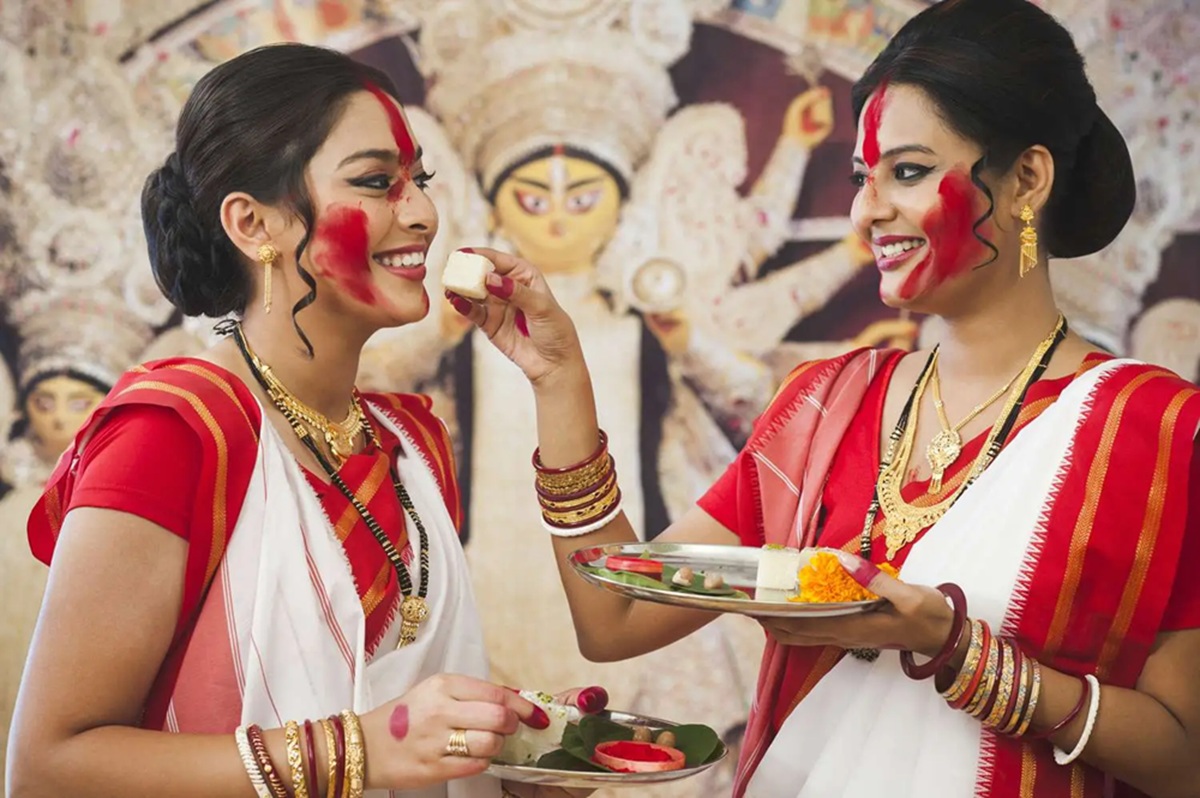
- Married women perform Sindoor Khela, smearing each other with red vermilion as a blessing for marital happiness.
- Families exchange greetings and sweets, marking the spirit of togetherness. October in India: A Traveler’s Dream – Check Out the Weather
How Durga Puja is Celebrated in West Bengal
West Bengal, especially Kolkata, is the heart of Durga Puja celebrations.
- Pandals and Art: Huge temporary structures called pandals are set up, decorated with artistic themes ranging from mythology to modern culture. Some resemble world monuments like the Eiffel Tower or Egyptian pyramids.
- Cultural Events: Dance, music, theater, and poetry recitations take place nightly.
- Food: Street stalls serve Bengali delicacies like ilish maach, shorshe bata, cholar dal, and rosogolla.
- Community Spirit: Families visit pandals together, dressed in new clothes. It is as much a social gathering as a religious one.
Durga Puja Across India
- Assam and Tripura: Similar to Bengal, with vibrant pandals and community feasts.
- Odisha: Known as Sharadiya Utsav, rituals are more traditional, with chanting of Vedic mantras.
- Delhi & Mumbai: Large Bengali communities organize pandals. Mumbai also blends Durga Puja with Ganesh Chaturthi traditions.
- Tamil Nadu & Karnataka: Linked with Navratri, focusing more on Golu (doll displays) and devotional music.
Check Out This In: Ganesh Chaturthi 2025: Date, Puja Timings, Rituals Visit in Mumbai
Durga Puja Abroad
Indian communities around the world carry Durga Puja traditions with them.
- United States & Canada: Bengali associations set up pandals in community halls.
- UK (London): Durga Puja celebrations attract thousands, combining prayers with cultural programs.
- Singapore & Malaysia: Temples and associations organize grand events, connecting the diaspora with their roots.
These events bring a sense of home for Indians living abroad and showcase Indian culture to the world.
Food and Feasting During Durga Puja
Food is central to the celebration.
- Bhog: A sacred offering to the goddess, usually khichuri (rice and lentils), labra (mixed vegetables), chutney, and sweets. Distributed as prasad to devotees.
- Street Food: Kolkata’s streets are filled with stalls offering puchkas (pani puri), kathi rolls, momos, and sweets.
- Family Feasts: Families prepare dishes like luchi-aloor dom (fried bread with potato curry), fish curries, and meat dishes.
Eating together represents joy, abundance, and community bonding.
Dressing and Shopping for Durga Puja
Durga Puja is also a time for new clothes and festive fashion.
- Women: Sarees, especially traditional tant and baluchari, or modern outfits with ethnic designs.
- Men: Kurta-pajama or dhoti, often paired with a shawl.
- Children: Get new clothes every day of the festival.
Markets in Kolkata, like Gariahat and New Market, stay open late, buzzing with shoppers. October Weekend Escapes from Delhi – Find Your Ideal Destination Today!
Music, Dance, and Culture During Durga Puja
Durga Puja is as much about art as it is about worship.
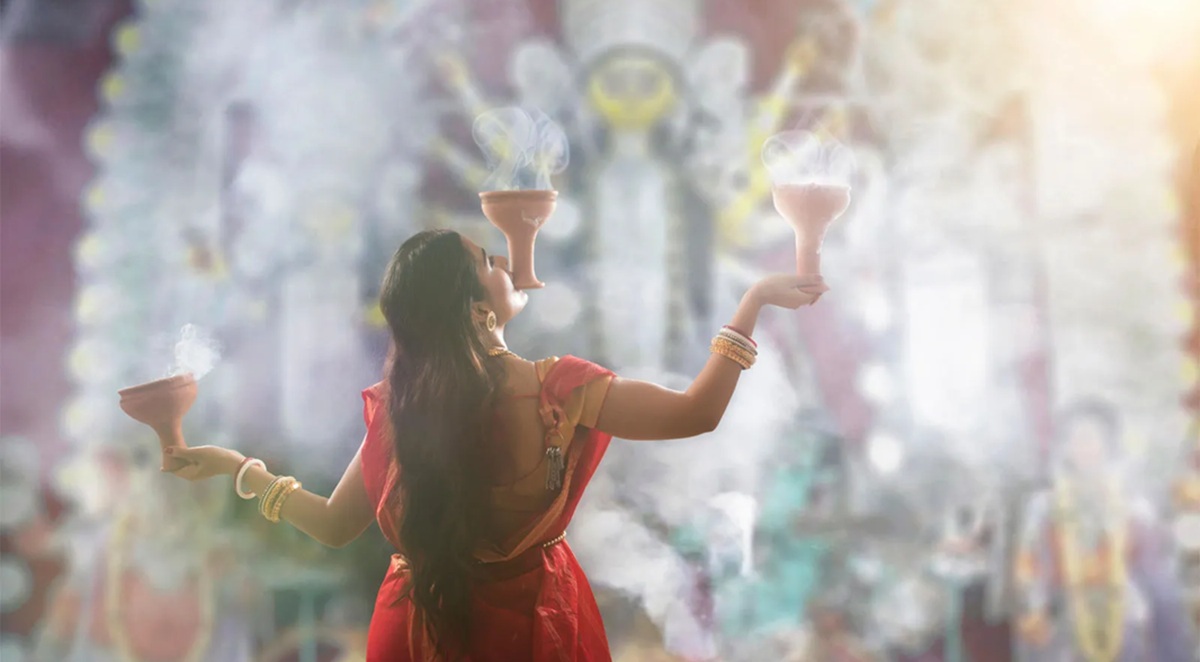
- Dhunuchi Naach: A traditional dance performed with incense-filled clay pots.
- Dhak Drums: Rhythmic beats that energize the crowds and create a spiritual mood.
- Cultural Programs: Rabindra Sangeet (Tagore’s songs), drama, and folk music dominate evenings.
For travelers, attending these events offers a deep cultural experience. Ready for Navratri? Check Out These Amazing Getaways in India!
Modern-Day Significance of Durga Puja
Durga Puja is more than a festival. It reflects:
- Empowerment of Women: Durga as a symbol of female power.
- Art and Creativity: From idol-making to pandal design, it supports artists and craftsmen.
- Unity in Diversity: People of all religions and backgrounds join the celebrations.
- Economic Impact: The festival boosts local businesses, from garment shops to food stalls.
Explore Abhaneri’s Festival and Stepwells – Start Your Journey Today!
Travel Tips for Experiencing Durga Puja
- Best Place: Kolkata for the most authentic and grand celebrations.
- Best Time to Visit: Plan your trip during Shashthi to Dashami for the complete experience.
- Where to Stay: Book hotels in advance near areas like Ballygunge, Salt Lake, or Park Street.
- What to Pack: Comfortable shoes for pandal hopping, light cotton clothes for day, traditional attire for evenings.
- Local Transport: Use app cabs or metro for convenience as roads are crowded.
- Cultural Etiquette: Respect the rituals, avoid blocking pathways in pandals, and always remove shoes before entering prayer areas. Get Ready for YaanaM Kerala Festival – Read the Ultimate Guide
Conclusion
Durga Puja is a celebration of faith, courage, and community. It is where devotion meets art, tradition meets modernity, and spirituality blends with joy. Whether you witness it in Kolkata’s majestic pandals or in smaller towns abroad, Durga Puja leaves an unforgettable impression.
For travelers, it is not just about watching rituals but about participating in an experience that touches the heart. From the rhythmic sound of dhak to the taste of hot bhog, from sindoor khela to idol immersion, every moment speaks of cultural richness and divine grace.
If you are planning a trip to India in September or October, attending Durga Puja should be on your list. It is a festival that captures the essence of India’s spiritual and cultural identity in the most vibrant way.
What is Durga Puja and why is it celebrated?
Durga Puja honors Goddess Durga’s victory over the demon Mahishasura, symbolizing the triumph of good over evil. It is a religious and cultural festival with rituals, music, dance, food, and community gatherings. Families visit decorated pandals, offer prayers, share bhog (sacred food), and celebrate with performances and processions.
When does Durga Puja take place and which days are most important?
The festival usually falls in September–October (Hindu month of Ashwin). It starts with Mahalaya (invocation), then the main days are Shashthi, Saptami, Ashtami, and Navami. Vijayadashami (Dashami) marks immersion of the idols and farewell to the goddess. Exact dates change each year based on the lunar calendar.
Where is the best place to experience Durga Puja in India?
Kolkata is the most famous, with grand themed pandals and nonstop cultural events. You can also enjoy vibrant celebrations in West Bengal’s districts, as well as in Assam, Tripura, Odisha, Delhi, and Mumbai. Outside India, large Bengali communities host community pujas in the UK, USA, Canada, Singapore, and Malaysia.
What are the main rituals during Durga Puja?
- Mahalaya: Invocation with chants of Chandi Path and traditional hymns.
- Shashthi: Unveiling the idol and welcoming the goddess.
- Saptami: Nabapatrika bathing and morning puja.
- Ashtami: Pushpanjali (flower offering) and Sandhi Puja at dusk.
- Navami: Concluding worship and community feasts.
- Dashami: Sindoor Khela (for married women) and idol immersion processions.
What is “pandal hopping” and how do I plan it as a visitor?
Pandal hopping means visiting multiple themed pandals across the city. Plan zones (e.g., North or South Kolkata) per day, start late afternoon, and continue into the evening for lighting and performances. Use metro or app cabs to avoid traffic, carry water, and wear comfortable shoes. Check local lists of “top pandals” updated each year.
Is there a dress code or etiquette I should follow at pandals and temples?
- Dress modestly; cover shoulders and knees.
- Remove shoes where required and keep phones on silent.
- Do not block queues during aarti or pushpanjali.
- Ask before taking close-up photos of devotees or rituals.
- Follow crowd-control instructions from volunteers and police.
What is bhog and can visitors try it? What food should I look for?
Bhog is a sacred food offering to the goddess, often khichuri, labra (mixed veg), chutney, and sweets. Visitors are welcome to receive it as prasad. Street stalls sell puchkas, kathi rolls, chops, cutlets, fish curries, and sweets like rosogolla and sandesh. Choose busy, clean stalls and carry cash for small purchases.
Are photography and videos allowed during Durga Puja events?
Most public pandals allow photography in open areas, but flash and tripods are often restricted, especially during aarti. Always follow signboards and volunteers’ guidance. Avoid filming close to the priest or pushing into ritual zones. Respect privacy when devotees are offering prayers.
How do I handle large crowds and stay safe during Durga Puja?
- Visit on weekdays or earlier in the evening to avoid peak rush.
- Keep valuables secure in front pockets or money belts.
- Agree on a meeting point with your group before entering a crowded pandal.
- Follow police barricades and one-way walking routes.
- Carry a power bank and a bottle of water; stay hydrated.
What happens on Vijayadashami (Dashami) and can visitors join immersion processions?
Dashami marks the farewell to the goddess with processions that carry idols to rivers or lakes for immersion (visarjan). Visitors can watch from designated areas along the route or at immersion ghats. Expect traffic diversions and heavy crowds. Follow police instructions and maintain a safe distance from the waterline.
How should I budget and what should I book in advance for Durga Puja travel?
Book flights and hotels 6–8 weeks in advance for Kolkata and major cities. Factor in local transport, food, tips, and small donations at pandals. Many events are free, but guided walks or private transport add comfort. Carry some cash for street food and markets; larger outlets accept cards and UPI.
Is Durga Puja suitable for seniors, kids, and travelers with mobility needs?
Yes, with planning. Choose less-crowded time slots (late afternoon), pick pandals with wider entry ramps, and avoid peak Ashtami evenings. Keep walking distances short by focusing on one neighborhood per day. Carry essential meds, use app cabs, and confirm elevator access in hotels in advance.
What cultural do’s and don’ts should I remember during Durga Puja?
- Join queues calmly for pushpanjali and aarti; keep phones silent.
- Do not touch the idol or ritual items; stay behind barriers.
- Ask before photographing people, especially elders and children.
- Dress modestly; avoid smoking or alcohol around pandals.
- Use dustbins; keep public spaces clean during festivities.
How is Durga Puja different from Navratri or Dussehra in other regions?
Durga Puja, centered in Bengal and the East, focuses on elaborate pandals, idol worship, and cultural shows. Navratri in Gujarat highlights Garba and Dandiya dances; in North India, Dussehra features Ramlila plays and effigy burning of Ravana. All share the theme of good triumphing over evil but express it with regional styles.
Must-Read Guides:
- Bishnupur Temples Travel Guide – History & Architecture
- Best Time to Visit West Bengal – Travel Tips & Top Places
- Theyyam Dance & Kerala Folk Arts – Cultural Experience
- Top Cultural & Heritage Sites to Visit in India in August
- First-Time India Travel – Culture Shock & Unique Experiences
- Temple Etiquette in India – Essential Tips for Travellers
- Diwali or Dussehra – Know the Difference, Celebrate Right!
- Plan Your Trip Around October Festivals – Find Out More!
- Step into Kolkata’s Festive Spirit – View the Durga Puja Pandals Guide!
- Discover YaanaM Kerala: Your Complete Festival Guide – Click to Explore!
- Explore Abhaneri’s Festival and Stepwells – Start Your Journey Today!
- Celebrate Navratri Away – Discover the Best Getaways in India!


