
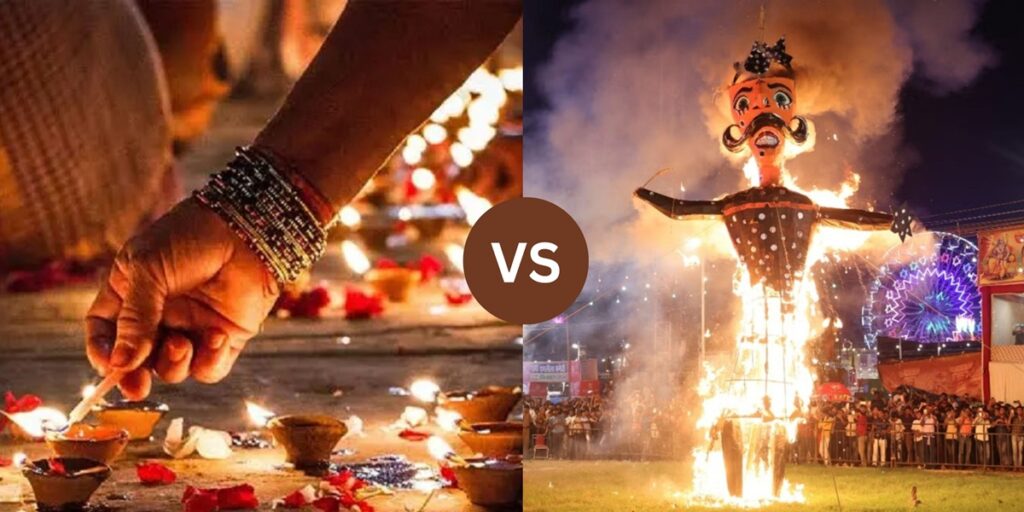
India’s cultural calendar is filled with festivals that bring together devotion, family, food, and color. Among them, Diwali and Dussehra stand out as two of the most important Hindu celebrations, both widely observed across the country. Although they are often mentioned in the same breath, they are not the same festival. They fall in different parts of the lunar calendar, carry different rituals, and celebrate different aspects of Hindu mythology.
What confuses many people is that the stories behind these festivals are linked. Dussehra celebrates Lord Rama’s victory over the demon king Ravana, while Diwali marks Rama’s return home to Ayodhya after that triumph. In that sense, they are chapters of the same epic but celebrated in distinct ways.
For travelers, understanding the difference matters. If you plan to visit India in September or October, you may be able to witness Dussehra processions with burning effigies of Ravana or immerse yourself in Durga Puja in Kolkata. If you arrive later, in October or November, you’ll experience Diwali’s festival of lights, with cities illuminated by lamps, rangoli patterns at every doorstep, and fireworks lighting up the night sky.
In this blog, we’ll unpack what each festival represents, how they are celebrated, and what sets them apart. We’ll also highlight the cultural and spiritual symbolism behind them and share travel tips for experiencing both festivals in India.
What is Dussehra?

Dussehra, also called Vijayadashami, literally means “the day of victory.” It is celebrated on the tenth day of the Ashwin month (September–October) in the Hindu lunar calendar. The festival comes at the end of the nine-day Navratri and marks the triumph of good over evil.
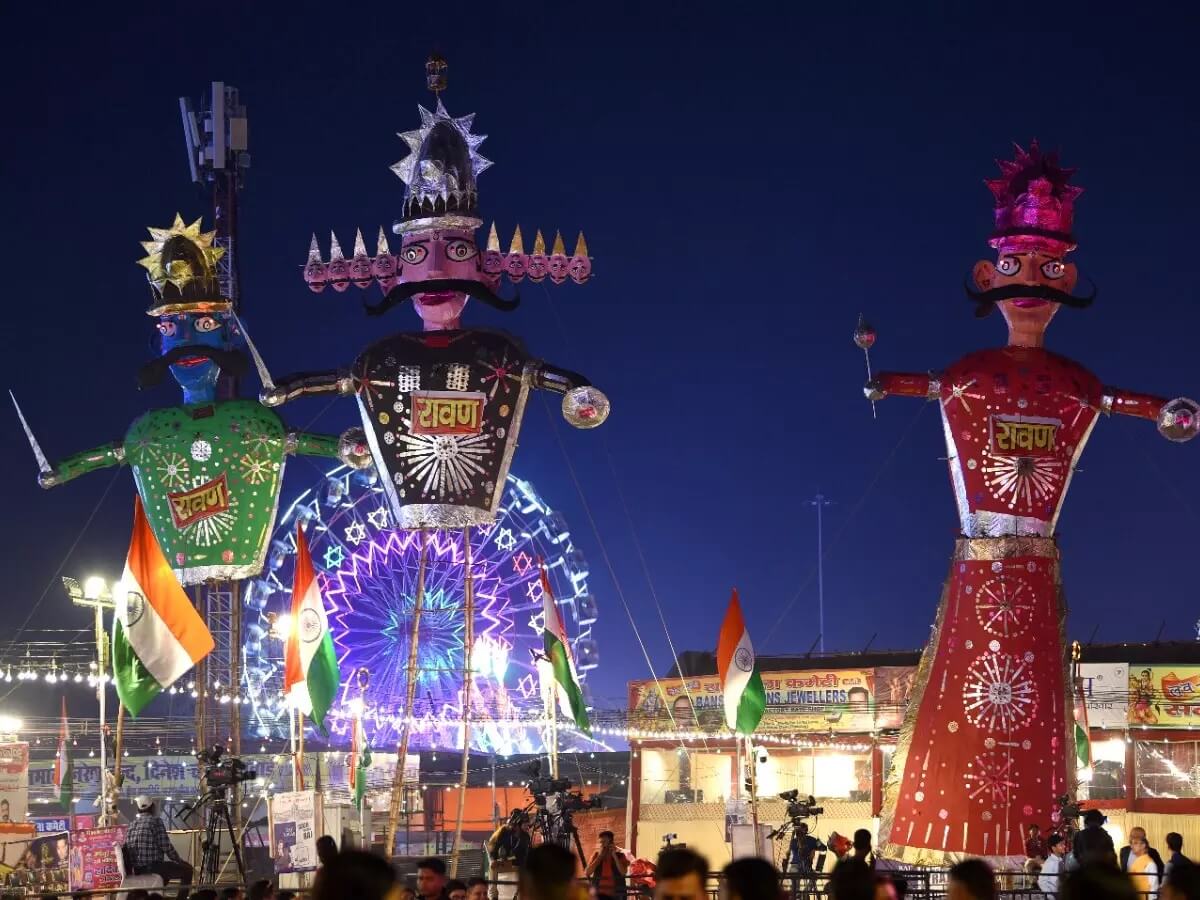
There are two main mythological stories tied to Dussehra. In North India, it is most closely associated with the Ramayana, where Lord Rama defeats the demon king Ravana, who had kidnapped his wife, Sita. Ramlila plays, which dramatize this epic, are staged for nine days and culminate on Dussehra with the burning of huge effigies of Ravana, his brother Kumbhkaran, and son Meghnad. The flames symbolize the destruction of evil and injustice.
In Eastern India, particularly in Bengal, Dussehra coincides with the conclusion of Durga Puja. Here, the day commemorates Goddess Durga’s victory over the buffalo demon Mahishasura. Idols of Durga are immersed in rivers or seas, marking the end of the celebrations.
In South India, especially in Mysore, Dussehra is celebrated with royal grandeur. The Mysore Palace is illuminated, and processions with decorated elephants, dancers, and musicians fill the streets. This version of Dussehra is less about Ravana and more about honoring Goddess Chamundeshwari, a form of Durga.
In short, Dussehra represents the power of truth and righteousness, expressed differently across India. For visitors, it’s a time to see dramatic performances, colorful processions, and deeply spiritual rituals. Get Ready for Ram Leela in Delhi – Explore the Celebrations!
What is Diwali?

Diwali, or Deepavali, is known as the “festival of lights.” Celebrated on the new moon night (Amavasya) of the Kartika month (October–November), it symbolizes the victory of light over darkness, good over evil, and knowledge over ignorance.
In North India, Diwali is connected to the story of Lord Rama returning to Ayodhya after defeating Ravana. The people of Ayodhya lit rows of lamps (deepa) to welcome him, giving the festival its name—Deepavali, or “row of lights.” This connection explains why Dussehra and Diwali are often seen as part of the same narrative.
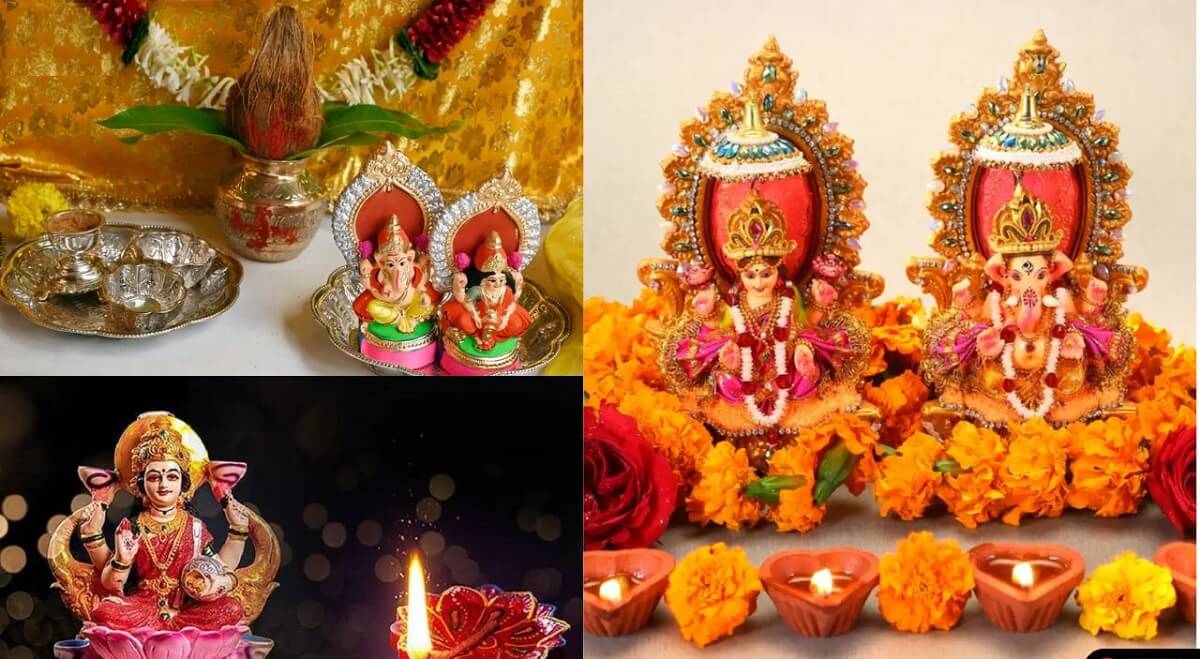
However, Diwali has multiple layers of meaning beyond Rama. In many parts of India, it is the night of Lakshmi Puja, dedicated to the goddess of wealth and prosperity. Families clean and decorate their homes, light diyas, and perform prayers to invite fortune. In Bengal, the night is observed as Kali Puja, honoring Goddess Kali. In Gujarat, Diwali also marks the start of the financial year for traders.
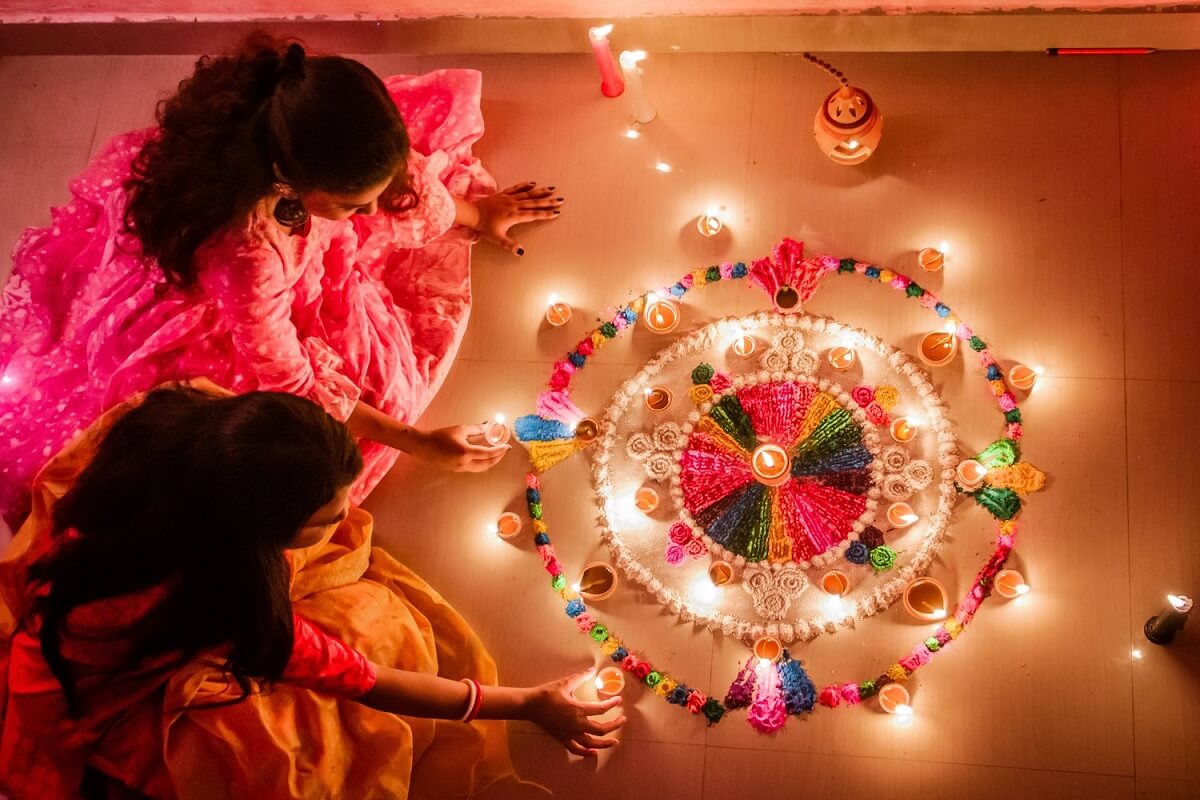
The festival typically lasts five days, starting with Dhanteras and ending with Bhai Dooj. The main night, however, is the Lakshmi Puja. On this evening, houses glow with lamps, streets are decorated with rangoli patterns, and fireworks light up the sky. Sweets are exchanged, families gather, and the mood is festive and joyous.
For travelers, Diwali is a sensory experience: the sight of illuminated cities, the sound of fireworks, the fragrance of incense and sweets, and the warmth of community celebrations. Unlike the drama of Dussehra, Diwali is about beauty, brightness, and family togetherness.
4. Timing: When They Are Celebrated
One of the simplest differences between Dussehra and Diwali is their timing. Both festivals follow the Hindu lunar calendar, which means their dates change each year on the Gregorian calendar, but their sequence remains fixed.
- Dussehra is celebrated on the tenth day of the bright half (Shukla Paksha) of the Ashwin month, usually in September or early October. It comes at the end of the Navratri festival.
- Diwali is celebrated about 20 days after Dussehra, on the new moon night (Amavasya) of the Kartika month, usually in late October or November.
The timing reflects the story sequence as well. Dussehra marks the victory of Rama over Ravana, while Diwali celebrates his homecoming to Ayodhya after the battle. Spiritually, Dussehra is about destroying evil, and Diwali is about celebrating renewal, light, and prosperity.
For those planning travel, this timing is useful. If you visit India in September or early October, you can witness the grand Ramlila plays, Durga Puja idol immersions, or Mysore’s royal processions. If you come later in October or November, you’ll see the glow of millions of lamps during Diwali. Some travelers even plan extended trips to experience both festivals in one journey, as they fall close together. October in India: A Traveler’s Dream – Check Out the Weather
5. Core Differences Between Diwali and Dussehra
While Diwali and Dussehra share a common theme—the triumph of good over evil—they differ in focus, rituals, and cultural expression. Here are the key distinctions:
1. Mythological Focus:
- Dussehra: Celebrates Rama’s victory over Ravana (North India) or Durga’s victory over Mahishasura (East India).
- Diwali: Marks Rama’s return to Ayodhya, Lakshmi’s blessings of prosperity, and the triumph of light over darkness.
2. Rituals and Symbols:
- Dussehra: Burning effigies of Ravana, dramatic Ramlila plays, idol immersions.
- Diwali: Lighting diyas, performing Lakshmi Puja, decorating homes with rangoli, bursting fireworks.
3. Duration:
- Dussehra: A one-day festival following nine days of Navratri.
- Diwali: A five-day festival with each day having unique rituals.
4. Themes:
- Dussehra: Destruction of evil, victory of dharma (righteousness).
- Diwali: Renewal, prosperity, inner light, and family togetherness.
5. Travel Experience:
- Dussehra: Public events, parades, effigy burning, and community celebrations.
- Diwali: Private family rituals combined with city-wide illumination and festive markets.
Together, they complement each other: Dussehra clears the path by defeating evil, and Diwali celebrates the joy of victory with light and prosperity. Plan Your October Weekend Getaway from Delhi – Explore Now!
6. Regional Variations of Dussehra and Diwali
India’s diversity shines through in how both Dussehra and Diwali are celebrated differently across states, each adding its unique flavor to the festivals.
Dussehra:
- North India: Cities like Varanasi, Lucknow, and Delhi are famous for their Ramlila performances, where actors dramatize the Ramayana for nine days. On Dussehra night, massive effigies of Ravana, Meghnad, and Kumbhkaran are set ablaze in front of cheering crowds.
- West Bengal: The festival overlaps with Durga Puja, where grandly decorated idols of Goddess Durga are immersed in rivers after days of worship and cultural programs.
- South India: Mysore’s Dussehra is a royal spectacle. The illuminated Mysore Palace and elephant-led processions showcase Karnataka’s heritage and attract global travelers.
- Himachal Pradesh: The Kullu Dussehra is unique, lasting a week with processions of deities from local temples.
Diwali:
- North India: Families light diyas, perform Lakshmi Puja, and burst fireworks. Markets overflow with sweets and gifts, making it both a spiritual and commercial celebration.
- West Bengal: The night coincides with Kali Puja, where Goddess Kali is worshiped in elaborately decorated pandals.
- South India: Naraka Chaturdashi, the day before Diwali, is celebrated with oil baths and the bursting of firecrackers to symbolize the destruction of Narakasura.
- Western India (Gujarat, Maharashtra): Business communities celebrate Diwali as the beginning of a new financial year, performing Chopda Puja for accounting books.
For travelers, these variations mean that no two experiences of Diwali or Dussehra are the same. Where you go in India will shape how you see and feel these festivals.
7. Spiritual and Symbolic Meanings
Though rooted in mythology, both festivals carry broader spiritual lessons.
Dussehra:
The essence of Dussehra is the victory of righteousness over evil. Ravana represents arrogance, greed, and desire, while Rama represents dharma (righteousness). Burning Ravana’s effigy is symbolic of burning negative tendencies within ourselves. In Bengal, Durga’s victory over Mahishasura emphasizes the strength of feminine energy and the triumph of divine power over destructive forces.
Diwali:
Diwali is the celebration of light and inner awakening. Lighting lamps is not just about decoration—it symbolizes dispelling ignorance and embracing knowledge. Worship of Goddess Lakshmi connects prosperity with purity and discipline, teaching that wealth must be earned and used with responsibility. In Bengal, Kali Puja represents destruction of evil and empowerment of the weak.
Together, Dussehra and Diwali form a cycle: first destroying negativity (Dussehra), then welcoming prosperity and positivity (Diwali). This sequence explains why they are spiritually connected yet distinct.
8. How Travelers Can Experience Both Festivals

For travelers, Diwali and Dussehra are among the best times to see India’s traditions in action. Each offers a very different experience.
Best Places for Dussehra:
- Delhi & Varanasi: Watch dramatic Ramlila plays and witness Ravana effigies go up in flames.
- Kolkata: Immerse yourself in Durga Puja pandals, cultural programs, and idol immersions.
- Mysore: Experience the royal Dussehra parade, complete with decorated elephants.
- Kullu: A week-long fair with local deities and folk dances.
Best Places for Diwali:
- Jaipur: The “Pink City” glows with decorative lights, and its bazaars hold special competitions.
- Varanasi: Diwali on the ghats of the Ganges is breathtaking, with thousands of lamps floating on the river.
- Ayodhya: Famous for record-breaking diya lightings and connection to Lord Rama.
- Delhi & Mumbai: City-wide fireworks, markets, and cultural events.
- Kolkata: Visit Kali Puja pandals and witness a different dimension of Diwali.
Travel Tips:
- Book accommodation and transport months in advance.
- Carry festive attire (sarees, kurtas) if you want to blend in.
- Respect local customs—avoid interrupting rituals and seek permission before photographing people during pujas.
By aligning your trip dates, you can witness Dussehra in early October and Diwali later in the month or November, experiencing two festivals in one journey.
FAQs About Diwali and Dussehra
1. Which festival comes first, Dussehra or Diwali?
Dussehra comes first. It is celebrated on the tenth day of the Ashwin month, marking Rama’s victory over Ravana. Diwali follows about 20–21 days later, on the new moon night of Kartika, celebrating Rama’s return to Ayodhya.
2. Are Dussehra and Diwali connected?
Yes, both festivals are linked through the Ramayana. Dussehra marks the day when Rama defeated Ravana, while Diwali marks the joyous occasion of his homecoming. In this way, they are chapters of the same story—victory first, celebration later.
3. Do both festivals celebrate Lord Rama?
In North India, the link with Rama is strong—Dussehra through Ravana’s defeat and Diwali through Rama’s return. But in other regions, the focus changes. In Bengal, Dussehra is celebrated as the immersion day of Durga Puja, while Diwali is observed as Kali Puja. This shows the festivals’ flexibility across India’s cultural landscape.
4. Why is Diwali called the Festival of Lights?
Diwali is called the Festival of Lights because homes, streets, and temples are illuminated with rows of oil lamps, candles, and electric lights. The symbolism is powerful: light triumphing over darkness, knowledge dispelling ignorance, and hope overcoming despair.
5. Why is Dussehra celebrated?
Dussehra, also known as Vijayadashami, celebrates the triumph of good over evil. Celebration In the north, it honors Rama’s victory over Ravana. In the east, it marks Goddess Durga’s triumph over Mahishasura. In the south, Mysore’s Dussehra honors Goddess Chamundeshwari. The unifying message is that dharma (righteousness) always prevails.
6. How long after Dussehra is Diwali celebrated?
Diwali is celebrated about 20–21 days after Dussehra. According to the Ramayana, it took Rama around three weeks to return to Ayodhya after defeating Ravana. That’s why Diwali always follows Dussehra in sequence.
7. Why is Diwali celebrated 20 days after Dussehra?
The 20-day gap symbolizes the journey Rama undertook to reach Ayodhya after his victory. People welcomed him with rows of lamps, creating the tradition of Diwali. The sequence ensures the festivals are always connected in spirit and timing.
8. What is the difference between Dussehra and Diwali in English?
Dussehra is about the battle—the destruction of evil through Rama’s or Durga’s victory. Diwali is about the celebration—lighting lamps, worshiping Goddess Lakshmi, and embracing prosperity. Dussehra lasts one day (after Navratri), while Diwali stretches over five days.
9. Which festival is bigger: Diwali or Dussehra?
Both are culturally significant, but Diwali is celebrated more widely across India and by the Indian diaspora worldwide. It is often considered the grandest Hindu festival, comparable to Christmas in its scale of celebration.
10. What is Ramayana’s link with Diwali and Dussehra?
The Ramayana ties the two festivals together. Dussehra is when Rama slays Ravana, symbolizing victory. Diwali is when Rama returns to Ayodhya, symbolizing joy, renewal, and the welcoming of prosperity.
Read More Festival blogs for more Informations:
- Explore Durga Puja Pandals in Kolkata – Plan Your Visit Now!
- Experience India’s Festive October – See What’s Happening!
- Sunburn Festival Mumbai 2025 – Dates, Theme, Tickets Travel Guide
- Plan Your Trip to Homegrown Festival India – Travel Guide & Highlights
- Book Your Spot at Lollapalooza India 2025 – Tickets, Travel & Tips
- Celebrate Ganesh Chaturthi 2025 – Dates, Rituals & Top Pandals in Mumbai
- Join the Ziro Music Festival 2025 – Lineup, Passes & Travel Guide
- Celebrate Dhanteras 2025 – Date, Significance & Traditions Explained
- Find Out Why Diwali Date Changes Every Year & 2025 Festival Date
- Top Places to Celebrate Diwali in India – Travel Inspiration 2025
- Karwa Chauth 2025 – Date, Rituals & Why It’s Important
- Anant Chaturdashi 2025 – Puja, Rituals & Celebration Guide
- Experience Goa Carnival 2025 – Dates, Events & Travel Tips
- What is Durga Puja and How Is It Celebrated?


