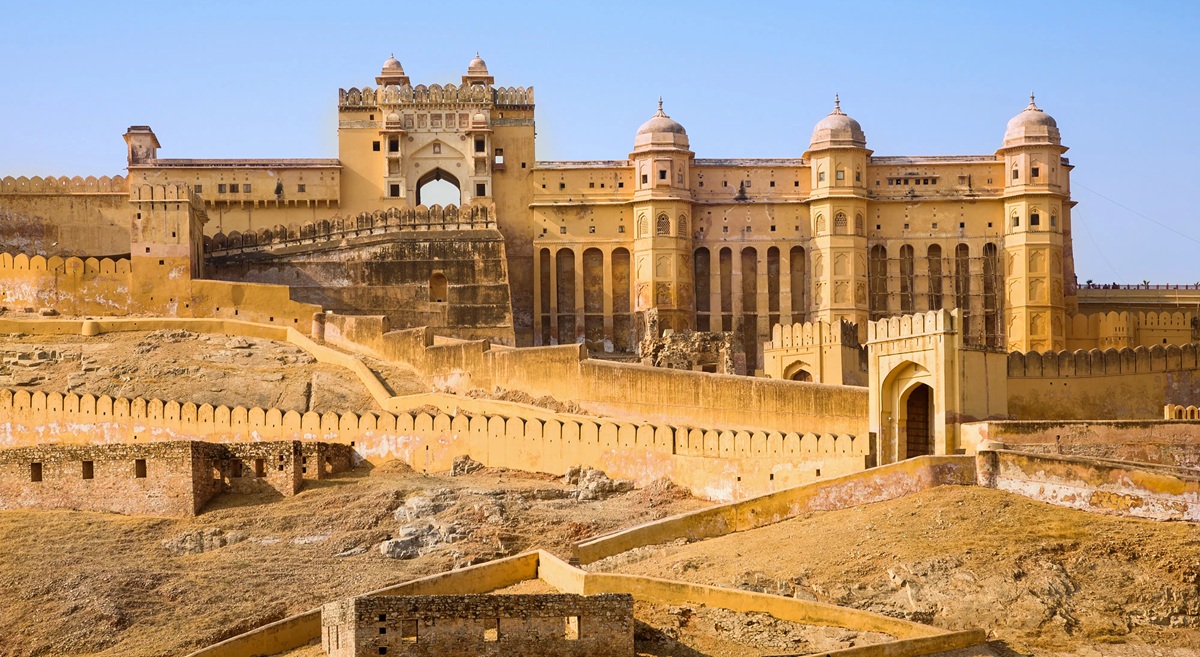
The first light of morning always seems to rise a little softer over Jaipur. Before the Pink City wakes, the sky turns a pale gold, brushing the Aravalli Hills with warm color. As you drive toward Amber Palace—known locally as Amer Fort—the air shifts. The city noise fades, giving way to dry desert breeze, the distant hum of temple bells, and the slow rhythm of the day beginning in the old village of Amer. Then the fort appears.
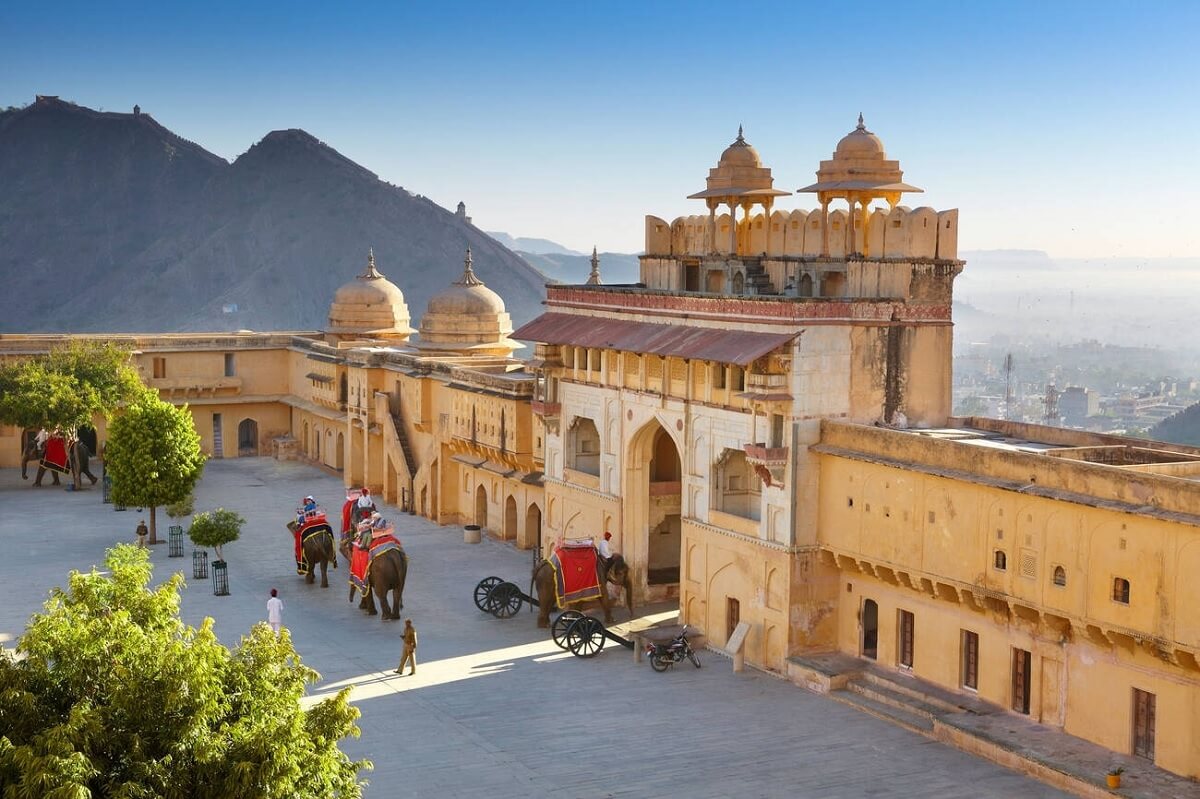
Amber Palace rises from the hillside like a dream carved in honey-colored stone. Its walls wrap around the hills in long, snaking lines, blending with the rugged landscape. At sunrise, the whole structure glows, almost mirroring the sun itself. This is the moment most travelers never forget. You see a palace that once guarded kingdoms. Where You see balconies where queens watched the world. You see the gateway that welcomed kings and caravans from Persia, Arabia, and Central Asia.
Travelers visit Jaipur for many reasons—its markets, its sweets, its architecture, its sense of history—but ask anyone who has been here, and they’ll tell you the same thing: Amber Palace is the heartbeat of Jaipur. It captures everything the city represents—grandeur, creativity, bravery, and a deep sense of cultural pride. The Pink City’s charm radiates from here outward.
Walking toward the palace, you hear the soft footsteps of people climbing the cobblestone slope, guides calling out stories of kings and queens, and the rustle of traditional Rajasthani skirts worn by women selling trinkets. The fort walls may be centuries old, but the atmosphere feels alive, constantly refreshed by the steady flow of travelers, artists, and locals who love sharing its stories.
Amber Palace isn’t just another historic site. It’s a living symbol of Rajasthan’s soul. And as you explore it—from its mirrored halls to its hidden corners—you begin to understand why Jaipur holds such a powerful place in India’s cultural imagination.
The Story Behind Amber Palace – History, Rajput Legacy & Architecture
Amber Palace carries within its walls nearly a thousand years of Rajasthan’s layered history. The early foundations date back to the 10th century, when the Meena rulers built a small settlement here. But the palace we see today began to take shape in the late 16th century under Raja Man Singh I, one of the most celebrated Rajput generals in Emperor Akbar’s Mughal court.
What makes Amber so special is how many architectural influences flow through it. You see a graceful blend of Rajput fort design, Mughal garden symmetry, and Rajasthani artistic detailing. This fusion creates an aesthetic that feels both regal and intimate. Take a 2-Day Agra–Jaipur Tour – City Highlights
Rajput Bravery & Mughal Elegance
Rajput architecture usually emphasizes strength—thick walls, watchtowers, and strategic placement. Amber has all of this, thanks to its position overlooking Maota Lake and the surrounding hills. From the battlements, Rajput warriors once kept watch for approaching armies.
But inside, the mood changes. The courtyards bloom with Mughal-inspired gardens. Arched doorways lead into pillared halls. Delicate frescoes—painted with natural colors from minerals, stones, and flowers—decorate the ceilings. Mirrors, mosaics, marble lattice windows, and hand-carved motifs speak of the kingdom’s wealth and artistic mastery.
The Palace of Four Courtyards
Amber Palace is intelligently divided into different sections, each serving a purpose:
- Jaleb Chowk – The main entry courtyard where returning armies paraded.
- Diwan-e-Aam – The public audience hall, featuring elegant sandstone pillars.
- Ganesh Pol & Royal Apartments – The beautiful gateway leading to the private quarters.
- Sheesh Mahal & Sukh Niwas – The heart of the palace, known for comfort, beauty, and cool air channels.
Each courtyard marks a shift in privacy, hierarchy, and architectural detail. As you move deeper, the palace becomes more intimate, reflecting how royal life transitioned from public duties to private luxury. Book a 3N/4D Jaipur–Bikaner Tour – Complete Plan
Stories Stored in Stone
Legends breathe through the walls of Amber Palace:
- Raja Man Singh’s alliance with Akbar shaped much of Amber’s design.
- Raja Jai Singh I, who later expanded the palace, introduced scientific ideas, astronomical knowledge, and refined aesthetics.
- Queens and princesses lived in chambers overlooking gardens, connected by delicate corridors built for privacy.
- Musicians once filled the palace with classical ragas, their melodies echoing in the halls.
As you explore, guides often share small anecdotes—about battles won, festivals celebrated, or architectural illusions created to impress royal guests. These stories help you see Amber Palace not just as a monument but as a place where real lives were lived, shaped by power, art, and devotion.
Elephant Rides at Amber Fort – Experience, Controversies, Ethics & Alternatives
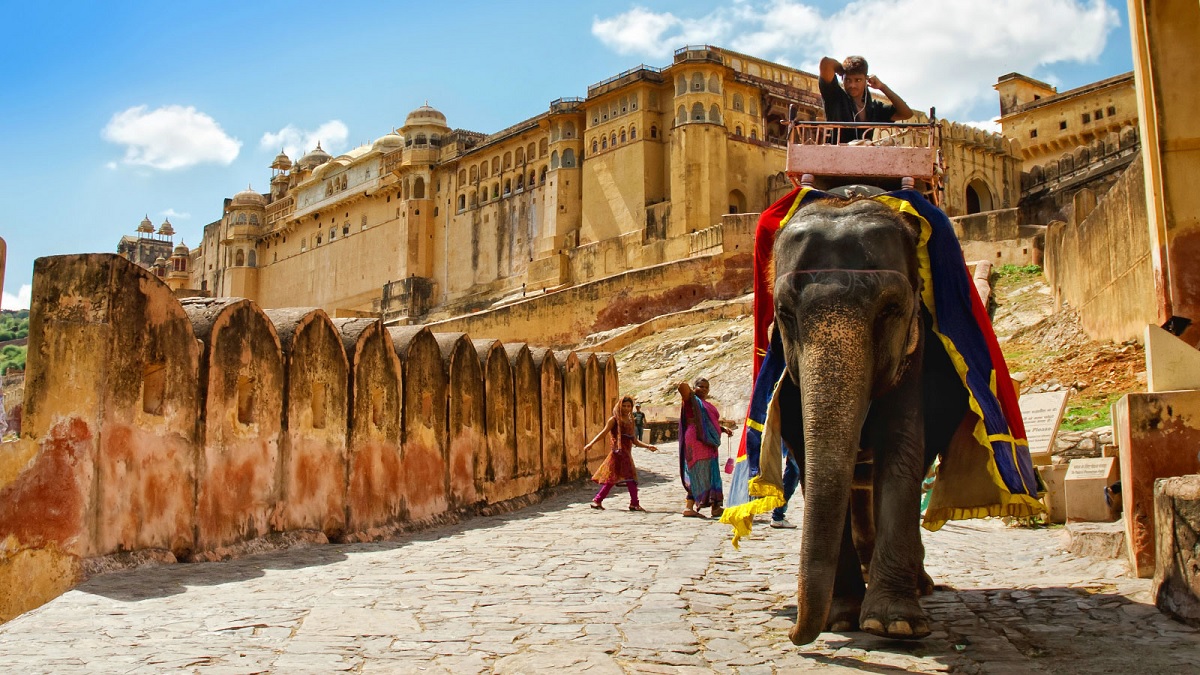
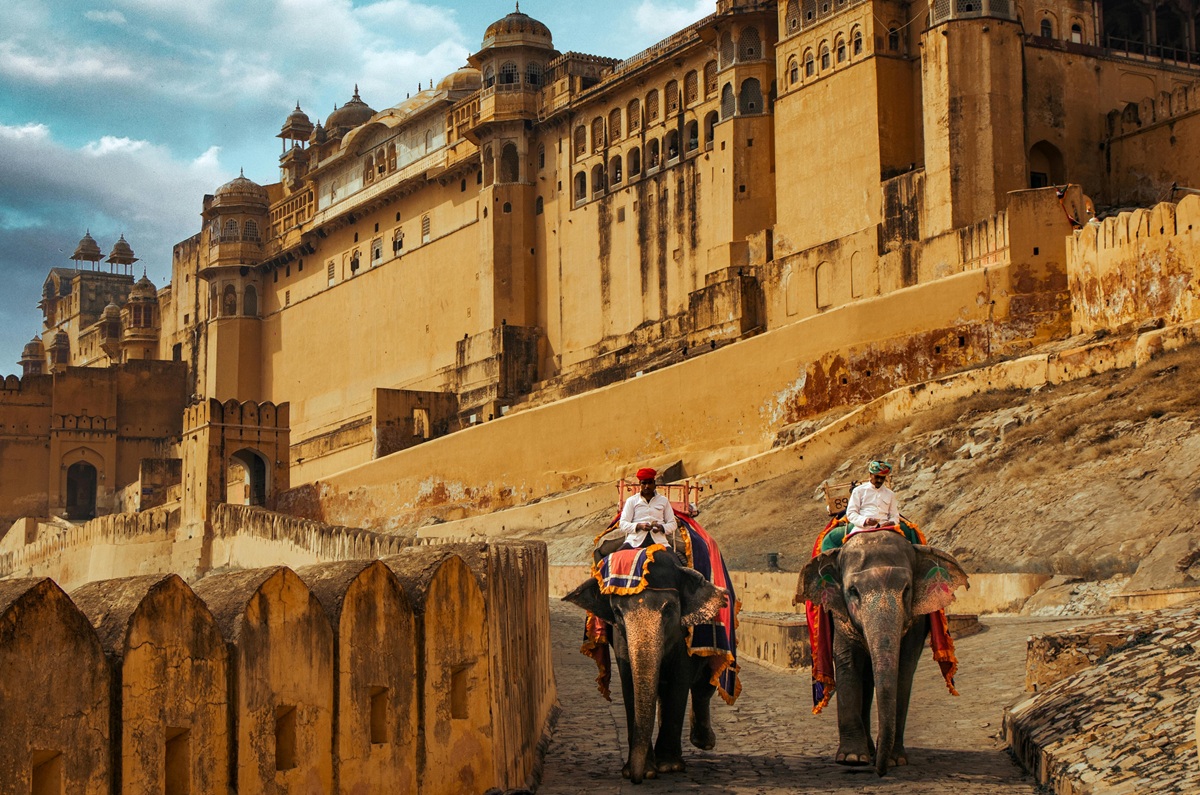
For decades, elephant rides have been one of the most recognizable experiences at Amber Fort. Early morning visitors often see elephants walking up the cobbled path toward the main gate, decorated with painted patterns and carrying tourists on saddles.
But the picture is far more complex today.
The Experience
If you visit early in the morning, you’ll see a line of elephants waiting near the lower courtyard. The ride usually lasts about 20–25 minutes, slowly ascending the ramp toward Suraj Pol, the Sun Gate. The pace is gentle, and some travelers enjoy the novelty of seeing the palace from a higher vantage point.
Timings & Cost (General Visitor Expectation)
- Rides start: Around 7:00 AM
- Last ride: Usually before 11:00 AM
- Cost: Approximate expectations range between ₹1,200 and ₹1,800 for two people (subject to local updates)
Travellers should check the latest rules on arrival, as pricing and availability can change.
Ethical Concerns & Ongoing Discussions
Elephant rides at Amber Fort have been widely discussed in recent years. Concerns include:
- Animal welfare – Elephants are not naturally meant for heavy loads or repetitive uphill walks.
- Temperature stress – Jaipur’s hot climate can be harsh for the animals.
- Foot injuries – Cobblestone paths may cause strain.
Animal welfare groups and some tourism boards have recommended reducing or phasing out elephant rides. Veterinary checks and regulations have been introduced, but debates around the practice continue.
Responsible Tourism Advice
If you’re considering a ride, it’s important to:
- Visit early in the morning (cooler temperatures).
- Look for elephants that seem healthy, with no visible injuries.
- Choose rides only from authorized operators.
- Avoid insisting on rides during peak heat.
- Avoid riding elephants carrying more than two people.
Alternatives for Ethical Travelers
Many visitors now choose other ways to reach the fort:
1. Jeep Ride
A quick and easy ride from the base to the entrance.
Safe, convenient, and available throughout the day.
2. Electric Golf Cart
Eco-friendly and ideal for families or seniors.
3. Walk up the Ramp
A beautiful option for active travelers.
Takes about 15–20 minutes with great views along the way.
4. Auto-Rickshaw or Taxi to the Upper Parking Area
A flexible choice with minimal walking.
Choosing alternatives doesn’t diminish the experience. In fact, walking or taking a jeep often gives you more time to enjoy the architecture, scenery, and atmosphere at your own pace. Explore Jaipur–Ajmer–Pushkar – 4-Day Tour Package
Exploring the Palace – Sheesh Mahal, Ganesh Pol, Diwan-e-Aam, Diwan-e-Khas
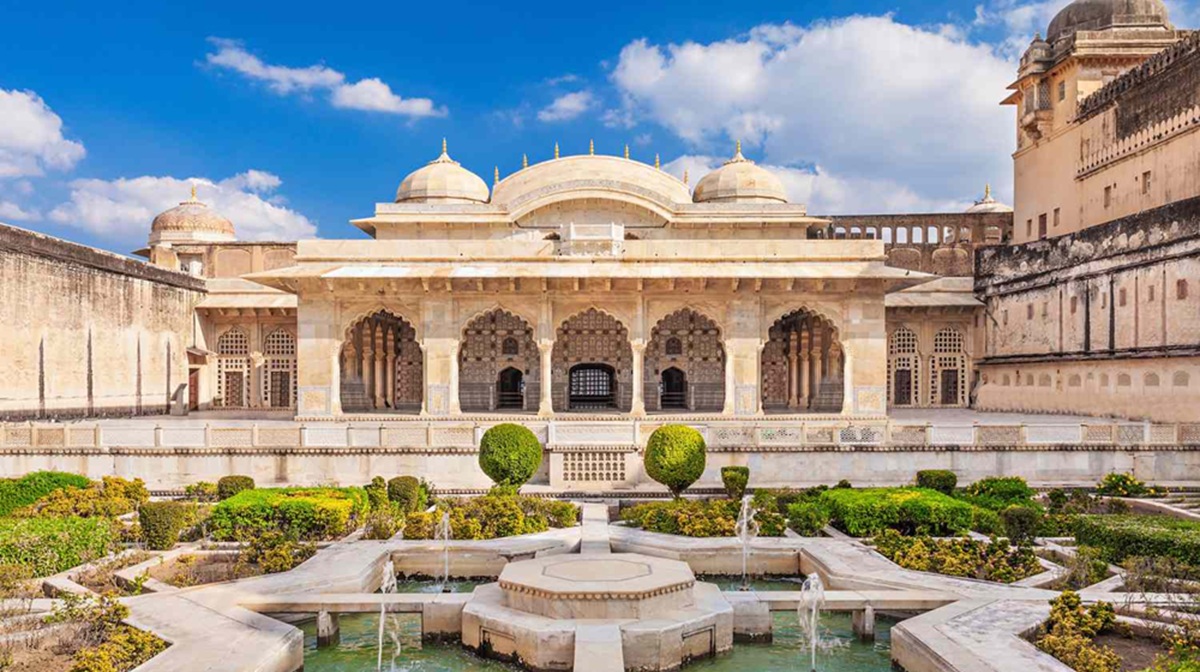
Amber Palace is full of remarkable spaces, but a few areas stand out as must-sees. Each reflects a different layer of royal life, artistic brilliance, and architectural mastery.
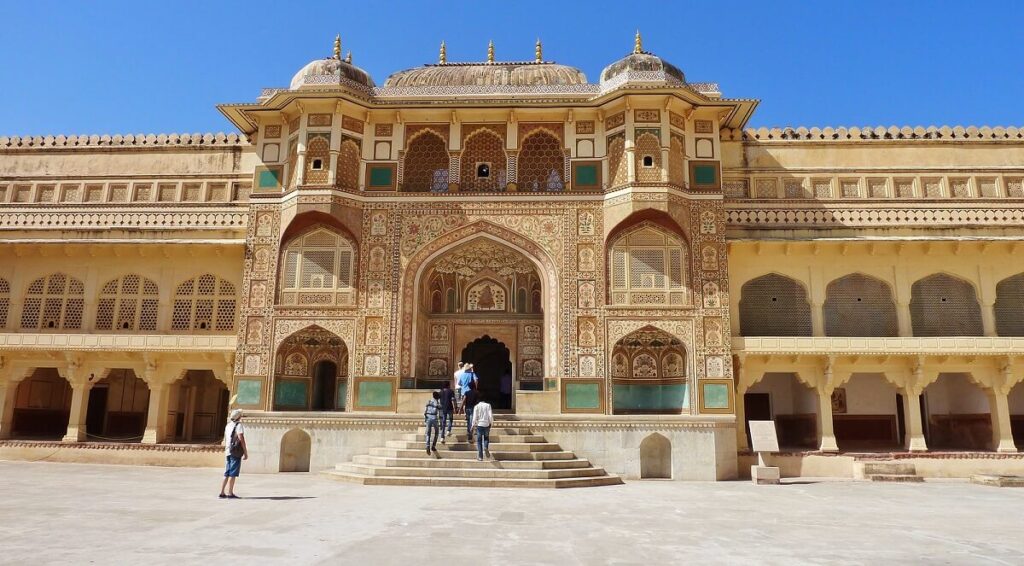
Ganesh Pol – The Gate of Splendor
This ornate gate is one of Amber’s most photographed spots. Built during the reign of Mirza Raja Jai Singh I, it features delicate frescoes painted with natural dyes and a bold central archway topped with latticed windows.
Look closely and you’ll see motifs of flowers, vines, and mythological symbols. The vibrant colors have survived centuries, thanks to the use of minerals and plant-based pigments. Ganesh Pol acted as a ceremonial gateway, leading into the private quarters of the palace.
Photography tip:
Arrive early—around 8 AM—to avoid shadows and crowds. Stand facing the arch from a distance for a symmetrical shot.
Sheesh Mahal – The Palace of Mirrors
Perhaps the most enchanting part of Amber Palace is the Sheesh Mahal, or Mirror Palace. This hall was designed for winter evenings, illuminated by a single lamp that reflected across thousands of tiny mirror pieces embedded in the walls.
The effect is magical. Even today, guides show how one flame could light the entire hall. The mirrors were brought from Persia and crafted into floral and geometric designs. The hall also features marble pillars and carved arches that create a shimmering, dreamlike atmosphere.
Photography tip:
Flash is prohibited. Use natural light and focus on ceiling patterns for close-ups.
Sukh Niwas – Royal Comfort & Cooling Techniques
Across from Sheesh Mahal, you’ll find Sukh Niwas, a hall designed for comfort during summer. Ingeniously engineered water channels once carried cool water across the marble floor, creating natural air-conditioning. Sandalwood doors added fragrance to the air.
This section of the palace shows how scientifically advanced Rajput architecture could be.
Diwan-e-Aam – Hall of Public Audience
This open-air hall, supported by sandstone pillars, was used by the king to address the public, listen to grievances, and conduct ceremonies. The hall faces a courtyard where villagers once gathered with petitions.
From here, you get a great view of the main courtyard and the bustling lower levels.
Diwan-e-Khas – Hall of Private Audience
Reserved for meetings with nobles and important guests, this hall features intricate marble screens, inlaid panels, and polished stone floors. You can sense the shift in atmosphere—from public to royal—through its design.
Zenana (Women’s Quarters)
Further inside, the zenana showcases numerous rooms connected by corridors designed for privacy. Queens and princesses lived here with their attendants, and the architecture allowed them to watch festivals and performances unseen.
Amber’s royal women led lives of seclusion but great comfort. Their chambers overlook courtyards filled with light, breeze, and peace. Plan a 2N/3D Jaipur Trip – Best Sightseeing Plan
Secret Corners & Hidden Viewpoints – Pink City Panoramas Most Tourists Miss
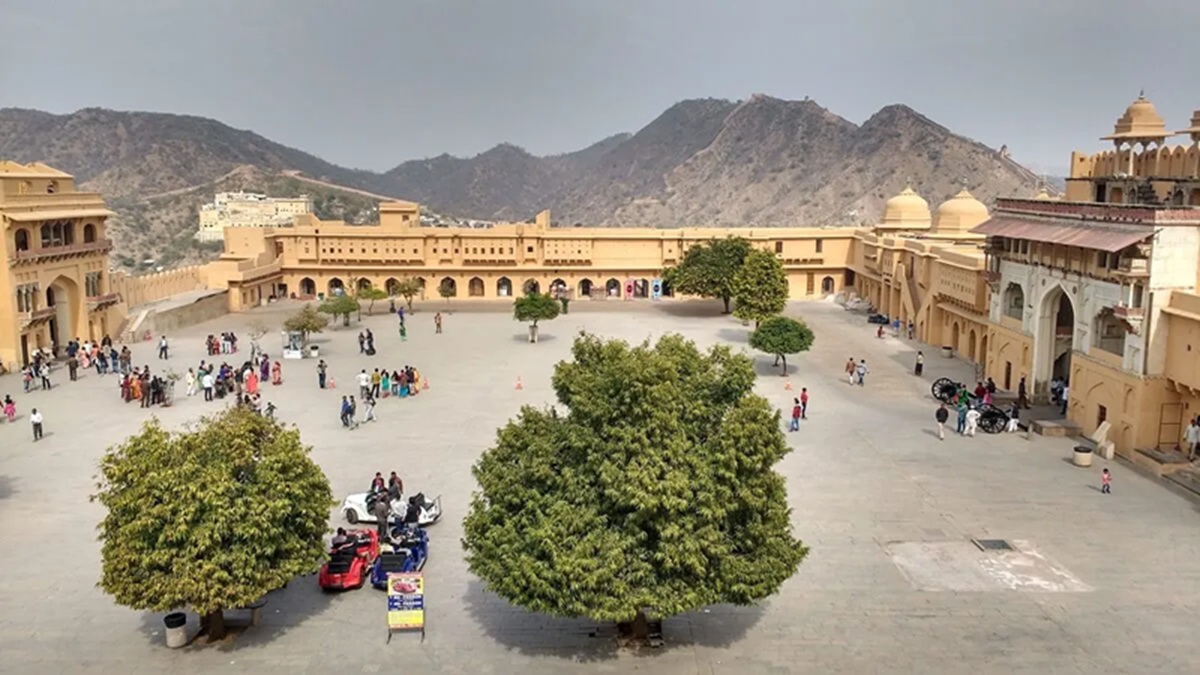
Most visitors walk through the main courtyards, take a few photos at Sheesh Mahal, and leave. But Amber Palace rewards those who wander a little deeper.
1. The Hidden Terrace Behind Ganesh Pol
Walk past Ganesh Pol and turn left. There’s a balcony overlooking Maota Lake and the old village of Amer. The view is calm, with reflections of the palace shimmering in the water.
2. The Corridor to the Old Guard Post
Few people explore the long corridor leading to an elevated watchtower. From here, you get dramatic views of the fort walls stretching across the hills—almost like Rajasthan’s own Great Wall.
3. The Steps Behind the Zenana
At the rear of the women’s quarters, narrow steps lead to an upper terrace. From here, the view opens toward the Aravallis, untouched and wild.
4. Views of Jaigarh Fort
Look up from many parts of Amber and you’ll see Jaigarh Fort perched on the hill. Some visitors skip it, but the connection between the two forts is fascinating. A hidden passage once linked them for emergencies.
5. Hidden Frescoes in Narrow Side Rooms
If you step into the side rooms near the third courtyard, you may find tiny frescoes—birds, flowers, and geometric designs—still intact, untouched by crowds.
6. View from the Palace Ramparts at Sunrise
A short walk from the upper courtyards brings you to the ramparts, where sunrise paints the walls gold. It’s one of Jaipur’s finest hidden photography spots.
These corners let you experience Amber Palace at its quietest—when the stories feel closer and the history more personal. Book 3-Day Delhi Agra Jaipur Tour – Full Itinerary
Jaipur’s Pink City Secrets – Streets, Bazaars, Stepwells & Food Trails Near Amber Palace
Amber Palace sits just outside the heart of Jaipur, but it is closely connected to everything that makes the Pink City unforgettable. Once you leave the palace walls behind, you enter a world of narrow lanes, centuries-old houses painted in soft terracotta shades, chaotic bazaars, and food stalls serving recipes passed down through generations.
Exploring Amber without dipping into the Pink City is like reading only half of a great story.
1. The Old Streets of Amer Village
Before reaching Amber Palace, you pass through the historic settlement of Amer (locally “Amber”), a charming village that predates the palace itself. Wander the inner lanes and you’ll find:
- Stone houses with carved wooden doors
- Small Hindu temples with ringing bells
- Local women in bright lehengas making rangoli outside their homes
- Potters, bangle sellers, and artisans still practicing traditional crafts
Walking here gives a glimpse into a quieter Jaipur—one that feels rooted in time.
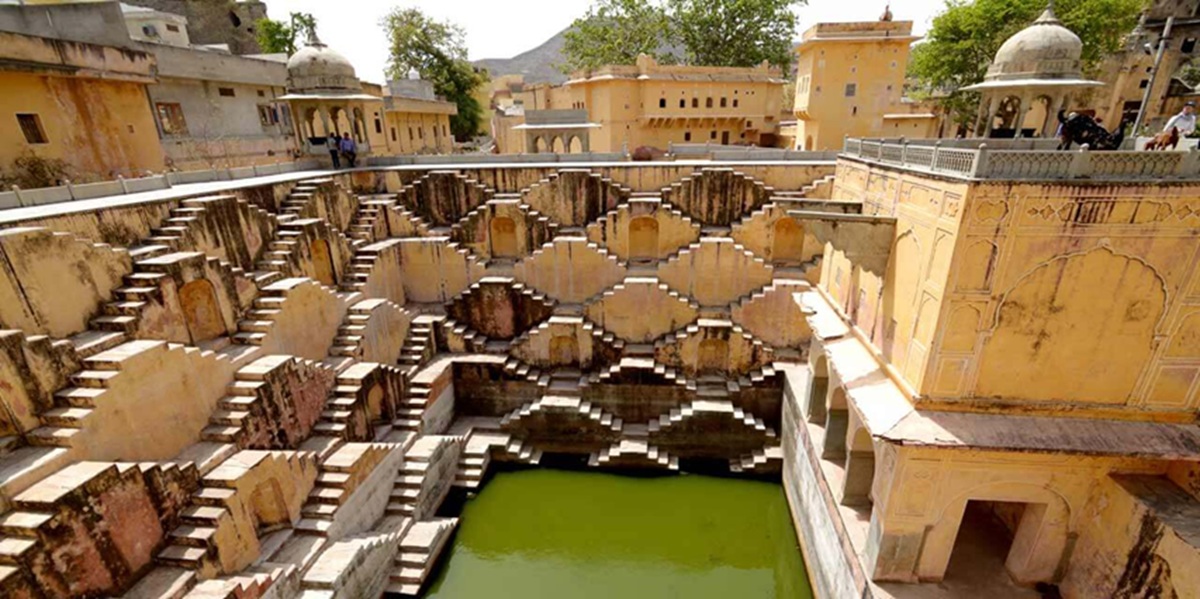
2. Panna Meena ka Kund – The Photogenic Stepwell
Just a short walk from Amber Palace lies Panna Meena ka Kund, a symmetrical stepwell with zigzagging stairs. Built in the 16th century, it served as a water reservoir and a community gathering space.
Today, it’s one of Jaipur’s most visually striking locations:
- Perfect for photos
- Peaceful compared to the palace crowds
- Free to visit
Tip: Visit around 8–9 AM when the light hits the steps beautifully and crowds are minimal.
3. Johri Bazaar & Bapu Bazaar – Colorful Markets
These classic Pink City markets are treasure troves for souvenirs:
- Silver jewelry
- Traditional mojari shoes
- Lac bangles
- Rajasthani fabrics and block prints
- Blue pottery
- Spices and teas
The markets are lively, safe, and full of color. Bargaining is common but keep it polite and friendly.
4. Hawa Mahal & the Surrounding Streets
The drive from Amber back to central Jaipur takes you past the legendary Hawa Mahal, the Palace of Winds. Its honeycomb façade looks magical in the morning when sunlight passes through its jharokhas. Nearby streets are filled with small rooftop cafés that give postcard-perfect views.
5. Food Trails Near Amber Palace
A visit to Jaipur is incomplete without sampling its distinctive cuisine. Near Amer and on the road back to Jaipur, you’ll find:
- Kachori stalls preparing freshly fried pyaaz and dal kachoris
- Lassi shops serving thick, sweet buttermilk in clay cups
- Sweet shops selling ghevar, imarti, and jalebi
- Local dhabas serving ker sangri, dal baati churma, and gatte ki sabzi
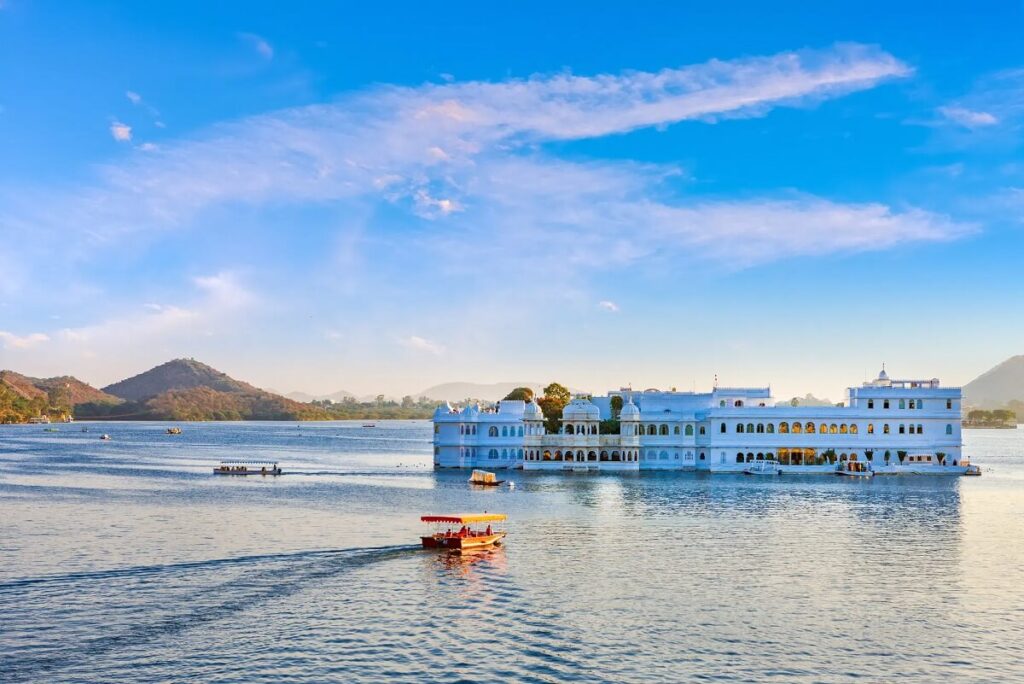
For a more scenic meal, head to restaurants overlooking Jal Mahal, where the palace floats in the middle of Man Sagar Lake.
Sound & Light Show at Amber Fort – What to Expect
As the sun begins to set behind the Aravalli Hills, Amber Palace takes on a different personality. The daytime crowds leave, the air cools, and the fort glows under soft yellow lighting. This is when the Sound & Light Show brings the monument’s history to life.
The Experience
The show is held in an open-air amphitheater overlooking the fort. The narration traces the story of Amber—from the early Meena tribe to the rise of the Kachhwaha Rajputs, their alliance with the Mughals, and the eventual founding of Jaipur.
Deep baritone narration, atmospheric music, and dramatic lighting effects make the palace appear to “speak” as its façade lights up in sync with the story.
Duration:
45–50 minutes
Timings:
Usually one show in Hindi and one in English (season-dependent).
Visitors should check updated timings upon arrival.
Why Attend the Show
- It’s a peaceful way to experience the fort without crowds
- Beautiful night-time views of Amber and the surrounding hills
- Families and history lovers enjoy the storytelling format
- Good for photographers who want night shots of the illuminated palace
Wrap up the evening with dinner at a rooftop restaurant in Amer village—you’ll see the palace glowing like a golden crown against the dark hills. Book a 3N/4D Jaipur–Bikaner Tour – Complete Plan
How to Reach Amber Palace – From Jaipur, Delhi & Other Cities
Amber Palace is well-connected, whether you’re based in Jaipur or traveling from another region.
From Jaipur City Center
Amber Palace is about 11 km from Jaipur’s old city.
Best ways to reach:
1. Auto-rickshaw
Affordable and convenient for solo travelers or couples.
2. Ola/Uber or Local Taxi
Comfortable and ideal for small groups or families.
Travel time: 20–30 minutes depending on traffic.
3. Tourist Buses
Many buses run from MI Road, Ajmeri Gate, and Hawa Mahal to Amer.
4. Self-drive or Rental Car
Plenty of parking available in the lower and upper areas.
From Delhi
Delhi to Jaipur is a popular weekend route.
- By Road: 5–6 hours (NH48)
- By Train: Shatabdi, Vande Bharat, and other express options
- By Flight: 1-hour flights to Jaipur Airport, then a 45-minute drive to Amber Palace
From Agra, Udaipur, Jodhpur & Pushkar
Amber is part of the classic Rajasthan tourist circuit.
- Agra to Jaipur: 4–5 hours by road
- Udaipur to Jaipur: 6–7 hours
- Jodhpur to Jaipur: 5–6 hours
- Pushkar to Jaipur: 2.5 hours
No matter where you come from, Jaipur’s roads make Amber Palace easy to reach.
Best Time to Visit – Weather, Seasons & Ideal Hours for Photography
Rajasthan’s weather plays a big role in how you experience Amber Palace.
Winter (October to March)
Best time to visit—pleasant days and cool mornings.
- Ideal for walking and exploring courtyards
- Great visibility for photography
- Perfect for combining Amber with other Jaipur attractions
Summer (April to June)
Hot afternoons, but mornings and late evenings are manageable.
- Visit early—ideally before 9 AM
- Carry water, sunscreen, and a hat
Monsoon (July to September)
Amber looks especially beautiful after rain.
- Hills turn green
- Photographers love this season
- Occasional humidity, but crowds are smaller
Best Hours for Photography
- Sunrise: Soft, golden light on the palace walls
- Early morning (8–10 AM): Balanced lighting
- Late afternoon (4–5 PM): Warm tones and dramatic shadows
- Night: For photos of the illuminated fort during the Sound & Light Show
Tickets, Timings & Entry Rules – 2025 Traveler Update
Here’s what most travelers should expect when visiting:
Timings
- Amber Palace: 8:00 AM – 5:30 PM
- Light & Sound Show: Evening (varies by season)
Always reconfirm the latest schedule on arrival.
Expected Ticket Prices (as per typical tourist structure)
- Indian adults: Around ₹200
- Foreign adults: Around ₹550
- Students: Discounted rates available
- Photography: Mobile allowed; professional equipment may require permits
Entry Rules
- Security checks are conducted at the entrance
- Avoid carrying large bags
- Drone photography is prohibited
- Respect restricted areas and museum zones
- Follow instructions around Sheesh Mahal—touching mirror work is not permitted
Tips for First-Time Travelers – Safety, Dress Code, Water, Footwear & Local Guides
Amber Palace is large, beautiful, and full of corners worth exploring. These tips help make your visit smoother.
1. Wear Comfortable Footwear
You’ll walk on stone pathways, stairs, and sloping ramps. Good shoes help.
2. Carry Water
The palace complex is big, and Jaipur can get warm even in winter.
3. Dress Respectfully
Light, breathable clothing is ideal.
Shoulders and knees covered are appreciated in Rajasthan’s heritage sites.
4. Hire a Licensed Guide
Local guides bring the palace to life with stories about kings, queens, battles, festivals, and architecture.
Avoid unregistered touts.
5. Start Early
Amber gets crowded around 10–11 AM.
Arriving early gives you better photos and a quieter experience.
6. Keep an Eye on Your Belongings
While the palace is generally safe, pickpockets may appear during peak periods.
7. Avoid Touching Frescoes & Mirror Work
Preserve the artwork for future generations.
8. Explore Beyond the Main Routes
The side alleys, terraces, and hidden viewpoints often lead to Jaipur’s best photographs.
Nearby Attractions – Jaigarh Fort, Nahargarh, Jal Mahal & More
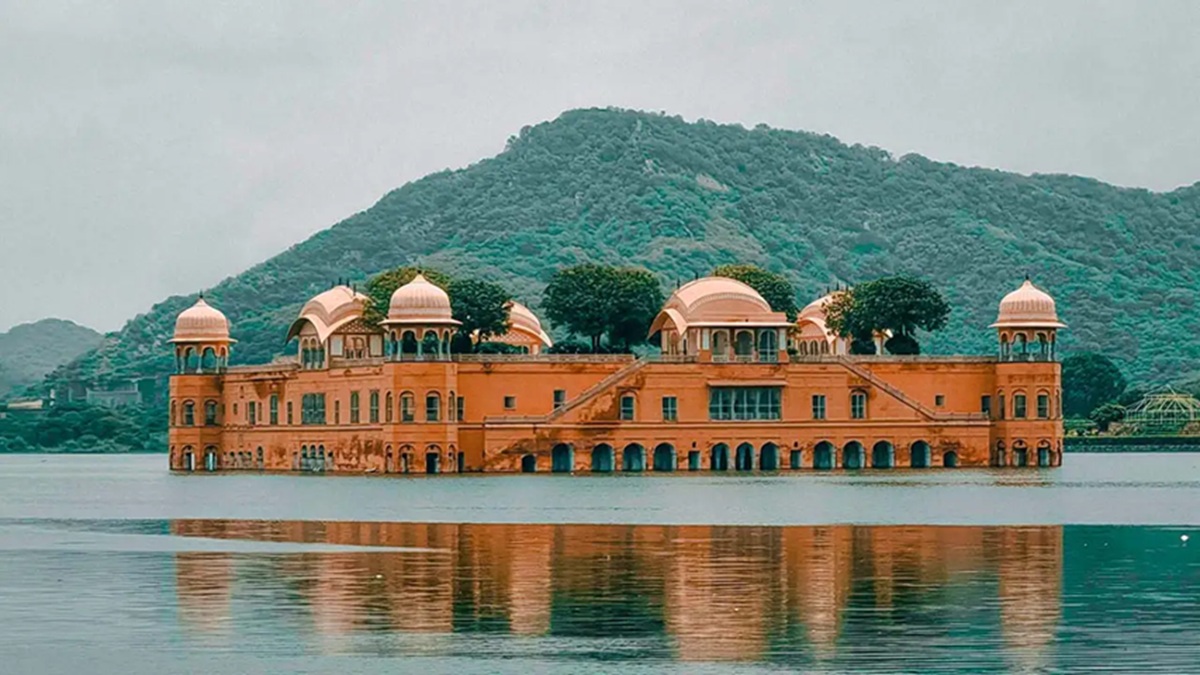
One of the joys of visiting Amber Palace is how many major attractions surround it.
Jaigarh Fort
Sitting above Amber Palace, Jaigarh is known for:
- Panoramic views
- The world’s largest wheeled cannon, Jaivana
- Underground passages connected to Amber
- Strong defensive architecture
It’s a must-visit for history lovers.
Nahargarh Fort
Perched on the highest ridge above Jaipur, Nahargarh offers:
- Sunset views over the entire Pink City
- The Madhavendra Palace with interconnected suites
- Scenic cafés and viewpoints
This fort is perfect for golden-hour photography.
Jal Mahal
On the way back to Jaipur, you pass Jal Mahal, a beautiful palace floating on Man Sagar Lake. Though entry isn’t allowed, the lakeside promenade is ideal for evening walks and photography.
Kanak Vrindavan Garden
A peaceful garden built in the Mughal-Rajput style. Good for families and slow travelers.
Hathi Gaon (Elephant Village)
Located near Amer, this is where many of the elephants live. Some travelers visit to learn about their care and daily routines.
Suggested Itinerary – Half-Day & Full-Day Plans Around Amber Palace
Half-Day Amber Palace Itinerary (Morning Focus)
- 7:30 AM – Arrive at Amber Palace
- 8:00 AM – Explore Ganesh Pol and Sheesh Mahal
- 9:30 AM – Walk the secret corridors and terraces
- 10:30 AM – Visit Panna Meena ka Kund
- 11:15 AM – Stop at Jal Mahal for photos
- 12:00 PM – Lunch in the Pink City
Perfect for travelers with limited time.
Full-Day Amber & Pink City Experience
- 7:30 AM – Reach Amber Palace
- 8:00–11:00 AM – Detailed tour of the palace
- 11:15 AM – Continue to Jaigarh Fort
- 1:00 PM – Lunch break
- 2:30 PM – Visit Panna Meena ka Kund
- 3:00 PM – Explore Hawa Mahal and bazaars
- 5:00 PM – Sunset at Nahargarh Fort
- 7:30 PM – Sound & Light Show at Amber
This gives you a complete Jaipur experience in one day.
Where to Stay in Jaipur – Areas, Hotels & Heritage Haveli Recommendations
Jaipur caters to every type of traveler, from luxury seekers to backpackers. Here are the best areas to stay:
1. Amer / Near Amber Palace
Ideal for travelers who love history, quiet surroundings, and early access to the fort.
Recommended for: Families, slow travelers, photographers.
2. Old City / Pink City
Great for culture lovers and those who enjoy being close to markets, temples, and historic buildings.
Stay near: Hawa Mahal, City Palace, Johri Bazaar.
3. Bani Park & Civil Lines
Quieter residential areas with boutique hotels, colonial-style properties, and green streets.
Ideal for: Couples, solo travelers.
4. MI Road & C-Scheme
Central location with easy access to restaurants, shopping, and major sites.
Good for: Business travelers, short stays.
5. Luxury Resorts on Jaipur’s Outskirts
Offer spa services, large rooms, and views of the Aravallis.
Great for: Honeymooners, wellness travelers.
Hotel Types to Consider
- Heritage Havelis: Charming interiors, courtyards, and traditional hospitality.
- Boutique Hotels: Stylish décor and personalized stays.
- Royal Palaces (converted hotels): For those wanting a regal experience.
- Budget Guesthouses: Simple, clean, friendly options for backpackers.
Conclusion – Why Amber Palace Remains Jaipur’s Crown Jewel
Amber Palace isn’t just a monument—it’s an experience that stays with you long after you leave Jaipur. It offers a window into the lives of Rajput kings, a canvas of brilliant architecture, and a breathtaking viewpoint over the ancient Aravalli Hills.
Every part of Amber tells a story:
- The mirror-covered Sheesh Mahal
- The grand Ganesh Pol with its hand-painted frescoes
- The courtyards where armies once marched
- The lakes, gardens, and temples surrounding the palace
- The hidden terraces where the wind carries the smell of desert air
Whether you come for history, photography, food, shopping, or simply the joy of discovering Rajasthan’s heritage, Amber Palace is where all the threads of Jaipur’s identity come together.
This is why travelers return again and again. Amber Palace captures the soul of the Pink City—timeless, vibrant, and unforgettable.
Jaipur Travel Guides & Top Attractions
- Plan Your Delhi–Jaipur Day Trip – Compare Car vs Train
- Explore Jaipur in a Day – Delhi to Jaipur by Train Guide
- Book Your Delhi–Jaipur Drive – One-Day Car Trip Guide
- Discover Chandpole Gate – History & Market Walk Guide
- Catch the Best Sunset – Nahargarh Fort & Café Guide
- Uncover City Palace Secrets – Top Facts to Know
- Visit City Palace Today – Must-See Attractions
- Explore Panna Meena ka Kund – Stepwell & Photo Spots
- Experience Amer Fort – History, Shows & Ride Tips
- Capture Hawa Mahal – History, Fees & Photo Points
- Stroll Through Sisodia Rani Bagh – Garden & Mural Guide
- Shop Tripolia Bazaar – Crafts, Bangles & Timings
- Shop Smarter at Bapu Bazaar – What to Buy & Tips
- Visit Raj Mandir Cinema – Ticket & Show Guide
- Explore Galtaji Monkey Temple – Full Visitor Guide
- Visit Birla Mandir – Best Time & Temple Etiquette
- Snap Photos at Patrika Gate – Instagram & Timing Guide
- Shop Johari Bazaar – Jewelry, Gold & Timings
- Experience Chokhi Dhani – Shows & Booking Guide
- Visit Govind Devji Temple – Darshan & Significance