
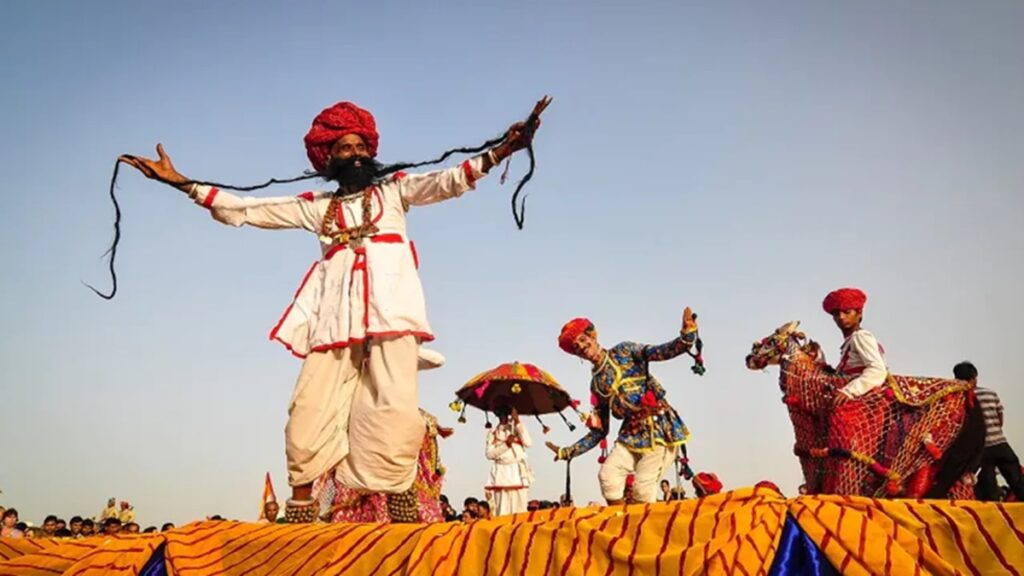
Imagine standing at the edge of Chand Baori, one of the world’s deepest and most intricate stepwells, as the air vibrates with the sound of dhol drums, and dancers in swirling ghagras bring centuries-old traditions alive. This is the Abhaneri Festival 2025—a two-day cultural extravaganza happening on September 26–27 in the village of Abhaneri, Rajasthan.
In a year when India’s tourism is booming—thanks to the Union Budget 2025’s INR 20,000 crore investment into infrastructure and connectivity—festivals like Abhaneri are more accessible than ever. Better roads, new UDAN-scheme flights into Jaipur, and digital tourism campaigns mean travelers can now add Abhaneri to their itineraries without hassle.
So why should you attend? Because this isn’t just another fair—it’s Rajasthan distilled into two unforgettable days: history, dance, music, crafts, food, and community. Whether you’re a first-time visitor to India or a repeat traveler looking for authentic experiences, the Abhaneri Festival offers a front-row seat to Rajasthan’s living heritage.
What Is the Abhaneri Festival and Why Is It Celebrated?
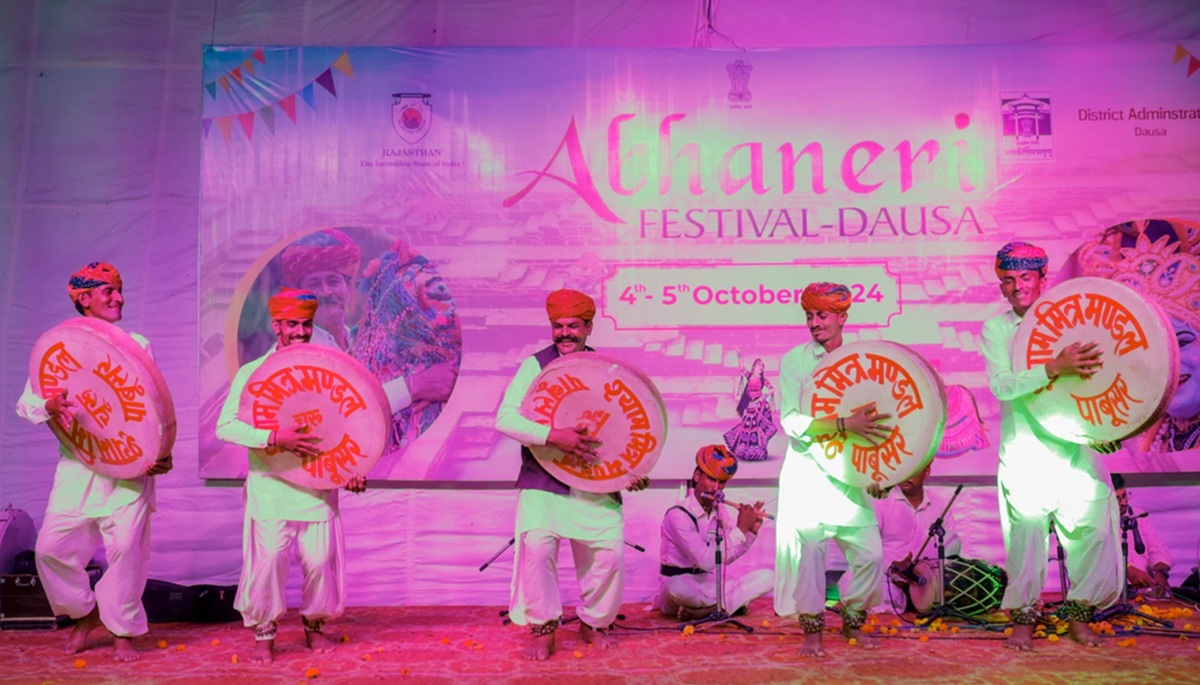
The Abhaneri Festival began in 2008, initiated by Rajasthan Tourism to revive interest in rural culture and heritage. The setting couldn’t be more perfect—Abhaneri village, known historically as Abha Nagri (City of Brightness), was founded in the 8th century by King Chand of the Nikumbha dynasty.
At its center lies Chand Baori, a 13-story stepwell with over 3,500 perfectly symmetrical steps, built between the 8th and 9th centuries. More than just a water reservoir, it was a community gathering place where villagers met, cooled down, and celebrated festivals. Next to it stands the Harshat Mata Temple, dedicated to the goddess of joy, which still hosts rituals during the festival.
The Abhaneri Festival is celebrated to:
- Preserve folk arts like Ghoomar, Kalbelia, and Kathputli puppetry.
- Boost rural livelihoods by giving artisans and performers a global platform.
- Promote sustainable tourism, aligning with modern eco-conscious travel.
- Celebrate Rajasthan’s identity of resilience, artistry, and community spirit.
Over the years, it has grown into a must-visit event, drawing 50,000+ attendees and international recognition.
Where Exactly Is Abhaneri and How Do You Get There?
Abhaneri is a small village in Dausa district, Rajasthan, about 95 km from Jaipur and 200 km from Agra. Its location makes it an ideal day trip or a stopover on a Golden Triangle itinerary (Delhi–Agra–Jaipur).
By Air
- Nearest Airport: Jaipur International Airport (95 km).
- Well-connected with Delhi, Mumbai, Bangalore, and tier-2 cities under the UDAN scheme.
- Taxi or bus from Jaipur takes around 2–2.5 hours.
By Train
- Nearest station: Dausa (15 km away).
- Regular trains from Jaipur and Delhi stop here.
- Local taxis or autos connect you to Abhaneri in 20 minutes.
travel By Road
- From Jaipur: 2 hours via NH21.
- From Agra: 3.5 hours via Agra–Jaipur highway.
- From Delhi: 5 hours (230 km).
- Buses (RSRTC) are budget-friendly at INR 200–500.
Tip: If self-driving, download offline maps as rural coverage can be patchy.
When Is the Best Time to Attend the Abhaneri Festival?
The festival dates are fixed: September 26–27, 2025.
- Weather: Post-monsoon greenery, mild warmth (25–32°C).
- Crowds: Less crowded than winter festivals like Pushkar Fair, yet still buzzing.
- Photography: Golden-hour light enhances stepwell’s carvings.
- Added Bonus: September 27 is World Tourism Day, making the festival extra special with eco-tourism workshops.
If you can’t attend in September, the best season to visit Abhaneri generally is October–March, when Rajasthan’s weather is at its best. Join the Spectacle of Ram Leela – Delhi Guide Inside!
What Are the Main Highlights of Abhaneri Festival 2025?
The two-day festival packs a punch with nonstop activities.
Daytime Events
- Heritage Walks: Guided tours of Chand Baori and Harshat Mata Temple.
- Artisan Bazaars: Buy block prints, blue pottery, and meenakari jewelry directly from craftspeople.
- Workshops: Try your hand at pottery, puppet-making, or natural dyeing.
Evening Performances
- Ghoomar Dance: Graceful women spinning in colorful ghagras.
- Kalbelia Dance: UNESCO-recognized, inspired by snake charmers.
- Bhawai Dance: Women balancing pots while dancing on brass plates.
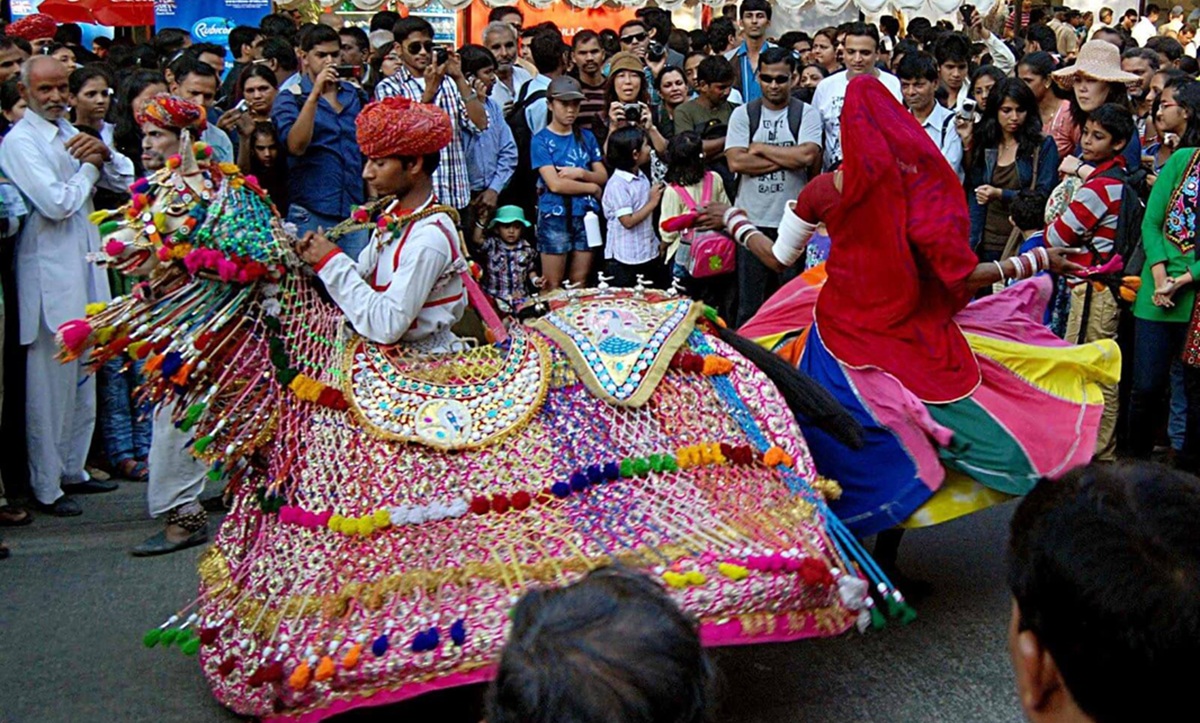
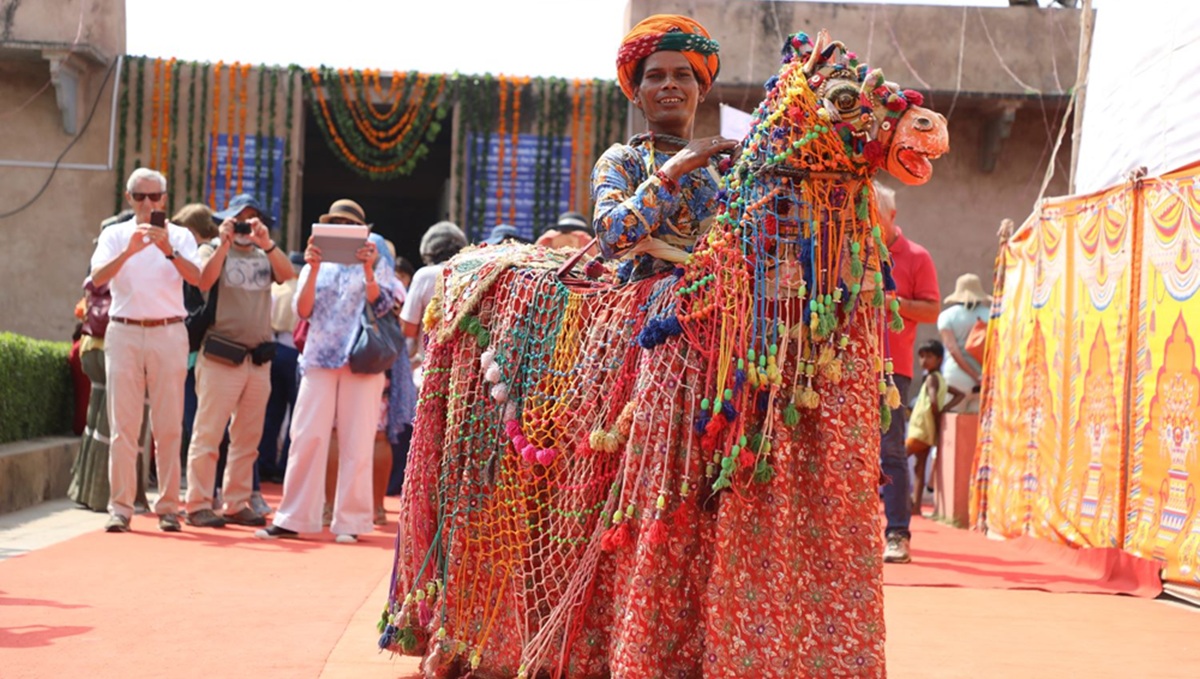
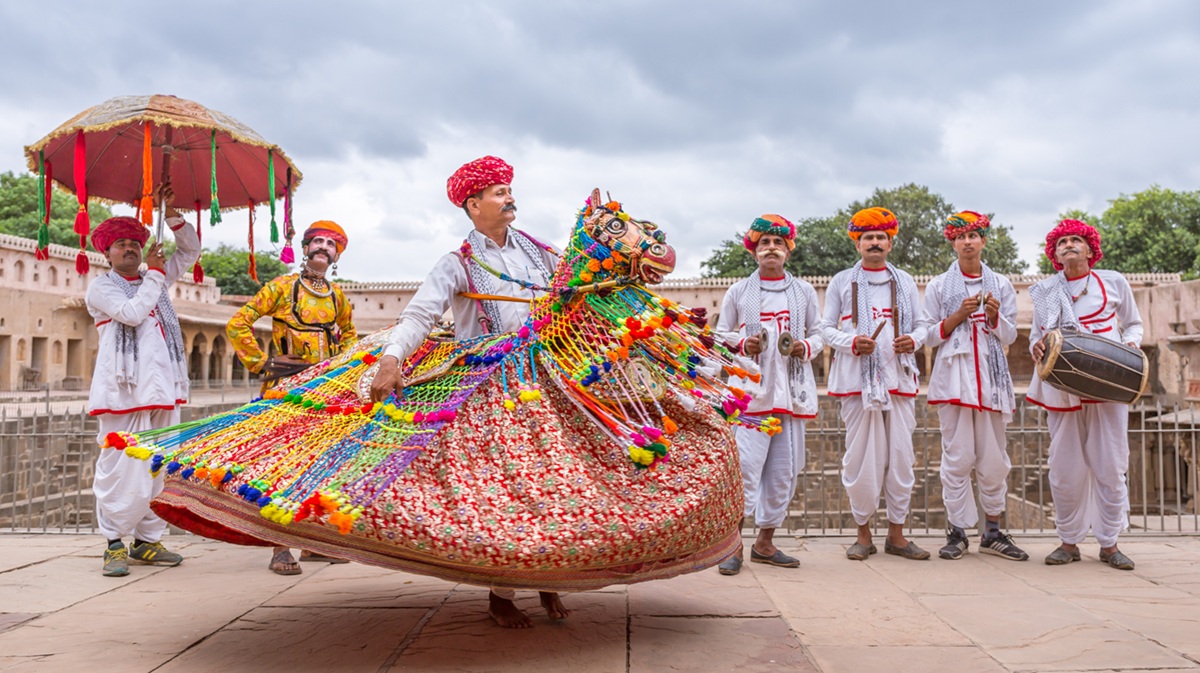
- Kachhi Ghodi: Men in horse costumes enacting warrior tales.
- Kathputli Puppetry: Folk stories told with string puppets.
- Live Music: Dholak beats, sarangi tunes, and devotional songs.
Special Additions for 2025
- Cooking Demos: Learn to make dal baati churma and laal maas.
- Eco-Friendly Focus: Upcycling workshops and plastic-free event zones.
- Adventure Add-ons: Camel cart rides and hot-air balloon previews.
Evenings end with cultural fireworks—quite literally—as performers close with a burst of sound and light.
What Local Foods and Drinks Should You Try at the Abhaneri Festival?
No Rajasthani festival is complete without a culinary celebration. Abhaneri Festival transforms the village into a food lover’s paradise, with street stalls, heritage kitchens, and live cooking demos. Here’s what not to miss:
Must-Try Dishes
- Dal Baati Churma – Rajasthan’s signature dish: round wheat baatis baked over coals, crushed and soaked in ghee, paired with lentil curry and sweet churma.
- Laal Maas – A fiery red mutton curry cooked with mathania chilies; not for the faint-hearted, but deeply authentic.
- Gatte ki Sabzi – Gram flour dumplings in spiced yogurt gravy, a staple of desert households.
- Ker Sangri ki Sabzi – A tangy-salty desert bean and berry mix, often vegan-friendly.
- Kachoris and Mirchi Vadas – Perfect festival snacks, fried golden and served with chutneys.
- Rabri and Ghewar – Sweet treats that melt in your mouth; ghewar is a honeycomb-like dessert dripping with syrup.
Beverages
- Lassi (sweet or salty): Served in clay cups for authenticity.
- Chaas (buttermilk): Cooling, spiced with cumin.
- Masala Chai: A must on cool evenings, best enjoyed while watching puppet shows.
What’s New in 2025
- Interactive Cooking Demos: Watch local chefs demonstrate laal maas preparation.
- Wellness Cuisine Stalls: Millet-based dishes, herbal teas, and organic snacks for health-conscious travelers.
- Eco-Serving: Food is served in leaf plates and clay cups—no plastic cutlery.
Visit Chand Baori Stepwell – Abhaneri Travel Guide & Highlights
How Much Does It Cost to Attend the Abhaneri Festival?
The best part: entry is free for everyone. You only pay for transport, stay, food, and any VIP seating upgrades.
Sample Budget Breakdown (per person for 2 days, excluding flights):
| Category | Cost-Saver (INR) | Premium (INR) |
|---|---|---|
| Jaipur–Abhaneri Transport (RT) | 500 (Bus) | 2,500 (Taxi) |
| Stay (1 night) | 1,500 (Homestay) | 5,000 (Heritage Haveli) |
| Food & Snacks | 700 | 2,000 |
| VIP Festival Pass | Free–500 | 500 |
| Misc. Souvenirs | 500 | 2,000 |
| Total | ~3,200 | ~12,000 |
Tip: Book accommodations in advance—during the festival, local stays fill up fast.
Where Should You Stay During the Abhaneri Festival?
Options are varied, depending on your budget and travel style.
In Abhaneri (Village Experience)
- Homestays: INR 1,500–2,500/night. Includes home-cooked meals, cultural immersion.
- Tented Camps: Festival organizers set up eco-camps near the venue (from INR 2,000/night).
In Dausa (15 km away)
- Heritage havelis, boutique stays at INR 3,000–5,000/night.
- Good balance of comfort and proximity.
Jaipur (95 km away)
- Luxury: Taj Rambagh Palace, ITC Rajputana (INR 10,000+).
- Mid-range: Budget hotels, hostels, and boutique guesthouses (INR 2,500–5,000).
- Ideal for combining Abhaneri with a Jaipur sightseeing trip.
Pro Tip: For photographers, staying in Abhaneri itself allows sunrise shots of Chand Baori before crowds arrive.
Discover Abhaneri Step Well – History, Architecture & Travel Tips
What Itineraries Can You Follow?
2-Day Festival Focus
- Day 1: Arrive Jaipur → drive to Abhaneri → heritage walk → evening performances → overnight homestay.
- Day 2: Morning temple aarti → workshops → food trail → depart after sunset show.
3-Day Jaipur + Abhaneri Combo
- Day 1: Jaipur sightseeing (Amber Fort, Hawa Mahal).
- Day 2: Full day at Abhaneri Festival.
- Day 3: Jaipur markets and departure.
5-Day Golden Triangle with Abhaneri
- Day 1: Delhi → Jaipur (train).
- Day 2: Jaipur sightseeing.
- Day 3: Abhaneri Festival.
- Day 4: Agra (Taj Mahal, Agra Fort).
- Day 5: Return Delhi.
7-Day Rajasthan Festival Trail
- Day 1: Jaipur.
- Day 2–3: Abhaneri Festival.
- Day 4: Agra (Taj Mahal).
- Day 5: Bharatpur Bird Sanctuary.
- Day 6: Pushkar (temple town and lake).
- Day 7: Return Jaipur/Delhi.
Is the Abhaneri Festival Family-Friendly and Safe for Solo Travelers?
Family-Friendly:
- Puppet shows, camel rides, and folk performances delight children.
- Food is mild-to-medium spiced; ask vendors for kid-friendly versions.
For Solo Travelers:
- Safe, with a warm community feel.
- Women travelers report positive experiences, especially when staying in homestays.
- Stick to well-lit festival areas at night and book trusted transport.
What Sustainable Practices Are Encouraged at the Festival?
- Plastic-Free Zones: Food in leaf plates, drinks in clay cups.
- Eco-Workshops: Natural dyeing, pottery, upcycling crafts.
- Community Support: Direct sales from artisans ensure fair income.
- Transport: Shuttle buses encourage shared rides.
- Cultural Conservation: Festival entry fees support local heritage sites.
What Else Can You See Near Abhaneri?
- Harshat Mata Temple: Adjacent to Chand Baori, dedicated to the goddess of joy.
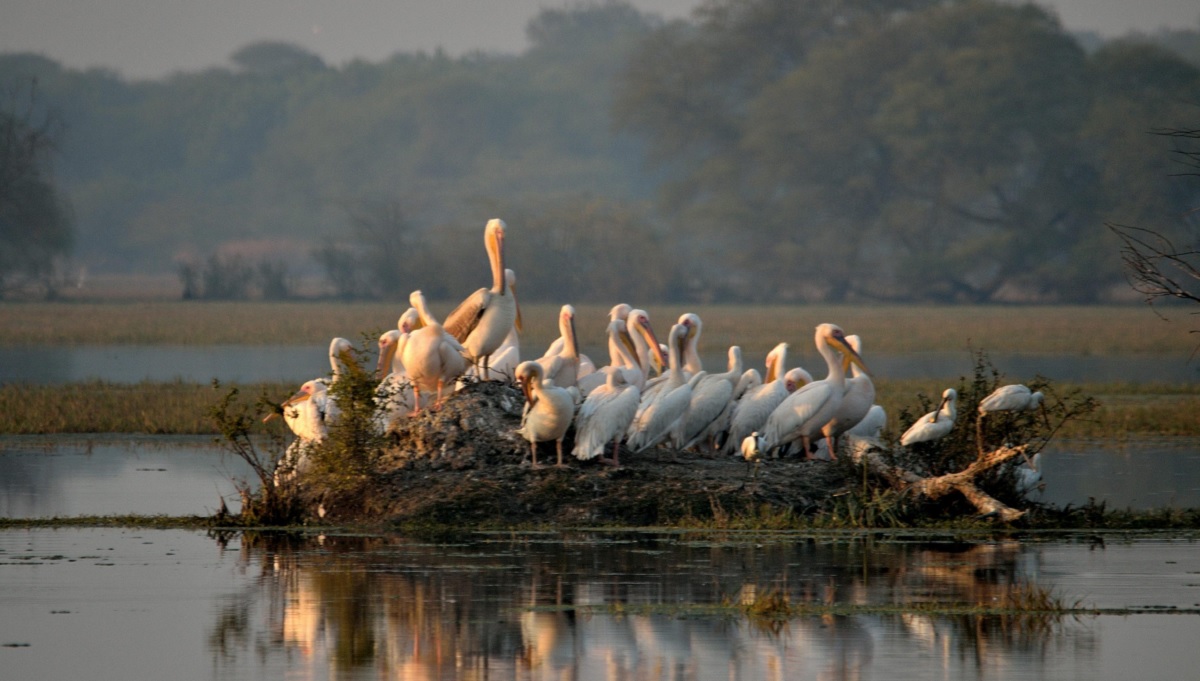
- Bharatpur Bird Sanctuary (Keoladeo National Park): UNESCO site, 100 km away.
- Jaipur (95 km): Amber Fort, Hawa Mahal, City Palace.
- Agra (200 km): Taj Mahal, Agra Fort.
- Alwar (120 km): Sariska Tiger Reserve.
Abhaneri makes a perfect hub for day trips in Rajasthan’s heartland.
Tips for First-Time Visitors
- Dress Code: Light cottons in daytime, shawl/jacket for evenings. Respect temple dress norms.
- Health: Carry mosquito repellent, stay hydrated.
- Money: Carry small denominations (INR 10–100); ATMs are scarce.
- Connectivity: Patchy internet—download offline maps and festival schedules.
- Photography: Drones may need special permits. Golden hour is best for Chand Baori.
- Apps: Rajasthan Tourism app for updates, Google Translate for basic Hindi phrases.
FAQs About Abhaneri Festival 2025
1. When is the Abhaneri Festival 2025?
The Abhaneri Festival 2025 will be held on September 26 and 27, 2025. It’s a two-day celebration that coincides with the post-monsoon season in Rajasthan, offering pleasant weather (25–32°C) and lush green surroundings. The festival also aligns with World Tourism Day on September 27, making it an ideal time to experience both cultural vibrancy and global tourism initiatives.
2. Where is the festival held?
The festival takes place in Abhaneri village, located in Dausa district, Rajasthan. Abhaneri is about 95 km from Jaipur and around 200 km from Agra, making it a perfect stop on the popular Golden Triangle route (Delhi–Agra–Jaipur). The main events are staged at the historic Chand Baori stepwell and the nearby Harshat Mata Temple, both of which serve as spectacular cultural backdrops.
3. Is entry free?
Yes, entry to the Abhaneri Festival is completely free of charge, making it accessible to everyone. However, for those who want a more comfortable experience, VIP passes are available for around INR 500. These passes provide front-row seating at performances, quicker access to certain zones, and in some cases, guided tours of the heritage sites.
4. How do I get there from Jaipur?
The most convenient way to reach Abhaneri from Jaipur is by road. It’s a 2-hour drive (95 km) via National Highway 21. Travelers can:
- Hire a taxi: Costs around INR 2,500 for a round trip.
- Take a bus (RSRTC): Budget-friendly option costing INR 200–500.
- Use a train to Dausa: Then hire a local taxi for the 15 km ride to Abhaneri.
If you’re arriving by air, fly into Jaipur International Airport and then continue by road to Abhaneri.
5. Can I attend with kids?
Absolutely! The festival is very family-friendly. Children enjoy puppet shows (Kathputli), camel cart rides, and vibrant folk dances. Food options like kachoris, sweets, and lassi are also kid-friendly. Parents should pack hats, sunscreen, and water bottles to keep children comfortable during the daytime. Evening shows are lively but safe, with plenty of families in attendance.
6. What food is available?
The festival is a foodie’s delight, showcasing authentic Rajasthani cuisine and local snacks. Must-try dishes include:
- Dal Baati Churma – the classic Rajasthani meal.
- Laal Maas – a spicy red mutton curry.
- Ker Sangri ki Sabzi – a vegan desert delicacy.
- Ghewar, Rabri, and Malpua – traditional sweets.
- Street snacks: Mirchi vada, samosas, and kachoris.
Drinks like lassi, chaas (buttermilk), and masala chai are widely available. In 2025, wellness stalls will also serve millet-based dishes and herbal teas.
7. Where can I stay?
Travelers have several accommodation options:
- Homestays in Abhaneri: Affordable (INR 1,500–2,500/night), with home-cooked meals and cultural immersion.
- Heritage Havelis in Dausa: Mid-range stays offering royal-style architecture and modern amenities (INR 3,000–5,000).
- Luxury Hotels in Jaipur: Ideal if you want to combine the festival with sightseeing in the Pink City (from INR 6,000 upwards).
- Festival Tented Camps: Temporary camps near the venue provide a rustic experience with essential comforts.
8. What should I wear?
Rajasthan in late September is warm during the day but cooler in the evenings. Recommended attire includes:
- Light cotton clothing for comfort.
- Comfortable walking shoes for exploring the stepwell and markets.
- Shawl or light jacket for evening performances.
- Modest clothing when visiting temples—avoid shorts and sleeveless tops.
Women often enjoy wearing colorful scarves or dupattas that blend with the festival’s vibrant atmosphere.
9. Is it safe for solo women travelers?
Yes, the Abhaneri Festival is considered safe for solo women travelers, thanks to its community-focused environment and strong presence of families and tourists. However, standard travel precautions apply:
- Book reliable transport in advance.
- Avoid isolated areas after dark.
- Stay in verified homestays or hotels.
- Carry a local SIM or offline maps for connectivity.
Many solo women travelers describe the festival as welcoming, with locals eager to assist and share their culture.
10. Can foreigners attend?
Yes, the festival actively welcomes international tourists. Many foreign travelers visit as part of Rajasthan tours or Golden Triangle itineraries. Announcements are often bilingual (Hindi and English), and locals are accustomed to hosting global visitors. Foreigners can easily blend in, enjoy cultural performances, and shop for souvenirs like block prints, blue pottery, and jewelry.
11. What else can I see nearby?
If you’re attending the festival, consider exploring nearby attractions:
- Harshat Mata Temple: Located right beside Chand Baori.
- Jaipur (95 km): Amber Fort, City Palace, Hawa Mahal.
- Agra (200 km): Taj Mahal, Agra Fort.
- Bharatpur Bird Sanctuary (100 km): A paradise for birdwatchers.
- Sariska Tiger Reserve (120 km): Wildlife safaris with a chance to spot tigers.
This makes Abhaneri a great base for day trips in Rajasthan.
12. Does the festival support sustainability?
Yes, sustainability is at the heart of the Abhaneri Festival. Key eco-friendly measures include:
- Plastic-free events: Food served in leaf plates and clay cups.
- Eco-workshops: Learn about natural dyeing, pottery, and upcycling crafts.
- Support for artisans: Direct sales ensure fair wages for craftspeople.
- Green transport: Shuttle buses and carpooling options reduce emissions.
- Cultural preservation: Festival revenue helps maintain Chand Baori and Harshat Mata Temple.
By attending, you’re not only enjoying the festival—you’re supporting rural livelihoods and heritage conservation.
Conclusion: Why Abhaneri Should Be on Your Rajasthan Bucket List
The Abhaneri Festival 2025 isn’t just about performances—it’s about connecting with centuries of history, culture, and community spirit. Set against the timeless beauty of Chand Baori, this festival gives you a rare chance to experience Rajasthan beyond the usual tourist trail.
With food that tells a story, dances that preserve heritage, and a setting that’s nothing short of cinematic, Abhaneri deserves a spot on your India bucket list. Whether you’re planning a quick weekend getaway or a week-long Rajasthan circuit, this festival will leave you with memories as deep and enduring as the stepwell itself.
So pack your bags, charge your camera, and let #AbhaneriFestival2025 transport you into the heart of Rajasthan’s ancient echoes.
Must-Read Guides:
- Join the Festivities – Find Ideal Navratri Retreats in India Now!
- Explore YaanaM Kerala’s Literary Vibes – Read the Full Guide Now!
- Plan Your Anant Chaturdashi 2025 – Puja Steps & Celebration Guide
- Get Ready for Dhanteras 2025 – Date, Meaning & Shopping Tips
- Explore 9 Vibrant Indian Festivals in September 2025
- Celebrate Radha Ashtami 2025 – Date, Puja Rituals & Legends
- Book Your Ziro Music Festival 2025 Trip – Tickets & Travel Info
- Witness Durga Puja 2025 – Traditions, Travel Tips & Best Places
- Discover Why Diwali Date Changes – 2025 Date & Significance
- Learn What Durga Puja Is & How to Celebrate – Complete Guide
- Check Out Top Indian Festivals in October 2025 – Dates & Travel Tips
- Mark Your Calendar for Karwa Chauth 2025 – Date & Importance
- Discover YaanaM Kerala: Your Complete Festival Guide – Click to Explore!
- Join the YaanaM Kerala Literary Festival – Read the Full Guide Now!
- Celebrate Navratri Away – Discover the Best Getaways in India!


