
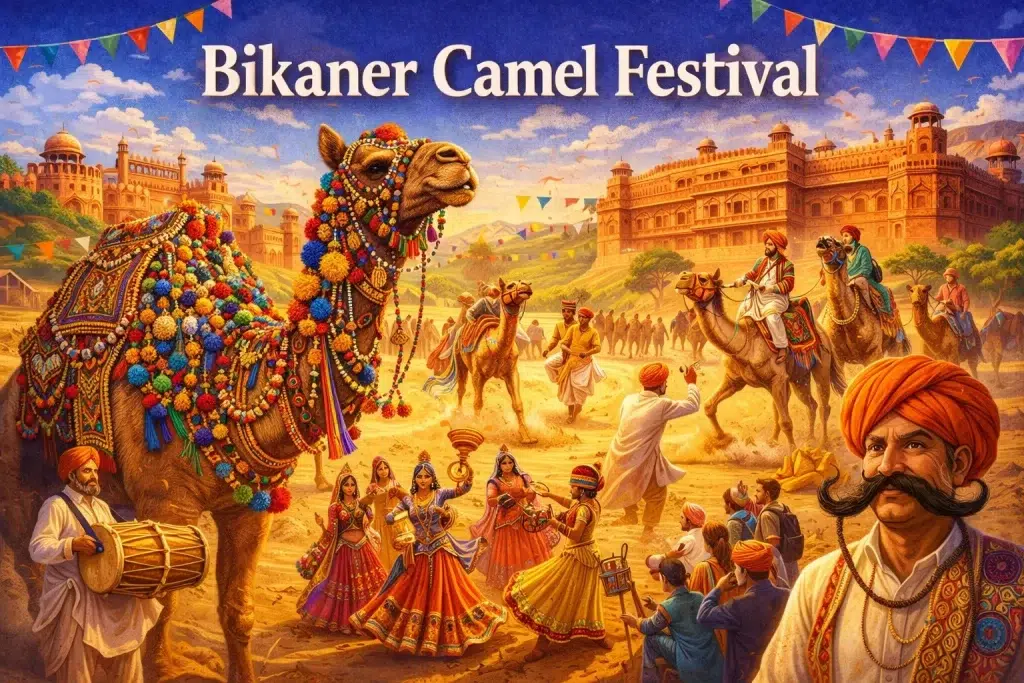
Bikaner, the desert jewel of Rajasthan, is famous for royal forts, old havelis, salty snacks, and a calm, lived-in charm that feels different from the busier tourist cities. But once a year, the city turns into a colourful stage for something truly unique: the Bikaner Camel Festival, a celebration that puts the “ship of the desert” in the spotlight.
Think decorated camels with intricate fur patterns, folk music echoing through old streets, crowd-cheered competitions, and evenings that end with cultural performances under winter skies. For travellers, it’s one of the most photogenic and most “Rajasthan” experiences you can plan in January.
This 2026 guide is written to help you plan fast and plan right: confirmed dates, a practical day-wise itinerary, venue pointers, how to reach Bikaner by train/flight/road, and the best stay options (heritage hotels and desert camps) depending on your budget and comfort.
Quick facts: Bikaner Camel Festival 2026
- Dates: 9 to 11 January 2026
- Location: Bikaner, Rajasthan
- Key venues (commonly used): Junagarh Fort area, city route for procession, Dr. Karni Singh Stadium zone, camel research/farm area, and Raisar Sand Dunes (finale day)
- Best for: culture lovers, photographers, families, Rajasthan first-timers
- Trip length: 2 nights/3 days is ideal (arrive one day before if you want it relaxed)
If you’re building a Rajasthan January plan, this guide pairs well with: places to visit in Rajasthan in January and unique cultural Rajasthani traditions.
Why the Bikaner Camel Festival is worth planning for
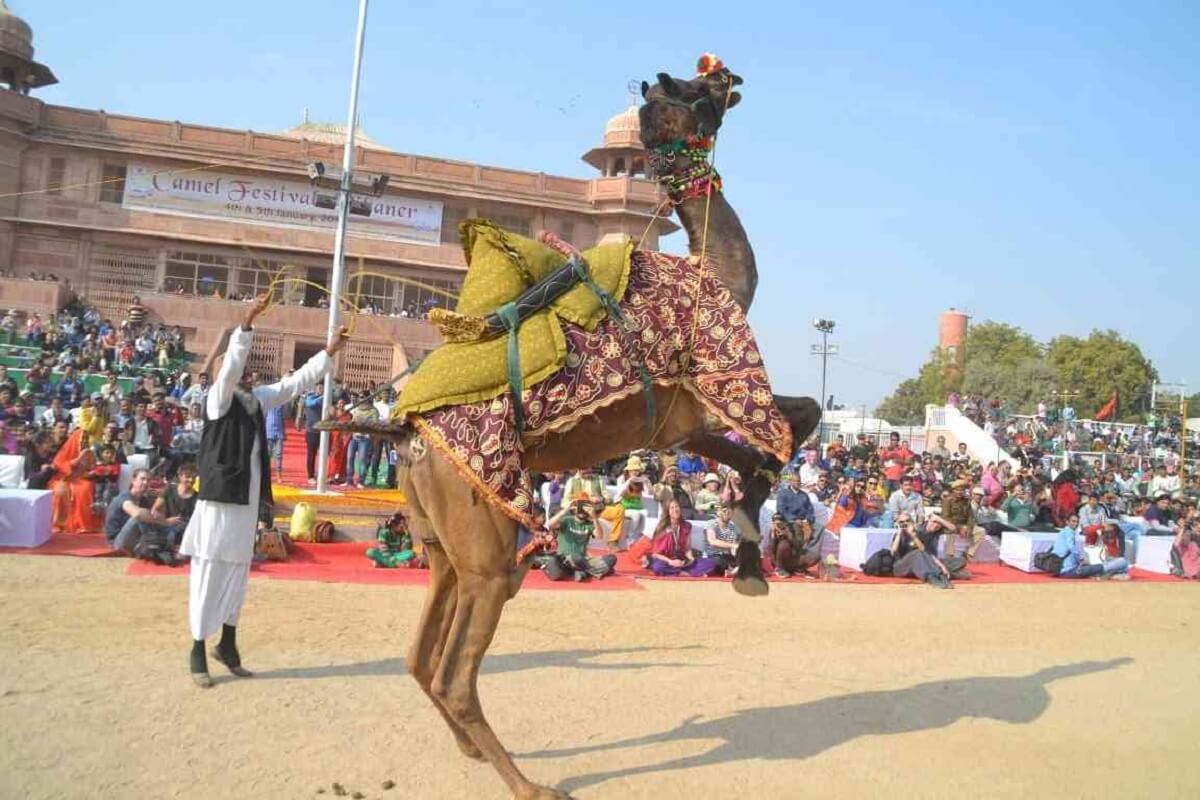
Many festivals are fun, but they can feel “generic” if you’ve done a few. The Bikaner Camel Festival feels rooted. The camels aren’t props. They are part of desert life, heritage, and identity. The decoration skills, fur-cut patterns, traditional accessories, and camel handling techniques are generational crafts.
What makes this festival special is the mix: you get street energy (processions), competitive events (camel dancing, racing, decoration), local flavours (Bikaneri food), and a strong Rajasthan vibe without the overwhelming crowds you might see in peak-city festivals.
And because it happens in early January, it’s also a perfect add-on to a broader Rajasthan trip.
Suggested Rajasthan circuit: 9 Days Jaipur Bikaner Jodhpur Jaisalmer Udaipur Tour
Bikaner Camel Festival 2026 dates (updated)
The Bikaner Camel Festival 2026 is planned for 9–11 January 2026. In many years, the official listing focuses on the main weekend days, while city events and special segments extend the celebration across multiple days. In 2026, the festival narrative is spread across three days, with major public events and a desert finale.
Best time to arrive: Reach Bikaner by the evening of 8 January (or early morning on 9 January) if you want to catch the opening-day mood without stress.
Full itinerary: Bikaner Camel Festival 2026 (Day-wise plan)
This itinerary is designed for travellers who want to experience the festival properly and still enjoy Bikaner’s heritage at a comfortable pace. Timings can shift slightly based on local scheduling, so treat this as a practical framework.
Day 0 (8 Jan): Arrive in Bikaner + easy heritage evening
Ideal arrival time: Afternoon or evening.
- Check in and rest (Bikaner winter nights can feel cold after sunset).
- Do a light old city walk near markets if you have energy.
- Try a simple Bikaneri dinner and sleep early for a full festival day.
For city context and key places, keep this open:
Bikaner travel overview.
Day 1 (9 Jan): Opening-day city vibe + heritage walk + food culture
What this day feels like: Local, lively, and very “Bikaner”. It’s a great day for travellers who love streets, old architecture, and authentic atmosphere.
Morning plan
- Breakfast and a slow start (mornings can be foggy/cool).
- Reach the heritage/old-city zone in time for the day’s main community events.
- Keep your camera ready for traditional attire, camel owners, and street scenes.
Midday plan
- Explore Bikaner’s architectural lanes and havelis routes (these areas become extra lively during festival days).
- Take a break for a local lunch (Bikaner thali, kachori, or a simple dal-bati style meal).
Evening plan
- Attend cultural segments and local performances (the mood is festive but still very rooted).
- End early if you want full energy for the competition day.
Quick add-on: If you want a royal-history stop that fits any Bikaner itinerary, read:
Junagarh Fort Bikaner guide.
Day 2 (10 Jan): Camel competitions + big festival energy near Junagarh
What this day feels like: This is the classic festival day most people imagine: decorated camels, competitions, crowd cheers, folk vibes, and photo moments.
Morning plan
- Start early to get good viewing spots for the main camel activities.
- Spend time watching camel decoration, fur-cut pattern designs, and handler skills.
Key festival highlights to watch today
- Camel decoration & fur-cut artistry: Owners spend hours on patterns, accessories, and grooming.
- Camel dance: Camels perform rhythmic steps to folk beats.
- Camel race moments: Fast, loud, and exciting. Great for video shots.
Midday plan
- Explore the craft stalls and local bazaar area near the festival zones.
- Eat at the festival food section (look for local snacks and thali options).
- Take a short rest break so you don’t burn out before the evening show.
Evening plan
- Stay for the cultural performances. Rajasthan folk nights are usually the soul of these festivals.
- Enjoy traditional music and dance forms (Ghoomar, Kalbelia-style performances, puppetry vibes).
To connect this trip with broader Rajasthan planning, these packages fit well around January travel:
- 9 Nights 10 Days Rajasthan Itinerary
- Rajasthan Package for 14 Days
- 8 Days Rajasthan Tour Package
- Rajasthan 6 Nights 7 Days Trip
- 17 Days Rajasthan Trip Itinerary
Day 3 (11 Jan): Raisar Sand Dunes finale + desert adventure + rural games
What this day feels like: A desert celebration day. More open space, more rural-sport flavour, and a strong “Rajasthan desert” experience.
Morning plan
- Start early for Raisar. Desert days feel best when you reach before crowds and before the sun gets sharper.
- Enjoy camel safaris and desert activities (keep water and a scarf handy).
Midday plan
- Browse handicrafts and local stalls (good place for souvenirs).
- Try simple local food options at the desert venue.
- Take breaks in shade; desert sun can feel intense even in January.
Evening plan
- Stay for cultural performances that close the festival on a high.
- Return to Bikaner city at a comfortable time, or depart the same night if your train is late.
Pro tip for photographers: The best photos often happen away from the main crowd. Spend time capturing details: camel ornaments, fur patterns, turbans, hands crafting leather accessories, and expressions of handlers.
Festival venues and what happens where
Festival programming typically spreads across multiple points in the city and surrounding areas. These are the most common venue types you’ll hear about:
- Junagarh Fort area: major cultural backdrop, strong photo setting, and often the heart of festival energy.
If Junagarh is on your list anyway, this read helps: Junagarh Fort history & museum guide. - Procession route (old city lanes): decorated camels and traditional attire scenes.
- Dr. Karni Singh Stadium zone: commonly associated with major gathering points and events.
- Camel research/farm zone: camel-related shows and demonstrations in some years.
- Raisar Sand Dunes: desert finale day with rural sports, bazaars, camel safaris, and cultural performances.
How to reach Bikaner for the Camel Festival (train, flight, road)
Bikaner is well connected by rail and road, and reasonably accessible by flight via nearby airports. For festival week, the smart move is to lock your transport early because rooms and seats can fill up.
1) By train (best option for most travellers)
Bikaner Junction is the main railhead. Trains are usually the easiest and most cost-effective way to reach from cities like Delhi, Jaipur, Jodhpur, and Ahmedabad (depending on schedules).
- Best for: budget travellers, families, travellers who prefer predictable travel
- Tip: choose an overnight train so you arrive in the morning and save hotel cost for one night
2) By flight (fastest, but usually via another city)
Bikaner has limited flight connectivity, so many travellers use Jaipur or Jodhpur airports and then take a train or road transfer to Bikaner.
- Best for: travellers coming from far cities (Mumbai, Bengaluru, Hyderabad, Kolkata)
- Tip: if you’re connecting via Jaipur, consider adding Jaipur as a 1–2 day add-on in the same trip
3) By road (good for Rajasthan circuit travellers)
Driving to Bikaner works well if you are already doing a Rajasthan loop (Jaipur–Bikaner–Jodhpur–Jaisalmer style). Roads are generally comfortable in winter, and sunrise starts feel pleasant in January.
- Best for: groups, families, travellers doing multi-city Rajasthan
- Tip: start early to avoid city exits and to reach Bikaner before the day’s festival activity peak
Suggested Rajasthan route for festival travellers: Jaipur–Bikaner–Jodhpur–Jaisalmer–Udaipur
Weather in Bikaner in January (what to expect)
January is one of the best months to visit Bikaner. Days are generally pleasant for outdoor events, while nights can get genuinely cold in the desert belt. Morning fog can happen, especially if you’re arriving by road from the NCR region.
What to pack for festival days
- Light jacket + one warm layer for night
- Comfortable walking shoes (you’ll stand and walk a lot)
- Sunglasses and sunscreen (desert sun is sharp even in winter)
- Scarf or buff (great for dust and evening chill)
- Power bank (you’ll shoot lots of photos and video)
Best places to stay in Bikaner during Camel Festival 2026
During festival weekend, the best stays get booked early. The smartest approach is to decide what you want your trip to feel like: heritage luxury, comfortable mid-range, or a desert camp experience.
Option A: Heritage luxury (royal feel, memorable stay)
If you want your accommodation to be part of the experience, Bikaner is excellent for heritage stays. These usually offer grand architecture, large courtyards, and a very “Rajasthan” vibe.
- Best for: couples, families, milestone trips, travellers who want comfort and photos
- Best area logic: near Lalgarh Palace / heritage zones or well-connected parts of the city for easy cab movement
Popular heritage-style choices travellers often shortlist: Narendra Bhawan, Laxmi Niwas Palace, Gajner Palace (lake-side heritage mood, a bit outside the main city), and similar palace-style stays.
Option B: Mid-range hotels (best value, most practical)
If your priority is the festival, not the hotel, choose a clean, central stay with easy access to transport and quick cab pickups.
- Best for: families, groups, budget-conscious travellers
- Best areas: around the city centre, station access belt, and routes that lead easily to Junagarh and major festival zones
Option C: Desert camps near Raisar (best for the finale vibe)
If you want the 11 January desert finale to feel effortless, consider staying in or near the desert camp belt. This can be a special experience: dunes, bonfire-style evenings, folk music, and a very different night sky.
- Best for: couples, groups, photographers, travellers who want a “desert stay” experience
- Watch-outs: camps can be colder at night; confirm heating/blankets and washroom comfort before booking
How to choose the right stay (fast decision guide)
- If you want comfort and minimal hassle: stay in the city
- If you want the most “Rajasthan” stay: heritage hotel
- If your main goal is dunes and desert vibes: a Raisar-side camp for at least one night
Where to stay: suggested “base areas” for festival convenience
These location choices help you avoid long back-and-forth travel during festival days:
- Central Bikaner base: easiest for city events, food walks, and quick transport
- Near Junagarh Fort belt: strong for heritage + sightseeing + festival mood
- Raisar side (for 11 Jan finale): best if you want a dunes-first experience
For a must-do heritage anchor during your stay, Junagarh Fort is a great add-on:
Junagarh Fort Bikaner: history & museum highlights.
What to eat at the Bikaner Camel Festival (don’t miss these)
A festival in Rajasthan is incomplete without food. Bikaner adds its own flavour, and festival week is a great time to sample it all.
- Bikaneri bhujia (yes, it tastes different fresh)
- Kachori and local snacks
- Dal baati churma style plates (popular at festival food zones)
- Gatte based sabzi dishes
- Local sweets for dessert
If you enjoy planning your trip around food + culture, this is a helpful read:
Rajasthan travel guide: cultural celebrations.
Top things to do in Bikaner besides the Camel Festival
If you’re staying for 3 days, keep at least one half-day for Bikaner itself. It’s not just a festival town, it’s a strong heritage destination.
- Junagarh Fort: a must for architecture, museums, and royal history
(guide here). - Old city lanes: for markets, havelis, and street photography.
- Local bazaars: for leather crafts, textiles, and souvenirs.
- Sunset viewpoints: winter light in Rajasthan is beautiful for photos.
For a related camel-culture experience in Rajasthan, many travellers also read:
Pushkar Camel Fair guide.
Practical tips for first-timers (small things that matter)
- Arrive early on competition day for better viewing and smoother entry movement.
- Carry cash for small stalls (UPI is common, but not universal everywhere).
- Dress in layers: warm mornings, sunny afternoons, cold nights.
- Respect animals and handlers: avoid flash very close to camels and give them space.
- Plan your Day 3 transport if you’re doing Raisar and leaving the same night (keep a comfortable buffer).
Sample budgets for a 3-day Bikaner Camel Festival trip
Budgets vary by transport and stay choice, but these ranges help you plan:
- Budget traveller: simple hotel + train travel + local food
- Mid-range: comfortable hotel + taxis + festival food + a few paid experiences
- Premium: heritage hotel + private car + desert camp night + curated experiences
Money saver: Use a train + central hotel strategy, then upgrade experiences (desert camp night or heritage dinner) instead of overspending on everything.
Suggested 3-day travel plan (simple, high-impact)
If you want the festival and Bikaner highlights without rushing, this is the cleanest structure:
- Day 1: Arrive + old city + opening-day events
- Day 2: Camel competitions + cultural night
- Day 3: Raisar dunes finale + return journey
If you want Bikaner as part of a bigger Rajasthan route, this itinerary fits nicely:
9 Days Rajasthan circuit including Bikaner.
FAQs: Bikaner Camel Festival 2026
What are the dates of Bikaner Camel Festival 2026?
The Bikaner Camel Festival 2026 is being planned for 9 to 11 January 2026, with events spread across the city and a finale at the desert dunes.
Where is the Bikaner Camel Festival held?
Festival activity usually spreads across multiple venues in Bikaner, with major events commonly associated with the Junagarh Fort area and city venues, and the finale at Raisar Sand Dunes.
How many days are enough for the Bikaner Camel Festival?
2 nights / 3 days is ideal. It lets you catch the opening vibe, the main competition day, and the dunes finale without rushing.
Is the Bikaner Camel Festival good for families?
Yes. Families enjoy the festival because it’s colourful, cultural, and easy to watch. The main thing is to start early, take breaks, and keep warm layers for evenings.
Which is the best stay option during the festival: city hotel or desert camp?
If you want convenience for city events, stay in Bikaner city. If you want the full desert vibe and an easy dunes finale day, add a desert camp night near Raisar.
What else should I do in Bikaner besides the festival?
Do Junagarh Fort, explore old city lanes for architecture and markets, and keep one evening free for local food and relaxed shopping.


