
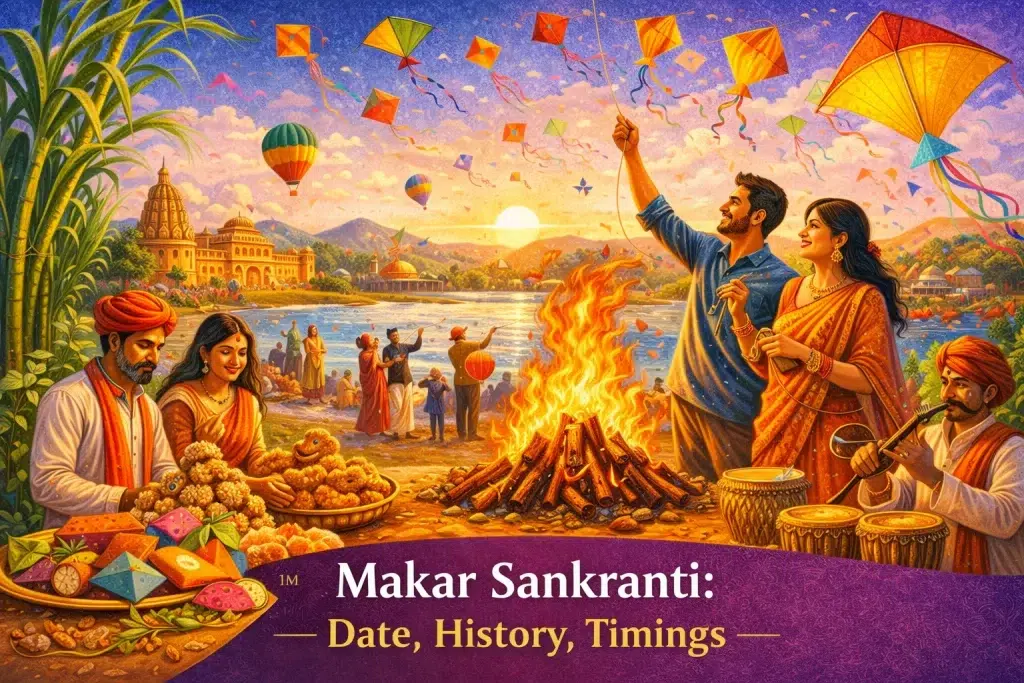
Makar Sankranti is one of those Indian festivals that feels spiritual and fun at the same time. In one city, people wake up early for a holy dip and charity. In another, rooftops turn into colourful kite arenas. In the south, homes smell of freshly cooked harvest rice and jaggery as families celebrate Pongal. If you’re planning a January trip, Sankranti is a perfect time because it combines culture, food, fairs, river ghats and winter-friendly weather.
Makar Sankranti 2026 Date
Makar Sankranti in 2026 will be celebrated on Wednesday, 14 January 2026.
Unlike many Hindu festivals that follow the lunar calendar, Makar Sankranti is based on the Sun’s movement and marks the transition into Makara (Capricorn). This solar shift is also linked with Uttarayan, the traditional “northward journey” of the Sun.
Is Makar Sankranti on 14 or 15 January in 2026?
In 2026, it is on 14 January. Some years it shifts to 15 January due to solar calculations, but most of India observes it on 14 January in 2026.
Makar Sankranti 2026 Timings (Punya Kaal and Sankranti Moment)
The most important timing is the Sankranti moment (when the Sun enters Capricorn). The Punya Kaal is the auspicious window commonly followed for snan (holy bath), daan (charity) and puja. These timings can vary slightly by city, so if you are doing a specific ritual, check your local panchang.
Important note: In 2026, the Sankranti moment falls in the afternoon (IST), so in many places the Punya Kaal begins later in the day rather than early morning.
Quick guide: what to do during Punya Kaal
- Take a holy dip (if you are at a river/ghat) or do a symbolic bath at home.
- Offer sesame (til), jaggery (gur), rice, khichdi, or seasonal grains in charity.
- Light a diya, offer water to the Sun, and do simple prayers.
- Share sweets and meals with neighbours, staff, and those in need.
History and Significance of Makar Sankranti
Makar Sankranti celebrates a powerful seasonal turning point. Days begin to feel longer, mornings stay crisp, and the winter sun becomes softer and pleasant. Traditionally, this shift represents renewed energy, positivity and a good harvest season.
Why is it called Makar Sankranti?
“Sankranti” means the Sun’s transition from one zodiac sign to another. “Makara” is Capricorn. So Makar Sankranti literally means the Sun’s transit into Capricorn.
Why is Makar Sankranti considered auspicious?
- Solar significance: It is tied to the Sun’s movement, not the moon.
- Seasonal shift: Symbolically linked with brighter days and progress.
- Harvest gratitude: Celebrates new crops, grains and food abundance.
- Daan and kindness: Charity is strongly encouraged in winter.
How Makar Sankranti is Celebrated Across India
One festival, many flavours. Makar Sankranti changes its style every few hundred kilometres, but the central theme remains the same: sun worship, harvest gratitude, purification and sharing.
Common traditions you’ll see
- Snan: Holy dips in rivers like Ganga, Yamuna, Godavari and at sangams.
- Daan: Sesame, jaggery, warm clothes, blankets, grains and food donations.
- Til-gud sweets: Especially popular in Maharashtra and north India.
- Kite flying: Big in Gujarat, Rajasthan, Delhi and many north Indian cities.
- Harvest feasts: Pongal in Tamil Nadu, Magh Bihu in Assam, and local dishes everywhere.
Different names in different states
- Gujarat: Uttarayan
- Tamil Nadu: Pongal (Thai Pongal)
- Assam: Magh Bihu
- Punjab & Haryana: Celebrations overlap with Lohri-style winter traditions
- Uttar Pradesh: Khichdi traditions in some regions
Best Places to Celebrate Makar Sankranti in India (2026)
If you want a real “festival vibe” in 2026, pick places where Sankranti becomes a city-wide experience. Here are the top destinations, what to do there, and practical travel notes.
1) Ahmedabad (Gujarat): Uttarayan + Kite Festival atmosphere
Ahmedabad is famous for Makar Sankranti celebrations because the entire city comes alive with kites. The sky looks like a moving painting and every terrace feels like a celebration.
- Best experience: Rooftop kite flying and evening celebrations
- Food to try: Undhiyu, jalebi, chikki, winter snacks
- Travel tip: Book hotels early because mid-January is peak season
2) Jaipur (Rajasthan): Kites + forts + winter sunsets
Jaipur gives you the festive rooftop energy plus full Rajasthan sightseeing in the same trip. Expect kite flying, local sweets, and comfortable winter weather for city walks.
- What to do: Rooftop kite watching, explore Amer Fort, City Palace, Hawa Mahal
- Local treats: Til-gud sweets, gajak, winter snacks
Plan more Rajasthan in January: Best places to visit in Rajasthan in January
3) Prayagraj (Uttar Pradesh): Sangam snan + spiritual energy
If your Sankranti travel goal is spiritual, Prayagraj is a strong choice. The Triveni Sangam is deeply significant, and the Magh-season atmosphere feels powerful and traditional.
- Best experience: Early morning sangam visit, charity and local winter food
- Travel tip: Expect crowds and plan early starts
4) Haridwar & Rishikesh (Uttarakhand): Ganga dip + evening aarti
Haridwar feels intensely devotional on Sankranti, while Rishikesh offers a calmer vibe with ashrams, cafés and river walks. Together, they make a perfect Sankranti trip.
- What to do: Ganga snan at Har Ki Pauri, attend Ganga Aarti, explore Rishikesh ghats
- Travel tip: Carry warm layers, especially for early mornings
Explore more Uttarakhand in January: Uttarakhand in January (weather, places, festivals)
5) Gangasagar (West Bengal): One of India’s biggest Sankranti pilgrimages
Gangasagar, where the Ganga meets the Bay of Bengal, is one of the most famous Makar Sankranti pilgrimage sites in India. It’s for travellers who want to witness large-scale faith and tradition.
- What to expect: Massive crowds, long travel routes, strong spiritual atmosphere
- Travel tip: Plan transport carefully and keep essentials light
6) Gorakhpur (Uttar Pradesh): Khichdi festival traditions
Gorakhpur is known for its Khichdi traditions around Sankranti, and the festival atmosphere near the temple areas feels lively and community-driven.
- Try: Temple offerings, khichdi-related food stalls, local fair vibe
7) Chennai & Tamil Nadu: Pongal celebrations (multi-day harvest festival)
In Tamil Nadu, the Sankranti period aligns with Pongal, a beautiful multi-day harvest celebration. It’s ideal for travellers who want a cultural experience centred on food, family and tradition.
- What to do: Experience local Pongal celebrations, try sweet pongal, visit temples
- Travel tip: Respect local customs in residential areas and temples
South India planning reads:
- Best places to visit in South India in January
- South India weather in January guide
- Kerala in January travel guide
8) Assam: Magh Bihu bonfires and feasts
Assam’s Magh Bihu is all about food, community, bonfires and a warm local vibe. It’s a great option if you want an authentic festival feel away from the usual tourist trail.
9) Goa: January holiday mood (quiet Sankranti, perfect weather)
Goa may not be famous for Sankranti like Gujarat or UP, but it’s one of the best places to relax during Sankranti week. You can enjoy beaches, cafés, and easy sightseeing with winter-perfect weather.
Plan it well: Goa in January: Insider travel tips
10) Puri (Odisha): Coastal calm + temple-town spirituality
Puri is ideal if you want a mix of beach air and spiritual energy. January weather stays pleasant, and you can add day trips to nearby attractions.
Helpful guides:
What to Eat on Makar Sankranti (Must-try Foods)
Food is a big part of Sankranti. Across India, the dishes often use ingredients that keep the body warm and energised in winter.
- Til-gud laddoo / chikki: Sesame and jaggery sweets
- Gajak and rewri: Popular winter sweets in north India
- Khichdi: Common in parts of UP and Bihar traditions
- Undhiyu: Gujarat winter special
- Pongal: Sweet and savoury pongal varieties in Tamil Nadu
Travel Tips for Makar Sankranti Week (Crowds, Weather, Packing)
What to pack
- Warm layers (mornings and evenings can be cold)
- Comfortable walking shoes (you’ll walk a lot at fairs and ghats)
- Sunglasses and sunscreen (winter sun can still be strong)
- Basic medicines and a small first-aid kit
Booking and crowd advice
- Book hotels early for Ahmedabad, Haridwar, Prayagraj and major festival cities
- Start early for ghats and fairs to avoid peak crowds
- Keep digital and physical ID copies handy
Kite flying safety
- Use safe kite string and avoid risky materials
- Do not fly from unsafe rooftops or near roads
- Be mindful of birds and local rules
More January Travel Ideas
Planning a longer January trip around Sankranti? These guides can help you build the right route based on weather and travel style:
- Best places to visit in India in January
- Places to visit in India in January with family
- Festivals in India in January
- Popular festivals in India in January
- Places to visit in North India in January
- Hill stations to visit in India in January
- Himachal in January: weather & attractions
- Gulmarg weather in January
- Sonmarg in January travel guide
- Nainital in January 2026 guide
- Coorg in January weather guide
- Munnar in January guide
- Ranthambore in January travel guide
- Lakshadweep in January guide
- Shillong in January travel guide
- Meghalaya weather in January
- Jharkhand in January (waterfalls & hills)
- Honeymoon destinations in India in January
People Also Ask (FAQ) – Makar Sankranti 2026
When is Makar Sankranti in 2026?
Makar Sankranti in 2026 will be celebrated on Wednesday, 14 January 2026.
Why is Makar Sankranti celebrated in India?
Makar Sankranti is celebrated to mark the Sun’s transition into Capricorn (Makara). It is linked with the seasonal shift toward longer days, harvest gratitude, and traditions like charity, holy dips and festive food.
What is the best place for kite flying on Makar Sankranti?
Ahmedabad and many cities in Gujarat are the most famous for kite flying during Uttarayan. Jaipur and several north Indian cities also have strong kite-flying traditions.
Which places are best for a holy dip on Makar Sankranti?
Popular places include Haridwar, Prayagraj (Triveni Sangam), and Gangasagar. These destinations attract large crowds, so plan early and follow local safety rules.
Is Pongal the same as Makar Sankranti?
They are closely related by timing and harvest theme. Makar Sankranti marks the Sun’s transit into Capricorn, while Pongal is a multi-day harvest festival celebrated mainly in Tamil Nadu during the same period.
What should I eat on Makar Sankranti?
Common Sankranti foods include til-gud laddoos, chikki, gajak, khichdi, and regional harvest dishes like pongal and undhiyu.


