Located just 10 kilometers from the spiritual heart of Varanasi, Sarnath holds a revered place on the map of global pilgrimage and heritage tourism. For travelers interested in history, spirituality, culture, or archaeology, Sarnath offers an unforgettable window into India’s ancient past.
It is one of the four key pilgrimage sites associated with the life of Gautama Buddha, along with Lumbini (birthplace), Bodh Gaya (enlightenment), and Kushinagar (parinirvana). Sarnath is the site where Buddha delivered his first sermon after attaining enlightenment—a moment that marked the beginning of Buddhism as a living tradition.
But there is much more to Sarnath than its religious significance. From well-preserved stupas and monastic ruins to immersive museums and tranquil gardens, this sacred site speaks to the soul and the senses alike. Whether you’re a cultural traveler, a history enthusiast, a practicing Buddhist, or simply someone looking for calm outside Varanasi chaotic energy, Sarnath is worth a full day—or more—on your Uttar Pradesh itinerary.
In this detailed travel guide, we explore the top reasons to visit Sarnath, the must-see sacred sites, and what makes this place spiritually and historically significant.
1. The Dhamek Stupa – A Sacred Landmark Where Buddha Preached
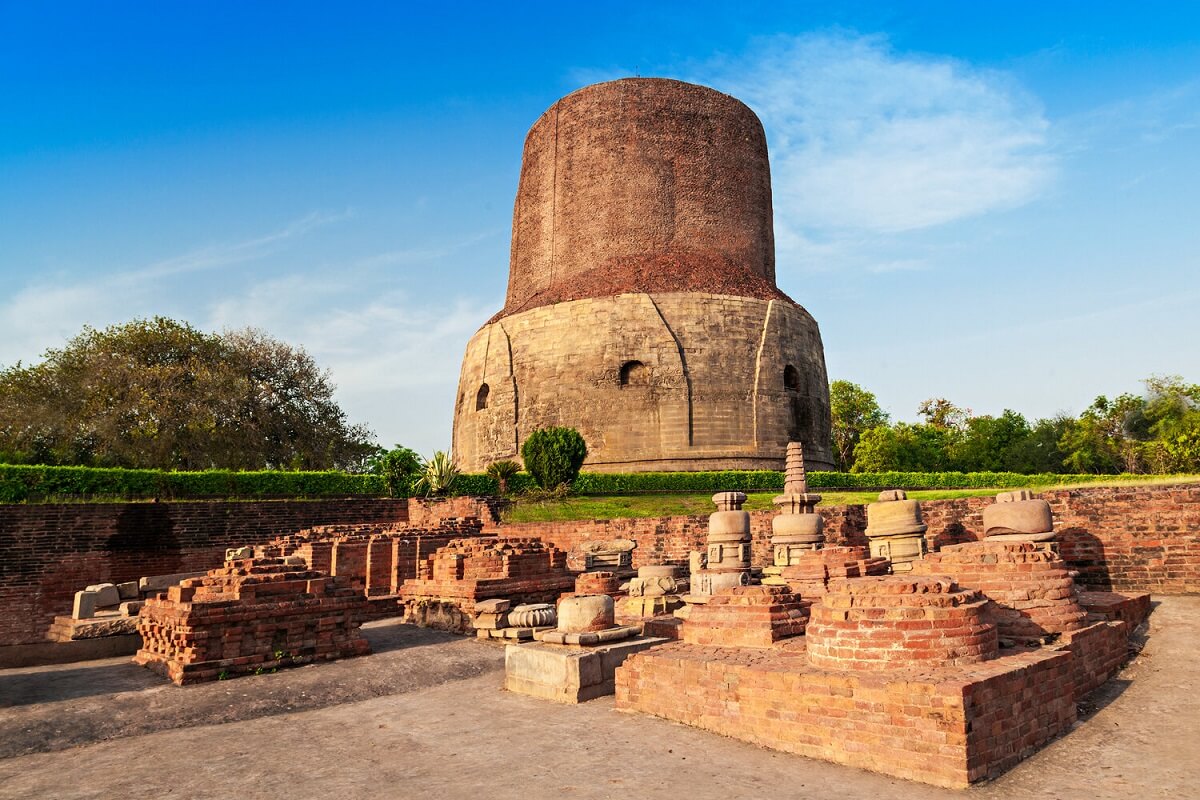
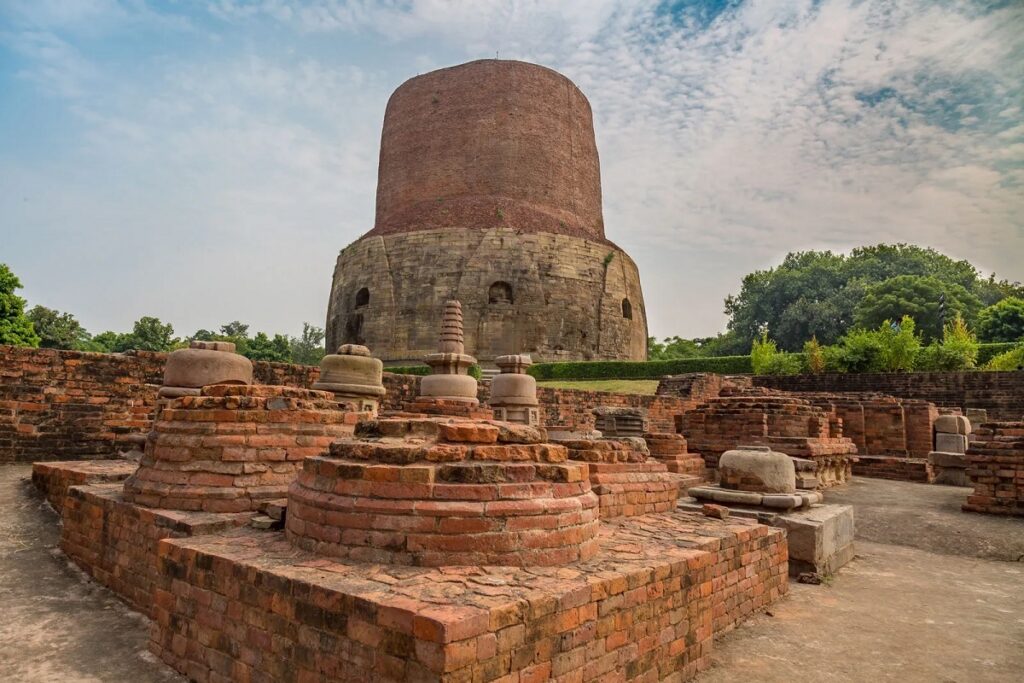
Perhaps the most iconic site in Sarnath, the Dhamek Stupa marks the exact spot where Lord Buddha gave his first sermon to five of his followers, setting in motion the Wheel of Dharma.
Constructed in 500 CE during the Gupta dynasty, this massive cylindrical structure stands 43.6 meters tall and 28 meters in diameter. Though built centuries after the Buddha, it stands on a more ancient foundation believed to be from Ashoka’s time in the 3rd century BCE.
The lower half of the stupa is adorned with detailed floral carvings in stone—an exquisite example of Gupta artistry. Pilgrims and tourists alike circumambulate the stupa, sometimes in silent prayer, while others simply marvel at its imposing structure. 3 Nights 4 Days Varanasi Trip – Perfect Short Escape
Visiting Dhamek Stupa early in the morning gives you a chance to experience the peaceful atmosphere and spiritual energy before the crowds arrive. Monks can often be seen chanting or meditating nearby, adding to the aura of sacredness.
Tip: Don’t miss the view of the stupa during sunset, when the golden light enhances its architectural details and serenity.
2. Mulagandha Kuti Vihar – Modern Spirituality Meets Ancient Roots
Unlike the ancient ruins spread across Sarnath, Mulagandha Kuti Vihar is a modern Buddhist temple built in 1931 by the Maha Bodhi Society of India. It’s not just a place of worship but also a vibrant center of Buddhist learning and interfaith dialogue.
The temple houses golden statues of Lord Buddha, as well as mural paintings by Japanese artist Kosetsu Nosu that vividly depict the life of the Buddha. The stained-glass windows and intricate frescoes create a serene ambiance, perfect for quiet reflection or meditation.
Surrounding the temple is a peaceful garden filled with deer, echoing the forest setting in which Buddha preached. The adjacent Bodhi Tree, grown from a sapling of the original tree in Bodh Gaya, further connects this temple to the broader Buddhist circuit.
Visitors during Buddha Purnima (usually in May) can witness elaborate processions, cultural performances, and religious discourse at the temple.
How to Reach: It’s a short walk from Dhamek Stupa, and auto-rickshaws from the main Sarnath entrance can drop you here if needed. Cultural and Heritage Sites to Visit in August in India
3. Sarnath Archaeological Museum – A Treasure Trove of Buddhist Art
Managed by the Archaeological Survey of India, the Sarnath Archaeological Museum is a must-visit for anyone wanting to understand the depth of Buddhist heritage in India.
The museum houses over 6,800 artifacts, many of which were excavated from the Sarnath complex. Highlights include the Lion Capital of Ashoka, which is now India’s national emblem. Carved out of a single block of sandstone, this sculpture symbolizes India’s philosophical legacy of truth and non-violence.
Other significant exhibits include:
- Fragments of Ashokan pillars
- Buddhist sculptures from the Maurya and Gupta periods
- Terracotta figurines, coins, seals, and Brahmi inscriptions
The museum is a short walk from the Dhamek Stupa and is best explored with a local guide or audio tour if you want context on the timelines and stylistic evolution of the exhibits. Exploring India & Buddhist Circuit – Top Pilgrimage Sites
Opening Hours: 9 AM – 5 PM (Closed on Fridays)
Entry Fee: Nominal, free for children under 15
4. Chaukhandi Stupa – Where Buddha Met His First Disciples
Located at the entrance to Sarnath, the Chaukhandi Stupa is believed to be the spot where Buddha reunited with his five former companions after enlightenment. Architecturally, it is unique compared to other stupas, with its octagonal Mughal tower added by Emperor Akbar to honor his father Humayun’s visit.
The structure is surrounded by lush gardens and offers panoramic views of the Sarnath plains. It is less crowded than Dhamek Stupa and a perfect spot for contemplative solitude or leisurely photography.
Restoration work over the years has maintained its form, but it retains a weathered beauty that speaks to its age and spiritual importance. 5-Day Heritage Tour: Varanasi, Prayagraj & Sarnath
Insider Tip: Visit at dusk when the site glows in the fading sun, and monks often gather here for evening chants.
5. Thai Temple and Monastery – Tranquility with International Influence
The Thai Temple in Sarnath is one of the most beautifully landscaped and architecturally impressive temples in the town. Funded and built by the Thai government and Buddhist monks, the temple is designed in classic Thai style, with sloping multi-tiered roofs and gold embellishments.
The centerpiece is a 40-meter-high standing Buddha statue, visible from a distance and surrounded by perfectly manicured gardens. Inside, you’ll find a peaceful shrine hall and monks available to answer questions about Thai Buddhist practices.
What makes this temple a key attraction is the cultural immersion it provides into how Buddhism is practiced outside India. Visitors are encouraged to remove shoes, observe silence, and join in meditation if desired. Delhi to Varanasi Tour – 6 Days of Spiritual Exploration
Location Tip: The Thai Temple is located near the Japanese Temple, making it convenient to visit both in a single outing.
6. Deer Park (Isipatana) – Where the First Sermon Echoed

Sarnath’s Deer Park, historically known as Isipatana, is not just a natural retreat but a spiritual one. According to Buddhist texts, it was in this forest clearing that Lord Buddha gave his first teaching on the Four Noble Truths and the Eightfold Path.
Today, the park is a protected area, with a tranquil walking path lined with Bodhi trees and a few deer grazing peacefully. Statues and plaques throughout the park explain key moments in Buddha’s life and teachings, offering a quiet outdoor classroom for those interested in Buddhism.
Many visitors simply sit under a tree with a book or journal, using the space for reflection or mindfulness practice. Several global monasteries also organize guided meditation sessions here throughout the year. 7-Day Cultural Journey: Lucknow to Varanasi
If you’re visiting Sarnath for spiritual reasons, Deer Park should be on the top of your list.
7. Ashoka Pillar Remnants – Witness of a Buddhist Emperor’s Legacy
While the original Ashoka Pillar no longer stands upright, its base remains intact and visible near the Dhamek Stupa. The original pillar—dating back to the 3rd century BCE—was topped with the lion capital now housed in the Sarnath Museum.
The polished sandstone base, though partially ruined, still carries inscriptions in Brahmi script, recording Ashoka’s edicts encouraging dharma, compassion, and tolerance. For history lovers, standing beside these inscriptions is akin to time travel—witnessing the roots of India’s secular and philosophical values.
This spot is often overlooked by hurried tourists, but it’s essential to grasp the broader historical framework of Buddhism’s rise during Ashoka’s reign. Must-Visit Historical Monuments in Uttar Pradesh: A Complete Travel Guide
8. Tibetan Monastery and Mahabodhi Society Temple
Sarnath’s spiritual identity is reflected in its multi-national Buddhist presence. The Tibetan Monastery, located near the Thai Temple, is operated by the Gelug school. Tibetan Buddhism and features traditional prayer wheels, thangka paintings, and colorful murals of Buddhist cosmology.
Just nearby, the Mahabodhi Society Temple continues the mission of reviving Buddhism in India. Their activities include Pali classes, Dhamma talks, and silent meditation sessions.
Visitors are welcome to attend morning and evening prayers, and the temple complex has a bookstore with excellent resources on Buddhist teachings and history.
If you are doing a Buddhist circuit tour through India, this monastery is an essential cultural stop. 10 Best Places to Visit in June in Uttar Pradesh
9. Evening Aarti and Local Markets
While Varanasi may be famed for its Ganga Aarti, Sarnath too holds daily aarti rituals at various temples, particularly around Mulagandha Kuti Vihar and the Ramgram Stupa replica.
These rituals are quieter and more meditative, offering a different kind of spiritual experience than the sensory overload of Varanasi’s ghats.
Post-aarti, take a walk through Sarnath’s local markets near the entrance and main road. You’ll find prayer beads, incense, Buddhist memorabilia, local textiles, and miniature statues crafted by artisans from neighboring villages.
A few cafes and tea stalls also offer light refreshments, perfect to end your visit on a peaceful note. 6 Best Beach Destinations to Visit in August in India
Final Travel Tips for Visiting Sarnath
- Best Time to Visit: October to March for pleasant weather; May for Buddha Purnima celebrations.
- Getting There:
- By Air: Nearest airport is Lal Bahadur Shastri Airport, Varanasi (25 km)
- By Train: Get off at Varanasi Junction or Manduadih Railway Station
- By Road: Sarnath is well-connected by taxis, autos, and buses from Varanasi (30-minute drive)
- Suggested Duration: One full day (or stay overnight for a deeper spiritual experience)
- Entry Fees: Most temples are free. The museum charges a nominal fee. 9 Best Hill Stations to Visit in India in August
Conclusion
Sarnath is far more than a footnote in the life of Buddha—it is a living heritage site. Echoing with teachings that continue to inspire millions around the world. Its sacred stupas, global monasteries, historical ruins, and tranquil parks offer not just sightseeing but introspection and learning.
Whether you’re on a religious pilgrimage, a historical exploration, or a spiritual retreat. Sarnath’s quiet power will leave an impression long after you’ve left.
You Might Also Like:
- Why a Ganges Boat Ride in Varanasi
- Varanasi in July – Monsoon Weather & Ritual Travel Tips
- Discover the Real Varanasi – Local Life & Hidden Gems
- June Weather in Varanasi 2025 – What to Expect
- April in Varanasi 2025 – Top Attractions & Travel Guide
- Top Heritage Hotels Near Varanasi Ghats to Stay
- Weekend Getaways Near Varanasi – Best Day Trips
- Top Street Food Spots in Varanasi for Foodies
- Plan a February 2025 Trip to Varanasi – Festivals & Weather
- Entry Fees & Attractions in Varanasi for Foreign Tourists
- Top 30 Places to Visit in Varanasi (Kashi) – Full Guide
- January Weather in Varanasi 2025 – Full Travel Guide
- Plan Your December 2025 Trip to Varanasi