
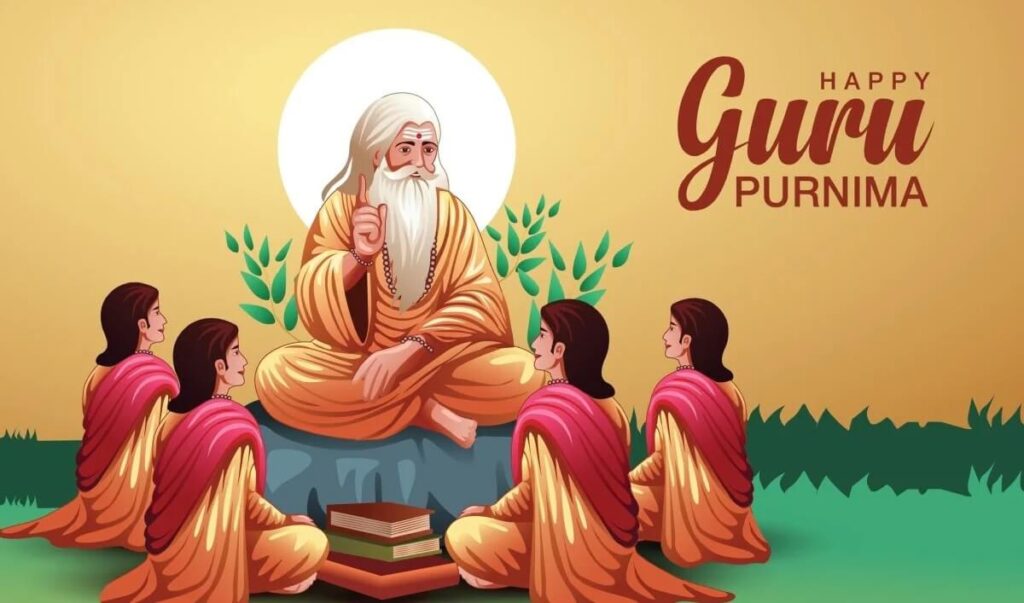
“गुरुर्ब्रह्मा गुरुर्विष्णुः गुरुर्देवो महेश्वरः।
गुरु साक्षात् परब्रह्म तस्मै श्री गुरवे नमः॥”
This ancient Sanskrit shloka beautifully encapsulates the essence of the guru: “The guru is Brahma, the creator; the guru is Vishnu, the preserver; the guru is Maheshwara (Shiva), the destroyer. The guru is verily the supreme consciousness. I bow with reverence to that divine teacher.”
Guru Purnima is one of the most spiritually significant festivals in the Hindu, Buddhist, and Jain traditions. Celebrated annually on the full moon day (Purnima) of the Hindu month of Ashadha, this sacred occasion is dedicated to expressing gratitude to teachers, mentors, and spiritual guides who illuminate the path of wisdom and self-realization.
Whether you have a spiritual guru, a life mentor, or a teacher who shaped your journey, Guru Purnima is a time to honor their presence in your life. This blog will walk you through the date, significance, mythology, rituals, and celebrations of Guru Purnima 2026 in a deeply informative and respectful manner.
Guru Purnima 2026 Date and Timings

In 2026, Guru Purnima will be observed on Wednesday, July 29, 2026.
- Purnima Tithi Begins: 06:18 PM on July 28, 2026
- Purnima Tithi Ends: 08:05 PM on July 29, 2026
The most auspicious time to perform Guru Puja and offer respects is during the morning and midday hours of July 10, particularly when the moon is visible in its full glory.
What is Guru Purnima?
Guru Purnima is a day of spiritual reflection and deep reverence. The word “Guru” comes from two Sanskrit roots — Gu, meaning darkness, and Ru, meaning remover. Thus, a Guru is one who removes the darkness of ignorance and guides the soul toward the light of truth and knowledge.
This festival is unique in that it transcends religious and cultural boundaries. In Hinduism, it honors Sage Veda Vyasa, who compiled the Vedas and wrote the Mahabharata. For in Buddhism, it marks the day when Lord Buddha gave his first sermon after attaining enlightenment. In Jainism, it celebrates Lord Mahavira’s first disciple, Indrabhuti Gautama.
Guru Purnima is observed with rituals, introspection, spiritual discourse, and heartfelt expressions of gratitude. Major Festivals in India During May 2027
Why is Guru Purnima Celebrated?
The celebration of Guru Purnima holds multiple layers of meaning across religious and philosophical traditions:
1. In Hinduism
It commemorates the birth anniversary of Sage Veda Vyasa, regarded as one of the greatest gurus in Indian philosophy. Vyasa is credited with:
- Compiling the four Vedas
- Writing the 18 Puranas and the Mahabharata
- Authoring the Brahma Sutras, the foundation of Vedanta philosophy
Therefore, Guru Purnima is also called Vyasa Purnima, honoring his contributions to spiritual literature and knowledge transmission.
2. In Buddhism
Guru Purnima is celebrated as the day when Gautama Buddha delivered his first sermon at the Deer Park in Sarnath, Uttar Pradesh. It marked the founding of the Buddhist Sangha (monastic community) and the beginning of the wheel of dharma.
3. In Jainism
The day is significant as the moment when Lord Mahavira accepted Indrabhuti Gautama as his first disciple, thereby establishing the guru-disciple tradition in Jainism.
Thus, Guru Purnima is not merely a cultural event but a timeless spiritual observance, reminding all seekers of the essential role of a teacher in life.
Rituals and Puja Vidhi for Guru Purnima
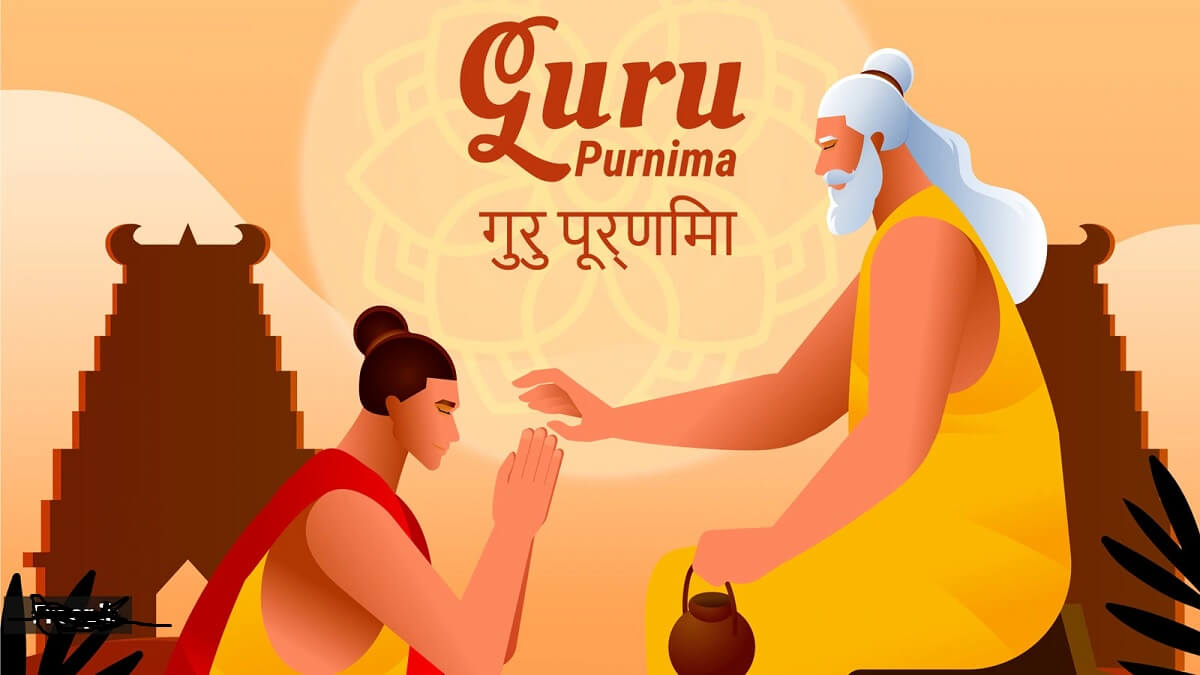
Guru Purnima rituals are simple yet deeply symbolic. Whether performed at home, in temples, or in spiritual centers, they revolve around purity, prayer, and reverence.
Steps of Guru Purnima Puja:
- Early Morning Bath: Devotees rise early and bathe, often using water sanctified from the Ganga or any sacred river.
- Cleanse the Puja Space: A sacred space is prepared, usually facing east. A clean white cloth may be laid on a raised platform.
- Place Guru’s Image or Symbol: A picture or symbolic representation of one’s guru is placed at the center of the altar. In the absence of a living guru, spiritual icons or books may be used.
- Offerings (Upachara): Fresh flowers, fruits, incense sticks, lamps (deepam), and sweets are offered.
- Chanting and Prayers: The Guru Stotram or Guru Mantra is chanted. Devotees may also read scriptures or recite the “Guru Ashtakam” and other hymns.
- Seek Blessings: In physical presence, disciples touch the guru’s feet. Otherwise, blessings are sought through prayer or meditation.
- Prasad Distribution: The offered food is shared among family, friends, or devotees.
- Satsang and Bhajan Sessions: Spiritual discourses and group singing of devotional songs are common, especially in ashrams and community gatherings. Saga Dawa Festival 2026, Sikkim: A Sacred Journey to the Heart of Buddhist Spirituality
Traditional Observances and Cultural Practices
1. Observing Silence and Fasting
Many devotees observe maun vrat (vow of silence) and fast on Guru Purnima, spending the day in meditation and spiritual contemplation.
2. Visits to Temples and Ashrams
Followers visit the ashrams or spiritual centers of their gurus. Ceremonies often include paduka puja (worship of the guru’s sandals) and discourses on sacred texts.
3. Sharing Knowledge
In educational institutions, teachers are honored with messages, speeches, and gifts. Students express their respect through cultural programs and heartfelt tributes. Malabar River Festival Travel Guide 2026: Everything You Need to Know
Modern Interpretations: Who is a Guru Today?
In the contemporary context, the definition of a guru has evolved. A guru can be:
- A spiritual master who initiates and guides you on the path to self-realization
- A teacher who imparts academic or life knowledge
- A mentor who supports and nurtures your personal or professional journey
- A parent or elder whose wisdom shapes your early values
Guru Purnima is a reminder that the guru is not just someone we revere, but someone whose light continues to guide us through darkness, doubt, and distraction.
How Guru Purnima is Celebrated Across India
1. Rishikesh and Haridwar
Spiritual seekers gather in large numbers to attend special satsangs and retreats led by renowned spiritual leaders. Ganga aarti is especially vibrant on this day.
2. Sarnath
In Buddhist tradition, this is where Lord Buddha gave his first sermon. The day is marked by prayer meetings, meditation sessions, and offerings in Buddhist monasteries.
3. Varanasi
As the seat of ancient wisdom, many schools, temples, and spiritual institutions hold large gatherings to honor gurus and organize cultural events.
4. Pune and Mumbai
Guru Purnima is widely observed in Maharashtrian households and spiritual centers like the Osho Ashram and other yogic institutes. 7 Best Monsoon Festivals in India You Should Witness in 2026
Travel Tip: Spiritual Places to Visit on Guru Purnima
If you are planning a spiritual journey during Guru Purnima 2026, consider visiting:
- Varanasi – Land of knowledge and home to numerous spiritual gurus
- Rishikesh – International hub for yoga and meditation
- Mount Abu – Jain temples and peace parks
- Sarnath – Buddhist pilgrimage site
- Tiruvannamalai – Associated with Ramana Maharshi and Advaita teachings
- Ganesh Chaturthi 2026: Date, Puja Timings, Rituals in Mumbai
- When Is Hoi An Lantern Festival in 2026? Know Dates, Timings, Significance
Conclusion: A Time to Express Gratitude and Inner Reverence
Guru Purnima is not just a ritualistic event but a day of spiritual alignment, humility, and self-inquiry. Whether you light a lamp, chant a mantra, or simply reflect on the lessons you’ve learned in life — this day is an opportunity to honor the guiding forces that have shaped your journey.
In the words of Adi Shankaracharya,
“Of all the means to liberation, the company of a true Guru is the greatest.”
So, on Wednesday, July 29, 2026, take a pause. Offer your thanks. Bow down — not just to the physical guru, but to the wisdom within you that continues to unfold, learn, and grow. Planning Your India Trip Around Its Popular Festivals
Guru Purnima 2026 – Quick Reference
| Aspect | Details |
|---|---|
| Date | Wednesday, July 29, 2026 |
| Purnima Tithi Begins | 06:18 PM on July 28, 2026 |
| Purnima Tithi Ends | 08:05 PM on July 29, 2026 |
| Main Deity Honored | Guru, spiritual teacher or mentor |
| Also Known As | Vyasa Purnima |
| Associated Traditions | Hinduism, Buddhism, Jainism |
You Might Also Like:
- Explore 20 Must-Visit Wildlife Reserves in India This September
- Plan Your September in Rajasthan – Top Things to Do & Events
- Discover 10 Best Weekend Getaways Near Udaipur for a Short Escape
- Visit Mukteshwar Temple – A Complete Guide to Nainital’s Sacred Gem
- Uncover Rural Rajasthan – Explore Village Life, Culture & Traditions
- Why Visit Ranthambore? Discover Wildlife, History & Raw Nature


