
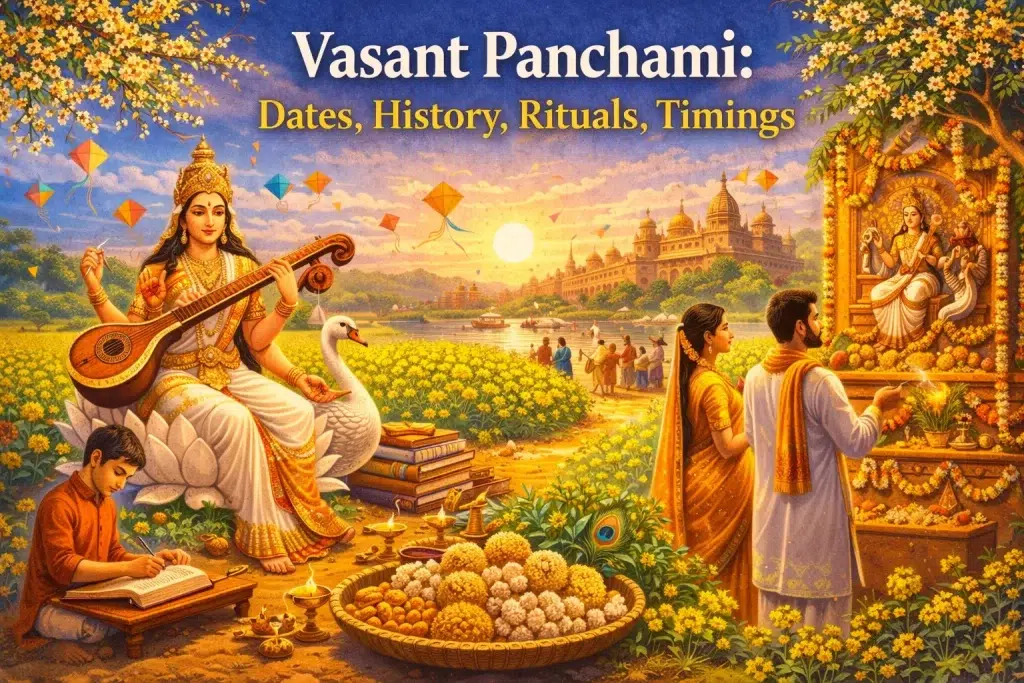
Vasant Panchami is one of India’s most beautiful “quiet festivals”. There are no loud crackers or midnight celebrations. Instead, the day feels soft and hopeful: yellow flowers, simple prayers, fresh notebooks, and the first real hint that spring is on the way. For students and creatives, it’s a festival that feels personal. For travellers, it’s a rare chance to see India in a calmer, more devotional mood, especially in cities where Saraswati Puja is celebrated with depth and pride.
This detailed guide covers Vasant Panchami 2026 date, tithi, Saraswati Puja muhurat, home rituals, what to wear, what to offer, and the best places to experience the festival in Varanasi, Prayagraj, Jaipur, and Kolkata. You’ll also find practical travel tips, itinerary ideas, and smart interlinks to help you plan your trip.
Vasant Panchami 2026 Date (Day, Tithi & Quick Answer)
Vasant Panchami 2026 falls on Friday, 23 January 2026. It is observed on Magha Shukla Panchami (the fifth day of the bright fortnight in the month of Magha). Many people also call it Basant Panchami, Shri Panchami, or simply Saraswati Puja, especially in eastern India.
Because it is linked to Panchami tithi, some families check their local panchang for the “exact” tithi window. In 2026, Panchami tithi is widely noted as starting around early morning and continuing into the next night, which is why most communities comfortably celebrate on 23 January. If you are travelling, treat the entire day as festival time, with peak rituals happening from morning to early afternoon.
Planning note: Vasant Panchami happens in late January in 2026, but many travellers combine it with winter trips that extend into February. If you’re building a longer festival calendar, this guide pairs well with Indian festivals in February.
Saraswati Puja Timings 2026 (Shubh Muhurat & Best Time)
On Vasant Panchami, the most important thing is to perform the puja during Panchami tithi, preferably in the morning hours when the day feels fresh and sattvic. In 2026, many popular panchang sources mention a morning-to-noon Saraswati Puja window as the most auspicious time for prayers, offerings, and learning rituals.
Suggested Saraswati Puja Muhurat (India): roughly 7:15 AM to 12:50 PM on 23 January 2026. This timing works well for most families, schools, and community pujas, especially in North India. If you are in another city, use this as a practical guide, and confirm the exact local muhurat if your family follows strict timing.
Traveller tip: If you want the best festival visuals, start early. Many public celebrations (especially in Kolkata and educational campuses) begin by mid-morning, and crowds build around noon. In ghats cities like Varanasi and Prayagraj, the morning atmosphere is calmer, more photogenic, and easier to experience respectfully.
Why Vasant Panchami is Celebrated?
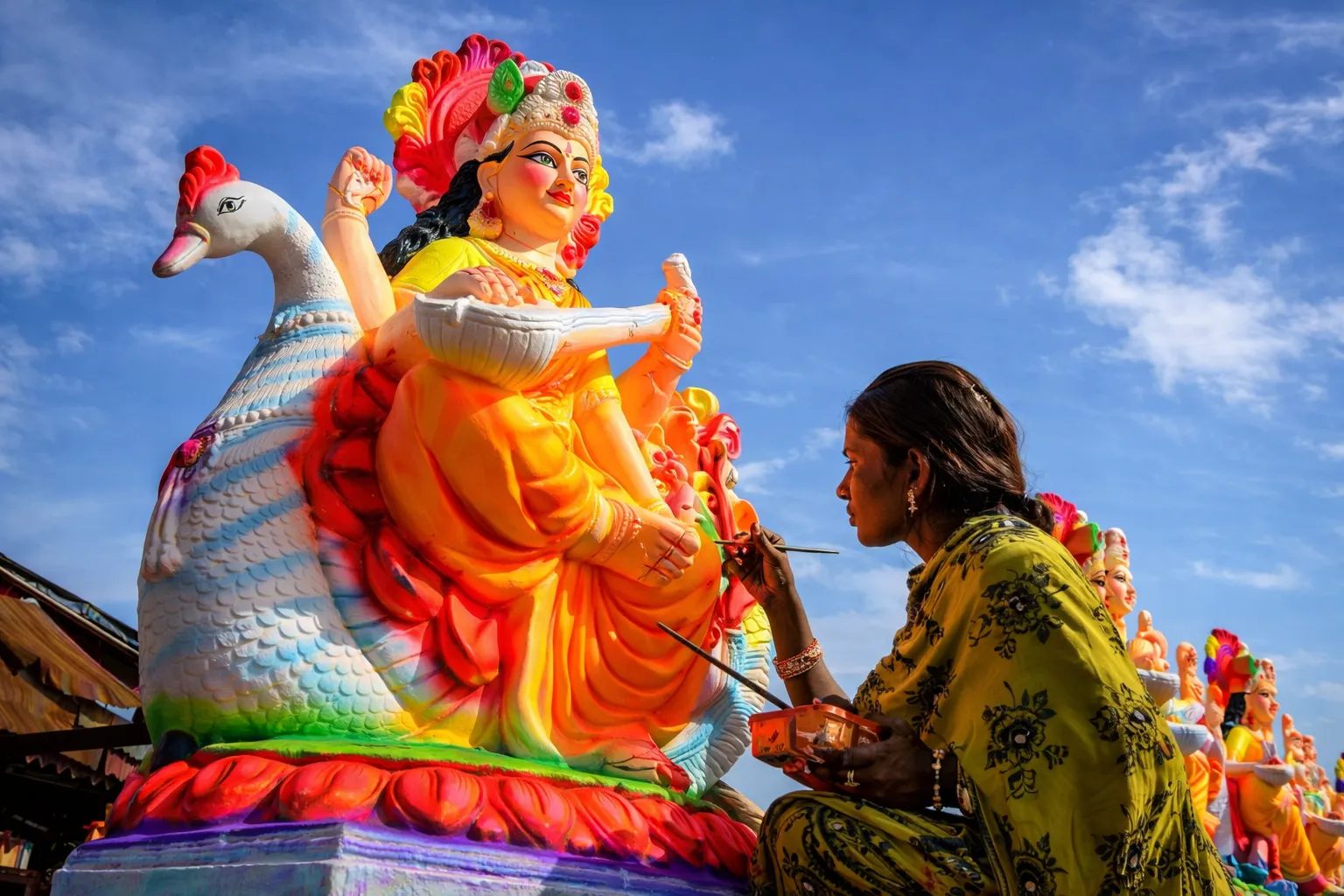
Vasant Panchami marks the symbolic arrival of Vasant Ritu (spring). Across north and east India, you’ll notice a shift in mood: mustard fields look brighter, flowers bloom more confidently, and the air feels less harsh than deep winter. Spiritually, the day honours Goddess Saraswati, the deity of knowledge, wisdom, music, art, language, and learning.
This is why the festival is especially important for students, teachers, writers, musicians, and anyone starting a new course, creative project, or academic year. Many families place books, pens, musical instruments, and learning tools near the idol or image of Saraswati as a symbolic request for clarity and discipline.
In some traditions, Vasant Panchami is also considered an auspicious day to start new work without heavy muhurat calculations. That’s why you’ll see Akshar Abhyasam (a child’s first writing ritual), admissions, and even new business beginnings around this date.
History of Vasant Panchami
Historically, Vasant Panchami has long been associated with learning, culture, and renewal. In many parts of India, it was a day when scholars, poets, and teachers held special gatherings to begin new studies or share knowledge. Over centuries, the festival developed into a strong community practice, especially in regions where Saraswati Puja became central to school and college culture.
In eastern India, particularly West Bengal, Saraswati Puja evolved into a vibrant youth festival, where educational institutions and neighbourhood groups arrange pandals, cultural programs, and immersion rituals. In north India, especially in cities like Varanasi and Prayagraj, the day remains more devotional, with emphasis on temple visits, riverfront prayers, and simple home worship.
Today, Vasant Panchami balances tradition and modern life beautifully. Families still offer flowers and sweets, while students take photos with friends at campus pujas. That mix of devotion and joy is what makes the festival so travel-friendly: it is cultural, photogenic, and meaningful without being overwhelming.
Why Yellow is Everywhere on Vasant Panchami (Dress, Food & Symbolism)
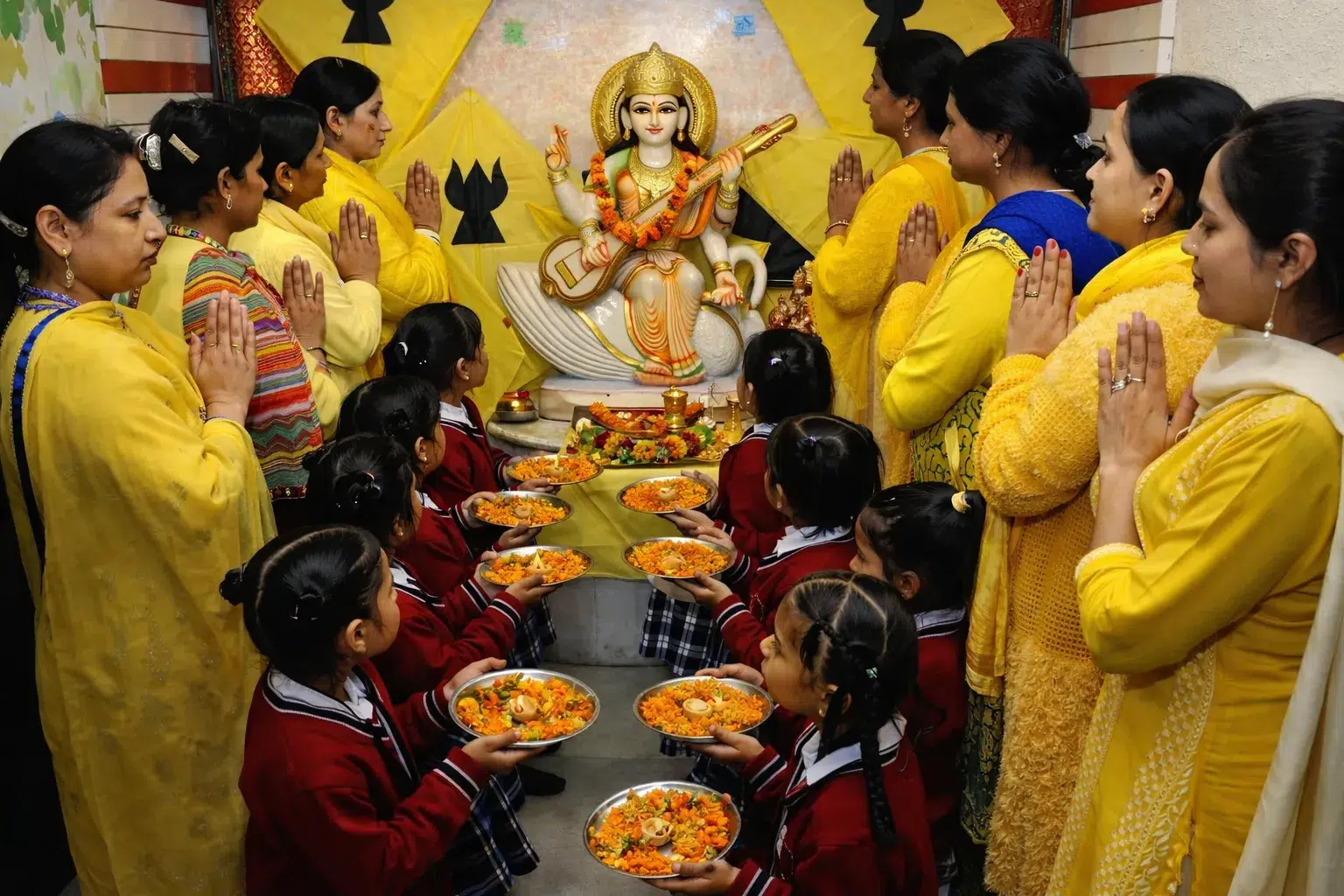
Yellow is not just a “theme colour” on Vasant Panchami. It is a symbol. In Indian culture, yellow is associated with knowledge, positivity, prosperity, and the warmth of the sun. It also mirrors nature at this time of year: mustard flowers, marigolds, and early spring brightness. That’s why people wear yellow sarees, kurtas, dupattas, or even small yellow accessories if they don’t want a full yellow outfit.
Food traditions also reflect this colour. Many families prepare yellow offerings such as kesar rice, saffron sweets, boondi laddoos, yellow kheer, or turmeric-flavoured dishes. In some homes, the entire meal includes “basanti” touches, from sweets to rice to flowers on the plate.
Simple travel advice: Pack one yellow outfit if you’re attending a Saraswati Puja in Kolkata or on a campus in Varanasi/Prayagraj. You’ll feel more in sync with the festival and your photos will naturally match the day’s vibe, without trying too hard.
Saraswati Puja Rituals at Home: A Step-by-Step Guide
If you’re doing Saraswati Puja at home (or even in a hotel room while travelling), keep it simple and respectful. Start with a bath and wear clean clothes (yellow if possible). Clean your small prayer space and place a picture or idol of Saraswati on a clean platform. Put a white cloth or yellow cloth under the idol if available. Arrange fresh flowers, incense, and a diya.
Now add your “learning items”: books, notebooks, pens, musical instruments, or art tools. The idea is symbolic: you’re placing your learning and creativity under Saraswati’s blessings. Offer flowers, light the diya, and do a short prayer. If you know Saraswati Vandana, chant it; otherwise, a heartfelt request for clarity and wisdom is enough.
Finish with prasad (sweets/fruits). Many families avoid touching books or starting regular study until after the puja, especially if they follow traditional practice. If you’re travelling, you can keep it practical: do the morning puja, then head out for temple visits and festival experiences.
What to Offer in Saraswati Puja: Flowers, Bhog & Puja Items Checklist
One reason Saraswati Puja feels easy is that the offerings are simple and widely available. Fresh flowers are the most important: marigolds, white flowers, or seasonal blooms work well. Many devotees offer fruits like bananas, apples, and seasonal citrus. If you can, add a few yellow sweets such as boondi laddoo, kesar peda, or simple halwa.
Basic Saraswati Puja checklist: diya (lamp), cotton wick, ghee/oil, incense, flowers, turmeric/kumkum, a clean cloth, prasad items, and a small kalash (optional). For travellers, you can reduce it to flowers + diya + sweets, and it still feels complete.
Common bhog ideas: kheer, halwa, sweet rice, saffron milk, or plain sweets from a clean shop. In Kolkata, you’ll often see offerings like khichuri, labra (mixed veg), and sweets in community pujas. In Varanasi and Prayagraj, simple sweets and fruits are common, especially for home pujas.
Reminder: Keep your offering clean and fresh. The festival is about purity of intention, not expensive items.
Akshar Abhyasam on Vasant Panchami: Best Day for a Child’s First Writing
Vasant Panchami is considered one of the best days for Akshar Abhyasam (also called Vidya Arambh). This ritual marks a child’s first step into learning: writing the first letters, usually guided by a parent, teacher, or priest. Families often make the child sit near Saraswati’s idol, then guide them to write “Om”, “Aum”, or the first alphabet letters on a slate, notebook, or rice tray.
The ritual is popular because Saraswati Puja naturally supports the theme of learning and discipline. Even older students sometimes begin new notebooks, new courses, or new music lessons on this day. It’s also common for musicians to place their instruments near the goddess and begin practice after the puja, treating it like a fresh start.
Traveller angle: If you’re visiting Kolkata, you’ll see many families bringing children to community pandals for blessings. In temple towns like Varanasi, you’ll see priests guiding small writing rituals in quieter family settings. For photographers, these moments are intimate and meaningful, so always ask permission and keep a respectful distance.
Dos and Don’ts for Saraswati Puja (Practical, Not Preachy)
Every region has its own customs, but a few common practices help travellers and first-timers avoid awkward moments. First, dress modestly if you’re entering a temple or community puja area. Yellow is welcome, but not compulsory. Remove shoes where required and follow the queue system, especially in busy cities like Kolkata.
Many families avoid eating non-vegetarian food and alcohol on Vasant Panchami, especially before the puja. If you’re travelling, it’s a good idea to keep your food choices light and vegetarian at least during the main muhurat hours, particularly if you plan to visit temples and participate in rituals.
Avoid touching idols, offerings, or books placed for puja unless invited. Don’t use flash photography inside crowded pandals or near idols. In Kolkata, immersion processions can be lively; keep safe distance, follow police barricades, and protect your phone and valuables.
Best mindset: treat Saraswati Puja like a cultural learning experience, not a “tourist event”. If you do that, locals are usually warm and welcoming.
Best Saraswati Puja Experiences in India (2026): Where to Go and Why
Vasant Panchami is celebrated across India, but the intensity and style change by region. If you want a deeply spiritual atmosphere with ghats and temple bells, choose Varanasi or Prayagraj. If you want royal-city culture, soft winter sun, and temple visits with a festive touch, choose Jaipur. If you want the most iconic, high-energy Saraswati Puja culture—pandals, campus celebrations, and immersion—choose Kolkata.
The best part is that these cities also work well for winter travel. You can build an itinerary around the festival and still enjoy classic sightseeing: river aarti in Varanasi, Sangam in Prayagraj, forts and markets in Jaipur, and heritage + food walks in Kolkata.
If you’re extending your trip into February, you can stack festivals and weather-friendly destinations. Useful reads include Indian festivals in February and Rajasthan in February travel guide.
Varanasi on Vasant Panchami: Ghats, Temples & a Calm Saraswati Puja Mood
In Varanasi, Vasant Panchami feels spiritual and atmospheric rather than loud. The city’s energy naturally matches Saraswati Puja: learning, mantras, and quiet devotion. Start your day early with a walk along the ghats when the light is soft. Many families and students visit temples for blessings, and you’ll find small Saraswati setups in homes, schools, and cultural spaces. If you enjoy slow travel, Varanasi on this day is perfect.
Best experiences: morning ghat walk, temple darshan, and an evening aarti to close the day. If you’re a student or creative, carry a small notebook, write your intentions for the year, and place it for blessings at a temple or in your stay (if culturally appropriate). This simple act feels surprisingly powerful in Varanasi’s mood.
Travel planning: late January is still winter-friendly, but mornings can be chilly. Pack a light jacket for sunrise time. If your trip continues into February, plan with this guide: Varanasi in February (weather, attractions & festivals).
Prayagraj Saraswati Puja Experience
Prayagraj offers a unique Vasant Panchami experience because the city naturally centres around rivers, rituals, and spiritual gatherings. On Saraswati Puja day, many devotees connect the festival to the sacred river culture of the region. If you are looking for a devotional, grounded celebration without the intense crowds of peak bathing events, Vasant Panchami is a meaningful time to visit.
Best experiences: a morning visit to the riverfront areas, temple darshan, and watching local families do simple puja routines. Because Saraswati is also linked to learning, you may see students carrying books and stationery to be blessed, especially in community settings. If you’re travelling with family, Prayagraj is practical: it has straightforward transport links and plenty of mid-range stays.
How to plan your day: do your main ritual visits in the morning during the puja window, then keep afternoon for relaxed sightseeing and local food. If your route includes nearby pilgrimage towns during winter, you can also pair Prayagraj with a January spiritual plan using Ayodhya in January (weather & travel guide).
Jaipur on Vasant Panchami
Jaipur suits Vasant Panchami beautifully because the city is already visually “warm”: sandstone tones, colourful bazaars, marigold garlands, and winter sunshine. On Vasant Panchami, you’ll spot more yellow outfits and seasonal flowers, and temples see a steady flow of devotees offering prayers for learning and success. The festival here feels elegant and balanced: you get devotion, but you also get the full Jaipur sightseeing experience without everything shutting down.
Best experiences: start with a temple visit in the morning, then continue with forts and heritage walks. Many travellers choose to wear yellow and take photos at iconic spots like Hawa Mahal and Amer Fort because the colour palette naturally matches the city. In the afternoon, explore bazaars for handicrafts, notebooks, or simple Saraswati Puja items if you’re doing a small ritual at your stay.
If you’re building a longer winter trip, Jaipur also fits perfectly into February routes. Use this planning resource: Travel guide: Rajasthan in February, and for festival stacking check Indian festivals in February.
Kolkata Saraswati Puja
If you want to see Saraswati Puja at its most famous and photogenic, go to Kolkata. Here, Saraswati Puja is a full cultural season—especially for students and young adults. Schools, colleges, and neighbourhood groups build pandals, decorate idols, and organise community rituals. The day feels like a mix of devotion and celebration: people dress up (yellow is very common), meet friends, visit multiple pandals, and take part in prayers.
Best experiences: morning visits to college pujas (where permitted), neighbourhood pandal hopping, and evening immersion processions. The immersion (visarjan) energy is a unique Kolkata highlight, with idols taken to the river for ritual farewell. If you enjoy cultural photography, Kolkata on Saraswati Puja day is one of the best days of the year—but it’s also a day to be extra respectful. Avoid intrusive shots near idols and always follow local rules.
Travel tip: Kolkata can get busy, so stay near areas you plan to explore and use local transport smartly. If you’re extending travel into February, this helps: Indian festivals in February.
Best 3–5 Day Itinerary Ideas for Vasant Panchami 2026
To make the most of Vasant Panchami, plan a trip where the festival day is the centre and the remaining days are sightseeing. Here are practical, traveller-friendly route ideas. Each can be customised depending on your starting city and budget.
Itinerary A (3 Days): Varanasi Focus
Day 1: Arrival + ghats + evening aarti
Day 2 (Festival Day): Morning Saraswati Puja + temple visits + relaxed food walk
Day 3: Sunrise boat/ghat walk + Sarnath or cultural spots
Itinerary B (4 Days): Prayagraj + Ayodhya Combo
Day 1: Prayagraj arrival + riverfront sunset
Day 2 (Festival Day): Morning puja + temples + local markets
Day 3: Drive/train to Ayodhya + evening darshan
Day 4: Ayodhya sightseeing + return
Itinerary C (4–5 Days): Jaipur Winter Culture
Day 1: Old city walk + bazaar
Day 2 (Festival Day): Temple visit + Amer Fort + sunset point
Day 3–5: Heritage + food + day trips (as per your plan)
For February extensions, use Rajasthan in February or Varanasi in February.
Weather Tips for Late January Vasant Panchami Travel (Packing & Comfort)
Late January is one of the most comfortable periods to travel in north and east India. Days are pleasant for sightseeing, while mornings and evenings can be cold, especially near rivers. In Varanasi and Prayagraj, the river breeze can feel sharp at sunrise, so pack a light jacket, shawl, or hoodie. Jaipur has bright sun in the afternoon but cool nights, so layered clothing works best.
Kolkata is usually milder than north India in late January, but evenings can still feel cool. Comfortable shoes are important across all four cities because Saraswati Puja experiences often involve walking: ghats, temple corridors, pandal hopping, and market lanes.
Bonus planning: If your trip extends into February, you can add destinations with excellent winter weather. Popular reads include Rishikesh in February travel guide and Goa in February (weather, attractions & festivals). This is a smart way to mix spiritual travel and relaxation in one itinerary.
What to Eat on Vasant Panchami
Vasant Panchami food is usually simple, sweet, and often yellow. Many families offer kesari halwa, boondi laddoo, kheer, or sweet rice as prasad. In some homes, saffron, turmeric, or yellow lentils are used to give dishes a warm golden colour that matches the festival theme. If you are travelling, you’ll easily find yellow sweets in local mithai shops, especially in north Indian cities.
In Kolkata, community pujas often have a fuller bhog style with khichuri and vegetable dishes, followed by sweets. In Varanasi, you’ll find more traditional temple-side prasad and seasonal winter snacks. Jaipur’s sweet scene is strong, so you can try local mithai as festival food while still keeping it vegetarian during the main ritual hours.
Food safety tip: stick to busy, clean shops where sweets move fast and are freshly stocked. Carry water and avoid overeating before temple visits. The festival day often involves walking and standing in queues, so light, comfortable meals make the whole experience better.
Festival Etiquette for Travellers
Vasant Panchami is welcoming, but it is still a worship day. A few small choices can make your experience smoother and more respectful. First, dress modestly for temples and pandals. If you wear yellow, keep it tasteful rather than flashy. Carry a small scarf or dupatta if you’re visiting traditional places that prefer covered shoulders.
Second, follow local instructions. In Kolkata pandals, there may be separate entry/exit lines. In ghats cities, there may be restricted areas near rituals. Avoid stepping into spaces where offerings or sacred items are placed. If you are unsure, pause and observe how locals behave, then follow that rhythm.
Third, be mindful with photography. Don’t use flash near idols or during aarti. Don’t block paths or push into the front. If you want portraits, ask first. Many people are happy to help, especially if you approach politely.
Finally, keep your valuables safe. Festivals can be crowded, and pickpocketing can happen anywhere. A cross-body bag and a simple phone strap go a long way on busy festival days.
More Winter Travel Reads (To Build a Bigger January–February Plan)
If you are planning around Vasant Panchami and want to build a bigger India winter trip, these guides can help you choose destinations based on weather and festivals:
- Indian festivals in February
- Rajasthan in February travel guide
- Varanasi in February (weather, attractions & festivals)
- Rishikesh in February travel guide
- Goa in February (weather, attractions & festivals)
- Ayodhya in January (weather & travel guide)
You can also interlink to your January destination cluster posts (hill stations, places to visit in January, January festivals, etc.) to strengthen internal SEO and keep users browsing longer.
People Also Ask (FAQ) – Vasant Panchami 2026
When is Vasant Panchami in 2026?
Vasant Panchami (Basant Panchami) in 2026 is on Friday, 23 January 2026. It is observed on Magha Shukla Panchami and is widely celebrated as Saraswati Puja.
What is the best time for Saraswati Puja in 2026?
Most families perform Saraswati Puja in the morning hours. A commonly followed puja window for India is roughly 7:15 AM to 12:50 PM on 23 January 2026. If you follow strict timing, confirm with your local panchang.
Why do people wear yellow on Vasant Panchami?
Yellow represents spring energy, positivity, and knowledge. It also reflects the season’s natural colours like mustard flowers and marigolds. That’s why yellow clothes, sweets, and flowers are common on this day.
Which city is best for Saraswati Puja celebrations?
Kolkata is the most famous for large-scale Saraswati Puja culture with pandals and campus celebrations. For a calmer spiritual experience, Varanasi and Prayagraj are excellent. Jaipur is great if you want temples plus winter sightseeing.
Can tourists attend Saraswati Puja pandals in Kolkata?
Yes, most pandals are open to visitors. Dress modestly, follow local queues, avoid flash photography, and be respectful around idols and offerings.
What is Akshar Abhyasam and why is it done on Vasant Panchami?
Akshar Abhyasam is a child’s first writing ritual, marking the start of learning. Vasant Panchami is considered auspicious for education and knowledge, so many families choose this day for the ceremony.
What food is offered to Goddess Saraswati?
Common offerings include sweets like boondi laddoo, kesari halwa, kheer, fruits, and yellow-themed prasad. Different regions have local bhog traditions, especially in community pujas.
Can I combine Vasant Panchami with a February trip?
Yes. Many travellers do Vasant Panchami in late January and then continue into February for winter-perfect destinations. Use these planning reads: Indian festivals in February, Rajasthan in February, and Goa in February.
Want me to tailor this into a city-specific itinerary? Tell me your starting city and trip length (3, 5, or 7 days). I’ll map a Vasant Panchami route with best areas to stay, a realistic daily plan, and internal links that match your blog structure.


