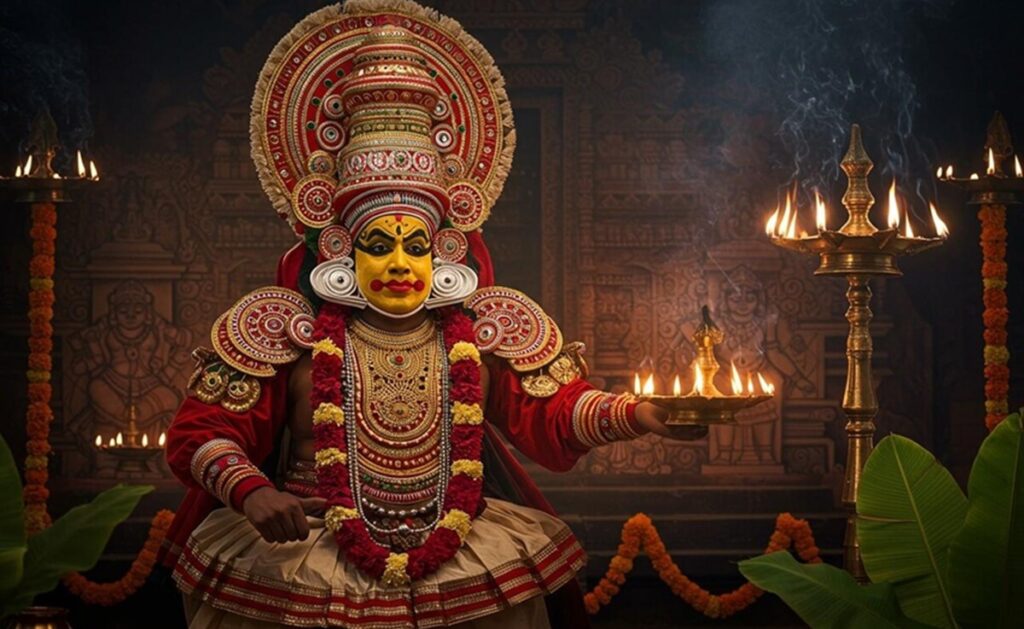
Folk arts are like windows into a culture. They show us the colors, stories, and spirit of a community. One of the most fascinating folk arts in India is Theyyam. But it’s not the only one. Across India, there are many ritualistic folk arts, each with its own magic and meaning. In this blog, we’ll explore Theyyam and a few other unique folk art traditions. Get ready for a journey full of music, dance, colors, and stories!
1. Theyyam: The Dance of Gods (Kerala)
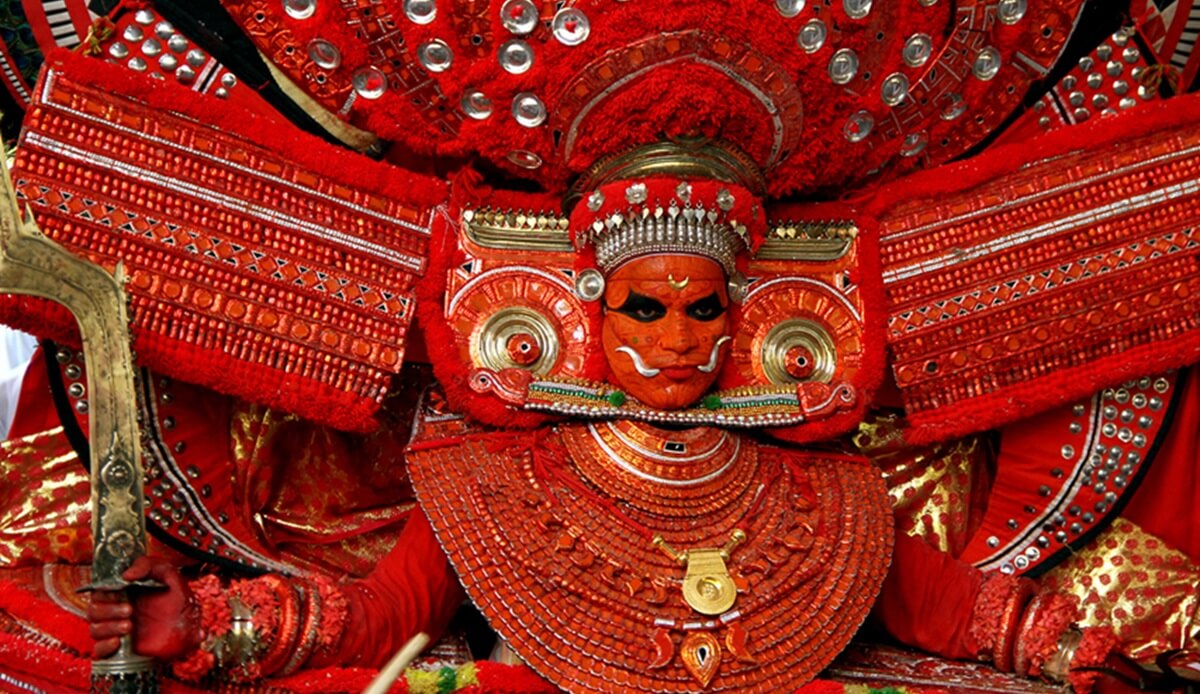
Theyyam is a powerful and colorful folk art from northern Kerala. It is more than just a dance. It’s a ritual where performers become gods. Yes, you read that right! When a person performs Theyyam, they are believed to be possessed by the spirit of a deity.
The performances usually take place in open-air shrines or village temples. They are held between October and May. The costumes are grand, with big headdresses, bright face paint, and colorful skirts. The performers go through hours of makeup and preparation.
Drums, chants, and fire are part of the performance. The performer dances, speaks, and even blesses the audience as the god they represent. People come to seek answers, blessings, and healing. Ritual Traditional Artforms of Kerala
Theyyam is not performed by priests or monks. Instead, local people from specific communities keep the tradition alive. It’s a mix of Hindu beliefs and tribal customs. This makes Theyyam a living example of India’s diverse cultural roots.
2. Bhuta Kola: Spirit Worship of the Tulu Nadu (Karnataka)
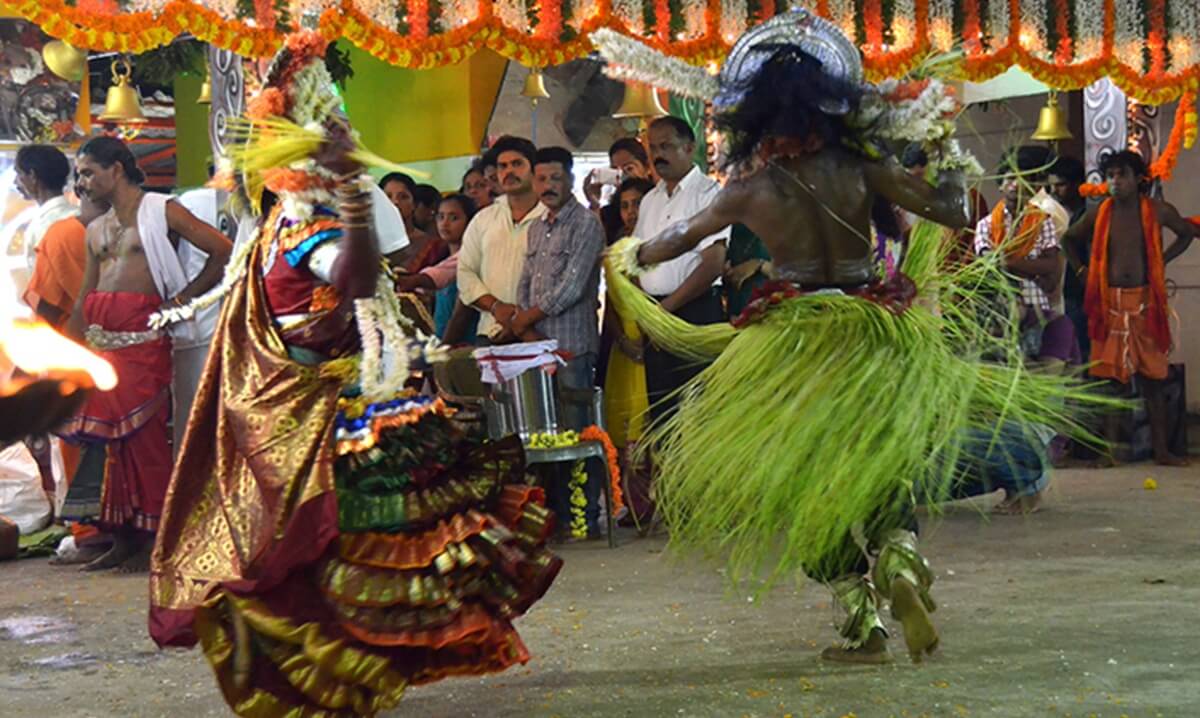
In the coastal areas of Karnataka, especially around Mangalore and Udupi, Bhuta Kola is practiced. Like Theyyam, Bhuta Kola is also a ritual dance. It honors the spirits, called “Bhutas,” who are seen as protectors of the land.
The performers wear large masks and colorful costumes. They paint their faces in bold colors. The dance is intense and energetic. It often happens at night and lasts for many hours.
People believe that the dancer becomes the spirit during the performance. They ask the spirit for advice and blessings. The performer often answers questions about village issues, health, or farming.
Bhuta Kola has inspired movies and books. It is deeply tied to the culture and beliefs of the Tulu-speaking people. Like Theyyam, it blends religion, art, and community. 12 Best Places to Visit in Karnataka in September (2025)
3. Pulikali: The Tiger Dance (Kerala)
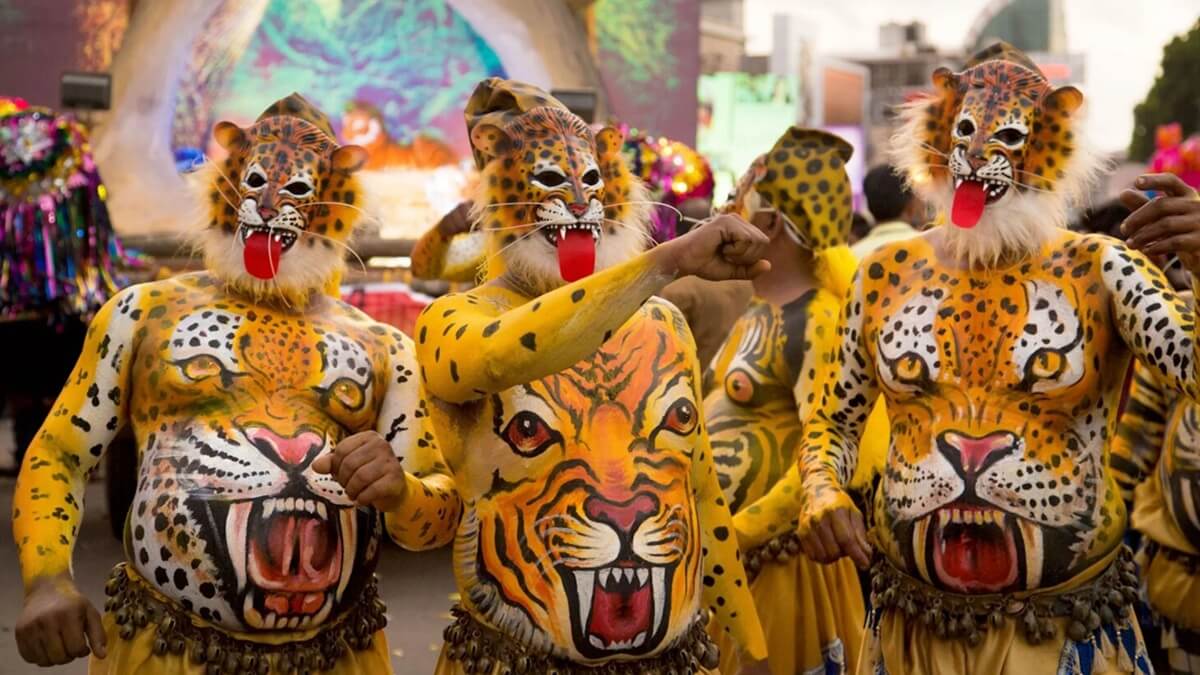
Pulikali means “play of the tiger.” It is a folk art from Thrissur in Kerala. It is usually performed during the Onam festival. Men paint themselves to look like tigers, with yellow, black, and red stripes. Some even paint their stomachs to look like tiger faces!
The performers dance through the streets to the beat of drums. Their movements copy a tiger’s walk, jump, and roar. The goal is to entertain people and show bravery.
Pulikali is fun and colorful. It’s not spiritual like Theyyam or Bhuta Kola, but it still connects to old stories and traditions. It celebrates the bond between humans and animals.
Children love watching Pulikali. It is one of the most eye-catching events during Onam. Local artists spend hours painting the bodies of performers. It’s a true mix of art, dance, and joy. Kerala in August: Top Destinations, Attractions for an Unforgettable Monsoon Trip
4. Baul Singing: Songs of the Wandering Minstrels (West Bengal)
The Bauls are a group of mystic singers from West Bengal. They live simple lives and travel from village to village. Their songs are about love, life, and finding God inside oneself.
Baul music is not loud or flashy. It is soft, soulful, and full of deep meaning. The singers play simple instruments like the ektara (a one-stringed instrument), dotara, and khamak.
Bauls wear orange or saffron clothes. They often have long hair and carry their instruments with them. Their music is a mix of Hindu, Sufi, and Buddhist ideas.
Listening to a Baul song feels like hearing a wise friend tell a story. Their performances are popular at village fairs and cultural festivals.
Baul singing was even listed by UNESCO as part of the Intangible Cultural Heritage of Humanity. It reminds us that music can bring peace and connect hearts. The Best Time to Visit West Bengal—and Where to Go on Your First Trip
5. Chhau Dance: Martial Arts and Masks (Odisha, Jharkhand, West Bengal)
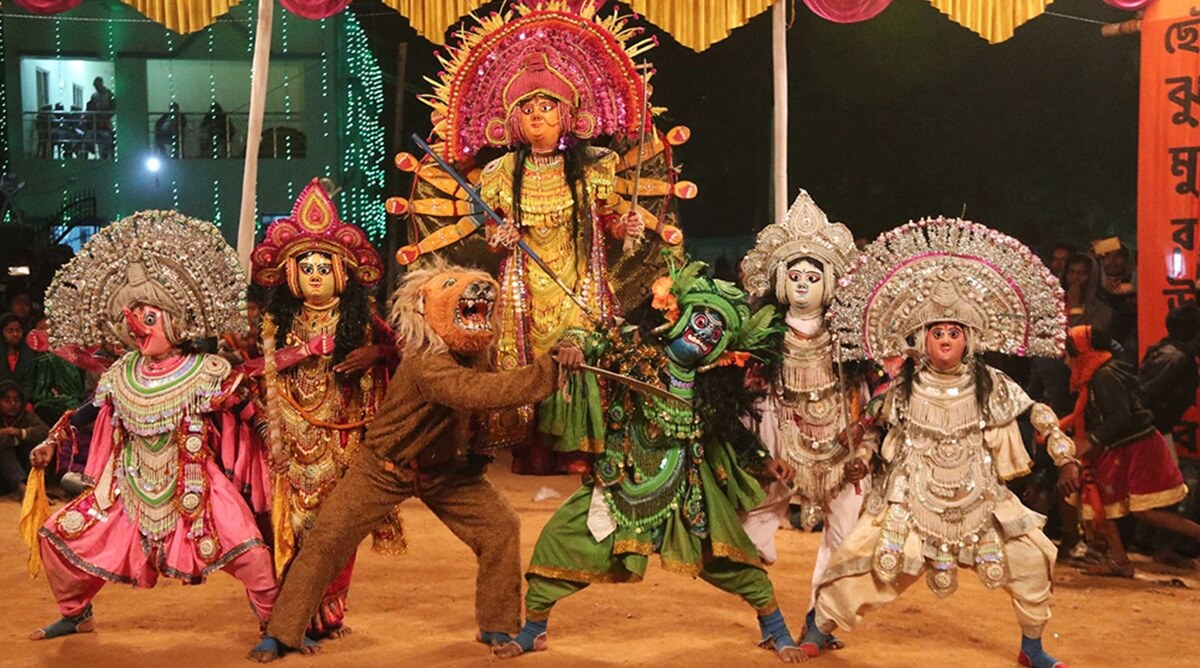
Chhau is a dance that mixes martial arts, storytelling, and music. It is popular in eastern India. There are three main types: Seraikella Chhau, Mayurbhanj Chhau, and Purulia Chhau.
The dancers wear masks (except in Mayurbhanj) and tell stories from Indian epics like the Ramayana and Mahabharata. The movements are powerful and look like fighting techniques.
Chhau performances are usually held during festivals. Drums and flutes create an exciting rhythm. The costumes are bright and eye-catching.
Each move in Chhau has a meaning. A leap might show flying, while a twist can show emotion. It is both athletic and artistic.
Like other folk arts, Chhau is passed down through families. It teaches discipline, storytelling, and culture.
6. Kalbelia: The Serpent Dance (Rajasthan)
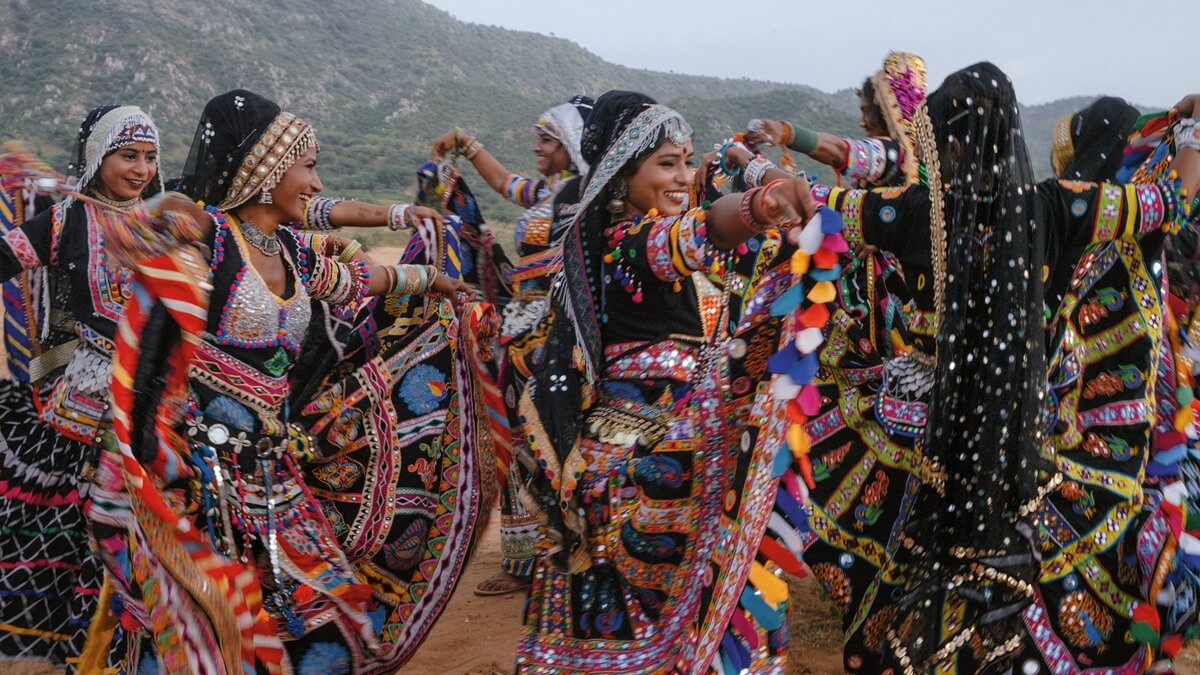
Kalbelia dance comes from the Kalbelia tribe in Rajasthan. They are known as snake charmers. The dance is performed mostly by women, and it looks like the movement of snakes.
The dancers wear black swirling skirts with silver embroidery. They spin, bend, and sway to the beat of traditional instruments like the pungi, dholak, and khanjari.
Kalbelia songs are often about love, life in the desert, and nature. The lyrics are passed down orally and never written.
This dance is joyful and expressive. It is often performed at fairs and festivals. In 2010, UNESCO recognized Kalbelia as part of the Intangible Cultural Heritage of Humanity. Experience Rural Rajasthan: Discover the Authentic Villages, Culture, and Traditions
Kalbelia shows how people can turn their everyday lives and history into beautiful art.
7. Terukkuttu: Street Theatre of Tamil Nadu
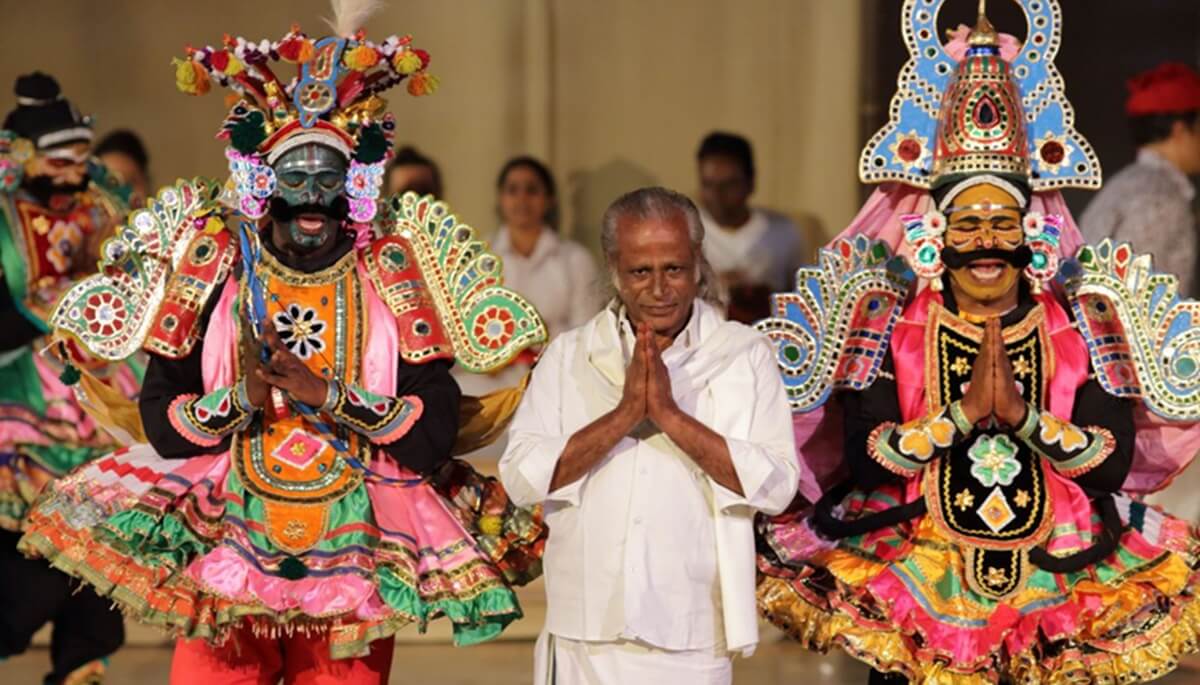
Terukkuttu means “street play.” It is a form of folk theatre from Tamil Nadu. It mixes dance, music, and drama.
The stories are usually from the Mahabharata. The most popular is the story of Draupadi. The plays are performed at night and can go on for hours.
The actors wear bright costumes and heavy makeup. They sing their lines in a musical style. Drummers and other musicians sit nearby and play live music.
Terukkuttu is not just for entertainment. It also teaches morals and religious values. The audience often takes part by clapping, singing, or even joining the dance.
It is especially popular during temple festivals. Through Terukkuttu, people keep old stories alive in a fun and engaging way. The Cultural Significance of the Kolam Art Form in Tamil Nadu
8. Conclusion: A Living Heritage
India’s ritualistic folk arts are full of life, color, and meaning. They connect the past to the present. They are not just performances, but experiences. Each one teaches us something about belief, beauty, and belonging.
Whether it’s the divine dance of Theyyam or the playful stripes of Pulikali, these arts make India’s cultural map rich and exciting. If you ever travel through India, try to see one of these performances. They will stay in your memory forever.
Folk arts are more than shows. They are the heartbeat of communities. Let’s celebrate and protect them for the generations to come.