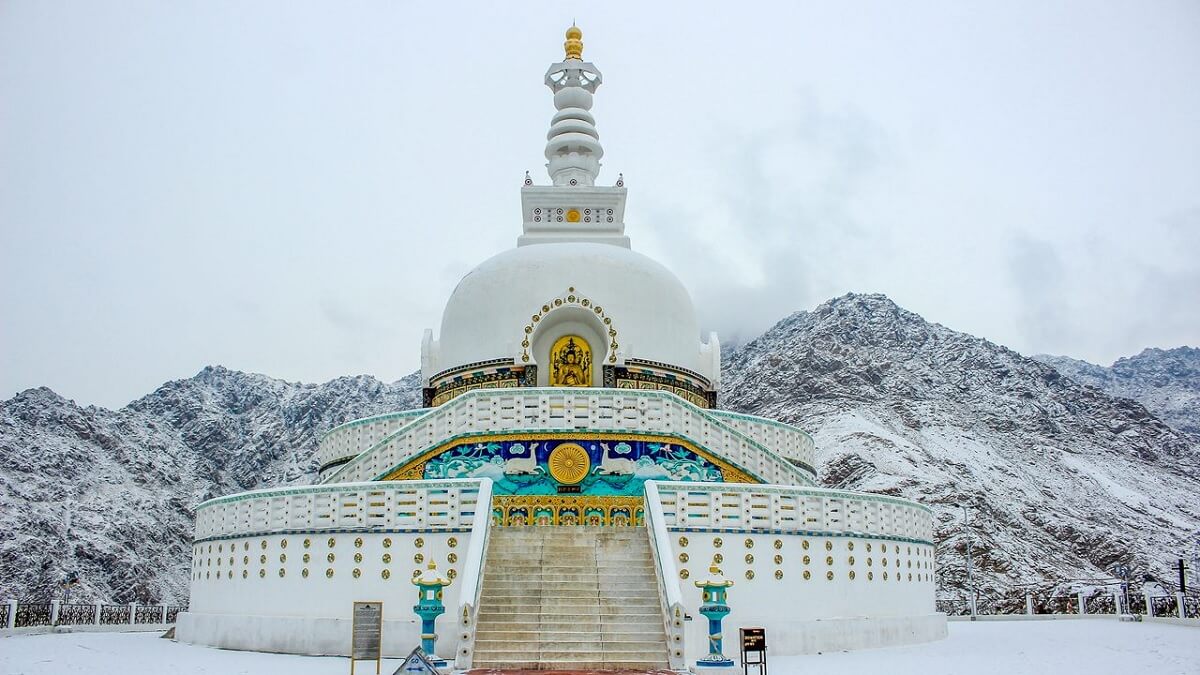
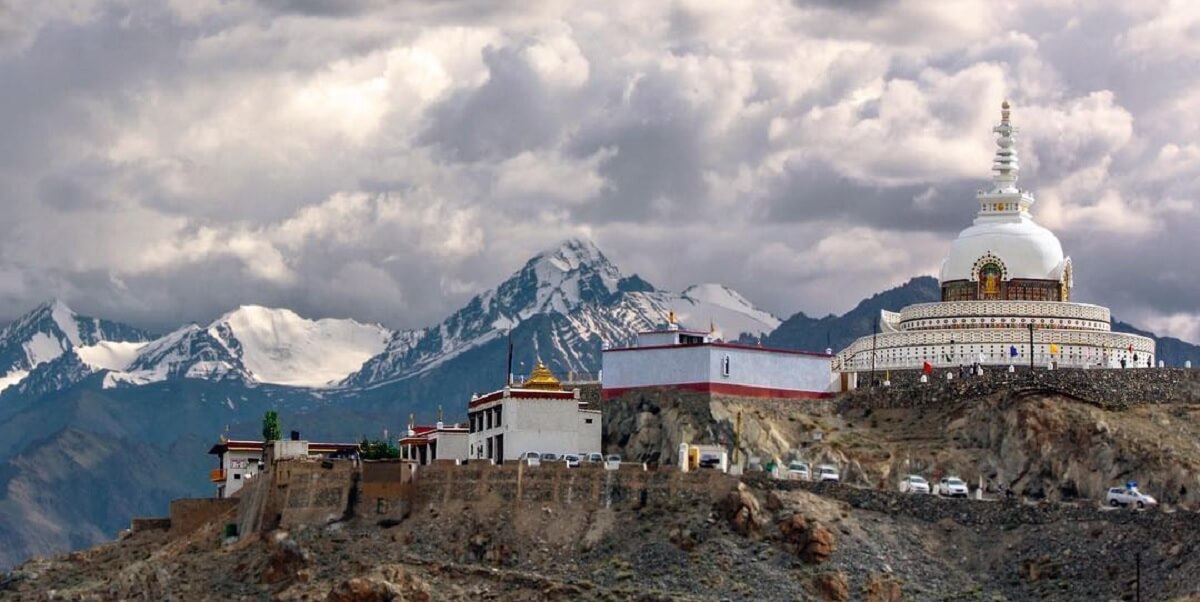
High above the rust-red rooftops of Leh, where the air thins and the winds whisper through prayer flags, the Shanti Stupa rises like a lotus in stone. A radiant white dome perched on a cliffside at nearly 12,000 feet, this modern Buddhist monument offers more than just panoramic views of the Ladakh Valley — it radiates a quiet presence, a sense of serenity that softens even the most hurried soul.
Built not centuries ago but in our own time, Shanti Stupa is both a spiritual gift and a symbol of Indo-Japanese peace — a testament to how compassion can transcend borders, and how silence can become a message.
In this detailed guide, you’ll uncover the origins, purpose, practical info, what to expect, and why every traveler — spiritual or not — should make their way up to this peaceful perch above Leh.
Where is Shanti Stupa Located?
- City: Leh, Ladakh
- Altitude: ~11,840 ft (3,610 m)
- Distance from Leh Main Market: Approx. 5 km
- Location: Changspa area, on a hilltop overlooking the town
From its platform, the stupa offers sweeping views of Leh Palace, the Stok Kangri range, the Indus Valley, and the windswept ridgelines that define this high-altitude desert.
The climb is steep — but short. You can either drive up the looping road or walk the 500+ stairs leading to its base. Read also: Magnetic Hill, Ladakh – Mystery, Location, Altitude
History of Shanti Stupa
Unlike most ancient monasteries of Ladakh, the Shanti Stupa is a relatively modern creation, completed in 1991. But its story began decades earlier.
The Vision:
The idea was conceived by Nichidatsu Fujii, a Japanese Buddhist monk and founder of the Nipponzan-Myōhōji order. Deeply influenced by the horrors of war and committed to Gandhian ideals, Fujii dedicated his life to building peace pagodas (Shanti Stupas) around the world.
The Collaboration:
- Built as a symbol of peace and harmony between Japan and India
- Constructed jointly by Japanese monks and Ladakhi Buddhists, with support from then Prime Minister Tenzin Gyatso (14th Dalai Lama) and Jawaharlal Nehru’s Peace Foundation
- Inaugurated in 1991 by the 14th Dalai Lama himself
Today, the stupa is both a pilgrimage site and a gesture of global goodwill, visited by monks, tourists, and peace-seekers alike. Read also: Exploring Ladakh’s Silk Route
Architectural Beauty – Modern Simplicity, Timeless Symbols
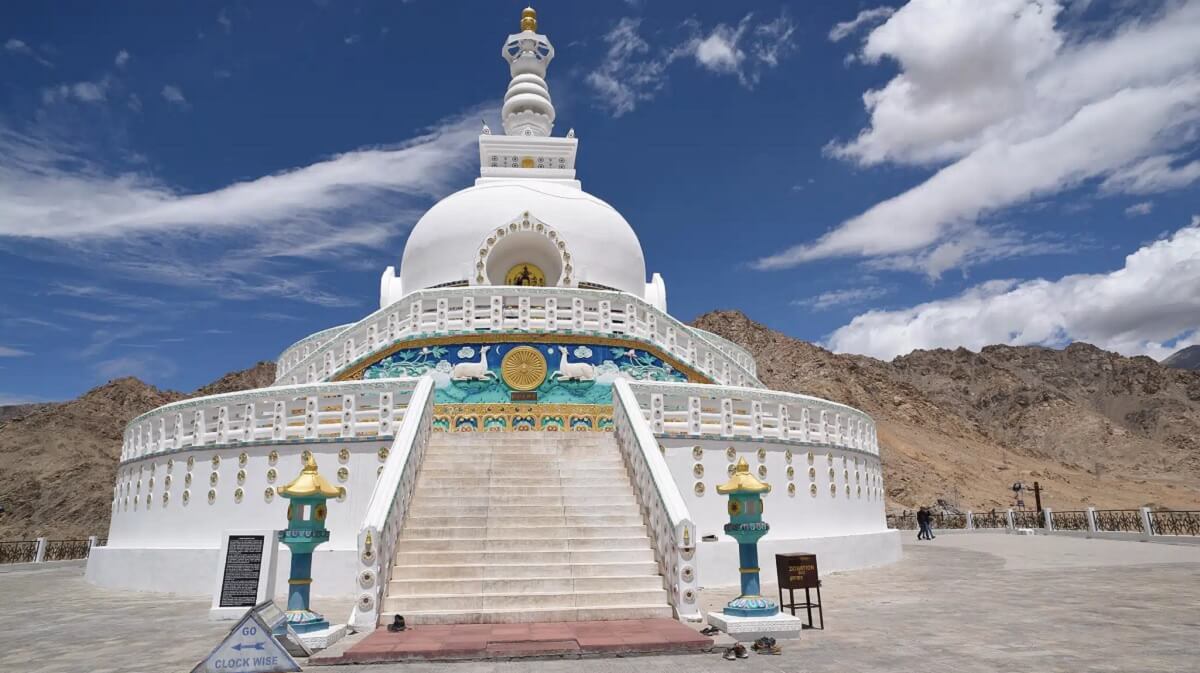
Unlike the ornately painted Tibetan-style monasteries of Ladakh, Shanti Stupa stands apart with its stark white exterior and contemporary design — yet it holds deep traditional symbolism.
Two Levels of the Stupa:
Level One:
- Houses a golden Buddha statue in the dharmachakra (teaching) posture
- Relief panels depict Buddha’s birth, enlightenment, and death (Mahaparinirvana)
Level Two:
- Open circumambulatory path (pradakshina)
- Decorative reliefs and inscriptions from Buddhist texts
Its clean curves, golden finial, and lotus-bloom base draw the eye — while the backdrop of blue sky and brown Himalayas gives it an ethereal aura.
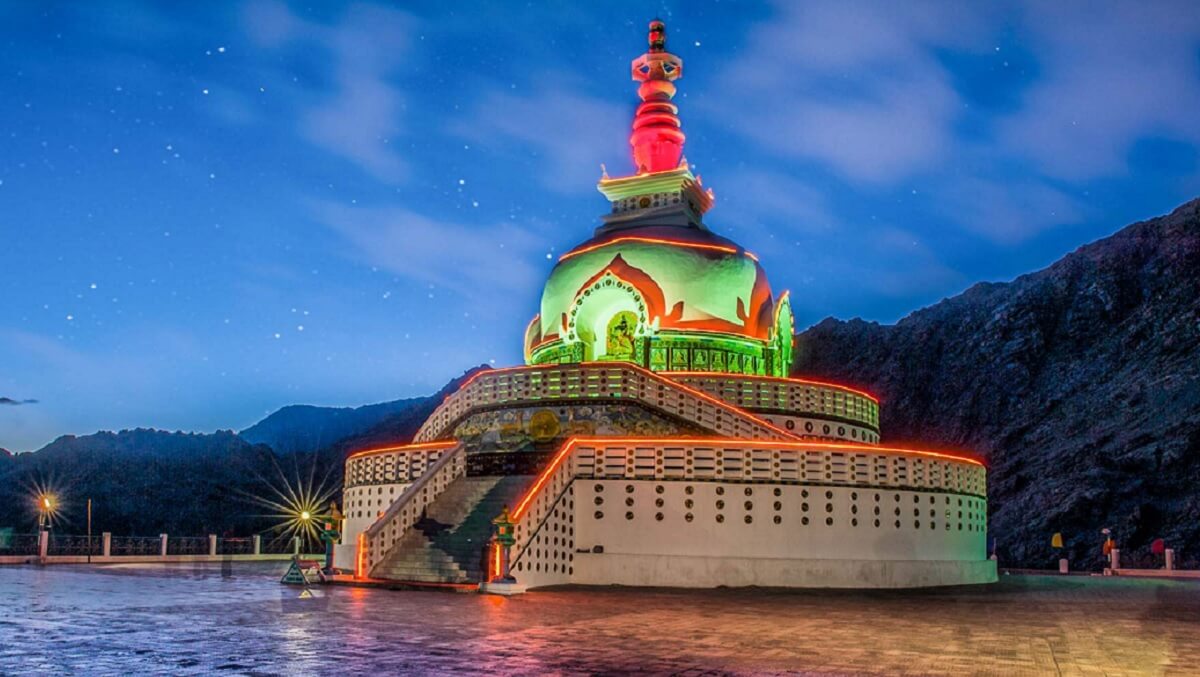
As the sun sets, the dome glows softly against the sky. At night, it’s illuminated, becoming a lighthouse of calm above the Leh valley. Read also: Ladakh Trip Budget Guide: Costs & Planning Tips
Spiritual Significance – Peace Beyond Borders
Though it’s often seen as a tourist viewpoint, Shanti Stupa is first and foremost a spiritual place. Its very purpose is to inspire peace, reflection, and unity across cultures.
Why It Matters Spiritually:
- Built to promote world peace and harmony
- Represents non-violence and global unity in the spirit of Mahayana Buddhism
- Linked to Nichiren Buddhism, which emphasizes chanting, human dignity, and inner transformation Read also: Hall of Fame War Memorial Visitor Guide
Many visitors, even non-Buddhists, report feeling a deep sense of calm here — a feeling often amplified by the altitude, silence, and vast open skies.
Chanting “Nam Myoho Renge Kyo”, the mantra of Nichiren Buddhism, is often encouraged here for those seeking inner balance.
Timings & Best Time to Visit
The Shanti Stupa is open daily and requires no entry fee, making it one of the most accessible spiritual spots in Leh — both physically and emotionally.
Opening Hours:
| Season | Timings |
| Summer (May–Oct) | 5:00 AM – 9:00 PM |
| Winter (Nov–Apr) | 6:00 AM – 8:00 PM |
You can visit anytime during these hours, but the experience changes dramatically depending on the light and time of day.
Best Times to Visit:
- Sunrise: The early morning air is crisp, crowds are minimal, and the rising sun bathes the valley in soft light. Meditation here feels intimate and personal.
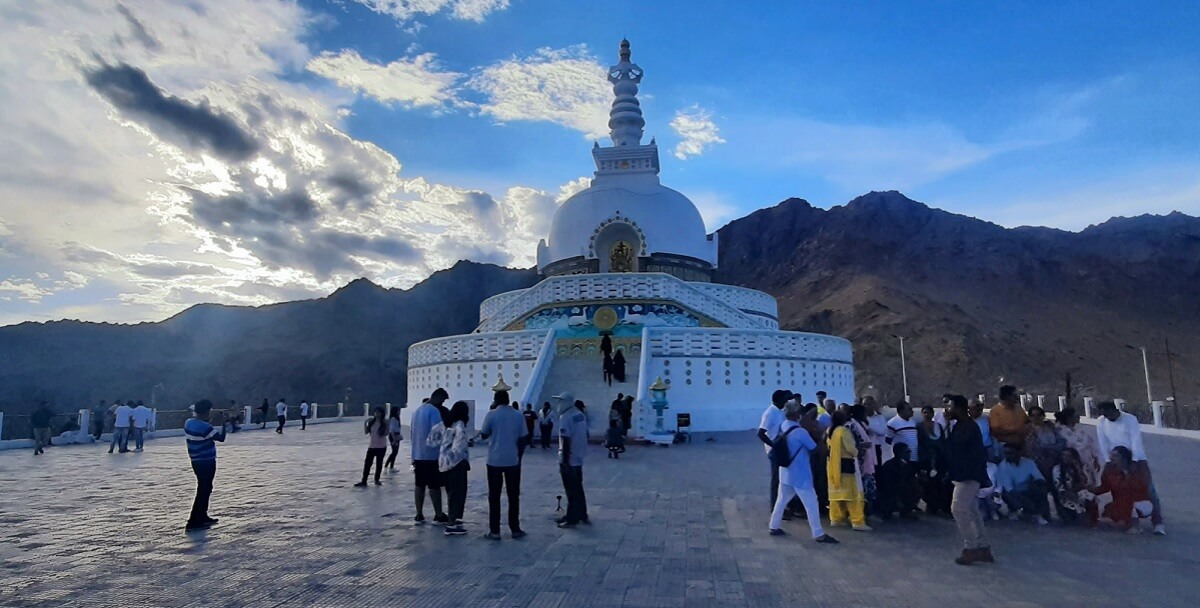
- Sunset: As the sun dips behind the hills, the stupa glows gold against a pastel sky. You can see the lights flicker on in the Leh town below — an unforgettable visual.
- Night (Illuminated): The stupa is lit with warm yellow and white lights, visible from much of Leh. Peaceful, photogenic, and quiet.
Travel Tip: If visiting at dawn or dusk, carry a light jacket — even summer evenings can get chilly at this altitude.
How to Reach Shanti Stupa from Leh
The route to Shanti Stupa is short, but steep. Whether you choose to walk up or drive, the journey has just enough effort to make the view worthwhile.
By Road:
- Distance from Leh Main Bazaar: ~5 km
- Time by Car/Bike: 15–20 minutes
- Route: Drive through Changspa Road or from Skara–Skalzangling area
Private taxis and bikes are easily available from the town. Auto-rickshaws and app-based taxis like Uber do not operate in Leh.
By Foot (Staircase Trail):
- ~500 steps from Changspa base
- Time: 20–30 minutes, depending on pace and altitude adjustment
- Offers dramatic views with every turn, and plenty of photo spots
Tip: Walk slowly. Stop to breathe. Use the climb as a quiet preparation — physically and mentally — for what awaits at the top.
What to Expect When You Visit
Visiting Shanti Stupa isn’t about ticking off another tourist spot. It’s about letting go of movement for a few moments, allowing the silence to speak louder than the wind.
Atmosphere:
- Peaceful, reflective, and welcoming
- Quiet areas around the stupa perfect for meditation or journaling
- Chanting or group prayer is sometimes heard in the early morning or evening
Photography Tips:
- Mornings = warm hues over Stok mountains
- Evenings = city lights + sunset glow
- Night photography = glowing dome under stars (tripod recommended)
Be mindful. Photography is allowed, but not during active prayers or meditation sessions by monks or pilgrims.
What to Bring:
- Water bottle
- Sunglasses (glare is intense midday)
- Shawl or light jacket
- Respectful clothing (avoid shorts, sleeveless tops)
- A moment to spare
Pro Tip: Sit quietly facing east. Watch the sun rise slowly over Leh — it’s one of the simplest, most moving rituals you can offer yourself here. 6 Nights 7 Days Leh Ladakh Tour Package
Nearby Attractions – What to Combine with Your Visit
Leh Palace:
- Located downhill, approx. 3 km from Shanti Stupa
- A 17th-century Tibetan-style palace offering sweeping views and Buddhist art
Namgyal Tsemo Monastery:
- Perched above Leh Palace, it houses a towering three-storey Maitreya Buddha
- Offers panoramic views of the Indus valley
Changspa Market & Cafés:
- A laid-back area with eco-friendly cafés, bookshops, and Tibetan handicraft stores
- Great for post-visit tea or a meal overlooking Leh. 10 Days Ladakh Tour from Manali
Visitor Etiquette – Spiritual Respect & Cultural Sensitivity
Though Shanti Stupa welcomes all with open arms, it remains a place of worship and contemplation. Respecting its sanctity helps you experience it more deeply and honors the community that built it.
Do’s:
- Walk clockwise around the stupa (as per Buddhist custom)
- Dress modestly — cover shoulders and knees
- Speak softly; lower your voice in sacred areas
- Remove shoes before entering prayer spaces
- Sit quietly if monks are praying — you are welcome to observe
Don’ts:
- Don’t climb on the dome or railing for photos
- Don’t play music or use drones (prohibited in spiritual sites)
- Avoid public displays of affection
- Don’t litter — carry your trash down with you
Tip: If you’re unsure, just follow the locals. Their calm reverence is a lesson in itself.
FAQs – Plan Your Visit with Confidence
Q1: Is Shanti Stupa wheelchair accessible?
The upper viewing platform is accessible by car, but the main stupa area requires navigating a few steps. Accessibility remains limited. Check out: 10 Days Ladakh Tour from Manali
Q2: How long should I spend at Shanti Stupa?
Plan to spend 45 minutes to 1 hour — enough to walk around, sit in silence, and take in the views at your own pace.
Q3: Is there a best season to visit?
Yes — May to October is ideal. During winter, the steps may be icy and road access could be limited due to snowfall.
Q4: Is it safe to climb the stairs at altitude?
Yes, if you’re acclimatized. Walk slowly and take breaks. Avoid the climb on your first day in Leh — give your body time to adjust to the altitude.
Conclusion: Shanti Stupa
In the busyness of our lives — even in our travels — we often chase places. We tick boxes, snap photos, and move on. But Shanti Stupa is different. It doesn’t demand attention. It offers a pause.
Here, you don’t just see Leh. You feel it — the breath of its winds, the silence of its stones, the prayers left fluttering in its flags.
So whether you come for the view, the history, or the spirit, come with a little intention. Stay longer than you planned. Let the stillness reach you.
Because at Shanti Stupa, stillness is not the absence of movement — it’s the presence of peace.
Find More Inspiration:
- Ladakh Trip Budget Guide: Costs & Planning Tips
- Ladakh Permits Guide: Areas & Application Process
- Visiting Ladakh in May: Weather, Tips & Events
- Apricot Blossom Festival 2026 in Ladakh: What to Expect
- Silk Route Ladakh: History & Top Places to Explore
- Ladakh in April 2026: Travel Guide & Things to Do
- Magnetic Hill Ladakh: Mystery, Location & Travel Info
- First Time in Ladakh? Step-by-Step Trip Planning Guide
- Leh Ladakh in January 2026: Weather & Travel Guide
- Traveler’s Guide: Karakoram Wildlife Sanctuary (Nubra Shyok)
- Pangong Lake: Your Ultimate Travel Guide
- Is Magnetic Hill Real? Facts and Science Explained
- Discover Peace at Leh’s Shanti Stupa
- How to Reach Ladakh from Major Indian Cities
- How to Stay Safe from AMS While Visiting Ladakh
- Top Reasons to Do the Stok Kangri Trek in Ladakh
- Top Instagram Spots in Ladakh
- Is Zojila Pass Open Now?