
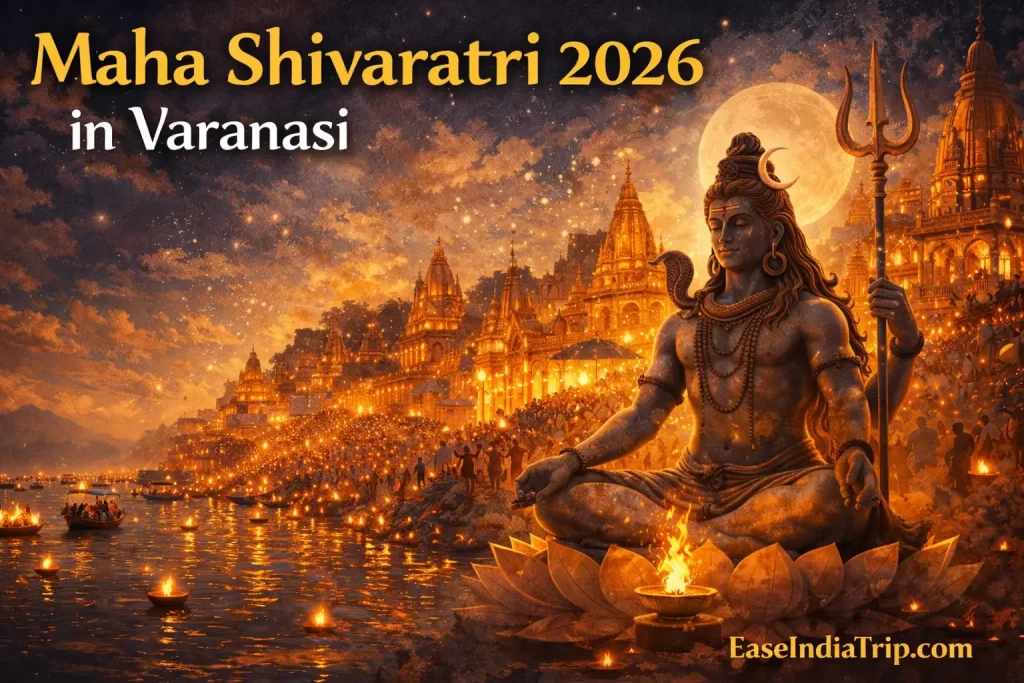
This guide is written exactly for that. It covers the key experiences, the realistic planning details, and the things most blogs skip: timing, movement, safety, crowd strategy, darshan tips, and how to build a smooth 2–4 day itinerary around Maha Shivaratri.
Important: Before you plan your puja timing, check the exact festival date and Nishita Kaal muhurat here:
Maha Shivaratri 2026: Date, Puja Timings & Fasting Rules.
Why Maha Shivaratri in Varanasi Feels Different
Across India, Maha Shivaratri is celebrated with fasting and night-long worship. In Varanasi, the celebration adds something extra: the city itself becomes the ritual. You don’t just visit a temple. You walk through living traditions in narrow lanes, witness processions, hear music and chants from every direction, and experience devotion that continues until sunrise.
What You Can Expect in Varanasi During Maha Shivaratri
- Huge crowds near Kashi Vishwanath Temple and surrounding lanes
- Special Shiva worship and night-long vigils in local temples
- Shiv Baraat processions in different parts of the city
- Heavy footfall at major ghats, especially around evening aarti time
- Extra security, barricading, and occasional traffic restrictions
For first-time visitors, this can feel overwhelming. The key is to plan your movement and timing smartly.
Quick Facts: Maha Shivaratri 2026 Trip Planning for Varanasi
- Festival Date: Sunday, 15 February 2026 (night continues into early hours of 16 Feb)
- Best Trip Duration: 2N/3D (minimum) or 3N/4D (more comfortable)
- Best Area to Stay: Near Dashashwamedh / Godowlia (walkable access) or Assi (slightly calmer)
- Top Experiences: Kashi Vishwanath darshan, Ganga Aarti, ghats walk, Shiv Baraat, sunrise boat ride
Kashi Vishwanath Temple on Maha Shivaratri: Darshan Strategy
No Maha Shivaratri visit to Varanasi is complete without darshan at Kashi Vishwanath Temple, one of the most revered Shiva shrines in India. On Shivaratri, devotees arrive in massive numbers. The main challenge is not devotion, it’s logistics.
If you are visiting for the first time, read this detailed temple guide first: Kashi Vishwanath Temple, Varanasi: Complete Visitor Guide.
Best Time for Darshan on Maha Shivaratri
- Early morning: The energy is calm, but lines can still be long
- Late night / Nishita Kaal window: Spiritually powerful, but expect the heaviest crowd
- Pre-festival day: If your trip allows, do one darshan on 14 Feb to avoid peak congestion
Practical suggestion: If you are coming mainly for the experience and not only for temple rituals, do darshan once early morning, then focus on ghats and procession vibes later in the day.
Entry and Crowd Tips
- Keep only essentials: phone, wallet, ID, and offerings (if any)
- Wear simple clothing and comfortable walking shoes
- Expect barricading and queue systems to change during peak hours
- Do not plan tight timelines on this day
Offering tip: If you want to offer items for Abhishekam, follow the temple’s local rules and purchase offerings from approved counters where applicable. Avoid getting stuck with large puja kits in crowded lanes.
Ganga Aarti on Maha Shivaratri: Where to Watch and How to Plan
On Maha Shivaratri, Ganga Aarti becomes even more special. The ghats are packed, the atmosphere is devotional, and you will see many pilgrims combining Shiva worship with reverence for Maa Ganga.
Best Ghats for Aarti Experience
- Dashashwamedh Ghat: The most famous and most crowded
- Assi Ghat: Often slightly calmer, with a more local feel
- Panchganga Ghat: Great for those exploring older parts of Kashi
Best Way to Watch Aarti During Festival Rush
- Arrive early: at least 60–90 minutes before the aarti starts
- Consider a boat viewpoint: watching from the river can be more comfortable than the crowd
- Keep expectations realistic: it will be crowded, loud, and intense
Pro tip: If Dashashwamedh feels too packed, Assi Ghat can offer a better experience, especially for couples, families, and international travellers who prefer space.
Shiv Baraat in Varanasi: What It Is and Where You May See It
One of the most exciting parts of Maha Shivaratri in Varanasi is the Shiv Baraat. It is a devotional procession that symbolically celebrates Lord Shiva’s wedding procession. In Kashi, the baraat energy is electric: traditional music, dancing groups, decorated idols, and crowds chanting together.
What You’ll See During Shiv Baraat
- Decorated Shiva icons and devotees dressed as Shiva’s ganas
- Dhol, damru, chants, and street-level celebration
- Processions moving through key lanes and congregation points
Where to Experience Shiv Baraat (Practical Guidance)
Routes can vary yearly based on crowd control and local administration. The safest approach is to:
- Ask your hotel staff for the expected procession route on the day
- Position yourself near major congregation areas like Godowlia / Dashashwamedh zone
- Avoid narrow lane bottlenecks if you are travelling with seniors or kids
Safety first: Shiv Baraat crowds can be dense. Keep your phone secured, stay hydrated, and do not push forward for close views. A slightly distant viewpoint is often more enjoyable and safe.
Best Things to Do in Varanasi During Maha Shivaratri (Beyond the Main Events)
Varanasi during Shivaratri is intense. Planning small, meaningful experiences around the main rituals makes your trip more balanced.
1) Sunrise Boat Ride on the Ganga
A sunrise boat ride the next morning is one of the best ways to decompress after the night’s energy. You will see pilgrims taking holy dips, temples waking up, and the city becoming calm again.
2) Walk the Ghats (Slow, Not Rushed)
Instead of trying to cover every ghat, choose a stretch and walk slowly. Dashashwamedh to Assi is popular, but it can be crowded. Early morning is best for comfort and photos.
3) Visit Smaller Shiva Temples in the Neighbourhood
While Kashi Vishwanath is the main shrine, many local Shiva temples come alive on Shivaratri. These can offer a more peaceful darshan compared to the central rush.
4) Eat Something Truly Local (But Do It Smart)
Varanasi’s food scene is part of the travel experience. If you are fasting, keep it light. If you are not fasting, try local favourites in a hygienic place and avoid experimenting too much on the festival night.
For the best street food spots, use this practical guide:
Best Places for Street Food in Varanasi.
Where to Stay in Varanasi for Maha Shivaratri
For Maha Shivaratri, your hotel location matters more than usual. Being close to the ghats and temple area can save you hours of walking and waiting.
Best Areas (Based on Travel Style)
1) Dashashwamedh
- Walkable access to ghats and many key lanes
- Best if your focus is Kashi Vishwanath + aarti + central vibe
- Expect noise and crowds
2) Assi Ghat
- Good for those who want a calmer stay but still near the river
- Easy access to sunrise vibes and cultural pockets
3) Cantonment Area
- More hotel options and better road access
- But you’ll rely on transport to reach the ghats and temple zone
Booking advice: For Maha Shivaratri week, book your stay early. Varanasi’s best located hotels get sold out quickly and prices rise closer to the date.
How to Reach Varanasi
By Air
Varanasi is served by Lal Bahadur Shastri International Airport, connected to major Indian cities. International connections may be seasonal or via Delhi/Mumbai depending on flight schedules.
By Train
Varanasi Junction and other nearby stations connect well to Delhi, Kolkata, Lucknow, and many major cities. For festival travel, confirm train availability early.
By Road
Road travel is possible from nearby cities, but festival traffic can slow movement inside Varanasi. Plan buffer time.
Suggested 3-Day Itinerary for Maha Shivaratri 2026 in Varanasi
Day 1: Arrive + Settle + Light Exploration
- Check-in and rest (avoid heavy sightseeing on arrival day)
- Evening ghat walk + observe the vibe
- Optional: attend aarti at Assi for a calmer experience
Day 2: Maha Shivaratri Day (Temple + Baraat + Aarti)
- Early morning darshan attempt at Kashi Vishwanath (if feasible)
- Rest in afternoon (conserve energy)
- Evening: Ganga Aarti (arrive early)
- Night: experience Shiv Baraat zones, then spiritual time
Day 3: Sunrise Boat + Slow Ghats + Departure
- Sunrise boat ride
- Breakfast and packing
- Optional: visit a calm temple or do a final ghat walk
Note: If your main goal is Nishita Kaal worship, use the exact timing guide here: Maha Shivaratri Date & Puja Timings.
Festival Crowd Tips and Safety Advice (Realistic and Useful)
- Start early: Morning movement is easier than evening movement
- Expect walking: many lanes are not vehicle-friendly on festival days
- Keep cash + UPI: small vendors may not accept cards
- Protect valuables: keep phone secured in crowded areas
- Stay hydrated: festival excitement can make you forget basics
- Travel with buffer: delays are normal during major events
FAQs
Is Varanasi too crowded during Maha Shivaratri?
It is crowded, especially around Kashi Vishwanath Temple, major ghats, and Shiv Baraat routes. With early planning and realistic timing, the experience is still very rewarding.
Can I attend Ganga Aarti and Shiv Baraat on the same day?
Yes, but plan carefully. Attend aarti early with a good spot, then move towards known procession zones. Avoid rushing through narrow lanes.
Is it safe for families and international tourists?
Yes, but choose calmer areas for stay, avoid extreme crowd points, and follow local instructions. Assi Ghat side is often easier for families.
Which is the best time for Kashi Vishwanath darshan?
Early morning is generally more manageable. Late night can be spiritually intense but may involve longer queues.
What if I want a different Maha Shivaratri experience outside Varanasi?
If you want a structured night-long spiritual program, consider Isha Yoga Center. Read this guide: Maha Shivaratri at Isha Yoga Center: How to Attend.
Conclusion
Maha Shivaratri in Varanasi is not a neat, perfectly organised festival. It is raw, intense, alive, and unforgettable. If you come with the right mindset and plan your movement smartly, you will experience a version of Shivaratri that feels deeply connected to India’s spiritual roots.
To plan your timings, fasting approach, and Nishita Kaal worship, keep the main reference guide bookmarked: Maha Shivaratri 2026: Date, Puja Timings & Fasting Rules.
Travel planning tip: If you’re combining this trip with other spiritual places, you can extend your itinerary to nearby sacred sites and keep the experience balanced and less rushed.


