
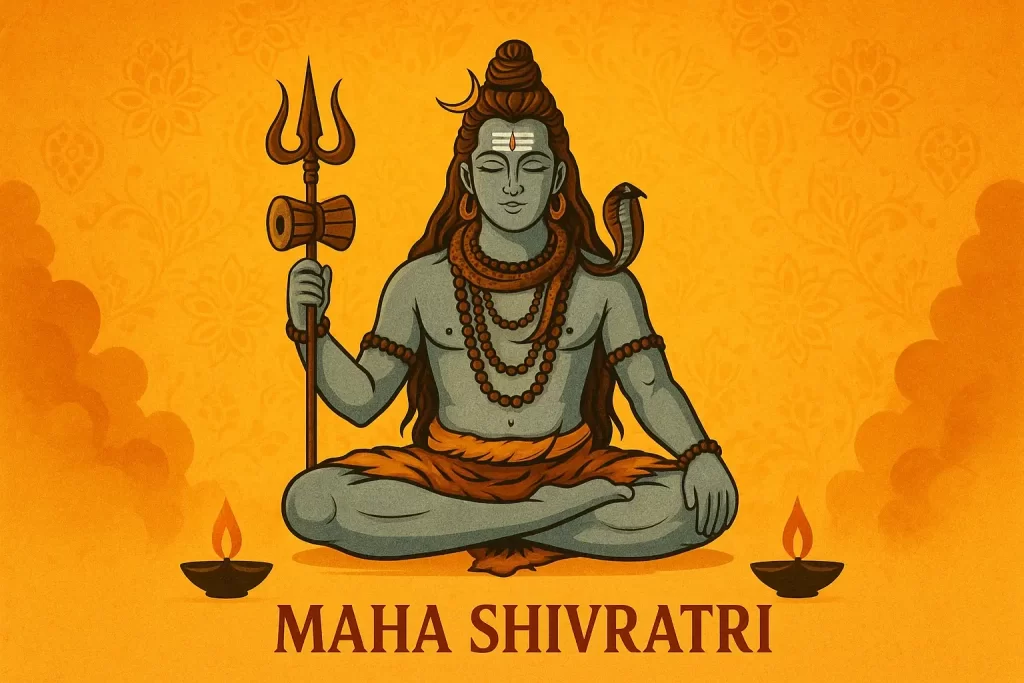
This detailed guide answers all of these questions clearly. Whether you are observing Maha Shivaratri at home, planning to visit a Jyotirlinga temple, or travelling to sacred cities like Varanasi or Ujjain, this article will help you plan the day and night properly.
Maha Shivaratri 2026 Date and Day
Maha Shivaratri in 2026 will be observed on Sunday, 15 February 2026.
The festival is celebrated on the Chaturdashi Tithi (14th lunar day) of the Krishna Paksha in the month of Phalguna, according to the Hindu lunar calendar. Unlike most Hindu festivals that are celebrated during the day, Maha Shivaratri is observed mainly during the night.
Devotees begin preparations from early morning on the festival day and continue prayers, fasting, and vigil until the next morning.
Why Maha Shivaratri Is Celebrated at Night
Spiritually, the night of Maha Shivaratri is believed to be a time when natural energies are aligned in a way that supports inner stillness and meditation. Scriptures and yogic traditions describe this night as especially powerful for spiritual growth, self-reflection, and surrender to Shiva consciousness.
Maha Shivaratri 2026 Tithi Timings (As per Indian Standard Time)
The Chaturdashi Tithi associated with Maha Shivaratri spans across day and night. Puja and fasting are observed based on the night-time presence of Chaturdashi.
- Chaturdashi Tithi Begins: Evening of 14 February 2026
- Chaturdashi Tithi Ends: Night of 15 February 2026
Important: Tithi timings may vary slightly based on geographical location. Always follow local temple announcements if you are performing special rituals.
Nishita Kaal Muhurat for Maha Shivaratri 2026
Nishita Kaal is considered the most sacred time to perform Shiva puja on Maha Shivaratri. It occurs around midnight and represents the deepest, most silent part of the night.
Nishita Kaal Puja Timing (Approximate – IST)
- Nishita Kaal Begins: Around 12:05 AM (16 February 2026)
- Nishita Kaal Ends: Around 12:55 AM (16 February 2026)
Note: These timings are indicative. Nishita Kaal varies by a few minutes depending on location (city-wise latitude and longitude). Temples may announce their own exact timings.
If you can perform only one puja during the night, it is best to do it during Nishita Kaal.
Four Prahar Puja Timings on Maha Shivaratri 2026
Traditionally, Maha Shivaratri night is divided into four Prahars. Devotees who follow detailed rituals perform Shiva Abhishekam and puja in each Prahar.
Prahar-wise Puja Timings (Indicative – IST)
- First Prahar: 6:30 PM – 9:30 PM (15 Feb 2026)
- Second Prahar: 9:30 PM – 12:30 AM
- Third Prahar: 12:30 AM – 3:30 AM
- Fourth Prahar: 3:30 AM – 6:30 AM (16 Feb 2026)
Each Prahar puja includes offerings of water, milk, bilva leaves, and chanting of Shiva mantras like “Om Namah Shivaya.”
For most household devotees, performing puja during one or two Prahars, especially Nishita Kaal, is considered sufficient.
Maha Shivaratri Fasting Rules (Vrat Vidhi)
Fasting on Maha Shivaratri is an important spiritual discipline. It symbolises control over physical desires and focus on inner awareness.
Types of Maha Shivaratri Fast
1) Nirjala Vrat (Strict Fast)
- No food and no water for 24 hours
- Observed by experienced devotees
- Not recommended for elderly, pregnant women, or those with medical conditions
2) Phalahar Vrat (Fruit-Based Fast)
- Fruits, nuts, milk, coconut water allowed
- Most commonly followed fasting method
- Suitable for beginners and working devotees
3) Satvik Ek Bhog
- One simple satvik meal in the evening or after puja
- No grains, onion, garlic, or spices
- Often followed by elderly devotees
What to Eat and What to Avoid During Shivaratri Fast
Allowed Foods
- Fresh fruits and dry fruits
- Milk, curd, buttermilk
- Sabudana, singhara atta, kuttu (if doing vrat cooking)
- Coconut water, fruit juices (without sugar)
Foods to Avoid
- Rice, wheat, and regular flour
- Onion and garlic
- Non-vegetarian food and alcohol
- Processed or packaged foods
The spirit of fasting is purity and simplicity. Eating lightly with awareness is more important than strict rules.
Essential Puja Items for Maha Shivaratri
- Shiva Lingam or picture of Lord Shiva
- Water, milk, honey, curd, ghee (for Abhishekam)
- Bilva (Bel) leaves
- White flowers
- Incense sticks and diya
- Rudraksha (optional)
Bilva leaves are considered extremely sacred for Shiva worship and should ideally be offered with clean hands and devotion.
Do’s and Don’ts on Maha Shivaratri
Do’s
- Maintain cleanliness of body and mind
- Chant Shiva mantras during the night
- Stay awake peacefully, with prayer or meditation
- Offer water or milk to Shiva Lingam
Don’ts
- Avoid anger, arguments, or negative thoughts
- Do not consume alcohol or non-vegetarian food
- Avoid sleeping during the night if possible
- Do not pluck bilva leaves on the same day; use pre-collected leaves
Why Maha Shivaratri Is Spiritually Important
According to Hindu tradition, Maha Shivaratri marks the divine union of Lord Shiva and Goddess Parvati. Yogic traditions consider this night ideal for meditation because the planetary positions support spiritual practices.
It is believed that sincere prayers offered on this night help dissolve past karmas, bring mental clarity, and strengthen inner discipline.
Maha Shivaratri for Pilgrims and Travellers
Many devotees plan pilgrimages during Maha Shivaratri to places associated with Lord Shiva. Temples remain open all night, and special rituals, processions, and abhishekams are organised.
Popular destinations during Maha Shivaratri include:
- Varanasi – Kashi Vishwanath Temple and Shiv Baraat
- Ujjain – Mahakaleshwar Jyotirlinga and Bhasma Aarti
- Isha Yoga Center – Night-long spiritual celebrations
- Haridwar and Rishikesh – Ganga-side Shiva temples
If you are travelling during this period, book accommodation and darshan slots early, as crowds increase significantly.
Frequently Asked Questions (FAQs)
Is Maha Shivaratri 2026 on 15 or 16 February?
Maha Shivaratri will be observed on Sunday, 15 February 2026. Most rituals and night-long worship extend into the early hours of 16 February.
Is fasting compulsory on Maha Shivaratri?
Fasting is recommended but not compulsory. Devotion, prayer, and mindfulness are more important than strict fasting.
Can beginners observe Maha Shivaratri fast?
Yes. Beginners can follow a simple phalahar fast with fruits and milk. Avoid strict nirjala fasting unless experienced.
Is it necessary to stay awake all night?
Staying awake is spiritually beneficial, but if health does not permit, you can rest after Nishita Kaal puja.
Which is the most important puja time on Maha Shivaratri?
Nishita Kaal is considered the most auspicious time for Shiva puja on Maha Shivaratri.
Conclusion
Maha Shivaratri 2026 is a powerful opportunity to slow down, reflect, and reconnect with spiritual awareness. Whether you observe the festival at home, in a temple, or on a pilgrimage, following the correct timings and maintaining sincerity in prayer is what truly matters.
Plan your fasting and puja in a way that suits your health and lifestyle, and let the night of Shiva become a time of inner calm and renewal.


