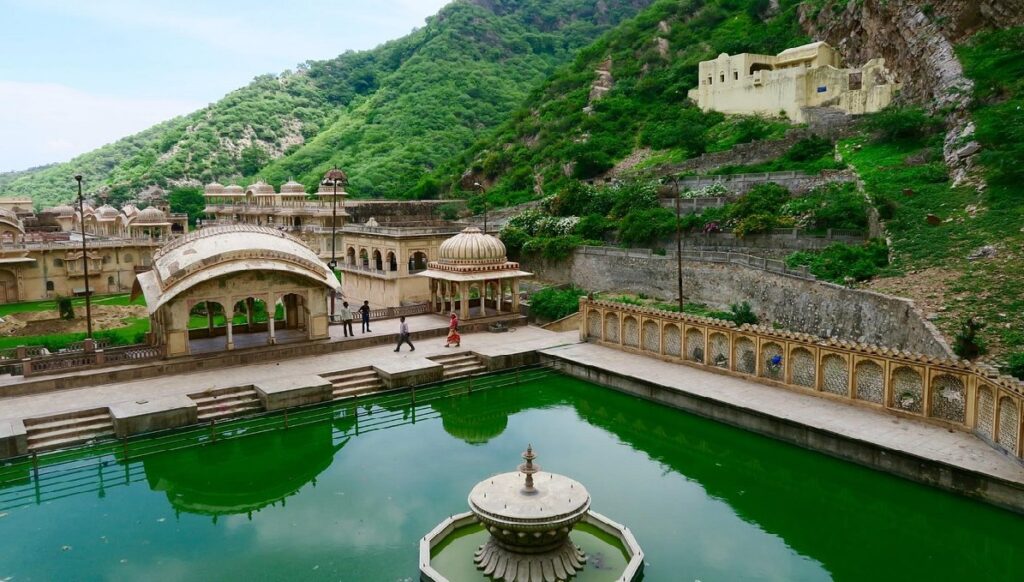
Jaipur, the Pink City of Rajasthan, is not only famous for forts, palaces, and colorful bazaars but also for its ancient temples that hold centuries of history and devotion. Among them, the Galtaji Temple stands out as one of the most unique and spiritually significant sites. Nestled amidst the Aravalli Hills, this temple is often called the Monkey Temple of Jaipur due to the large population of monkeys that roam freely around the complex.
Galtaji Temple is not just one shrine but a complex of temples, pavilions, and sacred water tanks (kunds), believed to have natural springs that never dry up. It is said to be over 500 years old, built in pink sandstone with stunning architecture, and holds a deep connection to saints and sages who performed meditation here. The temple is dedicated to Lord Hanuman, Lord Ram, and other Hindu deities, and is a major site for devotees as well as curious travelers.
In this guide, you’ll learn about the history, legends, rituals, architecture, natural springs, and practical visitor details of Galtaji Temple. It will help you understand why this sacred site attracts pilgrims, locals, and tourists alike, and how you can plan your visit for the best experience.
History and Legends of Galtaji Temple
The history of Galtaji Temple is deeply rooted in Jaipur’s religious traditions. According to local legends, the site was once the residence of Saint Galav, a revered sage who spent years meditating in the surrounding hills. It is believed that his intense penance pleased the gods, who blessed the place with eternal water flowing from natural springs. These springs feed the temple’s sacred tanks, making Galtaji an important site for purification rituals.
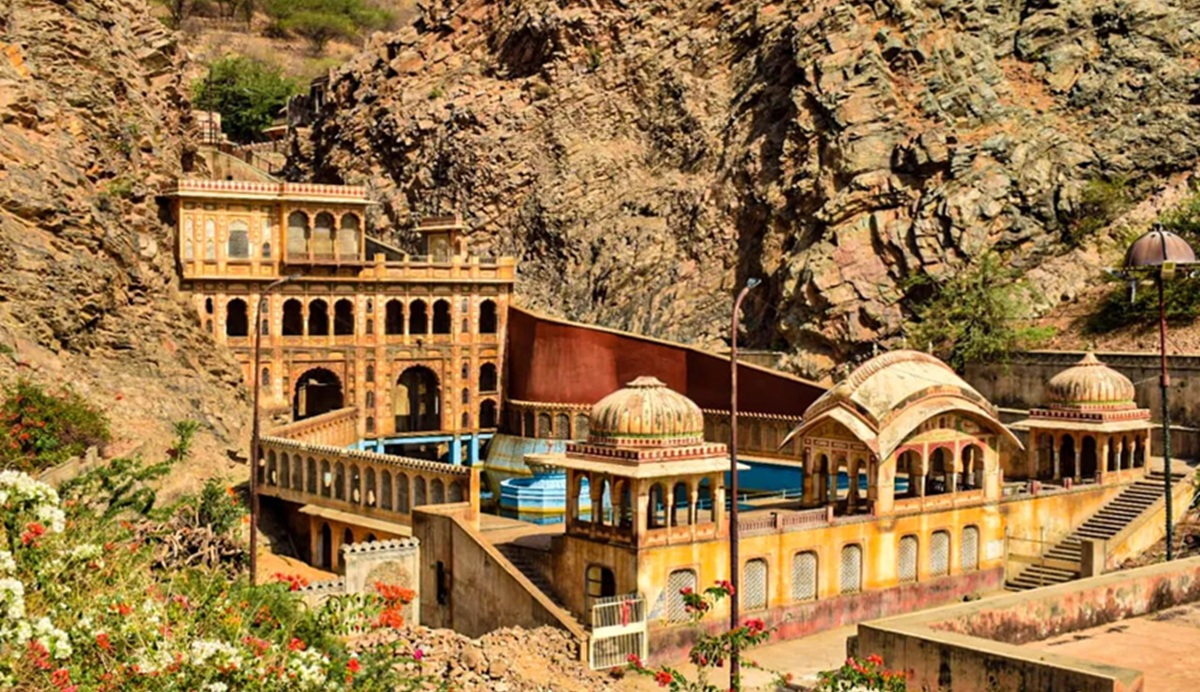
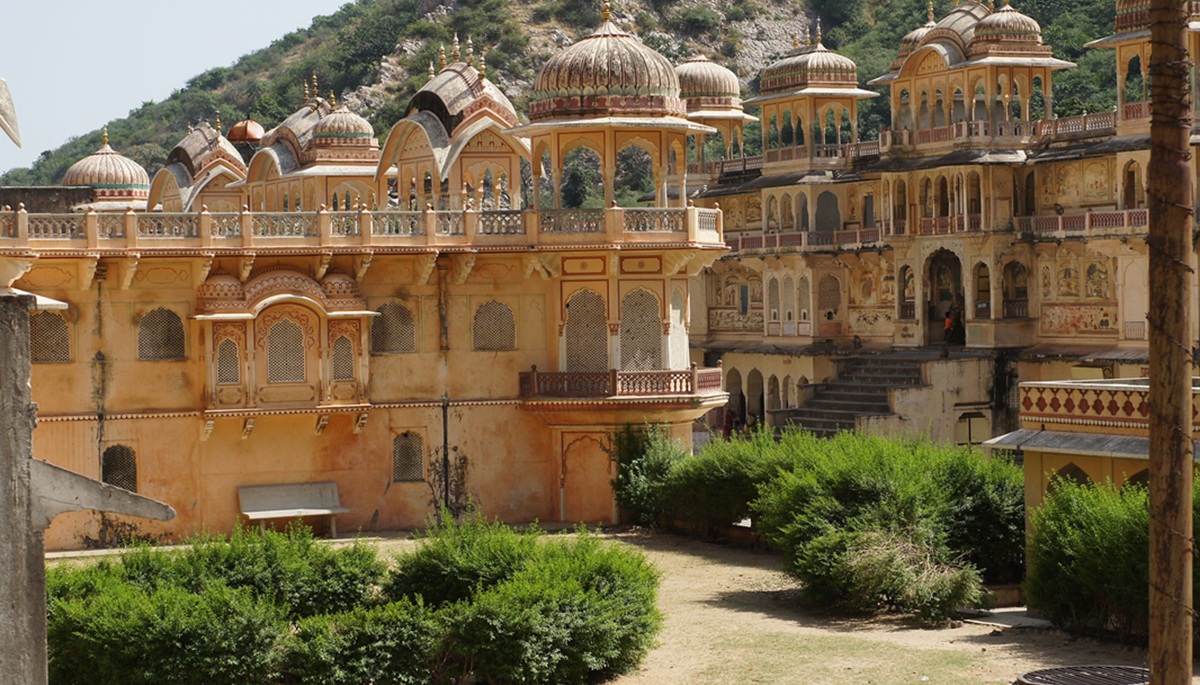
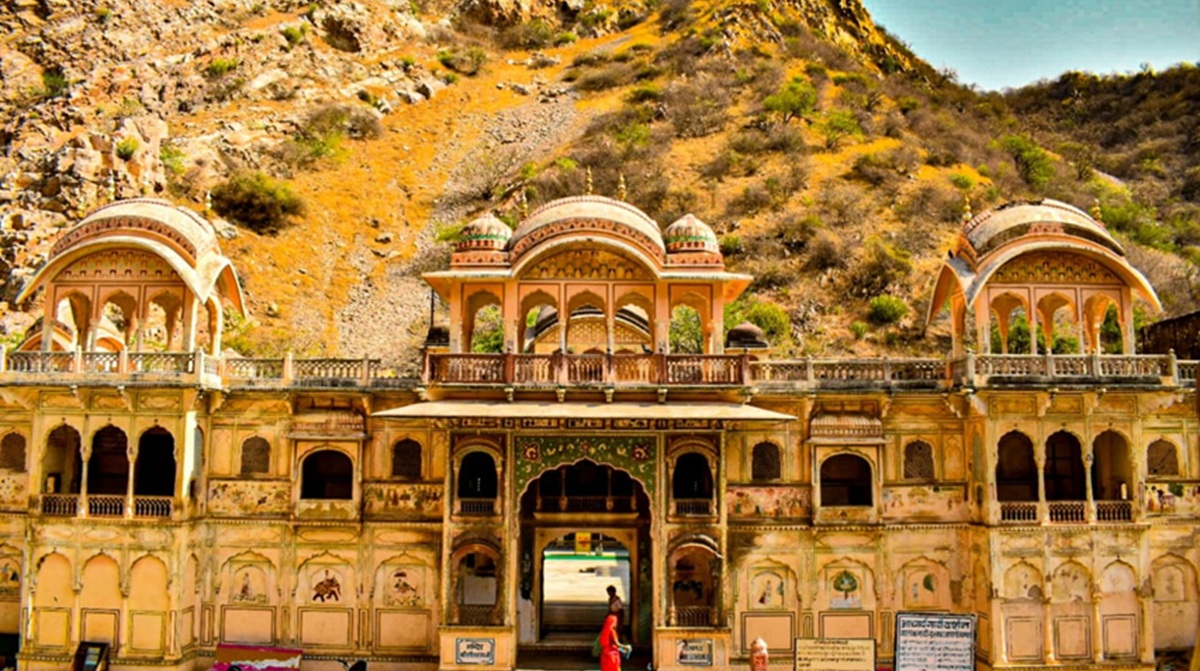
The current temple complex was built in the 18th century by Diwan Rao Kriparam, a courtier of Maharaja Sawai Jai Singh II of Jaipur. Constructed in pink sandstone with intricate carvings and painted frescoes, the temple blends Rajput and Mughal architectural styles. Its location, set in a narrow crevice of the Aravalli Hills, gives it a hidden charm, almost as if the temple is carved into the mountain itself.
Hindu mythology also ties the site to Lord Ram and Hanuman. The temple has shrines dedicated to these deities, along with Lord Krishna, Surya (the Sun God), and others. Over the centuries, Galtaji became a hub for saints, ascetics, and pilgrims who considered it an ideal place for spiritual retreat. Even today, thousands gather here for special occasions like Makar Sankranti, when devotees bathe in the kunds for spiritual cleansing.
The legend of monkeys also adds to its popularity. The Hanuman temple within the complex naturally attracted monkeys, which now live in large groups here. Over time, this gave Galtaji its nickname—the Monkey Temple—and many visitors now come specifically to see these animals roaming freely.
Architecture of Galtaji Temple
The architecture of Galtaji Temple reflects the elegance of Rajasthani design combined with Mughal influences. Built with pink sandstone, the temple structures rise in tiers along the hillside, giving an impression of a palace complex rather than a single temple. The main temple stands surrounded by smaller shrines and pavilions, all set against the dramatic backdrop of the rocky Aravalli Hills.
One of the most striking features is the arched gateways and chhatris (domed pavilions), which create a royal and serene atmosphere. The walls and ceilings are decorated with frescoes depicting mythological stories, floral motifs, and intricate geometric designs. Despite centuries of exposure, many of these frescoes still retain their charm, offering a glimpse into the artistry of the 18th century.
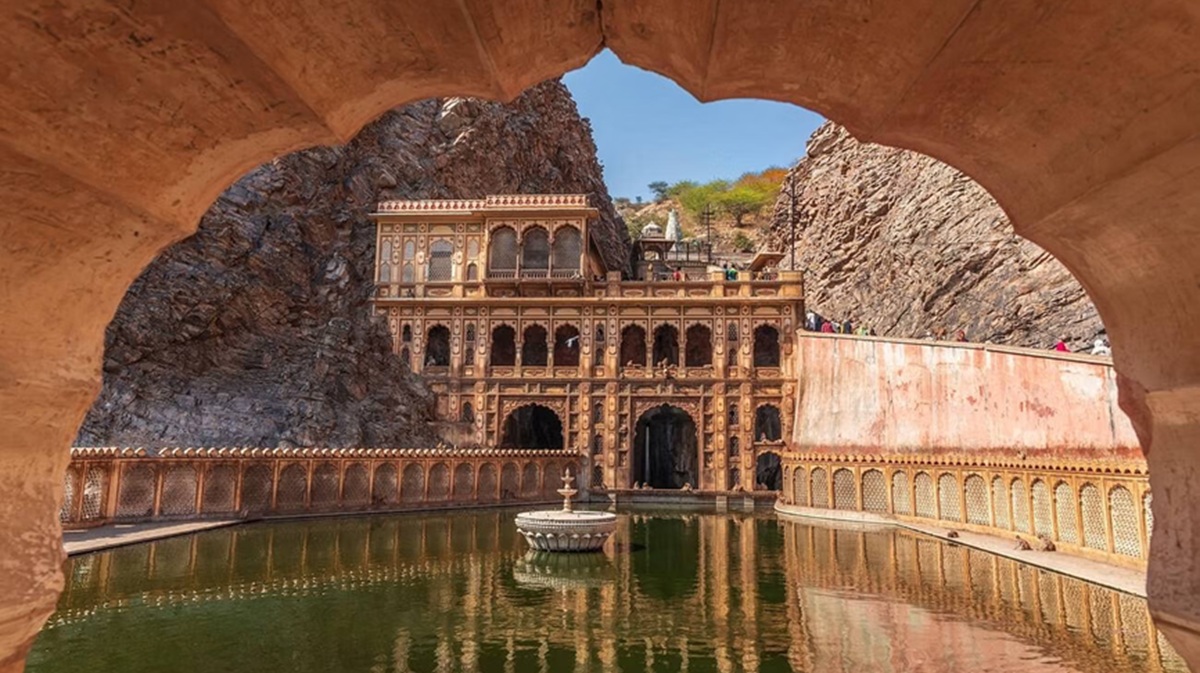
At the heart of the complex are the kunds (water tanks). These are considered sacred reservoirs fed by natural springs. The most prominent among them are Galta Kund and Surya Kund. Pilgrims believe the water in these tanks is holy and never runs dry, regardless of the season. The tanks are surrounded by steps where devotees sit, meditate, or prepare for ritual baths.
The temple dedicated to Lord Hanuman is another highlight. It is adorned with large courtyards, open halls, and idols of the deity. The monkeys often gather here, adding both a lively and spiritual energy to the temple atmosphere.
Overall, the architectural design of Galtaji Temple creates a perfect harmony between nature, spirituality, and art. The temples blend into the hills, and the natural water bodies make it one of the most picturesque religious sites in Jaipur.
Explore Also: Top 5 Temples in Jaipur for a Spiritual Visit
The Sacred Kunds (Water Tanks)
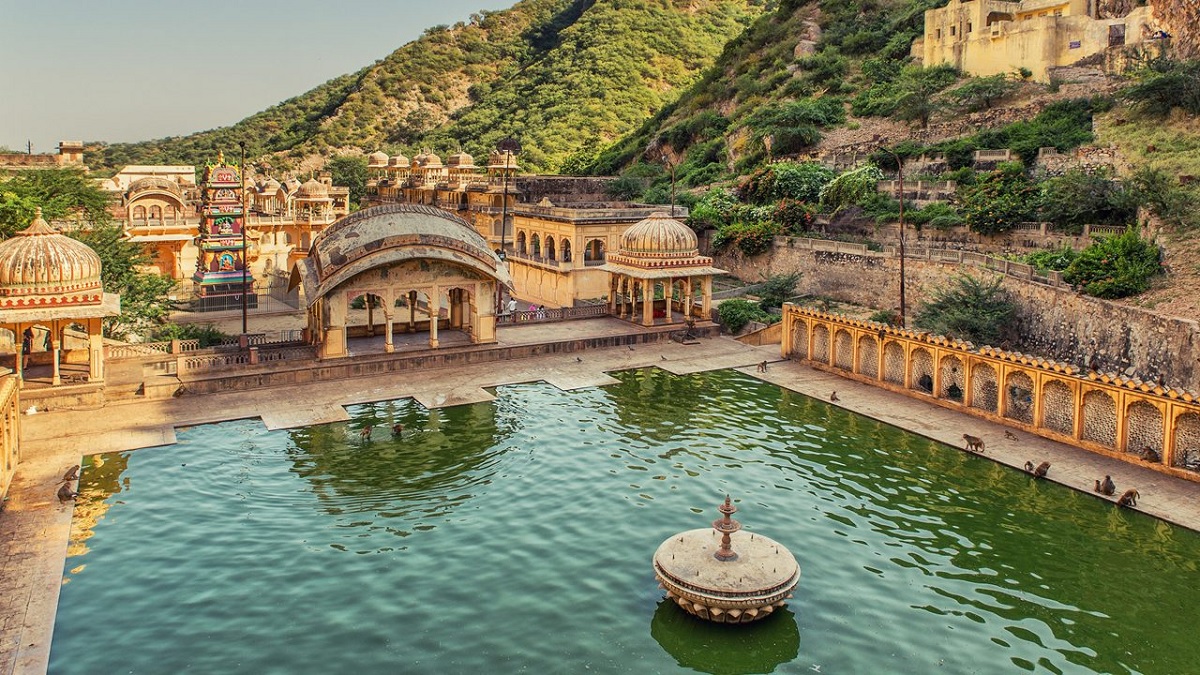
One of the most fascinating aspects of Galtaji Temple is its seven kunds (sacred water tanks), believed to hold purifying and healing properties. Among them, the Galta Kund is considered the holiest. Legend says that no matter how much water is taken from it, the tank never dries up. This belief has made it a central spot for rituals and holy dips.
The kunds are fed by natural springs flowing from the hills. These springs are considered a divine blessing, as Rajasthan is known for its arid climate. The continuous flow of fresh water into the tanks has been a mystery for centuries, strengthening the spiritual aura of the temple.
On important festivals like Makar Sankranti (14 January), thousands of devotees flock to the temple to bathe in the kunds, seeking spiritual cleansing and freedom from sins. The sight of pilgrims lining up to dip into the cold yet holy water is an experience that leaves a strong impression on visitors.
Each kund has its own significance. Surya Kund, dedicated to the Sun God, is especially popular. Pilgrims offer prayers here before entering the other tanks. Ramgopalji’s kund is also well-known, as it sits near the temple of Ramgopalji, one of the deities worshiped at Galtaji.
For travelers, the kunds are not only spiritually fascinating but also visually beautiful. The tanks, surrounded by stone steps, temples, and the hills beyond, create a peaceful atmosphere where you can sit, reflect, and watch rituals unfold. Whether or not you take a dip, the sight of locals performing prayers and monkeys playing around the steps makes this part of Galtaji an unforgettable experience.
Read: 17 Famous Temples in Rajasthan You Must Visit
Monkeys of Galtaji Temple
The nickname “Monkey Temple” comes from the large population of monkeys that inhabit the Galtaji complex. These monkeys, mostly rhesus macaques and langurs, are considered sacred because of the temple’s association with Lord Hanuman. They roam freely across the temple grounds, sit by the kunds, and even interact with visitors.
For many tourists, watching these monkeys is one of the highlights of visiting Galtaji. They often play, fight, or leap gracefully across temple domes and pavilions. Some are friendly and approach visitors for food, while others prefer to stay at a distance. Many devotees and locals bring fruits, peanuts, or prasad to feed them, considering it an offering to Lord Hanuman.
However, travelers should be cautious. The monkeys are curious and sometimes mischievous, snatching food, water bottles, or even sunglasses. It is advisable to avoid carrying plastic bags or loose items in your hands when walking through the complex.
Despite their antics, the monkeys add a unique energy to the temple. They are not aggressive when respected, and watching them interact in their natural setting gives the temple a vibrant, lively feel. For photographers, the sight of monkeys sitting against the backdrop of the kunds and sandstone temples creates memorable pictures.
The presence of monkeys also connects the temple to its religious essence. In Hinduism, feeding monkeys is believed to bring blessings, as they are associated with Lord Hanuman. This combination of devotion, wildlife, and culture makes Galtaji Temple a one-of-a-kind attraction.
Check out: Jaipur to Bikaner Tour – 3 Nights 4 Days Package
Religious Rituals and Festivals at Galtaji
Galtaji Temple is an active place of worship where daily rituals and seasonal festivals keep the complex alive with devotion. Priests perform aarti (prayer rituals with lamps) in the main shrines dedicated to Lord Ram, Hanuman, and Krishna. Devotees often light incense, chant mantras, and offer flowers or prasad.
One of the most important festivals celebrated here is Makar Sankranti in January. Pilgrims gather in thousands to bathe in the sacred kunds. The temple becomes filled with the sound of devotional songs, bells, and chants. This is considered the most auspicious time to visit Galtaji.
Other Hindu festivals such as Ram Navami, Krishna Janmashtami, Diwali, and Holi are also celebrated with grandeur. During these events, the temples are decorated with flowers, oil lamps, and colorful rangoli designs. Local musicians and devotees perform bhajans (devotional songs), creating a spiritual atmosphere that travelers find enchanting.
On normal days, the temple is relatively calm. You will see priests performing morning and evening prayers, devotees taking a dip in the kunds, and pilgrims meditating on the temple steps. The serene atmosphere, combined with the chants and bells, makes even a casual visit spiritually uplifting.
For travelers interested in culture, attending a festival here gives a deeper understanding of Rajasthan’s religious traditions. Even if you visit on an ordinary day, witnessing the blending of rituals, natural elements, and community devotion makes the experience memorable.
Read Also: Rajasthan in August – Monsoon Destinations & Travel Tips
Legends and Spiritual Significance
The legends surrounding Galtaji Temple add to its mystique. The most well-known is that of Saint Galav, who performed deep penance here. Pleased with his devotion, the gods blessed the land with perpetual springs. Because of this, Galtaji is considered a sacred spot for purification and spiritual advancement.
Another belief ties the temple to Lord Hanuman, who is said to have spent time here in devotion to Lord Ram. This is why the monkey population is respected and associated with divine energy. Many pilgrims believe feeding monkeys here brings good fortune.
The kunds themselves are believed to be gateways to spiritual cleansing. Bathing in them is thought to wash away sins and prepare the devotee for moksha (liberation from the cycle of birth and death). Pilgrims from across India travel here with this belief in mind.
Some legends also say that Galtaji is as sacred as the holy Ganges. Since Jaipur lies in a desert region, the continuous flow of water here is considered miraculous and divine. This belief has made the temple one of the most revered pilgrimage sites in Rajasthan.
Check out: Jaipur, Udaipur & Chittorgarh – 5 Days Rajasthan Tour
Whether you see it as myth or faith, the legends give Galtaji Temple a sense of timeless spirituality. For travelers, learning these stories enriches the experience, transforming the visit from simple sightseeing into a journey into Rajasthan’s sacred traditions.
Read: Attractions Near Khatu Shyam Ji Temple – Travel Guide
Best Time to Visit Galtaji Temple
The best time to visit Galtaji Temple is during the winter season (October to March) when Jaipur’s weather is pleasant. Daytime temperatures remain comfortable, making it easier to walk around the complex and climb the steps leading to various shrines.
The monsoon season (July to September) also has its charm. The Aravalli Hills turn green, and the natural springs look more beautiful. However, the paths may be slippery, so caution is needed.
Summers (April to June) are extremely hot in Jaipur, with temperatures often crossing 40°C. Visiting the temple in the daytime can be uncomfortable. If you happen to be in Jaipur during summer, plan your visit early in the morning or late in the evening.
For those interested in festivals, Makar Sankranti (January 14) is the most important occasion to witness. The temple attracts massive crowds, and the energy is truly electrifying. Other festivals like Ram Navami and Diwali are also worth experiencing here.
Timing-wise, the temple is open daily from 5:00 AM to 9:00 PM, with morning and evening aartis being the best times to witness rituals. Visiting in the early morning gives a serene experience, while evenings allow you to see the temple beautifully lit.
Overall, winters and festival days provide the most fulfilling experience of Galtaji Temple.
Check out: Jaipur with Ranthambore Safari – 5 Days Itinerary
How to Reach Galtaji Temple
Galtaji Temple is located about 10 km from Jaipur city center, nestled in the Aravalli Hills. Despite its somewhat remote location, it is well-connected by road.
- By Auto-Rickshaw or Taxi: The easiest option is to hire an auto-rickshaw or taxi from Jaipur city. The ride takes about 30–40 minutes and costs between INR 200–500 depending on distance and negotiation.
- By Bus: Local buses also run toward Galta Gate, from where you can walk or take a short auto ride to the temple.
- By Walking/Trekking: Some adventurous travelers choose to trek from Surajpol or Galta Gate. The trail offers scenic views of the Aravalli Hills and is about 2–3 km long.
- From Jaipur Railway Station/Airport: From the railway station, it takes around 40 minutes by road. From Jaipur International Airport, it takes about 50 minutes.
Since the temple lies in a hilly area, roads become narrow as you approach. The final stretch often requires walking up stairs, so wearing comfortable shoes is recommended.
Reaching the temple feels like a journey into nature itself. The approach passes through village roads, rocky paths, and eventually opens into the grand temple complex surrounded by hills and monkeys.
Check out: Explore Jaipur, Ajmer & Pushkar – 4 Days Tour
Visitor Tips and Guidelines
To make your visit to Galtaji Temple smooth and enjoyable, here are some practical tips:
- Dress Modestly: As it is a religious site, wear clothes that cover shoulders and knees.
- Footwear: Remove shoes before entering the main temples. Carry a bag if you prefer to keep them safe.
- Respect the Monkeys: Do not tease or chase them. Keep your belongings close and avoid plastic bags. Carry some peanuts or bananas if you wish to feed them.
- Photography: Allowed in most areas, but be mindful of worshippers. Avoid using flash near the monkeys.
- Hydration: Carry a water bottle, especially in summer, but hold it carefully as monkeys may try to grab it.
- Best Time of Day: Visit in the morning for peace or in the evening for a livelier experience.
- Safety: The temple is generally safe, but avoid going too late at night.
Following these tips will help you enjoy both the spiritual and natural aspects of Galtaji Temple.
Read: Rajasthan in September – Best Things to Do & Events
Conclusion
Galtaji Temple is one of Jaipur’s most fascinating spiritual and cultural landmarks. Known as the Monkey Temple, it combines religion, natural beauty, and vibrant wildlife in one place. With its sacred kunds, mythological legends, daily rituals, and playful monkeys, it offers an experience unlike any other in the Pink City.
For devotees, it is a site of deep faith where taking a dip in the sacred waters is a path to spiritual cleansing. For travelers, it is a mix of heritage, architecture, and nature that reveals Rajasthan’s diversity beyond forts and palaces.
Whether you come for the legends of Saint Galav, the beauty of the sandstone architecture, the thrill of seeing hundreds of monkeys, or the joy of watching rituals unfold at sunset, Galtaji Temple will leave you enriched.
A visit here is not only about sightseeing but also about experiencing a living tradition where faith, nature, and community come together.
If you are in Jaipur, set aside a few hours for Galtaji Temple—it will give you memories of spirituality, history, and cultural richness that stay with you long after you leave.
Explore Also: Your Jaipur Day Trip Awaits—Discover Whether Car or Train is Better!
FAQs
Q. Where is the Galtaji Temple located in Jaipur?
Ans. The Galtaji Temple is located about 10 km from the center of Jaipur, in the Khania-Balaji area.
It is situated in a valley surrounded by Aravalli hills, between the Jaipur-Agra highway.
The main access is through Galta Gate, near the Surajpol area.
Visitors usually take a taxi, rickshaw, or private vehicle to reach the temple.
Q. What are the visiting hours and darshan times at Galtaji Temple?
Ans. Galtaji Temple is open every day from 5:00 a.m. to 9:00 p.m.
Morning hours are usually reserved for aarti rituals and sacred baths in the kunds.
Sunset is another popular time, when the light over the hills creates a spiritual atmosphere.
No entrance fees are charged, but donations are recommended.
Q. Why is it known as the “Monkey Temple”?
Ans. Galtaji Temple is famous for its large population of monkeys that live in the hills and gardens
around the complex. Visitors encounter them at the temple ponds and stairs.
For this reason, tourists call it the “Monkey Temple”.
Although they are harmless, it is recommended not to feed them excessively or carry eye-catching objects.
Q. What rituals and sacred baths are practiced at Galtaji?
Ans. The temple has several kunds or natural water tanks, filled by springs from the hills.
The most important is Galta Kund, considered to never run dry.
Pilgrims bathe here, especially during Makar Sankranti,
as it is believed that the water has purifying power similar to the Ganga river.
Daily aartis are also performed in honor of Hanuman and the sun god.
Q. What is the best time to visit Galtaji Temple?
Ans. The best time to visit is between October and March, when the weather is cool.
During January (Makar Sankranti), thousands of devotees come to the temple to bathe in the kunds.
Mornings and evenings are the most pleasant times to explore, as it gets hot at midday.
Q. What should I bring or keep in mind when visiting Galtaji Temple?
Ans. It is recommended to wear comfortable and respectful clothing (covering shoulders and knees), light footwear, drinking water, and a camera.
Do not carry food in open bags, as they attract monkeys.
Be careful with small belongings.
For those who wish to bathe in the kunds, it is advisable to bring additional clothing.
Q. What legends are associated with Galtaji Temple?
Ans. According to legend, the sage Galav performed penance at this place for thousands of years.
As a blessing, the gods made an eternal spring flow from the hill,
which today feeds the sacred kunds.
Another tradition says that Hanuman protects the site and that’s why monkeys abound.
These stories reinforce the spiritual importance of the temple.
Q. How to reach Galtaji Temple from Jaipur?
Ans. From the center of Jaipur (Pink City), Galtaji Temple is about 30-40 minutes by car.
Visitors usually hire a taxi or autorickshaw.
There are also guided tours that include Amber Fort, Galta Ji, and other nearby sites.
The final access requires walking a few meters on paths between hills.
Continue Your Journey Here:
- Ready to Shop in Jaipur? Dive into Bapu Bazaar’s Treasures!
- Don’t Miss Jaipur’s Tripolia Bazaar – Click to Uncover Beautiful Bangles!
- Elephant Festival Jaipur 2025 – Events & Highlights
- How to Reach Ranthambore from Jaipur
- Holi Festival 2025 in Jaipur – Colors & Traditions
- Famous Temples to Visit in Jaipur
- Bapu Bazaar Jaipur – Best Shopping Guide
- Things to Do in Jaipur with Kids & Family
- Jaipur Monuments – Entry Fees & Travel Info
- Rajasthani Cooking Classes in Jaipur
- Jaipur Literature Festival 2025 – Dates & Venue
- Ranthambore Safari Tickets & Booking Guide
- Ranthambore Fort – History & Visitor Guide
- Jhalana Leopard Safari – Timings & Entry Fee
- Albert Hall Museum Jaipur – Visitor Guide
- Abhaneri Stepwell – History & Travel Guide
- Rajasthan Travel Guide & Festival Celebrations
- Chand Baori Stepwell – Visitor Guide
- Chokhi Dhani Jaipur – Attractions & Activities
- Patrika Gate Jaipur: Ultimate Instagram Guide
- Birla Mandir Jaipur Guide – History, Best Time & Travel Tips
- Govind Devji Temple Jaipur – Timings, Rituals & Visitor Guide
- Discover Neemrana Fort – Explore Tour from Delhi Now!
- See Jaipur’s Beauty in Just One Day – Travel by Train from Delhi!