Tucked amidst the lofty Garhwal Himalayas, the sacred town of Kedarnath is known for its deep-rooted spirituality, ancient legends, and breathtaking landscapes. While the Kedarnath Temple—dedicated to Lord Shiva—is the main attraction, there’s another powerful site located just a short trek away that many travelers often overlook: the Bhairav Temple, also known as Bhairavnath Temple.
Overlooking the Kedarnath valley and surrounded by snow-capped peaks, the Bhairav Temple is not only an important pilgrimage destination in itself, but it also holds great mythological and protective significance for the region. If you’re planning a spiritual journey to Kedarnath, visiting Bhairav Temple is an experience you shouldn’t miss.
In this travel guide, we’ll explore why the Bhairav Temple is famous, its exact location, and how to reach this divine site easily in 2025.
Why Is Kedarnath Bhairav Temple Famous?
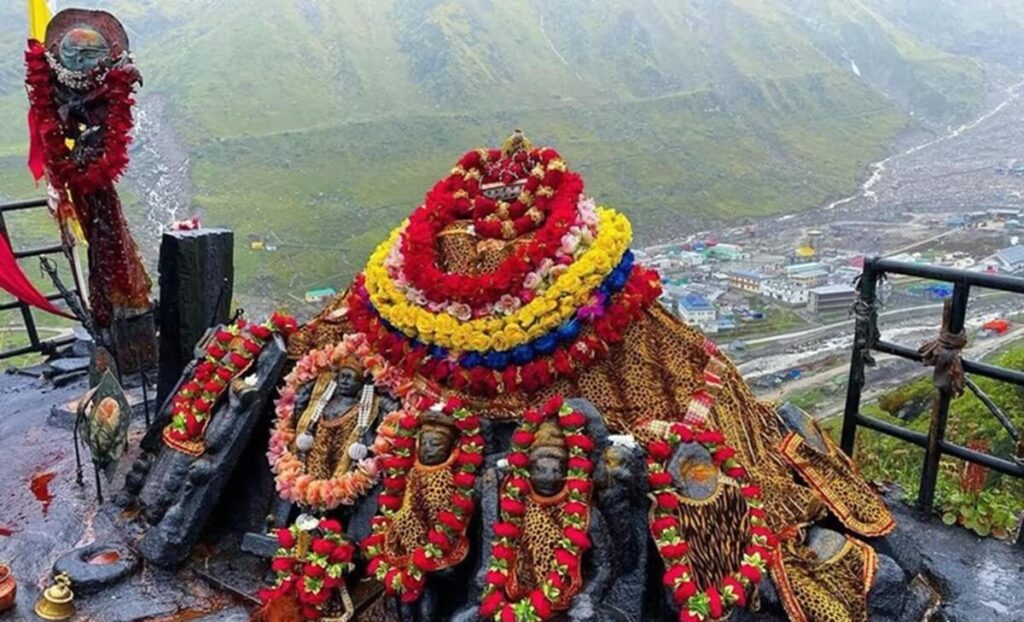
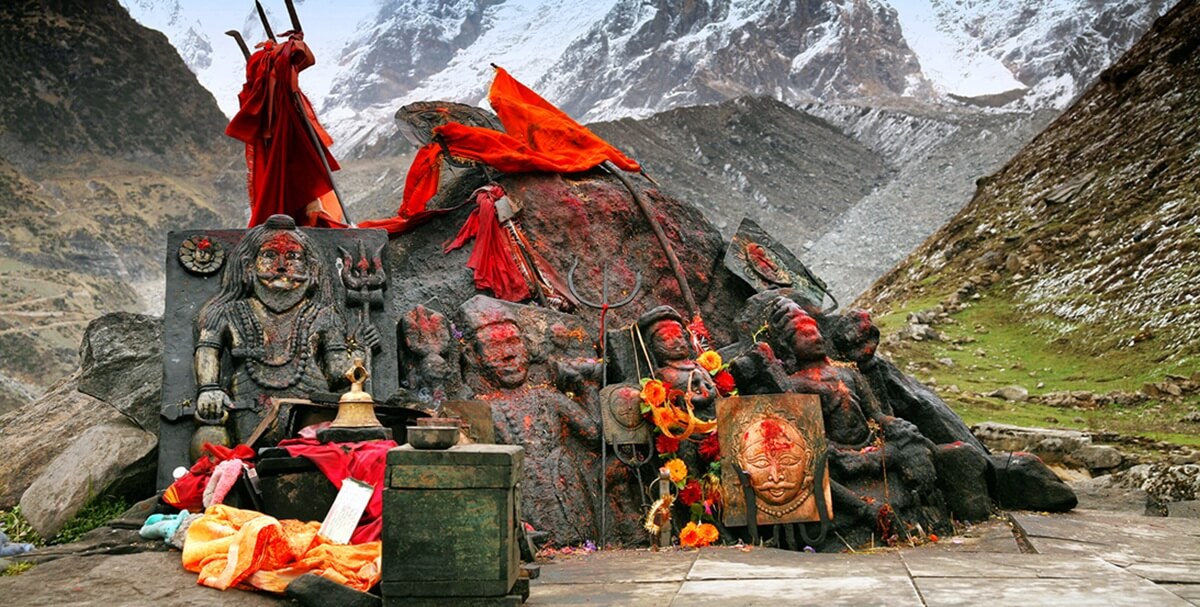
The Bhairav Temple in Kedarnath is dedicated to Lord Bhairav, a fierce manifestation of Lord Shiva associated with destruction and protection. In local belief and ancient scriptures, Bhairav is regarded as the guardian deity (kshetrapal) of Kedarnath town and its temple.
Spiritual Significance
According to Hindu mythology, after Lord Shiva manifested at Kedarnath in the form of a jyotirlinga, he appointed Bhairavnath as the protector of the temple and the surrounding region, especially during the harsh winter months when the main Kedarnath temple remains closed due to heavy snowfall.
During the six months of winter, when Kedarnath is inaccessible and the presiding deity is moved to Omkareshwar Temple in Ukhimath, it is believed that Bhairav watches over Kedarnath, protecting it from natural calamities and evil forces.
Many pilgrims make it a point to visit Bhairav Temple after their darshan at Kedarnath Temple, as it’s considered the final step to complete the yatra.
Mythological Belief
Local lore says that the bells in the Bhairav Temple ring mysteriously during snowstorms, as a sign that Bhairav is actively guarding the temple town. The deity is revered not just with devotion, but also with awe and respect for his fierce form.
Where Is Bhairav Temple Located?
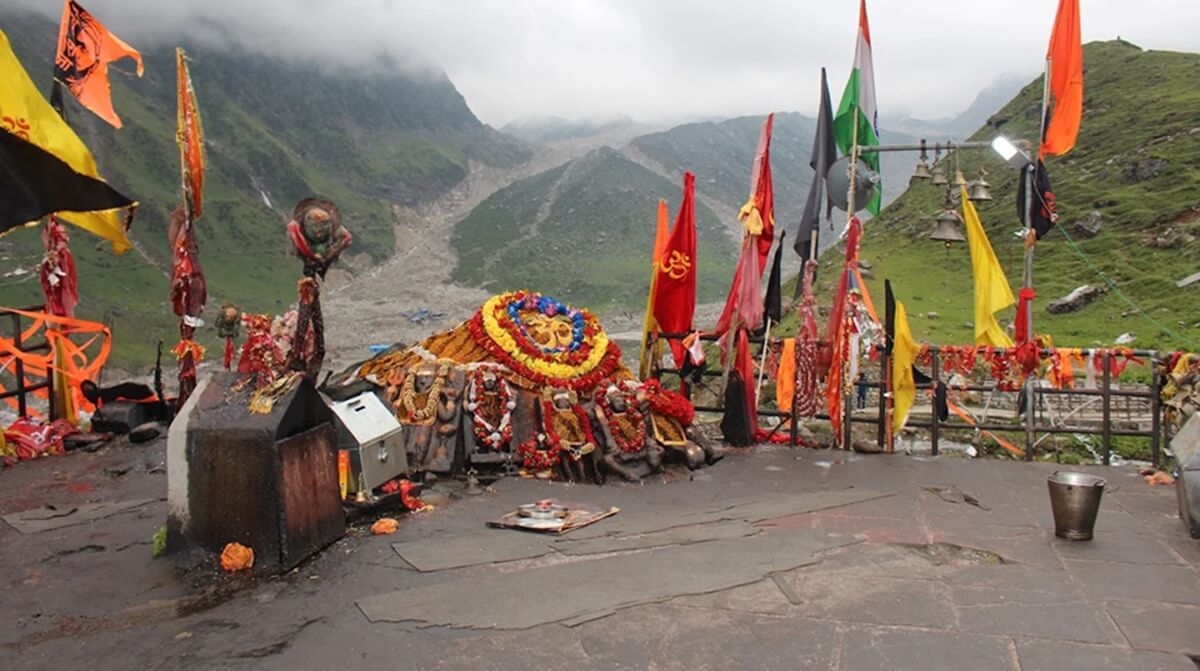
The Bhairav Temple is located on a small hilltop ridge about 500 meters southeast of the Kedarnath Temple. The elevated position offers panoramic views of the Kedarnath valley, Mandakini River, and the temple complex below.
Quick Facts:
- Altitude: Approximately 3,650 meters (11,975 feet) above sea level
- Distance from Kedarnath Temple: About 10–15 minutes uphill walk
- Best Time to Visit: May to June and September to early November
- Opening Months: Same as Kedarnath—open during Char Dham yatra season (May to November)
What to Expect
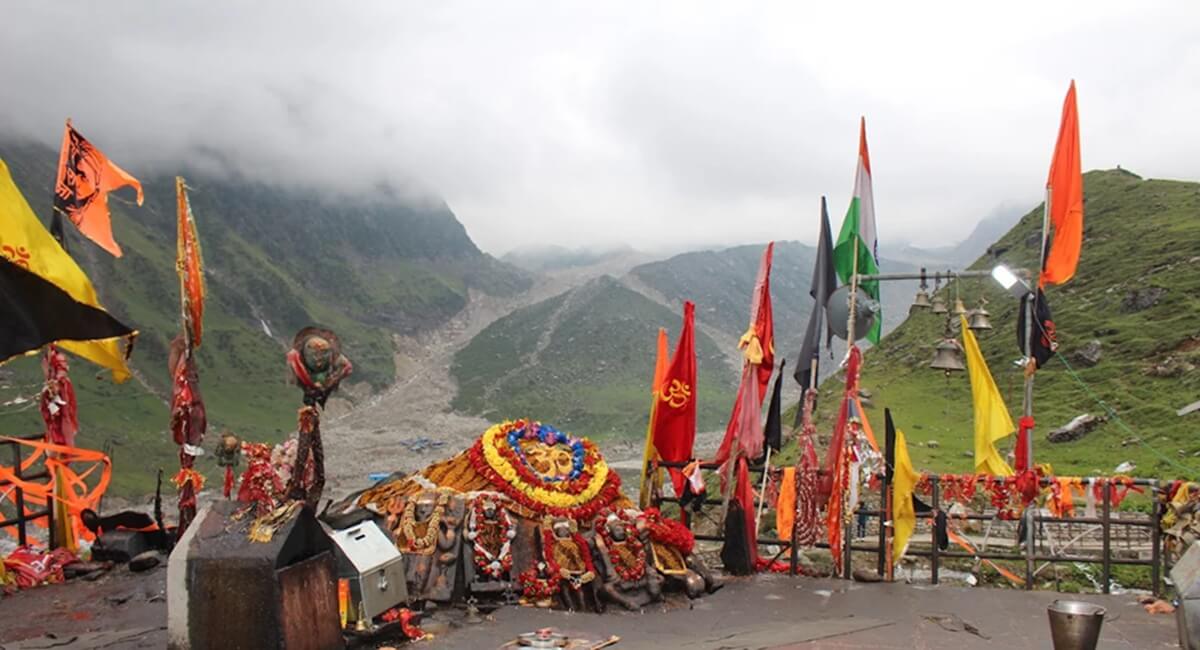
The trek to Bhairav Temple is short but slightly steep. Along the way, you’ll see fluttering prayer flags, local Himalayan flora, and occasional mules or sadhus on the trail. At the top, a small stone shrine houses the idol of Bhairav, often adorned with bells, tridents, and red threads.
The area around the temple is less crowded than Kedarnath, offering a moment of peaceful reflection and stunning 360-degree mountain views.
How to Reach Bhairav Temple from Kedarnath
Step-by-Step Guide:
- Reach Kedarnath Temple First
To visit Bhairav Temple, your journey begins with reaching Kedarnath, which is accessible only by trekking or helicopter. There is no motorable road to the temple.Read our full guide: How to Reach Kedarnath from Delhi or Kedarnath Yatra from Mumbai Travel Guide - From Kedarnath Temple to Bhairav Temple
After completing darshan at the main Kedarnath shrine, you can follow a well-marked foot trail behind the temple complex leading to Bhairav Temple.- Distance: 500–700 meters
- Time Required: 15 to 30 minutes
- Difficulty: Easy to moderate (uphill terrain)
- Footwear: Comfortable walking or trekking shoes recommended
- Guides Not Required
The trail is straightforward, and most pilgrims find it easily with the help of local signs or asking temple volunteers. - Safety Tips
The trail can get slippery after rains or in early mornings due to frost. Elderly pilgrims may take short breaks along the way.
How to Reach Kedarnath (for Bhairav Temple Visit)
To visit Bhairav Temple, you must first reach Kedarnath. Here’s a brief travel guide for 2025:
By Air
- Nearest Airport: Jolly Grant Airport, Dehradun (250 km from Gaurikund)
- From Dehradun, hire a cab or take a bus to Sonprayag/Gaurikund, the trek base.
By Train
- Nearest Stations: Rishikesh, Haridwar, or Dehradun
- From here, proceed by road to Gaurikund via Rudraprayag and Guptkashi.
Travel By Road
- Trek Base: Gaurikund
- Distance from major cities:
- Rishikesh to Gaurikund: 210 km
- Haridwar to Gaurikund: 230 km
- Private taxis and buses are available seasonally.
From Gaurikund to Kedarnath
- Trek: 16 km well-paved trail
- Pony, palki, and helicopter services are available
- Helicopter booking should be done in advance
For more trekking details, read: Kedarnath Dham Route Map
What to Carry on Your Visit to Bhairav Temple
- Warm clothing (weather can change rapidly)
- Comfortable walking shoes
- Water bottle and light snacks
- Camera (for breathtaking views)
- Offerings (flowers, bells, or prasad if you wish to worship)
Other Places to Visit Around Kedarnath
If you’re already planning your Kedarnath yatra, here are some nearby spiritual sites to consider adding to your itinerary:
- Adi Shankaracharya Samadhi – Located right behind Kedarnath Temple
- Rudraprayag – Confluence of Alaknanda and Mandakini rivers
- Guptkashi – Known for Vishwanath Temple and Ardhnarishwar Temple
- Triyuginarayan Temple – Mythological wedding site of Shiva and Parvati
- Chopta and Tungnath – For those adding trekking and nature into the pilgrimage
Explore our full Char Dham Yatra Itinerary to plan your visit better.
Final Thoughts
The Bhairav Temple in Kedarnath may not be as grand or popular as the main shrine, but its spiritual role and serene setting make it an essential stop for pilgrims and seekers alike. It embodies the mystical side of Kedarnath—where myths, devotion, and nature converge.
Whether you’re trekking for adventure, praying for blessings, or seeking peace in the Himalayas, don’t skip this short detour—it could be the most meaningful moment of your journey.
You Might Also Like:
- Kedarnath Weather in August 2025 – Travel Tips & Highlights
- Kedarnath Yatra in September 2025 – Complete Travel Guide
- Kedarnath Weather in July 2025 – Climate, Tips & More
- Top Places to Visit in Gaurikund – Gateway to Kedarnath
- How to Reach Kedarnath from Ahmedabad – Travel Guide 2025
- Kedarnath Opening & Closing Dates 2025 – Pilgrimage Info
- How to Reach Kedarnath from Dehradun – Best Routes & Tips
- Kedarnath Route Map – Easy Guide for Devotees
- Travel to Kedarnath from Delhi – By Train, Road & Air
- North India 10-Day Itinerary – How to Plan Your 2025 Trip
- Best Time to Do Char Dham Yatra – Month-wise Guide
- Char Dham Yatra Dates 2025 – Opening & Closing Schedule
- Char Dham Yatra from Mumbai – Route, Tips & Guide
- Top 11 Shiva Temples to Visit in Sawan
- Kalpeshwar Temple Guide – Panch Kedar Pilgrimage Tips
- Panch Kedar Yatra 2025 – Visit 5 Sacred Shiva Temples
- Tungnath Temple Guide – Timings, History & Travel Tips
- Best Time to Visit Tungnath – Weather & Opening Dates
- Adi Kailash Yatra 2025 – Travel Guide, Cost & Tips