High above the city of Nashik, carved quietly into a rocky hill, lies a forgotten chapter of India’s Buddhist past. The Pandavleni Caves are not loud or crowded like many heritage sites. They feel calm, thoughtful, and deeply human. These caves once echoed with chants, footsteps of monks, and the silence of meditation. Today, they offer something rare: history without noise, spirituality without ceremony, and views that slow you down. If you are curious about India’s Buddhist trail beyond the usual destinations, Pandavleni is a place that rewards patience, reflection, and a little climb.
What Are the Pandavleni Caves?
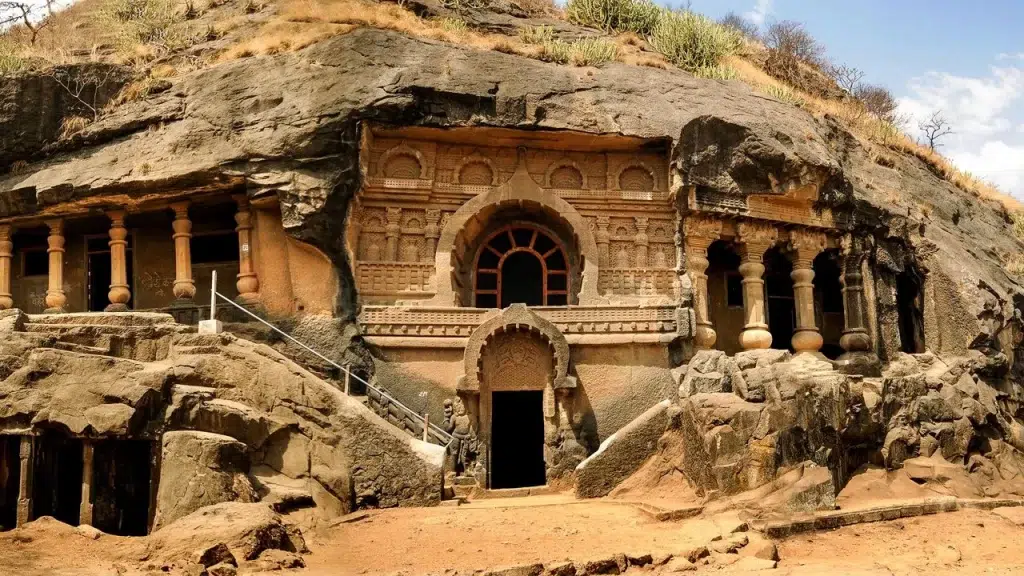
The Pandavleni Caves are a group of ancient rock-cut caves located on Trirashmi Hill, around 8 km from Nashik city in Maharashtra. Despite the popular name “Pandavleni,” these caves have no real connection with the Pandavas of the Mahabharata. The name came much later through local folklore.
Historically, these caves are Buddhist monastic dwellings carved between the 1st century BCE and the 3rd century CE. They belong mainly to the Hinayana (Theravada) tradition of Buddhism, where simplicity, meditation, and discipline were central.
There are 24 caves in total, each serving a specific purpose such as:
- Living quarters for monks (Viharas)
- Prayer halls (Chaityas)
- Water cisterns
- Study and meditation spaces
Unlike decorative cave complexes, Pandavleni stands out for its functional design, inscriptions, and austere beauty.
Why Pandavleni Is Important on the Buddhist Trail
A Living Record of Early Buddhism
Pandavleni is not just a tourist site. It is a historical document carved in stone. The caves preserve:
- Brahmi script inscriptions
- Names of donors including merchants, traders, and even Yavana (Greek-origin) patrons
- Details about monastic life and Buddhist community networks
This tells us that Nashik was once an important trade and spiritual hub, connected to ancient routes linking western India with the Deccan plateau.
Insight into Monastic Life
The caves give a rare glimpse into how monks lived:
- Simple stone beds
- Meditation cells
- Rainwater harvesting tanks
- Minimal ornamentation
For anyone interested in Buddhism beyond rituals, Pandavleni explains the everyday discipline of early monks.
Where Are the Pandavleni Caves Located?
Pandavleni Caves are located on Trirashmi Hill, just off the Mumbai–Agra National Highway (NH-160).
Distance from Major Cities
- Nashik City Centre: 8 km
- Mumbai: approx. 170 km
- Pune: approx. 210 km
- Aurangabad: approx. 190 km
The caves sit at a height, offering panoramic views of Nashik, especially beautiful during early morning and sunset.
Best Time to Visit Pandavleni Caves
Ideal Season (October to March)
This is the best period to explore the caves comfortably.
- Pleasant weather
- Clear views
- Ideal for walking and climbing steps
Monsoon Season (July to September)
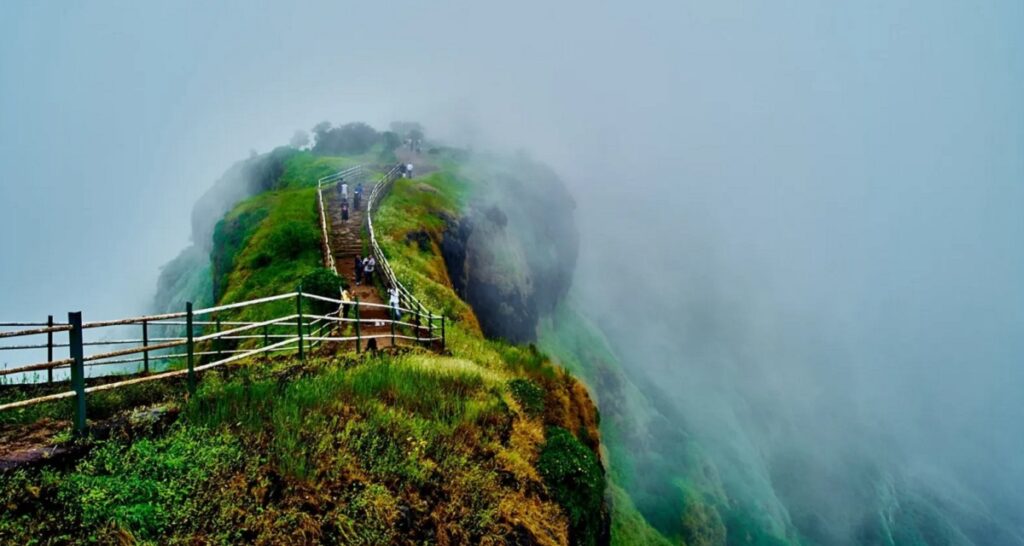
- The hill turns green and scenic
- Views are stunning
- Steps can be slippery, so caution is needed
Summer (April to June)
- Very hot, especially in the afternoon
- Visit only early morning or late evening
- Carry water and sun protection
Best time of day:
Early morning (7:30–10:30 am) or evening (4:30–6:30 pm)
How to Reach Pandavleni Caves
By Road
From Nashik city:
- Auto-rickshaws and taxis are easily available
- Approx fare: ₹150–₹300 one way
From Mumbai or Pune:
- Drive via NH-160
- Well-maintained highway
- Parking available at the base
By Train
Nearest railway station: Nashik Road Railway Station
- Well-connected to Mumbai, Pune, Delhi
- From station, take taxi or auto (approx 9 km)
By Bus
- Regular MSRTC buses to Nashik
- City buses and autos available to the caves
Local tip:
Ask for “Trirashmi Caves” or “Pandavleni Tekdi” locally.
Entry Fee, Timings & Facilities
Entry Fees
- Indians: ₹25 per person
- Foreigners: ₹300 per person
- Children below 15: Free
Timings
- Open daily: 8:00 am to 6:00 pm
- Last entry: Around 5:30 pm
Facilities
- Parking area
- Drinking water (limited)
- Toilets near entrance
- Small stalls selling snacks and coconut water
Exploring the Pandavleni Caves: Step-by-Step
The Climb to the Caves
The journey begins with a flight of stone steps leading up the hill.
- Moderate climb
- Takes 10–15 minutes
- Benches available midway
The climb itself sets the mood. City sounds slowly fade, replaced by wind and birds.
Cave Architecture Explained Simply
Viharas (Monk Living Quarters)
Most caves are viharas:
- Rectangular halls
- Stone benches along walls
- Small cells for sleeping and meditation
These were residential spaces, not temples.
Chaitya Cave (Prayer Hall)
One cave stands out as a chaitya:
- High arched roof
- Central stupa
- Space designed for group prayer
This was the spiritual heart of the complex.
Water Management System
One of the most impressive features:
- Rock-cut water tanks
- Channels to collect rainwater
- Ensured year-round water supply for monks
This shows advanced planning and sustainability.
Inscriptions and What They Tell Us
Pandavleni caves have some of the most important Buddhist inscriptions in western India.
They mention:
- Names of donors
- Professions like traders and bankers
- Kings and local rulers
- Monastic orders
Some inscriptions even mention women donors, highlighting inclusive patronage.
If you enjoy history, this is where Pandavleni truly comes alive.
Pandavleni and the Buddhist Trade Route
Pandavleni was strategically placed along ancient trade routes connecting:
- Western ports
- Deccan interiors
- Northern India
Merchants supported monasteries in return for:
- Safe rest stops
- Spiritual merit
- Community networking
This explains why Nashik flourished both economically and spiritually.
[Link to related guide: Buddhist sites in Maharashtra]
Things to Keep in Mind While Visiting
Clothing & Footwear
- Wear comfortable walking shoes
- Light cotton clothes in summer
- Avoid slippery footwear during monsoon
Safety Tips
- Watch steps during rains
- Avoid climbing after sunset
- Stay within marked paths
Photography Rules
- Photography allowed
- Avoid touching inscriptions
- No graffiti or markings
Food Options Near Pandavleni Caves
There are no food stalls inside the complex, but nearby Nashik has plenty of options:
- Local Maharashtrian thalis
- South Indian eateries
- Cafes and family restaurants
Try simple meals before or after your visit.
[Link to related guide: Best places to eat in Nashik]
Suggested Itinerary: Half-Day Pandavleni Visit
Morning Plan
- Reach caves by 8:00 am
- Explore caves slowly (1.5–2 hours)
- Sit quietly at the hilltop viewpoint
Post-Visit Options
- Visit nearby Jain temples
- Explore Nashik city
- Continue towards other heritage sites
[Link to related guide: Nashik heritage itinerary]
Why Pandavleni Appeals to Modern Travellers
- Not overcrowded
- Authentic Buddhist heritage
- Easy access from city
- Suitable for solo travellers, families, and seniors
- Ideal for spiritual, cultural, and slow travel
It is not about grand monuments. It is about presence and perspective.
Pandavleni vs Other Buddhist Caves
Compared to Ajanta or Karla:
- Less decorative
- More functional
- More intimate
- Easier to explore without guides
If Ajanta shows Buddhist art, Pandavleni shows Buddhist life.
Who Should Visit Pandavleni Caves?
- History lovers
- Buddhist followers
- Spiritual seekers
- Architecture students
- Weekend travellers from Mumbai or Pune
Even casual travellers find it refreshing.
Frequently Asked Questions (People Also Ask Style)
Is Pandavleni Caves a Buddhist site?
Yes, Pandavleni Caves are ancient Buddhist monastic caves belonging mainly to the Hinayana tradition.
How old are the Pandavleni Caves?
They were carved between the 1st century BCE and 3rd century CE.
Is Pandavleni suitable for elderly visitors?
Yes, but the climb may be tiring. Visiting early morning is recommended.
Are guides available at Pandavleni Caves?
Local guides may be available occasionally, but signage is limited.
How much time is needed to visit Pandavleni?
Around 2 to 3 hours is enough for a relaxed visit.
Can Pandavleni be visited with children?
Yes, but keep an eye on children near steps and edges.
Is photography allowed inside the caves?
Yes, photography is allowed for personal use.
What is the best time of day to visit Pandavleni?
Early morning or late afternoon for pleasant weather and good views.
Are Pandavleni Caves crowded?
Usually no. Weekends may see moderate local crowds.
Final Thoughts
Pandavleni Caves are not a checklist destination. They are a pause. A reminder that India’s Buddhist past was lived quietly, one step, one breath, one cave at a time. If you want to experience the Buddhist trail beyond guidebooks and crowds, Pandavleni deserves your time.
Explore More on the Buddhist Trail
For travellers interested in understanding how early Buddhist art and architecture developed beyond monastic caves, Sanchi offers one of the most important surviving Buddhist landscapes in the world.
Visit the Buddhist Monuments at Sanchi and explore the evolution of Buddhist architecture in India
Pandavleni Caves form just one chapter of a much larger spiritual journey that traces the life of the Buddha and the spread of Buddhism across the Indian subcontinent. Explore India’s Buddhist Circuit and plan a meaningful multi-site Buddhist journey
For international pilgrims and heritage-focused travellers, Bihar remains the spiritual heart of Buddhism, home to sites that continue to draw visitors from across Asia and beyond.
Join a 6-day Bihar Buddhist tour visiting Bodh Gaya, Nalanda and Rajgir
Travellers seeking quieter, lesser-visited Buddhist sites will find eastern India especially rewarding, with Odisha offering a calm and reflective travel experience.
Discover eastern India’s Buddhist heritage on a 6-day Odisha Buddhist tour
Southern India played an important role in the spread of Buddhism through ancient ports and trade networks, leaving behind remarkable early Buddhist centres.
Explore early Buddhist centres of southern India on a 7-day Andhra Pradesh Buddhist trail