Have you ever wondered where you can stand at the edge of time and stare into a geometric mystery carved from stone? Chand Baori Stepwell in Abhaneri, Rajasthan is one such place — a destination that evokes awe, silence, and curiosity with just one glance. Located about 95 km from Jaipur, this architectural marvel dates back over a thousand years and remains largely unknown to many domestic travelers.
This complete guide will help you understand the history, significance, and logistics of visiting Chand Baori. Whether you’re planning a Jaipur weekend getaway, a cultural road trip from Delhi, or crafting a Rajasthan itinerary beyond the usual palaces and forts, Chand Baori offers a perspective of India’s ancient ingenuity that few other places can. You’ll also discover nearby attractions like Harshat Mata Temple and Mehandipur Balaji, along with travel tips, timings, and entry details.
For readers looking to uncover more offbeat destinations in India, you might also explore our feature on less-visited temples in Rajasthan and unexplored villages in Himachal Pradesh.
History of Chand Baori: Rajasthan’s Most Striking Stepwell
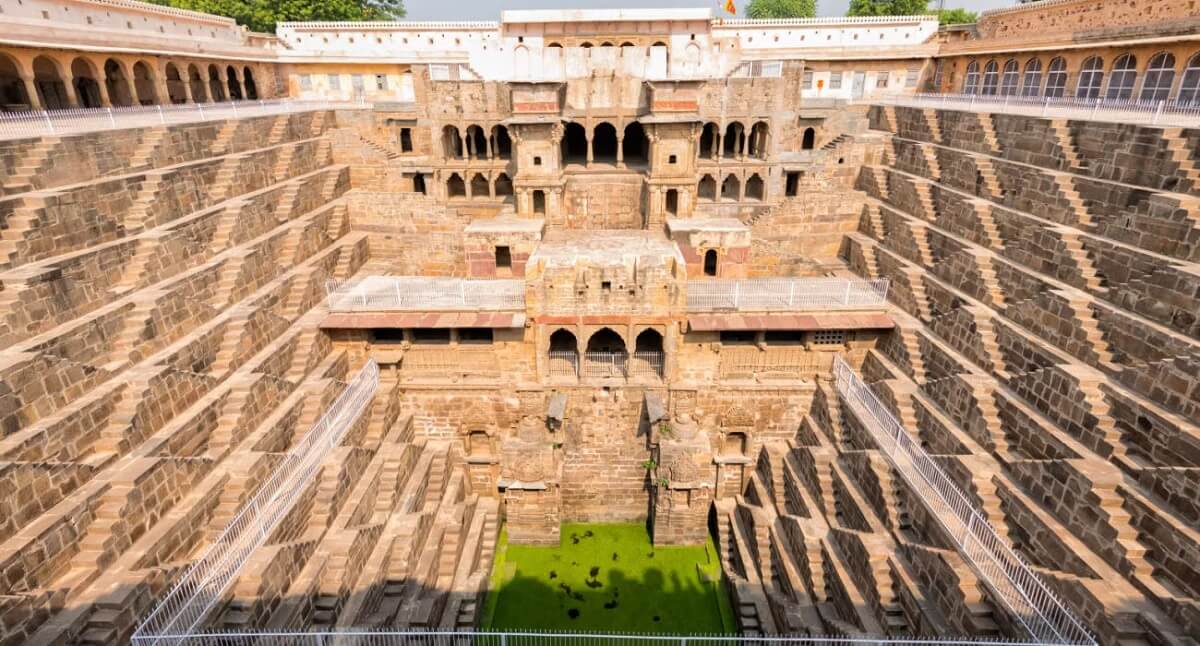
Chand Baori isn’t just a deep well—it’s a masterpiece of ancient engineering and spiritual symbolism. Built in the 8th or 9th century by King Chand of the Nikumbha Rajput dynasty, this stepwell served as both a water reservoir and a community gathering space in the parched region of Abhaneri. Its stepped structure ensured access to water even during severe droughts, a necessity in Rajasthan’s semi-arid climate.
With 3,500 narrow steps arranged in perfect symmetry and descending 13 levels, Chand Baori is believed to be one of the deepest and largest stepwells in the world. Temperatures at the bottom can be significantly cooler—making it a natural air-conditioning system in a time long before electricity.
This stepwell was more than utilitarian; it was also spiritual. Adjacent to the baori is the Harshat Mata Temple, where villagers once prayed for rain and good harvests. Together, the temple and stepwell formed the social and religious nucleus of the community.
Want to explore other historical sites with unique engineering? Our blog on Buddhist Monuments at Sanchi offers a similarly fascinating look at India’s architectural heritage.
Location: Where Exactly Is Chand Baori?
Chand Baori is located in Abhaneri village, part of Rajasthan’s Dausa district. It’s nestled in the heart of the desert plains but well connected by road and rail.
- Distance from Jaipur: Approximately 95 km (2-hour drive)
- Distance from Delhi: Roughly 220 km (4.5 to 5 hours by car)
- Nearest railway station: Bandikui Junction (about 8 km away)
- Nearby towns: Dausa, Bhangarh, and Sikandra
The village itself is quiet, rural, and typically Rajasthani in character, with friendly locals and a handful of small stalls selling snacks and souvenirs. There are no large-scale hotels or restaurants, so plan accordingly. Many travelers choose to combine Chand Baori with a stop at the nearby Bhangarh Fort or Mehandipur Balaji Temple. Abhaneri Step Well: History, Architecture, Highlights Travel Guide
How to Reach Chand Baori: Options from Delhi, Jaipur, and Beyond
From Jaipur
The fastest and most convenient option is by car. Take the Jaipur–Agra Highway (NH21), and turn off at Sikandra to reach Abhaneri. The roads are smooth and well-marked, and the drive through mustard fields and Rajasthani countryside is refreshing.
Alternatively, you can board a train to Bandikui Junction and hire a local taxi or auto from the station. Buses from Jaipur to Dausa also run regularly, and from there, you can take local transportation.
From Delhi
If you’re coming from Delhi, it’s a great weekend road trip. The best route is via NH48 to Alwar and then onward to Dausa. Alternatively, hop on a train to Dausa or Bandikui, or use an overnight bus to Jaipur followed by a day trip to Chand Baori.
Need help planning a road trip? You might find this useful: Weekend Trips from Delhi to Enjoy July Rains.
Entry Timings, Fees & Best Time to Visit Chand Baori

Timings:
Chand Baori is open every day from 8:00 AM to 6:00 PM, including weekends and public holidays.
Entry Fees:
As of 2025, there is no entry fee to visit Chand Baori. This makes it one of the few major attractions in Rajasthan that’s accessible without a ticket.
Best Time to Visit:
- October to March is ideal, when the weather is cooler and more comfortable.
- July to September offers a unique charm with overcast skies, though steps can become slippery after rain.
- Avoid May and June unless you can handle the extreme summer heat.
Pair your visit with our guide to Rajasthan in the monsoon for more rainy season travel ideas.
Architecture and Design: Why Chand Baori Is a Visual Marvel
What makes Chand Baori such a compelling site is its near-perfect geometry. The 3,500 steps descend into the earth in a crisscross pattern that seems both infinite and symmetrical from any angle. The depth of the stepwell—approximately 30 meters—creates a visual illusion that draws photographers, architects, and artists from around the world.
The design follows the concept of fractal architecture, where patterns repeat themselves in descending form. At the base, green water lies still, once used for ritual purification and storage.
Above the stepwell, you’ll find pillared pavilions, sculpted balconies, and carved stone walls that once belonged to the now-ruined palace complex. The Harshat Mata Temple next door also showcases beautifully damaged yet awe-inspiring sculptures.
For architecture lovers, this is a site that compares in significance to places like Khajuraho’s temple carvings or the stonework at Sanchi. Best Places to Visit in Bundi, Rajasthan: A Hidden Gem
Travel Tips & Local Suggestions

- Footwear: Wear sturdy shoes with good grip. The stone walkways can be slippery, especially after rain.
- Water & Snacks: Carry your own bottle. There are few shops in the village, and no restaurants near the site.
- Time Needed: Allocate 1.5 to 2 hours for a leisurely visit, including photography and a walk through Harshat Mata Temple.
- Guides: Local guides are available and reasonably priced. A good guide can share hidden stories and myths related to the baori.
- Dress Modestly: As this is a site of historical and spiritual importance, wear respectful clothing.
Want more travel hacks for India? Read our list of essential travel tips for first-time explorers.
Final Thoughts: Is Chand Baori Worth Visiting?
Absolutely. Chand Baori is one of those rare places where engineering, art, and history converge. It stands as a testament to how ancient India addressed real-world challenges with innovative thinking and breathtaking aesthetics. Whether you’re a solo traveler, photographer, culture enthusiast, or road-tripper, this site promises both serenity and astonishment.
Combine it with other lesser-known destinations like Mehandipur Balaji or Sariska National Park for a richer travel experience through Rajasthan’s quieter, yet deeply rewarding, circuit.
Related Travel Blogs You’ll Enjoy:
- Explore Top Things to Do in Mount Abu – Plan Your Trip Now
- Discover Hidden Gems in Rajasthan – Local Experiences Await!
- Plan Your July Trip – Rajasthan Weather & Travel Guide 2025
- How to Reach Jawai – Start Your Wild Rajasthan Adventure
- Know Rajasthani Culture – Explore Traditions Before You Go
- Rajasthan Travel Tips – Celebrate Rajasthan Day in Style
- Visit Chokhi Dhani Jaipur – Cultural Fun & Activities Guide
- Plan a Budget Trip – Rajasthan 1-Week Tour Cost Guide
- Travel Solo in Rajasthan – Must-Visit Places & Tips
- Visit Rajasthan’s Top Temples – Don’t Miss These Sacred Spots
- Solo Rajasthan Itinerary – Explore the State Your Way
- Join Jaipur Cooking Classes – Learn Authentic Rajasthani Recipes
- Things to Do in Jawai, Rajasthan: A Complete Travel Wildlife Guide